

Press Statement
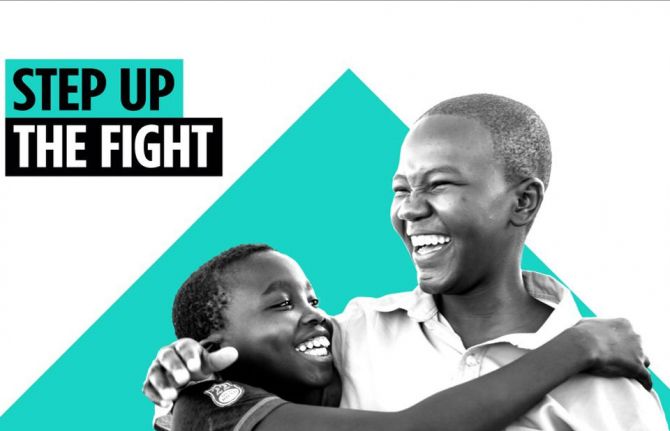
UNAIDS calls for a fully funded Global Fund to Fight AIDS, Tuberculosis and Malaria
11 January 2019 11 January 2019GENEVA, 14 January 2019—As the Global Fund to Fight AIDS, Tuberculosis and Malaria (Global Fund) launches its sixth replenishment for its next three-year funding cycle, UNAIDS is urging donors to fully fund the Global Fund.
The Global Fund launched the summary of its Sixth Replenishment Investment Case in Paris, France, calling for US$ 14 billion to help save 16 million lives through programmes for HIV, tuberculosis and malaria. The Global Fund estimates that this will cut the mortality rate for the three diseases in half. Funding will also go to building stronger health systems.
“In July 2018, UNAIDS sounded the alarm—resources available for AIDS are not matching agreed political commitments and there is an annual shortfall of US$ 5 billion,” said Michel Sidibé, Executive Director of UNAIDS. “I welcome the Global Fund’s call to raise at least US$ 14 billion for AIDS, tuberculosis and malaria for the next three years and call on donors and domestic partners to dig even deeper to ensure that the global investment target of US$ 26.2 billion for the AIDS response is met by 2020, as it is a public health imperative. I am confident that the President of France, Emmanuel Macron, and partners will ensure that the Global Fund is fully funded and will keep the bar high to ensure that additional funds are raised.”
Investing in the Global Fund is vital. To date, the Global Fund estimates that it has ensured access to HIV treatment for 17.5 million people living with HIV, keeping them alive and well. Funds also support access to HIV services for key and marginalized populations, HIV prevention, programmes for adolescents and programmes for young women and girls, HIV/tuberculosis integration and coinfections.
UNAIDS will continue to strengthen the long-established partnership with the Global Fund to maximize the impact of the investments, accelerate inclusive people-centred responses and end AIDS as public health threat. Joint work takes place across diverse sectors, enhancing human capital and strengthening systems to deliver sustainable results, save lives and leave no one behind.
The full Global Fund Sixth Replenishment Investment Case will be presented and discussed by global health leaders at the Preparatory Meeting of the Global Fund Sixth Replenishment, hosted by the Government of India in New Delhi on 8 February 2019.
UNAIDS estimates that US$ 26.2 billion will be required for the AIDS response in 2020. In 2017, US$ 21.3 billion was available for the AIDS response in low- and middle-income countries. UNAIDS urges a scale-up in donor and domestic resources for HIV to fill the gap and end the HIV, tuberculosis and malaria epidemics by 2030 as part of the Sustainable Development Goals.
UNAIDS
The Joint United Nations Programme on HIV/AIDS (UNAIDS) leads and inspires the world to achieve its shared vision of zero new HIV infections, zero discrimination and zero AIDS-related deaths. UNAIDS unites the efforts of 11 UN organizations—UNHCR, UNICEF, WFP, UNDP, UNFPA, UNODC, UN Women, ILO, UNESCO, WHO and the World Bank—and works closely with global and national partners towards ending the AIDS epidemic by 2030 as part of the Sustainable Development Goals. Learn more at unaids.org and connect with us on Facebook, Twitter, Instagram and YouTube.
Related resources
Press centre
Download the printable version (PDF)
Press Statement
Message on the occasion of Universal Health Coverage Day
12 December 2018 12 December 2018Health is everyone’s concern. The world has been striving for access to quality and affordable health services since the Declaration of Alma-Ata, which called for health for all more than 40 years ago.
We have come a long way since then—improvements in access to, and the quality of, health-care services have increased life expectancy globally from 62 to 72 years. Yet progress is far from equal. Today, more than half of the world’s population do not have full access to essential health services, because they are unaffordable, inadequate, inaccessible for certain groups or simply unavailable.
There is increasing inequity around the world, with the richest 1% of the population now owning half of the world’s wealth. Life expectancy in the poorest countries of the world is appreciably lower than in the wealthiest, and living in areas blighted by poverty can mean a shorter life span and a lost future. The disparity is observed between countries and between different communities within countries, with the most vulnerable, marginalized and stigmatized being left behind.
Making progress towards universal health coverage that is truly universal means making progress towards equity, inclusion and social justice. It means a people-centred, human rights-based approach and community-led service delivery, as well as a recognition of the need to address the social determinants of health, including necessary reforms of laws and policies and removing stigma and discrimination and gender inequity.
The global response to HIV has illustrated the critical measures—decisive political leadership and commitment, community engagement and a response informed by scientific evidence—that can change the course of a global epidemic.
Reaching time-bound HIV prevention and treatment targets will make an important contribution to achieving the universal health coverage targets, and together will significantly accelerate progress towards realizing the Sustainable Development Goals.
In recognition of the theme of this year’s Universal Health Coverage Day, “Unite for universal health coverage: now is the time for collective action”, I call on everyone to embrace and contribute to the universal health coverage movement. United, we can make universal health coverage a reality for all.
12 December 2018
Michel Sidibé
Executive Director of UNAIDS
UNAIDS
The Joint United Nations Programme on HIV/AIDS (UNAIDS) leads and inspires the world to achieve its shared vision of zero new HIV infections, zero discrimination and zero AIDS-related deaths. UNAIDS unites the efforts of 11 UN organizations—UNHCR, UNICEF, WFP, UNDP, UNFPA, UNODC, UN Women, ILO, UNESCO, WHO and the World Bank—and works closely with global and national partners towards ending the AIDS epidemic by 2030 as part of the Sustainable Development Goals. Learn more at unaids.org and connect with us on Facebook, Twitter, Instagram and YouTube.
Press centre
Download the printable version (PDF)
Press Statement
UNAIDS stands with United Nations Special Representatives in condemning sexual violence in South Sudan
07 December 2018 07 December 2018GENEVA, 7 December 2018—UNAIDS condemns the rapes of 150 women and girls while collecting food for their families near Bentiu, a government-controlled area in South Sudan, during a 10-day period in November.
Echoing a statement made by the United Nations Special Representatives on Sexual Violence in Conflict, Pramila Patten, and for Children and Armed Conflict, Virginia Gamba, and the Special Advisor on the Prevention of Genocide, Adama Dieng, who spoke out against the rapes earlier this week, Michel Sidibé, Executive Director of UNAIDS, said, “No one should live in fear of sexual violence, no matter where they live. We must protect women and girls from one of the grossest human rights violations—rape. We must end gender-based violence for good.”
The world is commemorating the 16 Days of Activism against Gender-Based Violence from 25 November until 10 December to highlight the commitments made to end all forms of gender-based violence. UNAIDS is committed to working with its partners to prevent and mitigate the effects of rape and other forms of gender-based violence.
UNAIDS
The Joint United Nations Programme on HIV/AIDS (UNAIDS) leads and inspires the world to achieve its shared vision of zero new HIV infections, zero discrimination and zero AIDS-related deaths. UNAIDS unites the efforts of 11 UN organizations—UNHCR, UNICEF, WFP, UNDP, UNFPA, UNODC, UN Women, ILO, UNESCO, WHO and the World Bank—and works closely with global and national partners towards ending the AIDS epidemic by 2030 as part of the Sustainable Development Goals. Learn more at unaids.org and connect with us on Facebook, Twitter, Instagram and YouTube.
Press Statement
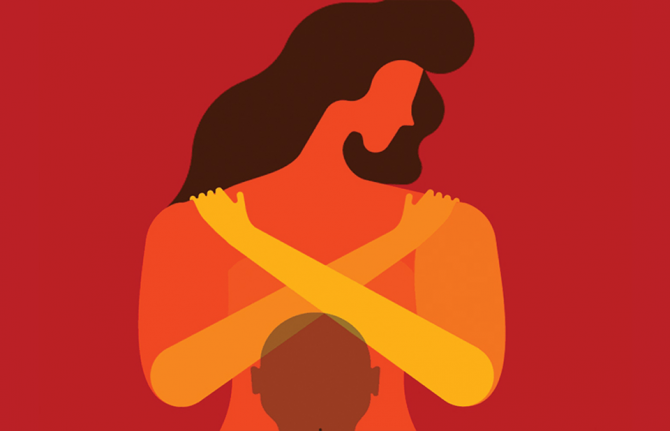
International Day for the Elimination of Violence against Women—2018 message
04 December 2018 04 December 2018As we mark the International Day for the Elimination of Violence against Women, we commemorate and renew our global commitment to ending violence against women and other forms of gender-based violence.
Violence against women remains one of the most persistent violations of human rights across the globe, undermining the health, dignity, security and autonomy of women and girls. Women who have been physically or sexually abused by their partners report higher rates of mental health issues, including depression and anxiety, higher use of alcohol and less control over sexual decision-making.
There is an undeniable link between violence against women and HIV. Studies show clearly that women living with HIV are more likely to have experienced violence, and women who have experienced violence are more likely to be living with HIV. In some regions, women who experience physical or sexual intimate partner violence are 1.5 times more likely to acquire HIV than women who have not experienced violence. Among marginalized populations, a high prevalence of violence is linked to higher rates of HIV infection, in particular among transgender women.
Violence or the fear of violence can it make very difficult for women to insist on safer sex and to use and benefit from HIV and sexual and reproductive health services. The fear of intimate partner violence is also an important barrier to the uptake of HIV testing and counselling, to the disclosure of HIV-positive status and to treatment uptake and adherence, including among pregnant women living with HIV. Violence against women living with HIV also manifests in health-care settings—women have even reported being sterilized against their will.
Programmes that empower women and girls through integrated approaches that transform social and cultural norms and promote and implement laws and policies on violence against women, gender equality and HIV are incredibly effective. The uptake of such programmes, combined with political will to promote gender equality and end discrimination against women, are critical to addressing violence against women. UNAIDS remains committed to continuing to act urgently against violence against women as a human rights imperative and as a cause and consequence of HIV.
On 25 November, the International Day for the Elimination of Violence against Women kicks off the 16 Days of Activism against Gender-Based Violence, ending on 10 December, Human Rights Day. It is a time to commemorate and renew our commitment to ending violence against women and other forms of gender-based violence.
25 November 2018
Michel Sidibé
Executive Director of UNAIDS
Under-Secretary-General of the United Nations
UNAIDS
The Joint United Nations Programme on HIV/AIDS (UNAIDS) leads and inspires the world to achieve its shared vision of zero new HIV infections, zero discrimination and zero AIDS-related deaths. UNAIDS unites the efforts of 11 UN organizations—UNHCR, UNICEF, WFP, UNDP, UNFPA, UNODC, UN Women, ILO, UNESCO, WHO and the World Bank—and works closely with global and national partners towards ending the AIDS epidemic by 2030 as part of the Sustainable Development Goals. Learn more at unaids.org and connect with us on Facebook, Twitter, Instagram and YouTube.
Press centre
Download the printable version (PDF)
Press Statement
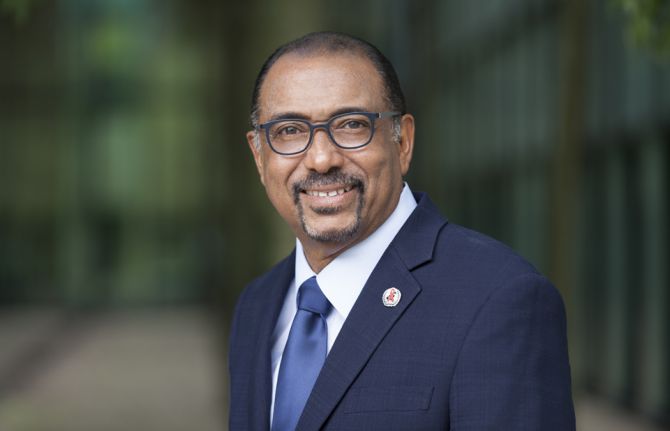
World AIDS Day 2018 message by UNAIDS Executive Director, Michel Sidibé
23 November 2018 23 November 20181 December 2018
This year marks the 30th anniversary of the first World AIDS Day. Thirty years of activism and solidarity under the banner of World AIDS Day. Thirty years of campaigning for universal access to life-saving services to treat and prevent HIV. But after 30 years, AIDS is still not over. We have miles to go.
World AIDS Day is a day to remember the millions of people who have lost their lives to AIDS-related illnesses, many of whom died because they couldn’t access HIV services, because of stigma, because of discrimination and because of criminalization of key populations.
On this World AIDS Day, UNAIDS is campaigning for people to know their HIV status and their viral load. In 2017, 9.4 million people were simply unaware that they are living with a potentially deadly, but treatable, disease. If people don’t know their HIV status, people who are living with HIV can’t start treatment, and people who are HIV-negative can’t get the knowledge and skills they need to keep that way. If people don’t know their HIV status, they can’t protect themselves, their families, their partners. If people living with HIV don’t know their viral load, they won’t be sure that the treatment is effective, protecting their health and stopping HIV transmission.
Live life positively. Know your HIV status.
Michel Sidibé
Executive Director of UNAIDS
Under-Secretary-General of the United Nations
UNAIDS
The Joint United Nations Programme on HIV/AIDS (UNAIDS) leads and inspires the world to achieve its shared vision of zero new HIV infections, zero discrimination and zero AIDS-related deaths. UNAIDS unites the efforts of 11 UN organizations—UNHCR, UNICEF, WFP, UNDP, UNFPA, UNODC, UN Women, ILO, UNESCO, WHO and the World Bank—and works closely with global and national partners towards ending the AIDS epidemic by 2030 as part of the Sustainable Development Goals. Learn more at unaids.org and connect with us on Facebook, Twitter, Instagram and YouTube.
Press Statement
President of Botswana visits UNAIDS and calls for a united, efficient partnership for setting regional HIV priorities
25 October 2018 25 October 2018UNAIDS’ unwavering commitment praised by the President
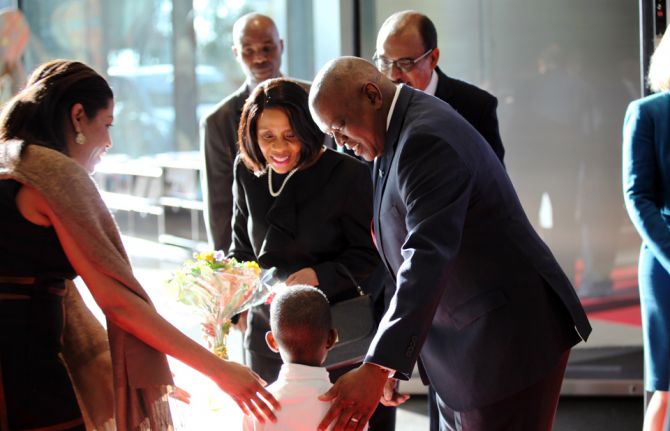
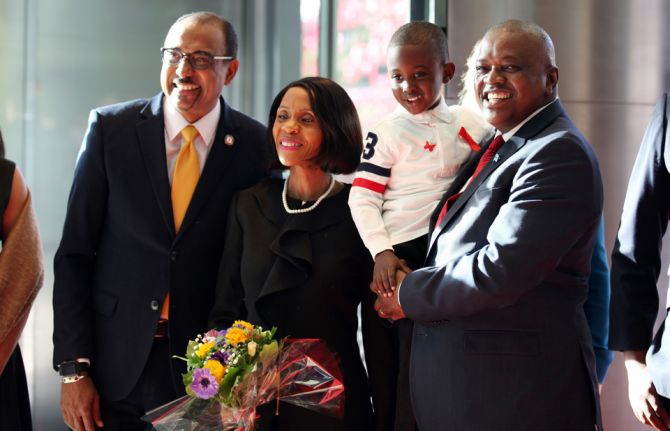
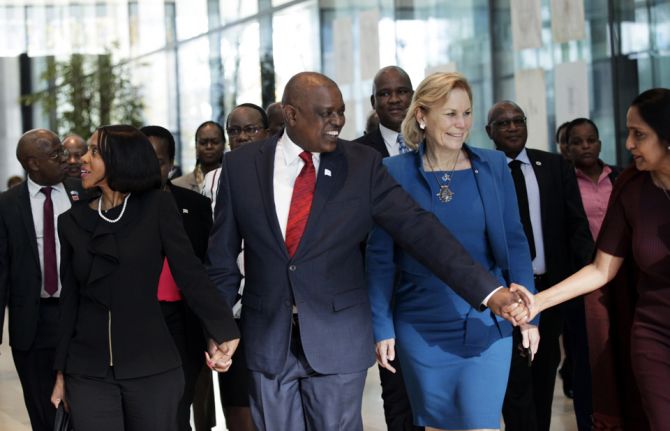
GENEVA, 25 October 2018—The President of Botswana, Mokgweetsi E.K. Masisi, visited UNAIDS headquarters in Geneva, Switzerland, on 25 October 2018 to share Botswana’s vision on a key public health concern: HIV.
The President met the Executive Director of UNAIDS, Michel Sidibé, and congratulated UNAIDS for leading the AIDS agenda with humility and professionalism.
“We continue to count on your stewardship,” said Mr Masisi. “Botswana stands ready to sprint the last mile to end AIDS as a public health threat.”
Two decades ago, AIDS ravaged the small southern African nation of 2 million. Today, despite having one of the highest rates of HIV in the world – 23% of adults live with HIV- Botswana has shown remarkable progress. New HIV infections have been reduced by 63% since the peak in 1996 and AIDS-related deaths have decreased to 4100 from 15 000 in 2008. It was the first country in the region to provide universal, free antiretroviral treatment to people living with HIV, paving the way for many other countries in the region to follow.
Mr Sidibé described the President as an advocate for the region. “Mr Masisi is bringing new energy and impetus to the AIDS response in Botswana with a focus on HIV prevention,” said Mr Sidibé. The President participated in a moderated dialogue along with a high-level delegation that included the Minister of International Affairs and Cooperation and the Minister of Health and Wellbeing as well as the First Lady of Botswana. During the discussions, the President described Botswana’s financial investments in health, HIV and its people. He highlighted that mother-to-child HIV transmission is on the verge of being eliminated and that more than 80% of people living with HIV are on treatment.
However, challenges remain. “When you disempower a young girl through violence or unwanted sexual experience, she is affected for life,” Mr Masisi said. In order to curtail new HIV infections, the President committed to redefining the roles and engagement of young boys and men. Mr Masisi and Mr Sidibé then recognized former President Festus Mogae’s long-standing efforts to turn the country around from despair to hope when Botswana faced the HIV crisis initially.
UNAIDS
The Joint United Nations Programme on HIV/AIDS (UNAIDS) leads and inspires the world to achieve its shared vision of zero new HIV infections, zero discrimination and zero AIDS-related deaths. UNAIDS unites the efforts of 11 UN organizations—UNHCR, UNICEF, WFP, UNDP, UNFPA, UNODC, UN Women, ILO, UNESCO, WHO and the World Bank—and works closely with global and national partners towards ending the AIDS epidemic by 2030 as part of the Sustainable Development Goals. Learn more at unaids.org and connect with us on Facebook, Twitter, Instagram and YouTube.
Video
Region/country
Press Statement
UNAIDS welcomes increase in funding from the Netherlands
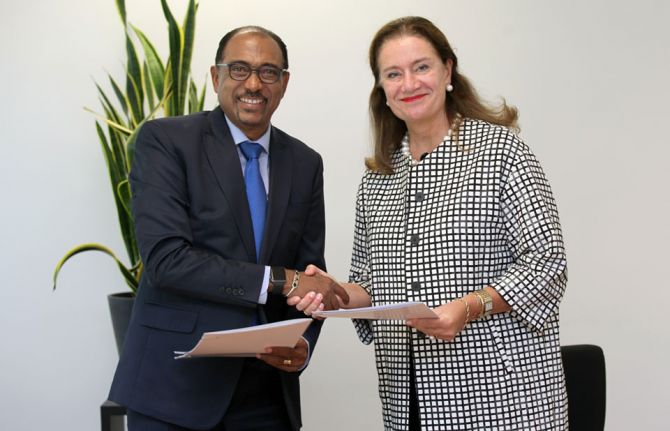
19 September 2018 19 September 2018GENEVA, 19 September 2018—UNAIDS welcomes the decision by its third largest donor, the Netherlands, to increase its funding to UNAIDS by more than 20%. The Netherlands will provide US$ 23.3 million in core funding in 2018, compared to US$ 19.2 million in 2017.
“I am encouraged by the Netherland’s firm commitment to UNAIDS and to the response to HIV. Despite tremendous progress, there are still miles to go to reach critical targets, and time is running out,” said Michel Sidibé, Executive Director of UNAIDS. “This increase in funding will help UNAIDS’ efforts in leading the response to push AIDS into permanent decline.”
The funding agreement was signed in Geneva, Switzerland, by Mr Sidibé and Monique van Daalen, Ambassador and Permanent Representative of the Netherlands to the United Nations in Geneva. The increased contributions from the Netherlands will go towards supporting the implementation of UNAIDS’ 2016–2021 Strategy, which includes reducing new HIV infections to below 500 000 and ensuring that 30 million people living with HIV have access to life-saving antiretroviral therapy by 2020.
“UNAIDS’ mandate is clear and specific, namely to end AIDS. UNAIDS’ leadership has been critical in achieving the progress we have seen to date,” said Ms van Daalen. “UNAIDS is an important knowledge centre and uses critical data and information, also on existing barriers, to advocate for a more effective AIDS response. Increased and consistent funding for UNAIDS will ensure that no one is left behind. UNAIDS’ focus on the most vulnerable groups is crucial.”
UNAIDS is funded entirely through voluntary contributions. Fully funding its work is critical to achieving UNAIDS’ vision of zero new HIV infections, zero discrimination and zero AIDS-related deaths.
UNAIDS
The Joint United Nations Programme on HIV/AIDS (UNAIDS) leads and inspires the world to achieve its shared vision of zero new HIV infections, zero discrimination and zero AIDS-related deaths. UNAIDS unites the efforts of 11 UN organizations—UNHCR, UNICEF, WFP, UNDP, UNFPA, UNODC, UN Women, ILO, UNESCO, WHO and the World Bank—and works closely with global and national partners towards ending the AIDS epidemic by 2030 as part of the Sustainable Development Goals. Learn more at unaids.org and connect with us on Facebook, Twitter, Instagram and YouTube.
Press centre
Download the printable version (PDF)
Region/country
Press Statement
UNAIDS welcomes ground-breaking decision by India’s Supreme Court that strikes down law criminalizing LGBTI people
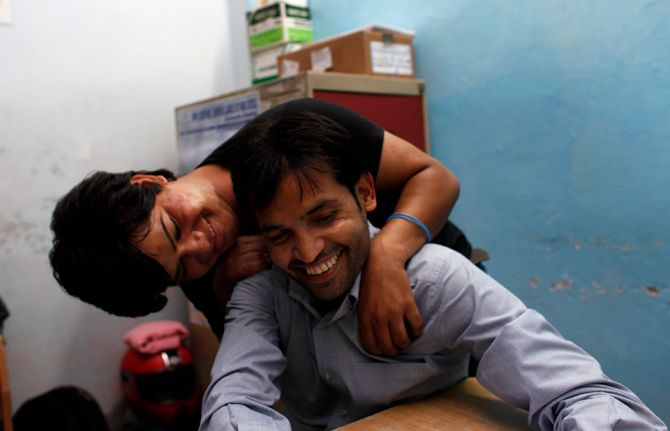
06 September 2018 06 September 2018GENEVA, 6 September 2018—UNAIDS welcomes the decision of the Supreme Court of India to annul key provisions of Section 377 of the Indian Penal Code. Section 377 criminalizes sexual relations between lesbian, gay, bisexual, transgender and intersex (LGBTI) people.
“Today is a day of gay pride, a day of celebration, a day when respect and dignity was finally restored in India for lesbian, gay, bisexual, transgender and intersex people,” said Michel Sidibé, Executive Director of UNAIDS. “I applaud the brave activists, civil society organizations and community groups that have fought long and hard for this injustice to be reversed.”
Criminalization of consensual same-sex sexual relations is a violation of human rights and legitimizes prejudice and violence against LGBTI people. Criminalization hinders people from accessing and using HIV prevention, testing and treatment services and increases their risk of acquiring HIV.
In India, HIV prevalence among gay men and other men who have sex with men is 2.7% and among transgender people is 3.1%, compared to the national HIV prevalence among all adults of just 0.26%. Around three out of ten gay men and four out of ten transgender people in India who are living with HIV do not know their HIV status. Many LGBTI people living with HIV do not have access to HIV treatment.
Gay men account for 18% of all new HIV infections worldwide. UNAIDS urges countries to ensure the full respect of the human rights of all people, regardless of their sexual orientation, through repealing laws that prohibit sex between consenting adults in private, enforcing laws to protect people from violence and discrimination, addressing homophobia and transphobia and ensuring that crucial health services are made available.
“I hope this decision sets the trend and is followed by similar decisions in other countries that remove unjust laws criminalizing homosexuality,” said Mr Sidibé.
In June 2016, United Nations Member States committed in the Political Declaration on Ending AIDS to promote laws and policies that ensure the enjoyment of all human rights and fundamental freedoms for children, adolescents and young people, particularly those living with, at risk of and affected by HIV, so as to eliminate the stigma and discrimination that they face.
UNAIDS
The Joint United Nations Programme on HIV/AIDS (UNAIDS) leads and inspires the world to achieve its shared vision of zero new HIV infections, zero discrimination and zero AIDS-related deaths. UNAIDS unites the efforts of 11 UN organizations—UNHCR, UNICEF, WFP, UNDP, UNFPA, UNODC, UN Women, ILO, UNESCO, WHO and the World Bank—and works closely with global and national partners towards ending the AIDS epidemic by 2030 as part of the Sustainable Development Goals. Learn more at unaids.org and connect with us on Facebook, Twitter, Instagram and YouTube.

Press Statement
UNAIDS welcomes appointment of Michelle Bachelet as UN High Commissioner for Human Rights
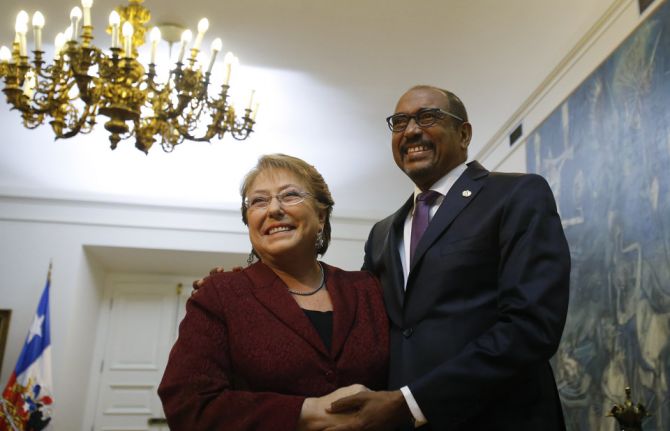
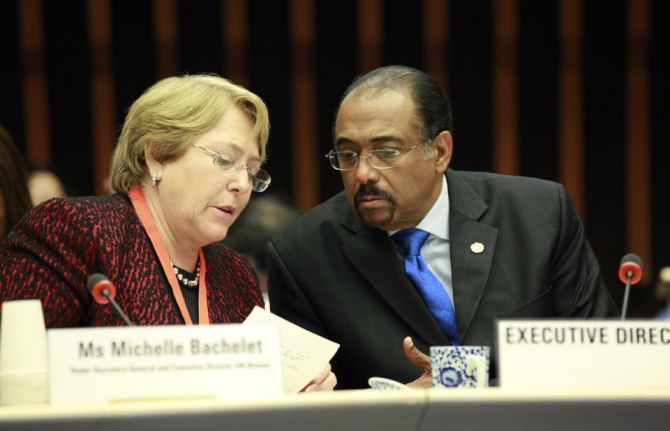
10 August 2018 10 August 2018GENEVA, 10 August 2018—UNAIDS welcomes the appointment of former Chilean president Michelle Bachelet as the United Nations new human rights chief.
Ms Bachelet ended her second four-year term as president earlier this year, having already held the post between 2006 and 2010. She was the first woman to be elected to Chile’s highest office. After her first term, she was appointed the first ever Executive Director of the UN gender equality office, UN-Women based in New York.
A former paediatrician, the politician also held key government posts as Chile’s Minister of Defence and Minister of Health.
“We look forward to working closely with Michelle Bachelet who has always been a strong supporter of human rights and social justice for the most vulnerable and marginalized in society. A people-centred, human rights-based approach is crucial to ending the AIDS epidemic by 2030.”
The High Commissioner is the top official who speaks out for human rights across the whole UN system, strengthening human rights mechanisms; enhancing equality; fighting discrimination in all its forms; strengthening accountability and the rule of law; widening the democratic space and protecting the most vulnerable from all forms of human rights abuse. Headquartered in Geneva, the Office of the High Commissioner for Human Rights (OHCHR) is mandated to promote and protect the universal exercise and full realization of human rights, across the world, as established in the UN Charter.
UNAIDS
The Joint United Nations Programme on HIV/AIDS (UNAIDS) leads and inspires the world to achieve its shared vision of zero new HIV infections, zero discrimination and zero AIDS-related deaths. UNAIDS unites the efforts of 11 UN organizations—UNHCR, UNICEF, WFP, UNDP, UNFPA, UNODC, UN Women, ILO, UNESCO, WHO and the World Bank—and works closely with global and national partners towards ending the AIDS epidemic by 2030 as part of the Sustainable Development Goals. Learn more at unaids.org and connect with us on Facebook, Twitter, Instagram and YouTube.
A human rights-based approach is essential to ending AIDS as a public health threat
Office of the High Commissioner for Human Rights
Press Statement
UNAIDS welcomes additional evidence from Cameroon, Côte d’Ivoire, and South Africa on progress towards the 2020 targets
22 July 2018 22 July 2018Results from population-based HIV impact surveys provide insight into where investments are needed
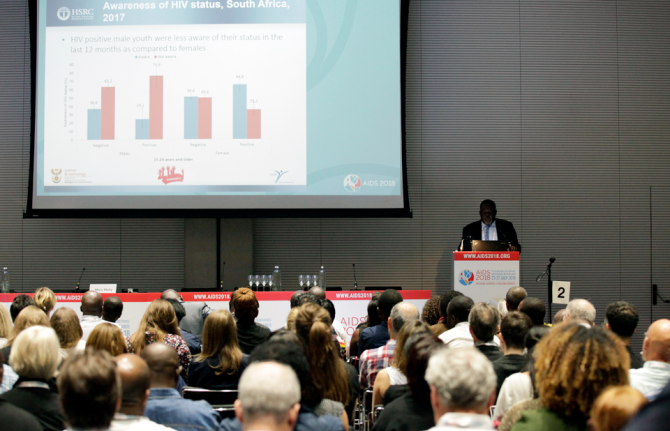
AMSTERDAM/GENEVA, 22 July 2018—Cameroon, Côte d’Ivoire, and South Africa have released new survey data on progress towards the 2020 targets. The Cameroon and Côte d’Ivoire population-based HIV impact assessment (PHIA) surveys and the South African survey all studied knowledge of HIV status, new HIV infections, condom use, voluntary medical male circumcision, antiretroviral therapy coverage, viral suppression and other indicators.
In South Africa, which has the largest HIV epidemic in the world with more than 7 million people living with HIV and the largest treatment programme in the world with 4.4 million people on antiretroviral therapy, the new data combined with similar data from an earlier survey indicate that there has been a 40% reduction in the rate of new adult HIV infections between 2010 and 2017.
“These surveys are incredibly important and play a vital role in helping countries to review and refine their HIV programming to make sure that the right services are reaching people affected by HIV,” said Michel Sidibé Executive Director of UNAIDS.
The survey data confirm UNAIDS estimates which indicate that South Africa has also improved treatment coverage and is very close to reaching the 90-90-90* treatment targets. It found that 85% of people living with HIV knew their HIV status, 71% of people who knew their status were accessing antiretroviral treatment and 86% of people who were accessing treatment had supressed viral loads.
Viral load suppression among all people living with HIV in Cameroon and Côte d’Ivoire however was less than 50% reflecting low treatment coverage. The two countries are far from reaching the 90-90-90 targets at 47%, 91% and 80% and 37%, 88% and 76% respectively.
The largest difference between the southern African country and the two western and central African countries is observed in knowledge of HIV status, indicating that HIV testing services need to be significantly scaled up in west and central Africa.
The PHIA surveys provide key information for identifying characteristics of the populations that are not receiving services. In Cameroon, viral load suppression varied by province from 28% to 63%. In South Africa less than 50% of children and young men (ages 15-34 years) living with HIV had suppressed viral load (compared to 67% among the women aged 15-49). These data will provide critical information to allow programme managers to direct their responses to the populations and locations most in need of services.
The PHIA surveys, were led by Columbia University in collaboration with country governments and supported by the United States President’s Emergency Plan for AIDS Relief. The South African survey was conducted by the Human Sciences Research Council
* 90% of people living with HIV know their HIV status, 90% of people who know their status are receiving antiretroviral treatment, and 90% of people on treatment have suppressed viral loads.
UNAIDS
The Joint United Nations Programme on HIV/AIDS (UNAIDS) leads and inspires the world to achieve its shared vision of zero new HIV infections, zero discrimination and zero AIDS-related deaths. UNAIDS unites the efforts of 11 UN organizations—UNHCR, UNICEF, WFP, UNDP, UNFPA, UNODC, UN Women, ILO, UNESCO, WHO and the World Bank—and works closely with global and national partners towards ending the AIDS epidemic by 2030 as part of the Sustainable Development Goals. Learn more at unaids.org and connect with us on Facebook, Twitter, Instagram and YouTube.
Press centre
Download the printable version (PDF)