

Press Statement
UNAIDS welcomes further evidence that starting antiretroviral therapy early saves lives
27 May 2015 27 May 2015GENEVA, 27 May 2015— UNAIDS welcomes additional evidence that starting antiretroviral therapy at a higher CD4 (a measure of immune system health) level has a positive effect on the health and well-being of people living with HIV.
“Every person living with HIV should have immediate access to life-saving antiretroviral therapy,” said Michel Sidibé, Executive Director of UNAIDS. “Delaying access to HIV treatment under any pretext is denying the right to health.”
The NIH-funded international randomized clinical trial START (Strategic Timing of Antiretroviral Treatment) has found compelling evidence that the benefits of immediately starting antiretroviral therapy outweigh the risks. Data from the study showed that the risk of AIDS, other serious illnesses or death was reduced by 53% among people who started treatment when their CD4 levels were 500 or above, compared to the group whose treatment was deferred to when their CD4 levels dropped to 350.
The START announcement follows a series of research findings over the past several years indicating the health benefits of starting HIV treatment earlier. The findings from these studies will play an important role in shaping the new treatment guidance from the World Health Organization due to be released later in 2015.
“This is a further demonstration of the importance of science and research that enables an evidence-based, people-centred response to HIV that leaves no one behind,” said Michel Sidibé, Executive Director of UNAIDS. “The findings strongly support the UNAIDS Fast-Track approach to achieving the 90-90-90 HIV treatment targets and ending the AIDS epidemic by 2030.”
UNAIDS reaffirms the importance of respecting a person’s right to know their HIV status and to decide whether and when to begin antiretroviral therapy. HIV treatment decisions must be well-informed and voluntary. Wider and more equitable delivery of antiretroviral therapy will require increased efforts to address the social and legal barriers that inhibit access to health services for people living with HIV, especially marginalized populations.
Evidence of the health benefits of earlier initiation of treatment, combined with previous findings on the impact of antiretroviral medicines on reducing HIV transmission, confirms that antiretroviral therapy is a cornerstone of efforts to save and improve lives as well as to prevent new HIV infections together with all other HIV prevention options currently available.
UNAIDS
The Joint United Nations Programme on HIV/AIDS (UNAIDS) leads and inspires the world to achieve its shared vision of zero new HIV infections, zero discrimination and zero AIDS-related deaths. UNAIDS unites the efforts of 11 UN organizations—UNHCR, UNICEF, WFP, UNDP, UNFPA, UNODC, UN Women, ILO, UNESCO, WHO and the World Bank—and works closely with global and national partners towards ending the AIDS epidemic by 2030 as part of the Sustainable Development Goals. Learn more at unaids.org and connect with us on Facebook, Twitter, Instagram and YouTube.
Press centre
Download the printable version (PDF)
Press Statement
UNDP and UNAIDS back efforts by least-developed countries to secure sustainable access to treatment
21 May 2015 21 May 2015GENEVA, 21 May 2015—The United Nations Development Programme (UNDP) and the Joint United Nations Programme on HIV/AIDS (UNAIDS) would like to call attention to the urgent and compelling case for the international community to take all measures possible to protect the health of people living in least-developed countries (LDCs).
The proposal was put forward by Bangladesh on behalf of the LDCs group and is now before the WTO TRIPS Council. It requests an extension of the period under which LDCs are exempt from applying protections for pharmaceutical related patents and clinical data. The current waiver is due to expire in January 2016.
“Millions of people rely on access to affordable, assured quality generic medicines,” said Michel Sidibé, Executive Director of UNAIDS. “WTO Members have before them a critical opportunity to help least-developed countries to reach health and sustainable development goals—failure to support them could put millions of lives at risk.”
The classification of LDCs is contingent on a number of key human development indicators, including levels of poverty, literacy and infant mortality. Access to adequate healthcare, including affordable medicines, remains a key challenge in most LDCs affecting millions of lives. The flexible intellectual property arrangements currently available to LDCs are a crucial tool for improving health.
“While much progress has been made in scaling up access to HIV treatment, much more will be required in the post-2015 era to achieve the vision of a life of dignity for all, leaving no one behind,” said Helen Clark, UNDP Administrator.
The percentage of people living with HIV who are not receiving antiretroviral therapy has been reduced from 90% in 2006 to 63% in 2013. LDCs and developing countries have effectively used transition periods to scale up access to treatment for HIV and its co-infections by importing or manufacturing lower-cost generic medicines.
Access to medicines such as sofosbuvir used to treat chronic hepatitis C remains a grave challenge in LDCs because of high prices. Sofosbuvir can cost as much as US$ 84 000 for a 12-week course in developed country markets. Lower prices via generic licenses are being offered by the patent-holder in some developing countries, but would still place a considerable burden on health budgets. A company in Bangladesh, making use of its LDC status, has launched its own version for US$ 900 for the 12-week course. While this price is also out of reach of many patients in LDCs, with the possibility of other manufacturers emerging in LDCs there is potential for greater competition and further price reductions.
There is another transition period in place which UNDP and UNAIDS have previously backed, that exempts LDCs from implementing their WTO intellectual property obligations for all fields of technology but this period expires in 2021. The proposed transition period on pharmaceutical products, for as long as an LDC remains an LDC, is necessary on top of that general transition period, for the longer-term security it would provide for patients, manufacturers, donors and LDC governments alike.
In accordance with the recommendations of the Global Commission on HIV and the Law, UNDP and UNAIDS urge all WTO Members to support the LDC request for a transition period on pharmaceutical related patents and clinical data for as long as a country remains an LDC.
UNAIDS
The Joint United Nations Programme on HIV/AIDS (UNAIDS) leads and inspires the world to achieve its shared vision of zero new HIV infections, zero discrimination and zero AIDS-related deaths. UNAIDS unites the efforts of 11 UN organizations—UNHCR, UNICEF, WFP, UNDP, UNFPA, UNODC, UN Women, ILO, UNESCO, WHO and the World Bank—and works closely with global and national partners towards ending the AIDS epidemic by 2030 as part of the Sustainable Development Goals. Learn more at unaids.org and connect with us on Facebook, Twitter, Instagram and YouTube.
Press centre
Download the printable version (PDF)
Press Statement
UNAIDS calls for sustained commitment to develop an effective HIV vaccine
18 May 2015 18 May 2015GENEVA, 18 May 2015—On HIV Vaccine Awareness Day, UNAIDS is calling for a renewed global commitment to finding an effective HIV vaccine.
“A vaccine would be a major step towards ending the AIDS epidemic,” said UNAIDS Executive Director Michel Sidibé. “There have been encouraging recent scientific advances that give us hope for the future development of an HIV vaccine.”
UNAIDS is committed to leaving nobody behind in the HIV response. A major advantage of vaccines is that they promote equity and can be used effectively in all communities and settings, including those where many other health services can be harder to deliver.
Studies show that an HIV vaccine is possible. The RV144 vaccine trial in 2009 lowered the rate of HIV infection by 31%. There is much hope that ongoing research will build on this trial and deliver results. Newer vaccine candidates, as well as neutralizing antibodies, are also being studied.
Vaccines have eradicated smallpox, and polio is close to eradication. Vaccines have also effectively controlled diphtheria, pertussis, tetanus, mumps, measles and rubella, among other infectious diseases.
However, in 2013, HIV vaccine research and development saw the largest decline in investment since 2008. In order to transform promising concepts into an effective and accessible vaccine increased and sustained funding will be critical.
UNAIDS
The Joint United Nations Programme on HIV/AIDS (UNAIDS) leads and inspires the world to achieve its shared vision of zero new HIV infections, zero discrimination and zero AIDS-related deaths. UNAIDS unites the efforts of 11 UN organizations—UNHCR, UNICEF, WFP, UNDP, UNFPA, UNODC, UN Women, ILO, UNESCO, WHO and the World Bank—and works closely with global and national partners towards ending the AIDS epidemic by 2030 as part of the Sustainable Development Goals. Learn more at unaids.org and connect with us on Facebook, Twitter, Instagram and YouTube.
Press centre
Download the printable version (PDF)
Press Statement
International Day against Homophobia, Transphobia and Biphobia
14 May 2015 14 May 2015Message from UNAIDS Executive Director Michel Sidibé
GENEVA, 17 May 2015—We are living in a time of rapid social change. Lesbian, gay, bisexual, transgender and intersex (LGBTI) people are now reaching new frontiers and celebrating remarkable achievements.
Despite this transformation, acts of discrimination and violence continue against the LGBTI community.
We cannot tolerate picking and choosing rights in a modern society—a society where diversity is celebrated; a society where everyone, no matter where they live or whom they love, is able to live in peace and security; a society where everyone can contribute to the health and well-being of their community.
We can make this society a reality, but we will need global solidarity.
We did this when we fought against apartheid—and we won!
As we observe the International Day against Homophobia, Transphobia and Biphobia, I call on everyone to join the movement for social justice, equality and equity so that all people can live with respect and dignity.
This is the future I commit to—this is the future I embrace.
Multimedia
Press centre
Download the printable version (PDF)


Press Statement
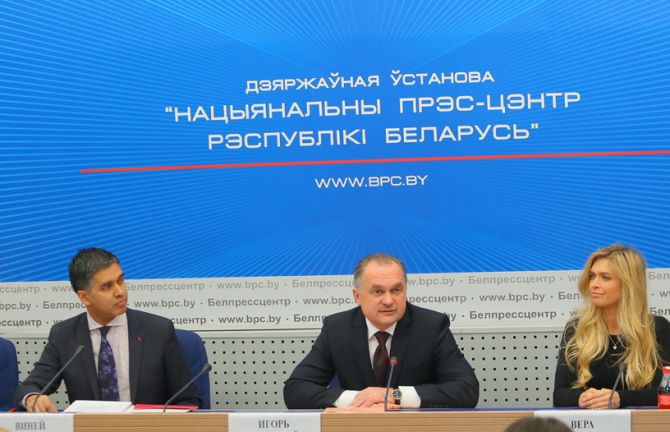
Belarus confirms it applies no restrictions on entry, stay and residence for people living with HIV
09 April 2015 09 April 2015GENEVA, 9 April 2015—The Joint United Nations Programme on HIV/AIDS (UNAIDS) welcomes confirmation by the Government of Belarus that it applies no restrictions on the entry, stay and residence for people living with HIV. In addition, Belarus provides foreign nationals equal access to health care services, including antiretroviral treatment for people living with HIV.
The announcement signals that the country aligns its HIV-related laws and policies regarding HIV-related restrictions on entry, stay and residence with international public health and human rights standards. These include the 2011 UN General Assembly Political Declaration on HIV and AIDS, which specifically encourages Member States to remove any existing HIV-related travel restrictions.
“In Belarus and elsewhere freedom of movement is a right for everyone to enjoy, regardless of HIV status,” said UNAIDS Executive Director Michel Sidibé. “I urge the remaining 37 countries, territories and areas that still apply such restrictions to take immediate steps to end punitive laws and practices, as critical measures to ending the AIDS epidemic.”
With this positive development in Belarus, only three countries in eastern Europe and central Asia still apply HIV-related travel restrictions.
There is no evidence that HIV-related travel restrictions protect public health or prevent HIV transmission. The latest scientific evidence indicates that people living with HIV who are accessing HIV treatment can achieve an undetectable viral load, which significantly reduces the risk of HIV transmission. These restrictions also have no economic justification, as people living with HIV can lead long and productive working lives.
UNAIDS
The Joint United Nations Programme on HIV/AIDS (UNAIDS) leads and inspires the world to achieve its shared vision of zero new HIV infections, zero discrimination and zero AIDS-related deaths. UNAIDS unites the efforts of 11 UN organizations—UNHCR, UNICEF, WFP, UNDP, UNFPA, UNODC, UN Women, ILO, UNESCO, WHO and the World Bank—and works closely with global and national partners towards ending the AIDS epidemic by 2030 as part of the Sustainable Development Goals. Learn more at unaids.org and connect with us on Facebook, Twitter, Instagram and YouTube.
Press Statement
UNAIDS calls for integration of services to end the dual epidemics of tuberculosis and HIV
24 March 2015 24 March 2015GENEVA, 24 March 2015—On World Tuberculosis (TB) Day, UNAIDS is calling for the scale-up of integrated HIV and TB services, particularly in the countries and regions most affected by the dual epidemics. Worldwide, 9 million people developed TB in 2013 and 1.5 million people still die of the disease every year. TB entrenches poverty in many countries, with annual income falling by an average of around 50% among affected families.
TB also remains a leading cause of death among people living with HIV. There were around 360 000 TB-related deaths in 2013 among people affected by HIV and about 1.1 million people living with HIV developed TB.
However, if people living with HIV start antiretroviral therapy they reduce the risk of developing active TB disease. Early diagnosis of HIV and access to treatment reduces the risk of contracting TB by 65%. When treatment of latent TB infection is combined with antiretroviral therapy, the risk of developing active TB disease falls by about 90%.
If people living with HIV do develop active TB disease, immediate access to antiretroviral therapy and TB treatment (isoniazid preventive therapy) can reduce their chance of dying by 50%. Diagnosis of TB in people living with HIV and HIV testing for all people with presumptive and diagnosed TB are therefore crucial.
UNAIDS supports community-based efforts to build innovative and integrated approaches to HIV and TB that ensure that everyone has earlier access to HIV and TB prevention, testing and treatment services. By coordinating and intensifying efforts to support people living with HIV and TB, the epidemics can be reduced and ended in parallel. To do this, community support and mobilization will be crucial to increasing awareness about testing and treatment options and to strengthening health-care capacities.
A new strategy launched by the World Health Organization, Gear Up to End TB, proposes increased collaboration between TB and HIV services, the strengthening of health systems, the engagement of communities, improved social protection and intensified research and innovation. The strategy aims to reduce TB deaths by 95% and new cases of TB by 90% by 2035.
UNAIDS has established ambitious 90–90–90 treatment targets: 90% of people living with HIV know their HIV status, 90% of people who know their HIV-positive status are on treatment and 90% of people on HIV treatment having a suppressed viral load so their immune system remains strong and they are no longer infectious. UNAIDS is also working towards a Fast-Track Target of reducing new HIV infections to less than half a million a year by 2020.
UNAIDS will continue to work closely with countries, donors and partners, including the World Health Organization, the Stop TB Partnership, the Global Fund to Fight AIDS, Tuberculosis and Malaria and the United States President’s Emergency Plan for AIDS Relief, to produce sustainable solutions to fully integrate and deliver critical HIV and TB services.
UNAIDS
The Joint United Nations Programme on HIV/AIDS (UNAIDS) leads and inspires the world to achieve its shared vision of zero new HIV infections, zero discrimination and zero AIDS-related deaths. UNAIDS unites the efforts of 11 UN organizations—UNHCR, UNICEF, WFP, UNDP, UNFPA, UNODC, UN Women, ILO, UNESCO, WHO and the World Bank—and works closely with global and national partners towards ending the AIDS epidemic by 2030 as part of the Sustainable Development Goals. Learn more at unaids.org and connect with us on Facebook, Twitter, Instagram and YouTube.
Press Statement
Empowering women is critical to ending the AIDS epidemic
04 March 2015 04 March 2015Message from UNAIDS Executive Director Michel Sidibé on International Women’s Day
GENEVA, 8 March 2015—As we celebrate International Women’s Day, world leaders and civil society are gathering in New York to take part in the 59th session of the Commission on the Status of Women. There, they will review the progress made since the adoption 20 years ago of the Beijing Declaration and Platform for Action, which set ambitious targets designed to improve the lives of women around the world. The Platform for Action strived to make sure that women and girls could exercise their freedom and realize their rights to live free from violence, go to school, make decisions and have unrestricted access to quality health care, including to sexual and reproductive health-care services.
In the response to HIV, there have been major advances over the past 20 years and new HIV infections and AIDS-related deaths are continuing to decline. However, in reducing new infections this success has not been shared equally.
In 2013, 64% of new adolescent infections globally were among young women. In sub-Saharan Africa, young women aged 15 to 24 are almost twice as likely to become infected with HIV as their male counterparts. Gender inequalities, poverty, harmful cultural practices and unequal power relations exacerbate women’s vulnerability to HIV, but concerted global commitment and action can reverse this.
Twenty years ago, world leaders recognized that gender inequality was a major barrier to women achieving the highest possible attainable standards of health, and that women had unequal opportunities to protect their health and well-being. The Beijing Declaration and Platform for Action recognized fundamentally that the human rights of women include their right to assume control over matters related to their sexuality, including sexual and reproductive health, free of coercion, discrimination and violence. We should all be concerned that 20 years on, the United Nations Secretary-General’s report on the implementation of the Beijing Declaration underscores unacceptably slow progress in many areas, including the persistent denial of sexual and reproductive health and rights.
The core principles of the Beijing Declaration are at the heart of UNAIDS’ commitment to ending the AIDS epidemic. As the world moves towards collectively agreeing global sustainable development goals, we need to reaffirm the commitment that no one is left behind.
UNAIDS has put forward a global Fast-Track Target of reducing HIV infections to less than half a million per year by 2020. Reaching this ambitious target means committing to reducing new infections among women and girls by at least 75% over the next five years. The 90–90–90 treatment targets are also important as AIDS is the leading cause of death globally among women of reproductive age and of adolescent girls in Africa. The 90–90–90 treatment targets are: 90% of people living with HIV knowing their HIV status; 90% of people who know their HIV-positive status receiving treatment; and 90% of people on HIV treatment having a suppressed viral load so their immune system remains strong and they are no longer infectious.
Ensuring that women and girls are empowered to protect themselves from HIV, to make decisions about their own health and to live free of violence, including violence related to their HIV status, will be crucial to ending the AIDS epidemic by 2030.
UNAIDS
The Joint United Nations Programme on HIV/AIDS (UNAIDS) leads and inspires the world to achieve its shared vision of zero new HIV infections, zero discrimination and zero AIDS-related deaths. UNAIDS unites the efforts of 11 UN organizations—UNHCR, UNICEF, WFP, UNDP, UNFPA, UNODC, UN Women, ILO, UNESCO, WHO and the World Bank—and works closely with global and national partners towards ending the AIDS epidemic by 2030 as part of the Sustainable Development Goals. Learn more at unaids.org and connect with us on Facebook, Twitter, Instagram and YouTube.
Press centre
Download the printable version (PDF)
Press Statement
UNAIDS welcomes further evidence of the efficacy of antiretroviral medicines in preventing new HIV infections
24 February 2015 24 February 2015GENEVA, 24 February 2015—UNAIDS strongly welcomes results from scientific trials presented at the 2015 Conference on Retroviruses and Opportunistic Infections (CROI), held in Seattle, United States of America. Two studies demonstrate that the antiretroviral medicines tenofovir and emtricitabine when used as pre-exposure prophylaxis (PrEP) are 86% effective in preventing new HIV infections among men who have sex with men.
A third study showed 96% efficacy in preventing new HIV infections when the HIV-negative person in a serodiscordant couple (where one partner is living with HIV and the other is not) had access to PrEP and the HIV-positive partner had access to antiretroviral therapy.
“These new results are a significant breakthrough in advancing efforts to provide effective HIV prevention options to men who have sex with men and to serodiscordant couples,” said Michel Sidibé, Executive Director of UNAIDS. “The results are timely and important and will advance global efforts to end the AIDS epidemic by 2030.”
The PROUD study in the United Kingdom enrolled more than 500 men who have sex with men at higher risk of HIV infection. Half of the participants were given a daily pill of tenofovir and emtricitabine, the other half were deferred for one year before starting PrEP. According to the results presented at CROI, the people taking a daily pill of tenofovir and emtricitabine were 86% less likely to become infected with HIV than the people in the deferred group.
Results presented by the organizers of the Franco-Canadian IPERGAY study also showed the significant efficacy of PrEP. In the IPERGAY study some 450 men who have sex with men at higher risk of HIV infection were enrolled in a trial in which half were asked to take four tablets of tenofovir and emtricitabine, two before and two after sexual intercourse; the other half were given a placebo. According to the results presented, the people in the group taking the active pill before and after sex were 86% less likely to become infected with HIV.
In both the studies the trials were modified to offer active antiretroviral medicines to all participants after interim analysis of the data showed a significantly positive effect.
The Partners PrEP Demonstration Project enrolled more than 1000 serodiscordant couples in Uganda and Kenya. The HIV-positive partner in each serodiscordant couple was offered antiretroviral therapy and the HIV-negative partner was offered PrEP. A computer simulation model calculated the efficacy of PrEP combined with early treatment to be 96%.
The Partners PrEP Demonstration Project suggests that the use of PrEP as a potential bridge in serodiscordant couples—used while the HIV-positive person commences treatment until such a time that the risk of transmitting the virus is minimized—is highly effective in reducing new HIV infections.
Another study in South Africa, the FACTS 001 trial, showed that despite moderate adherence, with 50–60% of sexual exposures happening in the presence of gel, the use of 1% tenofovir as a vaginal gel was not effective in preventing new HIV infections among young women at higher risk of HIV infection. Despite disappointing results the study does provide valuable information about the urgent need to find new and effective HIV prevention options that work for young women.
UNAIDS warmly congratulates the researchers on completing four major studies of HIV prevention approaches in the populations that are most in need of prevention. For men who have sex with men at higher risk of HIV infection and for serodiscordant couples, PrEP, offered as part of a package of HIV prevention measures, is a highly effective additional HIV prevention option.
To advance efforts to end the AIDS epidemic by 2030, UNAIDS stresses the continued need for a combination approach to HIV prevention that includes biomedical, behaviour change and structural approaches.
UNAIDS
The Joint United Nations Programme on HIV/AIDS (UNAIDS) leads and inspires the world to achieve its shared vision of zero new HIV infections, zero discrimination and zero AIDS-related deaths. UNAIDS unites the efforts of 11 UN organizations—UNHCR, UNICEF, WFP, UNDP, UNFPA, UNODC, UN Women, ILO, UNESCO, WHO and the World Bank—and works closely with global and national partners towards ending the AIDS epidemic by 2030 as part of the Sustainable Development Goals. Learn more at unaids.org and connect with us on Facebook, Twitter, Instagram and YouTube.
Press centre
Download the printable version (PDF)
Press Statement
UNAIDS welcomes appointment of Eric Goosby as the United Nations Secretary-General’s Special Envoy on Tuberculosis
21 January 2015 21 January 2015UNAIDS welcomes the appointment by United Nations Secretary-General Ban Ki-moon of Eric Goosby as his Special Envoy on Tuberculosis. Dr Goosby will work on increasing efforts to end tuberculosis (TB) by keeping TB high on the global political and development agenda.
“I congratulate Dr Goosby and look forward to working with him in his new role as Special Envoy on Tuberculosis,” said Michel Sidibé, Executive Director of UNAIDS. “Dr Goosby’s knowledge and experience working on HIV and TB, together with his dynamic and committed leadership, will further strengthen our collaboration and bring us closer to ending the dual epidemics of HIV and TB.”
TB and HIV are inextricably linked. In 2012, people living with HIV accounted for 1.1 million (13%) of the estimated 8.7 million people who developed TB globally. TB remains a leading cause of death among people living with HIV. In 2013, 360 000 people living with HIV died of TB, a disease which is both preventable and curable.
Dr Goosby has led the United States of America’s global HIV efforts since 2009 when he was appointed as Ambassador-at-Large by President Barack Obama. Under his leadership, the United States President’s Emergency Plan for AIDS Relief (PEPFAR) significantly developed its HIV programmes around the world, supporting millions of people living with and affected by HIV, many of whom were also living with TB.
UNAIDS has worked closely with Dr Goosby. In 2011, UNAIDS partnered with Dr Goosby and PEPFAR to spearhead the Global Plan towards the elimination of new HIV infections among children by 2015 and keeping their mothers alive. Between 2009 and 2013, new HIV infections among children in the 21 Global Plan priority countries fell by 43%.
UNAIDS and Dr Goosby have also worked closely together on increasing country ownership of health responses as well as on efforts to strengthen health systems. A strong partnership with countries as they lead their response will continue to galvanize the global HIV and TB response.
UNAIDS
The Joint United Nations Programme on HIV/AIDS (UNAIDS) leads and inspires the world to achieve its shared vision of zero new HIV infections, zero discrimination and zero AIDS-related deaths. UNAIDS unites the efforts of 11 UN organizations—UNHCR, UNICEF, WFP, UNDP, UNFPA, UNODC, UN Women, ILO, UNESCO, WHO and the World Bank—and works closely with global and national partners towards ending the AIDS epidemic by 2030 as part of the Sustainable Development Goals. Learn more at unaids.org and connect with us on Facebook, Twitter, Instagram and YouTube.
Press centre
Download the printable version (PDF)
Press Statement
UNAIDS supports community and government efforts in Cambodia
19 December 2014 19 December 2014An epidemiological investigation into the recently diagnosed HIV cases is under way.
GENEVA, 19 December 2014—UNAIDS expresses its support for the people reported to have been affected by the recent HIV diagnoses in Battambang Province, Cambodia. UNAIDS is joining partners in supporting Cambodia’s Ministry of Health as it conducts a full epidemiological investigation and takes all necessary measures to prevent further HIV infections.
UNAIDS is working with the authorities to ensure that anyone who may have been affected has access to essential HIV treatment, care and support services. UNAIDS is also working with the ministry to ensure that the rights and privacy of all people are upheld. It is essential that people living with HIV live with dignity and without fear of stigma and discrimination.
In Cambodia, voluntary and confidential HIV testing and counselling are widely available free of charge and people living with HIV have access to free antiretroviral therapy across the country.
From having one of the most serious HIV epidemics in Asia in the mid-1990s, Cambodia has continued to make progress. New HIV infections have dropped by 67%, from 3900 in 2005 to 1300 in 2013. More than two thirds of the 75 000 people living with HIV are accessing antiretroviral therapy, which is the highest percentage of treatment access in the region.
UNAIDS
The Joint United Nations Programme on HIV/AIDS (UNAIDS) leads and inspires the world to achieve its shared vision of zero new HIV infections, zero discrimination and zero AIDS-related deaths. UNAIDS unites the efforts of 11 UN organizations—UNHCR, UNICEF, WFP, UNDP, UNFPA, UNODC, UN Women, ILO, UNESCO, WHO and the World Bank—and works closely with global and national partners to maximize results for the AIDS response. Learn more at unaids.org and connect with us on Facebook and Twitter.