


Press Statement
UNAIDS again urges Russia to repeal 'LGBTQ propaganda' law
25 November 2022 25 November 2022Responding to the decision of the Russian Duma to pass a further extension of the so-called “LGBTQ propaganda law”, UNAIDS Executive Director Winnie Byanyima reiterated her deep concern about the damaging consequences of such laws for public health.
“In addition to violating the rights of people to autonomy, dignity and equality, and harming the security and general wellbeing of LGBTQ individuals, this decision will seriously hurt public health. It will undermine Russia’s efforts to end AIDS by 2030. Punitive and restrictive laws increase the risk of acquiring HIV and decrease access to services, reduce the ability of service providers, including peer networks, to provide critical sexual and reproductive health information and services, and increase stigma related to sexual orientation. Such laws make it harder for people to protect their health and that of their communities. We urge the repeal of this harmful law.”
UNAIDS
The Joint United Nations Programme on HIV/AIDS (UNAIDS) leads and inspires the world to achieve its shared vision of zero new HIV infections, zero discrimination and zero AIDS-related deaths. UNAIDS unites the efforts of 11 UN organizations—UNHCR, UNICEF, WFP, UNDP, UNFPA, UNODC, UN Women, ILO, UNESCO, WHO and the World Bank—and works closely with global and national partners towards ending the AIDS epidemic by 2030 as part of the Sustainable Development Goals. Learn more at unaids.org and connect with us on Facebook, Twitter, Instagram and YouTube.
Press Statement
Board members warned that the severe shortfall in UNAIDS operating budget risks prolonging the AIDS pandemic
03 November 2022 03 November 2022UNAIDS Executive Director calls for immediate investment of $35 million in end-of-year funding and a commitment to increase the operating budget to $210 million for 2023
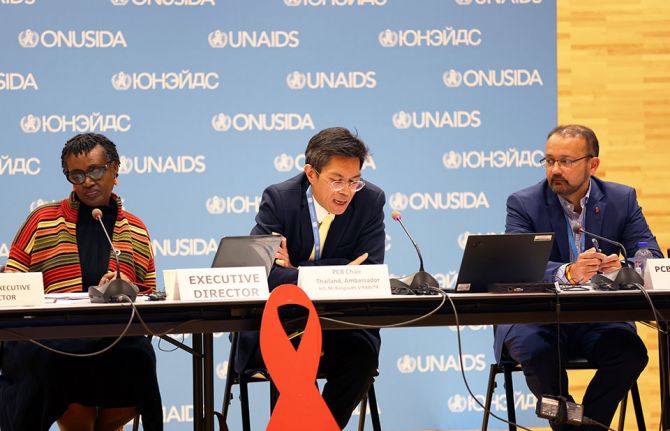
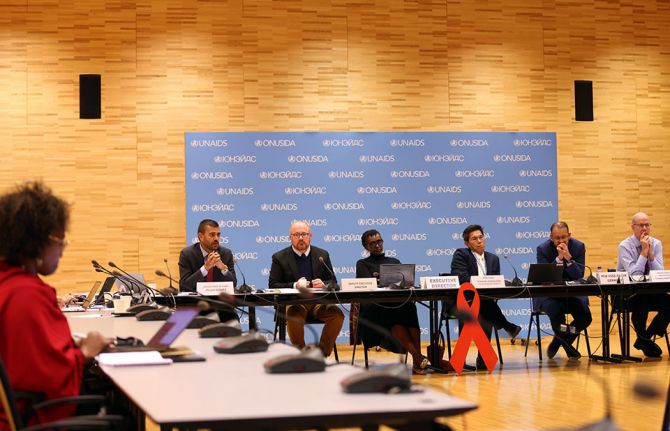
GENEVA, 3 November 2022—Board members of the United Nations Joint Programme on HIV/AIDS (UNAIDS) have met to discuss how to address a $35 million funding gap in the organization’s minimum operating budget of $187 million which is undermining efforts to end the AIDS pandemic as a global health threat by 2030. The budget required to fully meet the organization’s operational needs is set at $210 million.
In his opening remarks at a special meeting held in Geneva to discuss solutions to the funding gap, the Ambassador of Thailand’s Permanent Mission to the United Nations Office in Geneva, Rongvudhi Virabutr, the current chair of UNAIDS Programme Coordinating Board, said that the Joint Programme continued to have an important role in data collection and analysis to develop evidence and mobilize political leadership.
“As the largest funder of AIDS responses said earlier this year, the Joint Programme is “the North Star", without which we are all blind. A fully funded and effectively functioning Joint Programme is key to our collective success. We have no time to waste.”
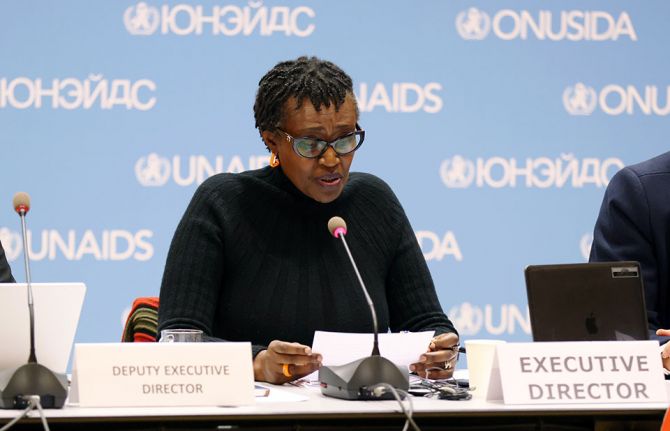
Calling for an immediate release of $35 million in end-of-year funding, UNAIDS Executive Director, Winnie Byanyima said that the organization’s financial position had deteriorated even further since the last meeting of the UNAIDS PCB in June. She said that the war in Ukraine and movements in currency exchange markets had aggravated the situation.
“The size of the budget shortfall means that it cannot be addressed by stretching the budget or finding any more efficiency gains. It is forcing stark choices—a dramatic reduction in UNAIDS country presence or further reductions to our co-sponsors are some of the scenarios,” said Ms Byanyima. “These choices are devastating, and all scenarios will set the global AIDS response back even further by denying HIV prevention, treatment and care services to millions of vulnerable people.”
UNAIDS has taken significant action to resolve the funding gap by instituting budget discipline, developing a new resource mobilization strategy and working closely with a specially appointed task team made up of members of the PCB to come up with actions and recommendations to strengthen the financial position in 2023.
UNAIDS co-sponsors, communities of people living with and affected by HIV and civil society organizations have all called for UNAIDS to be fully funded so it can achieve is vital mission.
“The world is in danger and now our collective efforts in addressing the Sustainable Development Goal of eliminating HIV/AIDS as a public health threat is at stake,” said Christian Hui of the Prevention Access Campaign, Canada. “We cannot deny the contribution of the Joint Programme. Civil society, especially marginalised and key populations, have hugely benefited from the Joint Programme to advance access to lifesaving antiretrovirals and to combination prevention, to advance human rights and to empower communities to take an active part in HIV programming.”
Recognizing the complementarity of UNAIDS work, other partners in the HIV response, including the Global Fund to Fight AIDS, Tuberculosis and Malaria and the United States President’s Emergency Plan for AIDS Relief (PEPFAR) have also added their voices for UNAIDS to be fully funded.
UNAIDS is present in 70 countries worldwide working in partnership with governments, civil society and communities, collecting the data that shapes the HIV response, advocating for the reversal of harmful laws and policies to create an enabling legal environment, working for an end to HIV-related stigma and discrimination, and challenging the inequalities driving the HIV pandemic among vulnerable and marginalized groups of people. In 2020-2021, UNAIDS supported more than 80% of applications to the Global Fund, guiding $5 billion in HIV funding.
“We would like to call upon all stakeholders for increased support, coordination and collaboration with UNAIDS to address the unfinished agenda of saving lives and leaving no one behind in our efforts to end AIDS,” said Alegnta Gebreyesus Guntie of the Permanent Mission of Ethiopia to the United Nations Office in Geneva.
“UNAIDS support to countries is on developing data-informed, science-based strategies tailored to the epidemic and developing plans to implement them well,” said Ms. Byanyima. “Now, the work of the Joint Programme is needed more than ever to help countries to be ready for the next round of Global Fund applications in a difficult allocation environment.”
The UNAIDS Global AIDS Update In Danger reveals an HIV response faltering in the wake of the COVID-19 pandemic, the global economic crisis, and the war in Ukraine. A total of 650 000 people died of AIDS-related illnesses in 2021 and there were 1.5 million new HIV infections—1 million above the 2020 target of 500 000. New HIV infections increased in 38 countries.
“UNAIDS is working tirelessly to reverse the trend and to get the HIV response back on track.” said Ms. Byanyima.
UNAIDS
The Joint United Nations Programme on HIV/AIDS (UNAIDS) leads and inspires the world to achieve its shared vision of zero new HIV infections, zero discrimination and zero AIDS-related deaths. UNAIDS unites the efforts of 11 UN organizations—UNHCR, UNICEF, WFP, UNDP, UNFPA, UNODC, UN Women, ILO, UNESCO, WHO and the World Bank—and works closely with global and national partners towards ending the AIDS epidemic by 2030 as part of the Sustainable Development Goals. Learn more at unaids.org and connect with us on Facebook, Twitter, Instagram and YouTube.

Press Statement
UNAIDS welcomes signing of an agreement to restore peace in northern Ethiopia
03 November 2022 03 November 2022The peace agreement will facilitate access to health services including access to HIV services amidst reports of stock-outs of antiretroviral treatment and people going without access to the life-saving medicines
GENEVA, 3 November 2022—UNAIDS welcomes the peace agreement to permanently ‘silence the guns’ and end the conflict in northern Ethiopia. The agreement, facilitated by the African Union as part of its principled position of ‘African solutions to African problems’, was signed by the Government of the Federal Democratic Republic of Ethiopia and the Tigray Peoples' Liberation Front on 2 November 2022.
“This is a critical first move that will bring relief and bring hope for the Ethiopian people, particularly the most vulnerable populations including women and children,” said Winnie Byanyima, Executive Director of UNAIDS. “This first step will lay the foundations for sustainable peace in the country and facilitate access to life-saving health services, including HIV services, for people affected by the conflict.”
UNAIDS welcomes the Government of Ethiopia’s commitment to “enhance its collaboration with humanitarian agencies to continue expediting aid to all those in need of assistance, to assist all civilians in need, leaving no one behind, and to continue the efforts to restore public services and rebuild the infrastructures of all communities affected by the conflict”.
In 2021 more than 480 000 people living with HIV were on treatment in Ethiopia. Ethiopia was on the right path for a successful response to HIV and was making positive gains towards ending AIDS by 2030, despite some areas still falling behind. However, the conflict has caused major concerns for maintaining and sustaining HIV prevention and treatment efforts in the areas affected by the conflict, putting continued progress on HIV in jeopardy.
Comprehensive access to health care is critical, including HIV prevention, testing, treatment, and care services. UNAIDS appeals to the Government of the Federal Democratic Republic of Ethiopia, and to international partners supporting the peace process, to include HIV services when implementing the peace plan, especially in “rebuilding infrastructures in affected communities and the economic recovery of the country”.
UNAIDS
The Joint United Nations Programme on HIV/AIDS (UNAIDS) leads and inspires the world to achieve its shared vision of zero new HIV infections, zero discrimination and zero AIDS-related deaths. UNAIDS unites the efforts of 11 UN organizations—UNHCR, UNICEF, WFP, UNDP, UNFPA, UNODC, UN Women, ILO, UNESCO, WHO and the World Bank—and works closely with global and national partners towards ending the AIDS epidemic by 2030 as part of the Sustainable Development Goals. Learn more at unaids.org and connect with us on Facebook, Twitter, Instagram and YouTube.

Press Statement
UNAIDS urges Russia to repeal 'LGBTQ propaganda' law
28 October 2022 28 October 2022GENEVA, 29 October 2022—Responding to the statement by the Russian government that it intends to extend the so-called “LGBTQ propaganda” law, UNAIDS Executive Director Winnie Byanyima has joined with UN High Commissioner for Human Rights in expressing deep concern.
“Extension of this law,” said Ms Byanyima, “is a further violation of the rights of people to autonomy, dignity and equality. Not only will it harm the security and general wellbeing of LGBTQ individuals, it will have a serious negative impact on people’s health outcomes. The evidence is clear that punitive and restrictive laws, including those restricting free speech, increase the risk of acquiring HIV and decrease access to services. Such laws reduce the ability of service providers, including peer networks, to provide critical sexual and reproductive health information and services, and increase stigma related to sexual orientation, making it harder for people to protect their health and that of their communities. This will undermine Russia’s efforts to end AIDS by 2030. Our call to the Parliament and Government of Russia is to withdraw these harmful proposals and indeed to repeal the existing law. Stigmatising approaches damage public health, perpetuate pandemics and hurt everyone. Social solidarity, inclusion and protecting every person’s human rights are key to ending AIDS and ensuring health for all.”
UNAIDS
The Joint United Nations Programme on HIV/AIDS (UNAIDS) leads and inspires the world to achieve its shared vision of zero new HIV infections, zero discrimination and zero AIDS-related deaths. UNAIDS unites the efforts of 11 UN organizations—UNHCR, UNICEF, WFP, UNDP, UNFPA, UNODC, UN Women, ILO, UNESCO, WHO and the World Bank—and works closely with global and national partners towards ending the AIDS epidemic by 2030 as part of the Sustainable Development Goals. Learn more at unaids.org and connect with us on Facebook, Twitter, Instagram and YouTube.
Office of the High Commissioner for Human Rights
Region/country
Press Statement
UNAIDS commends Germany’s pledge of €1.3 billion for the 7th Global Fund Replenishment
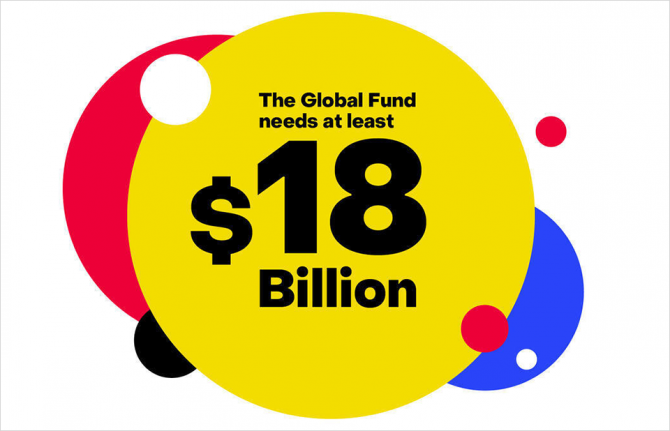
08 September 2022 08 September 2022GENEVA, 8 September 2022—UNAIDS warmly welcomes Germany’s pledge of €1.3 billion for the 7th replenishment of the Global Fund to Fight AIDS, Tuberculosis and Malaria, an increase of 30% on the country’s contribution of €1 billion made in 2019. The announcement is a significant step towards reaching the goal of raising at least $18 billion when President Biden hosts the 7th Global Fund Replenishment Conference in New York later this month.
“This announcement demonstrates Germany’s continued leadership in global health, its commitment to multilateralism and its determination to save millions of lives by ending AIDS, tuberculosis and malaria by 2030,” said UNAIDS Executive Director, Winnie Byanyima. “This is an investment in young people’s health and wellbeing—particularly of young women and girls —and it will strengthen global security by instilling resilience into systems needed to protect all of us from emerging health threats. I look forward to other donors matching Germany’s increase in funding.”
The United States is the Global Fund’s largest donor and has pledged $6 billion for the organization’s 7th replenishment contingent on the $18 billion target being fully met. Last week, Japan announced that it was increasing its contribution to the Global Fund by 30% to more than $1 billion.
The Global Fund Replenishment Conference takes place from 19—21 September at a time when funding for the HIV response remains under intense pressure. In 2021, international resources available for HIV were 6% lower than in 2010. Overseas development assistance for HIV from bilateral donors other than the United States has fallen by 57% over the last decade. The HIV response in low- and middle-income countries is US$8 billion short of the US$29 billion needed by 2025 to get the world on track to end the AIDS pandemic as a global health threat by 2030.
To maximize the effectiveness of their investments to the Global Fund, donors are also being urged to fully fund the Joint United Nations Programme on HIV/AIDS. UNAIDS is present in 70 countries worldwide working in partnership with governments, civil society and communities, collecting the data that shapes the HIV response, advocating for the reversal of harmful laws and policies to create an enabling legal environment, working for an end to HIV-related stigma and discrimination, and challenging the inequalities driving the HIV pandemic among vulnerable and marginalized groups of people.
UNAIDS latest report In Danger, shows that recent crises have knocked the global AIDS response off track, with HIV infections on the rise in 38 countries. It shows also that the end of AIDS by 2030 is possible, if leaders act boldly together.
The announcement of Germany’s increase was made in Berlin by the Federal Minister for Economic Cooperation and Development, Svenja Schulze, at the Get Back On Track international conference organized by civil society organizations, including Action Against AIDS Germany.
UNAIDS
The Joint United Nations Programme on HIV/AIDS (UNAIDS) leads and inspires the world to achieve its shared vision of zero new HIV infections, zero discrimination and zero AIDS-related deaths. UNAIDS unites the efforts of 11 UN organizations—UNHCR, UNICEF, WFP, UNDP, UNFPA, UNODC, UN Women, ILO, UNESCO, WHO and the World Bank—and works closely with global and national partners towards ending the AIDS epidemic by 2030 as part of the Sustainable Development Goals. Learn more at unaids.org and connect with us on Facebook, Twitter, Instagram and YouTube.
Region/country
Press Statement
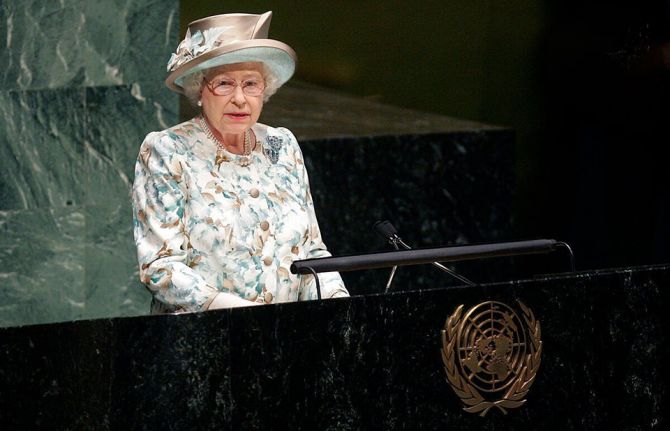
Statement by the UNAIDS Executive Director on the death of Queen Elizabeth II
09 September 2022 09 September 2022UNAIDS Executive Director Winnie Byanyima said:
“The life of Her Majesty Queen Elizabeth II was one of continuous public service.
Queen Elizabeth II was a great friend of the United Nations and spoke very movingly of its work and its values, including in her famous address to the UN General Assembly in 1957.
Queen Elizabeth II was dedicated to ending AIDS and to ending stigma for people living with HIV. Her visit, during the Commonwealth Heads of Government Meeting in Uganda in 2007, to Mildmay hospital at which she met with people living with HIV and their families, helped to challenge stigma and to affirm the dignity and rights of all people living with HIV. It helped also to make strengthening the HIV response, centred on the inclusion and rights of communities affected by HIV, core to the agenda of the Commonwealth.
May her example inspire us all. I express my profound condolences to her family, and to the government and people of the United Kingdom and of the countries of the Commonwealth of Nations.”
UNAIDS
The Joint United Nations Programme on HIV/AIDS (UNAIDS) leads and inspires the world to achieve its shared vision of zero new HIV infections, zero discrimination and zero AIDS-related deaths. UNAIDS unites the efforts of 11 UN organizations—UNHCR, UNICEF, WFP, UNDP, UNFPA, UNODC, UN Women, ILO, UNESCO, WHO and the World Bank—and works closely with global and national partners towards ending the AIDS epidemic by 2030 as part of the Sustainable Development Goals. Learn more at unaids.org and connect with us on Facebook, Twitter, Instagram and YouTube.
Region/country
Press Statement
St Kitts and Nevis becomes the latest country to declare that laws that have criminalized LGBT people are unconstitutional
30 August 2022 30 August 2022GENEVA, 30 August 2022—UNAIDS welcomes a St. Kitts and Nevis High Court ruling that laws criminalizing gay sex are unconstitutional, meaning that they are immediately struck from the legal code. The Court upheld the plaintiffs’ claim that Sections 56 and 57 of the Offences Against the Person Act violated the right to privacy and freedom of expression.
“This landmark ruling is an important step forward in ensuring equality and dignity for the lesbian, gay, bisexual and transgender community in St. Kitts and Nevis and the whole Caribbean,” said Luisa Cabal, UNAIDS Regional Director for Latin America and the Caribbean. “Today, St. Kitts and Nevis joins a growing list of Caribbean nations that have overturned these colonial-era laws that deny people’s human rights and hold back the response to the HIV pandemic. Everyone benefits from decriminalisation.”
Laws that punish consensual same sex relations, in addition to contravening the human rights of LGBT people, are a significant obstacle to improving health outcomes, including in the HIV response. Such laws help to sustain stigma and discrimination against LGBT people and are barriers to LGBT people seeking and receiving healthcare for fear of being punished or detained. Decriminalisation saves and changes lives.
The claim against the government of St. Kitts and Nevis was brought by a citizen, Jamal Jeffers, and the St. Kitts and Nevis Alliance for Equality, with the support of the Eastern Caribbean Alliance for Diversity and Equality. The ruling by the High Court follows a similar High Court decision for Antigua and Barbuda in July. Courts in Belize and Trinidad and Tobago have also repealed sections of their legal codes that criminalized same-sex sexual relations.
There remain seven countries in the Caribbean that criminalize gay sex between consenting adults, all of them former British colonies. They are Barbados, Dominica, Grenada, Guyana, Jamaica, St. Lucia, and St. Vincent and the Grenadines.
“Caribbean civil society is determined, and Caribbean courts are clear. The clock is ticking on these damaging colonial laws,” said Luisa Cabal. “Countries that have still not taken these laws off the books need to do so as a matter of urgency, for the health and human rights of all their people.”
The Court ruling reduces to 68 the number of countries worldwide criminalizing same-sex sexual relations. Earlier this month, Singapore announced that it is repealing legislation that punished gay sex by a prison sentence of up to two years.
UNAIDS
The Joint United Nations Programme on HIV/AIDS (UNAIDS) leads and inspires the world to achieve its shared vision of zero new HIV infections, zero discrimination and zero AIDS-related deaths. UNAIDS unites the efforts of 11 UN organizations—UNHCR, UNICEF, WFP, UNDP, UNFPA, UNODC, UN Women, ILO, UNESCO, WHO and the World Bank—and works closely with global and national partners towards ending the AIDS epidemic by 2030 as part of the Sustainable Development Goals. Learn more at unaids.org and connect with us on Facebook, Twitter, Instagram and YouTube.
Related
Our work
Region/country
Press Statement
UNAIDS welcomes the repeal of the law that criminalized LGBT people in Singapore
22 August 2022 22 August 2022GENEVA, 22 August 2022—UNAIDS applauds Singapore’s announcement that it will repeal section 377a of the country’s penal code which criminalizes consensual sexual relations between men. The law, which dates back to 1938 when Singapore was under British colonial rule, punishes gay consensual sex by a prison sentence of up to two years.
In his annual policy address speech that included plans to repeal the legislation, Singapore’s Prime Minister, Lee Hsien Loong, said sex between consenting men should not be criminalized and that there was no justification to prosecute people for it, nor to make it a crime. He said that gay people were fellow Singaporeans and that they wanted to live their own lives, participate in the community and contribute fully to Singapore.
“The end of the criminalisation of gay men is wonderful news, both for the lesbian, gay, bisexual and transgender community in Singapore, and for the country as a whole,” said Taoufik Bakkali, UNAIDS Regional Director for Asia and the Pacific region. “UNAIDS welcomes this as a significant step towards respecting the human rights of LGBT people in Singapore and creating a more open, tolerant and inclusive society where people can be who they are and love who they want without fear of being imprisoned. This vital change will save lives and benefit everyone, and will inspire other countries to follow. Other countries should join the growing group of nations who have turned away from criminalisation.”
Laws which punish consensual same sex relations, as well as contravening the human rights of LGBT people, are a major barrier to improving health outcomes, including in the HIV response. Punitive legislation embeds stigma and discrimination against LGBT people, deters LGBT people from seeking healthcare for fear of being denounced to the authorities and facing punishment and detention, and prevents countries from putting policies in place that properly respond to differentiated epidemics among their populations.
Singapore joins a growing list of countries that have recently decriminalized same-sex relations, including Antigua and Barbuda, Botswana, Bhutan and Angola. The change in Singapore will at last reduce the number of countries in which consensual same-sex relations are still criminalized to below 70 countries worldwide. Decriminalisation is not the end point in tackling stigma and exclusion, but is a vital step forward.
UNAIDS
The Joint United Nations Programme on HIV/AIDS (UNAIDS) leads and inspires the world to achieve its shared vision of zero new HIV infections, zero discrimination and zero AIDS-related deaths. UNAIDS unites the efforts of 11 UN organizations—UNHCR, UNICEF, WFP, UNDP, UNFPA, UNODC, UN Women, ILO, UNESCO, WHO and the World Bank—and works closely with global and national partners towards ending the AIDS epidemic by 2030 as part of the Sustainable Development Goals. Learn more at unaids.org and connect with us on Facebook, Twitter, Instagram and YouTube.
Our work
Region/country
Press Statement
UNAIDS welcomes the repeal of laws that criminalise and discriminate against LGBT people in Antigua and Barbuda
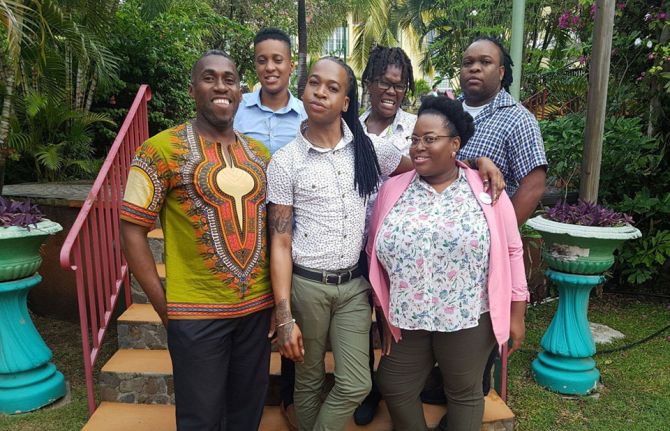
07 July 2022 07 July 2022Geneva, July 7, 2022— UNAIDS applauds the ruling of the Antigua and Barbuda High Court of Justice that effectively decriminalises consensual same-sex sexual activity by holding that sections 12 and 15 of the Caribbean country’s 1995 Sexual Offences Act are unconstitutional. The court held that the criminalisation of consensual sexual acts between same-sex, adult partners infringes the rights to liberty, legal protection, freedom of expression, privacy and protection from discrimination based on sex. This ruling is an important step toward creating a more equitable context for lesbian, gay, bisexual and transgender (LGBT) people in Antigua and Barbuda to exercise their rights to dignity, justice and health.
“This ruling will save lives and will help advance the end of AIDS. It will benefit everyone in the country, and will inspire countries across the world to take the same vital step forward for health and human rights. By creating a more supportive legal environment we can accelerate progress around reducing stigma and discrimination and ensuring everyone can enjoy lives free of fear, shame and injustice,” said UNAIDS Executive Director, Winnie Byanyima. “We congratulate the courageous litigants, civil society organizations and their legal team who have earned this landmark win for equality in Antigua and Barbuda.”
The case was brought by Mr Orden David, President of Meeting Emotional and Social Needs Holistically (MESH), an organization serving the LGBT community and Women against Rape (WAR)—a group that provides counselling and psychosocial support to gender-based violence survivors as well as marginalized and vulnerable groups.
They argued that the criminalization of same-sex sexual relations contributed to hostile healthcare settings where LGBT people often faced verbal abuse and confidentiality breaches. Among other things, this blocked their access to HIV testing, treatment and follow-up care.
“I have seen first-hand the pain, frustration and anger that the LGBT community experiences when trying to access services,” said Ms Alexandrina Wong, WAR’s Executive Director. “This judgment… is saying to us that changes must be made to ensure that human rights are assured, and discrimination is eliminated in time.”
“This is a clear statement that we must stop the stigma and discrimination against our community, and we will continue to support each other and advocate for our rights,” Mr David said.
Criminal laws drive and sustain public health inequalities. They legitimize stigma, discrimination and violence against LGBT people, increasing their risk of contracting HIV while reducing access to life-saving care. Gay men and other men who have sex with men who live in countries that criminalize same-sex relations are more than twice as likely to be living with HIV as those living in countries without such penalties. In countries with extreme criminal penalties, this increases to more than five times as likely
This case was part of an initiative spearheaded by the Eastern Caribbean Alliance for Diversity and Equality (ECADE). In 2020 ECADE also launched legal challenges to similar laws in four other countries: Barbados, Grenada, St. Kitts and Nevis and St. Lucia.
“Our government has sworn to uphold the rights of all, and this action tells us we are on the right road,” said Kenita Placide, ECADE’s Executive Director. She acknowledged the state attorneys who supported the final position.
In the Caribbean, strategic litigation is emerging as an effective strategy for challenging punitive, colonial-era laws. There were successful challenges of laws discriminating against LGBT people in Belize in 2016 as well as Guyana and Trinidad and Tobago in 2018.
“The marginalization and criminalization of entire communities are fuelling the Caribbean HIV epidemic,” said Luisa Cabal, UNAIDS Regional Support Team Director for Latin America and the Caribbean. “This decision shows that change is possible and UNAIDS remains committed to support law reform in the region.” She emphasized that judicial review is a key component of a broader approach that includes national dialogue around social justice and equity, as well as the deepened engagement of policymakers and health professionals.
UNAIDS is contributing to community conversations around these issues, including by supporting public forums and sensitizing journalists reporting on key population communities and law reform in the region.
Consensual same-sex sexual relations remain criminalized in 70 countries globally, including seven in the Caribbean.
UNAIDS
The Joint United Nations Programme on HIV/AIDS (UNAIDS) leads and inspires the world to achieve its shared vision of zero new HIV infections, zero discrimination and zero AIDS-related deaths. UNAIDS unites the efforts of 11 UN organizations—UNHCR, UNICEF, WFP, UNDP, UNFPA, UNODC, UN Women, ILO, UNESCO, WHO and the World Bank—and works closely with global and national partners towards ending the AIDS epidemic by 2030 as part of the Sustainable Development Goals. Learn more at unaids.org and connect with us on Facebook, Twitter, Instagram and YouTube.
Region/country



Press Statement
UNAIDS applauds Argentina for the approval of its new human rights-based HIV law
04 July 2022 04 July 20224 July 2022—UNAIDS congratulates the Argentinian Congress on the approval of a new law on a comprehensive response to HIV, viral hepatitis, tuberculosis and sexually transmitted infections (STIs). The bill, which has had input from a number of civil society organizations, replaces 30-year-old legislation and changes the country’s health approach from a biomedical approach to an approach more focused on gender and human rights. The new law calls for an end to stigma and discrimination against people living with HIV or STIs and aims to stop criminalization of HIV exposure or transmission.
By prohibiting mandatory testing for HIV and other STIs as part of pre-employment exams, the new law also seeks to protect against discrimination in all areas (with emphasis on the workplace) and ensures the privacy of the diagnosis.
“We join the civil society and community movements in this important celebration. The new law is evidence-based and written from the perspective of human rights,” celebrates Alberto Stella, UNAIDS Country Director for Argentina, Chile, Paraguay and Uruguay. “The HIV response in the country now counts on a broad framework of social protection, very much in line with the Global AIDS Strategy (2021-2026), which focuses on ending inequalities to end the AIDS epidemic.”
Besides eradicating discriminatory practices, the new legislation also includes the possibility of early retirement at 50 years old for people who have been living with the virus for ten years and who have paid at least 20 years of pension contributions. It also allows access to a non-contributory pension for life in cases of social vulnerability.
The new bill pays a historical debt for dozens of activists who occupied the balconies of Congress in recent voting sessions and the thousands of people living with HIV they represent. “We are one step closer to eliminating barriers to the implementation of self-testing and promoting prevention strategies such as Pre-Exposure Prophylaxis (PrEP)”, celebrated Fundación Huesped, an Argentinian organization with a regional reach that has advocated for the right to health since 1989.
The new law also recognizes specific rights of women, guarantees the right to health of their children and ensures compliance with the rights recognized in the law for the Integral Protection of Women.
“This is the result of the articulated work conducted by civil society who not only led its elaboration but who also did excellent and hard work on advocacy,” says Stella. “Along with the National HIV, TB, Hepatitis and STI department of the Ministry of Health, UNAIDS was able to contribute with advocacy efforts and the facilitation of dialogues, providing evidence and the informing on international guidelines.”
The new bill also proposes the national production of medication and supplies.
The latest estimates from the UNAIDS 2021 Global AIDS Update report show that 140 000 people are living with HIV in Argentina and 65% of whom are on antiretroviral treatment. Every year 5600 people are newly infected with HIV, and 1400 people die from AIDS-related illnesses.
UNAIDS
The Joint United Nations Programme on HIV/AIDS (UNAIDS) leads and inspires the world to achieve its shared vision of zero new HIV infections, zero discrimination and zero AIDS-related deaths. UNAIDS unites the efforts of 11 UN organizations—UNHCR, UNICEF, WFP, UNDP, UNFPA, UNODC, UN Women, ILO, UNESCO, WHO and the World Bank—and works closely with global and national partners towards ending the AIDS epidemic by 2030 as part of the Sustainable Development Goals. Learn more at unaids.org and connect with us on Facebook, Twitter, Instagram and YouTube.