Feature Story
Cambodia reaches 95–95–95 targets, showing the power of community leadership
18 июня 2026
18 июня 2026 18 июня 2026More than 20 years ago, when Seum Sophal learned he was living with HIV, he saw little reason for hope. Stigma was widespread and treatment options were limited.
“I was ready to die,” he recalled. “I was worried about what would happen to my young son after I was gone.”
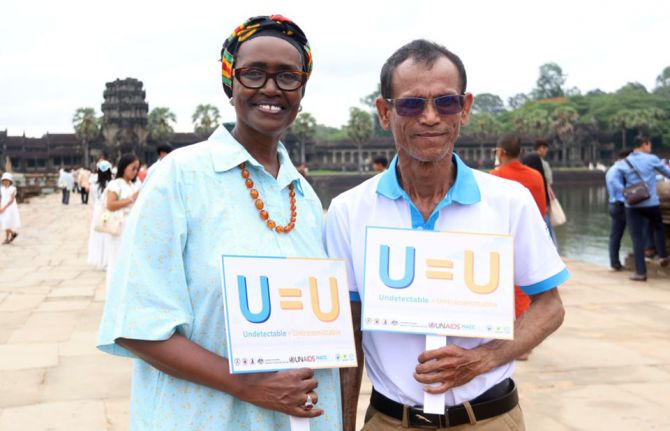
Today, Mr Sophal, an officer with the Forum of Networks of People Living with HIV and Key Populations (FoNPAMs) at the Health Action Coordinating Committee (HACC), speaks with pride and emotion about Cambodia’s achievement of the 95–95–95 HIV treatment targets.
For him, the achievement is not only a national triumph, but also recognition of the years of work and commitment invested by communities, including his own.
It also reflects on the success of a partnership in which each actor took responsibility and delivered: the government expanded access to HIV testing and treatment, communities reached the people most affected by HIV and helped improve services, and international partners provided technical and financial support.
Together, these efforts have brought Cambodia to achieve the 95–95–95 targets: 95% of people living with HIV know their status, 95% of those diagnosed are receiving antiretroviral treatment and 95% of people on treatment have achieved viral suppression.
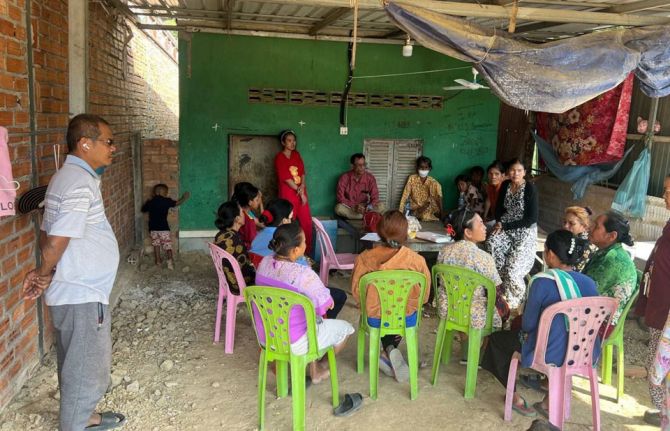
Mr Sophal’s own contribution began shortly after his diagnosis, when he started volunteering with Salvation Centre Cambodia, a local organization providing home-based support to people living with HIV.
“I went from home to home, encouraging people to get tested, start treatment and remain in care,” he said.
At a time when stigma and fear prevented many people from seeking health services, community workers provided information, accompanied people to clinics and helped families cope with the practical and emotional effects of HIV. Mr Sophal believes that timely community support helped many people survive.
He has also seen that support continues across generations. Children assisted by the organization more than 20 years ago are now adults, and some have become volunteers themselves.
“It is community support passed from one generation to the next,” he said.
The contribution of communities to the 95-95-95 targets has extended beyond helping individuals access services. Community representatives have brought people’s experiences to health workers and decision-makers, challenged discriminatory treatment and advocated for practical changes in the way services are delivered.
Community feedback has contributed to longer clinic opening hours, peer counselling, multi-month dispensing of antiretroviral medicines and more accessible testing options. These changes have made it easier for people to start treatment and remain in care while managing work and family responsibilities.
Mr Sophal is also proud of community advocacy to strengthen social protection for people living with HIV.
Although HIV treatment in Cambodia is free, poverty, unstable employment, food insecurity and the cost of travelling to health facilities is still challenging.
Community organisations have advocated for eligible people living with HIV to be connected to Cambodia’s IDPoor system- which identifies and registers households living in poverty. Those who qualify can receive Equity Cards, providing access to free public healthcare through the Health Equity Fund, as well as cash transfers and other forms of social assistance.
However, Cambodia’s achievement does not mean that the HIV epidemic is over.
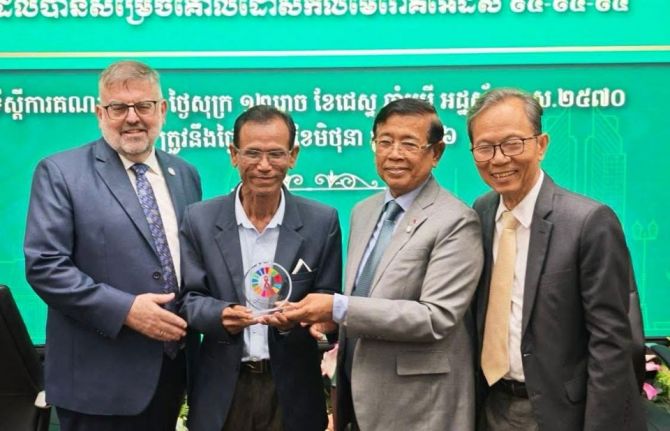
“This achievement is a source of national pride, but it also comes with responsibility,” said Ieng Mouly, Senior Minister and Chair of the National AIDS Authority. “Our task now is to protect and sustain this progress through stronger country ownership and increased domestic investment in the national HIV response.”
Cambodia’s 95-95-95 announcement comes at a critical time for the global HIV response. The UNAIDS Global AIDS Brief, released on 12 June 2026, warns that cuts in external financing, underinvestment in HIV prevention and community-led services, and growing restrictions on human rights and civic space could reverse hard-won gains.
Community-led organizations are under particular financial pressure.
“As external resources become more uncertain, protecting these gains will require sustained political leadership and investment in the fundamental elements of a multisectoral and collaborative HIV response,” said Patricia Ongpin, UNAIDS Country Director for Cambodia, Lao PDR, Malaysia and Viet Nam.
Mr Sophal welcomes the Cambodian Government’s growing investment in the HIV response, but says a sustainable mechanism is also needed to fund community organizations from domestic resources. Social contracting - through which the government finances community groups to deliver agreed services - could help protect the outreach, trust and local knowledge that contributed to Cambodia’s achievement.
“As the first country in Asia and the Pacific to achieve the 95-95-95 targets, Cambodia sends a clear message to the region and the world: ending AIDS is possible when governments work closely with communities and keep people at the center of the response” said Eamonn Murphy, UNAIDS Regional Director for Asia and the Pacific.
For Mr Sophal, to end AIDS, the response needs to focus on the people who remain most affected by HIV.
“If I were addressing heads of state at the United Nations General Assembly, I would ask them to remain focused on key populations,” he said. “They are among the people most affected by HIV and must not be left behind. If we protect their health and rights, we can end AIDS. My second message would be: continue investing in communities.”