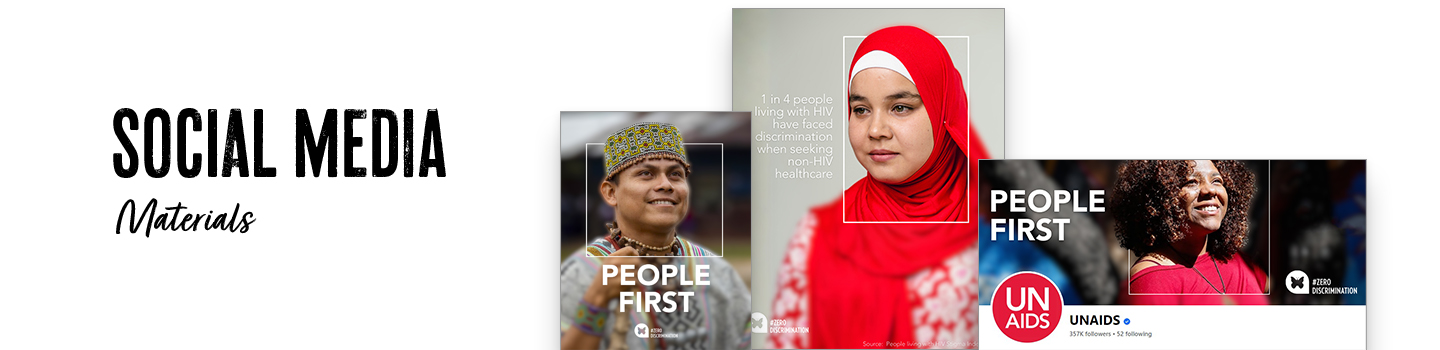
On Zero Discrimination Day, 1 March, we celebrate the right of everyone to live a full and productive life with dignity. This year, UNAIDS shines a light on the persistent discrimination faced by people living with and at risk of HIV, discrimination that undermines access to health services, violates rights, and holds back progress toward ending AIDS by 2030. This year's Zero Discrimination Day highlights the need to put people first.
The evidence is clear: HIV‑related stigma and discrimination put lives at risk. Based on data from more than 30,000 people living with HIV across 25 countries, stigma and discrimination remain pervasive barriers to health access, dignity, and human rights.
According to the People Living with HIV Stigma Index 2.0 Global Report, nearly one in four report being stigmatized by others, including in healthcare settings, where discrimination undermines trust and access to life‑saving services. In addition, 85% of people living with HIV feel internalized stigma, and many change their behaviour— hiding their HIV status, or interrupting HIV treatment—because of fear of rejection and judgment. These findings confirm that HIV‑related stigma is not a side issue; it is a barrier to ending AIDS by 2030.
NUMBERS SPEAK LOUDER THAN WORDS
- 1 in 4 have faced discrimination when seeking non-HIV health care: Healthcare facilities—places meant to heal—become sources of fear and rejection.
- 24% have experienced community discrimination in the past year: Verbal harassment, and exclusion from family and community activities remain commonplace.
- 38% feel ashamed of being HIV-positive: Internal stigma keeps people isolated and prevents them from seeking the support they need.
-
85% experience some form of internalized stigma: From hiding their status to feeling worthless, the psychological burden is immense.
For women and girls living with and affected by HIV, gender inequalities intersect with HIV-related stigma and discrimination. Reproductive coercion, mistreatment and abuse is a persistent and widespread manifestation of stigma and discrimination that occurs along the continuum of healthcare services. A review of data collected from 26,502 women living with HIV from 23 countries, which recently completed the Stigma Index 2.0, revealed that in every single country, women living with HIV have reported experiencing some form of coercion within the last 12 months. Intersectional stigma and discrimination also impacts their experience of other services, as well as community and domestic life and their access to justice and redress. Additionally, HIV-related stigma and discrimination combine with gender norms and inequalities to place a heavy burden of unrecognized and unpaid care on women and girls.
Discrimination continues to:
- Prevent people from testing for HIV
- Stop people from seeking HIV prevention services including medicine to prevent HIV
- Stop people from accessing treatment
- Drive people away from health services
- Deny people their fundamental human rights
- Fuel the AIDS epidemic
As the world works toward ending AIDS as a public health threat by 2030, we cannot succeed if discrimination stands in the way.
Zero Discrimination Day highlights how we can all become informed and promote inclusion, compassion, peace and, above all, a movement for change.
WHAT MUST CHANGE
1. Remove discriminatory laws
Countries must examine their policies and laws and eliminate those that discriminate, criminalize and harm people living with and risk of HIV—including laws that criminalize sex work, drug use, same-sex relationships, and HIV non-disclosure—that stand in the way of accessing health services.
2. Protect rights to access health care
- Ensure confidentiality
- Ensure training for health workers and implement zero-tolerance policies for discrimination
- End mandatory HIV testing
- Provide quality, compassionate care for all
3. Address stigma in communities
- Challenge myths and misinformation about HIV
- Promote U=U (Undetectable = Untransmittable)
- Support community education and awareness
- Build empathy and understanding
4. Support community-led responses
- Fund organizations led by people living with HIV
- Ensure meaningful participation in policy decisions
- Strengthen peer support networks
- Protect the rights of communities to lead HIV responses
On 1 March 2026, UNAIDS calls on governments, health care providers, employers, communities and individuals to listen to the voices of people living with and affected by HIV and act on the evidence, so no one feels “less than” because of their HIV status; health systems become spaces where people can seek testing, treatment, and care without discrimination.
On Zero Discrimination Day 2026, UNAIDS invites everyone to:
Sustain the gains: Protect and scale what works: by safeguarding funding for HIV, human rights; institutionalizing stigma-free practices in health systems, education, and workplaces; reforming and repealing discriminatory laws and policies; and defending hard-won community leadership, legal protections, and U=U progress.
Stand with communities: Support, fund and partner with community‑led organizations that lead advocacy efforts and provide trusted, stigma‑free services.
Share the facts: Use social media, workplaces, and schools to spread messages that HIV is a health condition, not a moral failing, and that people living with HIV can live long, healthy, dignified lives.