Feature Story

Cambodia reaches 95–95–95 targets, showing the power of community leadership

18 June 2026

More than 20 years ago, when Seum Sophal learned he was living with HIV, he saw little reason for hope. Stigma was widespread and treatment options were limited. 

“I was ready to die,” he recalled. “I was worried about what would happen to my young son after I was gone.” 

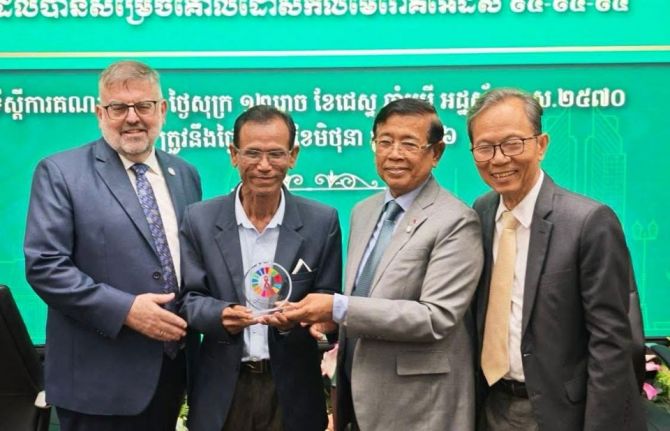
Today, Mr Sophal, an officer with the Forum of Networks of People Living with HIV and Key Populations (FoNPAMs) at the Health Action Coordinating Committee (HACC), speaks with pride and emotion about Cambodia’s achievement of the 95–95–95 HIV treatment targets. 

For him, the achievement is not only a national triumph, but also recognition of the years of work and commitment invested by communities, including his own.  

It also reflects on the success of a partnership in which each actor took responsibility and delivered: the government expanded access to HIV testing and treatment, communities reached the people most affected by HIV and helped improve services, and international partners provided technical and financial support. 

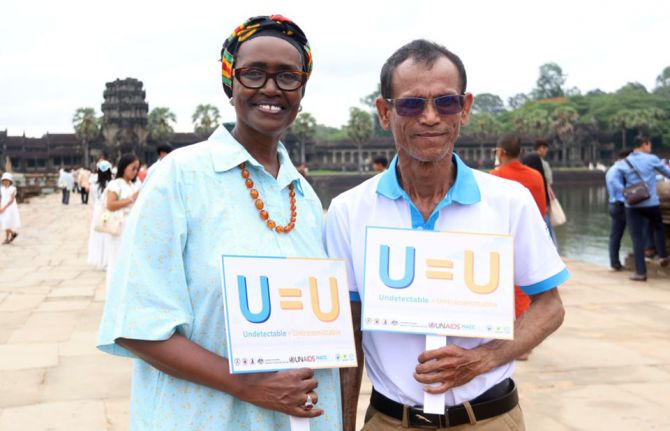
Together, these efforts have brought Cambodia to achieve the 95–95–95 targets: 95% of people living with HIV know their status, 95% of those diagnosed are receiving antiretroviral treatment and 95% of people on treatment have achieved viral suppression. 

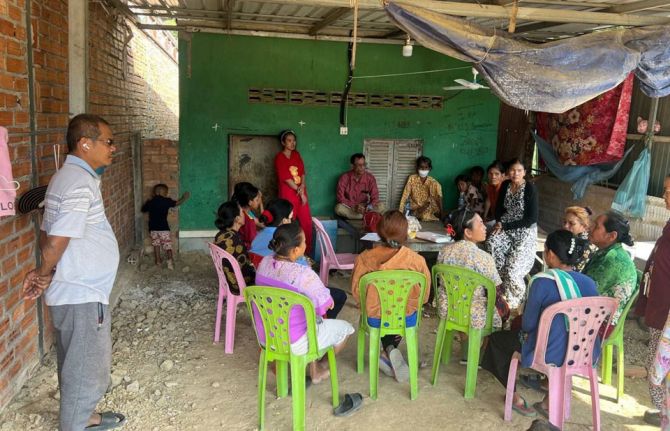
Mr Sophal’s own contribution began shortly after his diagnosis, when he started volunteering with Salvation Centre Cambodia, a local organization providing home-based support to people living with HIV. 

“I went from home to home, encouraging people to get tested, start treatment and remain in care,” he said. 

At a time when stigma and fear prevented many people from seeking health services, community workers provided information, accompanied people to clinics and helped families cope with the practical and emotional effects of HIV. Mr Sophal believes that timely community support helped many people survive. 

He has also seen that support continues across generations. Children assisted by the organization more than 20 years ago are now adults, and some have become volunteers themselves. 

“It is community support passed from one generation to the next,” he said. 

The contribution of communities to the 95-95-95 targets has extended beyond helping individuals access services. Community representatives have brought people’s experiences to health workers and decision-makers, challenged discriminatory treatment and advocated for practical changes in the way services are delivered. 

Community feedback has contributed to longer clinic opening hours, peer counselling, multi-month dispensing of antiretroviral medicines and more accessible testing options. These changes have made it easier for people to start treatment and remain in care while managing work and family responsibilities. 

Mr Sophal is also proud of community advocacy to strengthen social protection for people living with HIV. 

Although HIV treatment in Cambodia is free, poverty, unstable employment, food insecurity and the cost of travelling to health facilities is still challenging.  

Community organisations have advocated for eligible people living with HIV to be connected to Cambodia’s IDPoor system- which identifies and registers households living in poverty. Those who qualify can receive Equity Cards, providing access to free public healthcare through the Health Equity Fund, as well as cash transfers and other forms of social assistance. 

However, Cambodia’s achievement does not mean that the HIV epidemic is over.  

“This achievement is a source of national pride, but it also comes with responsibility,” said Ieng Mouly, Senior Minister and Chair of the National AIDS Authority. “Our task now is to protect and sustain this progress through stronger country ownership and increased domestic investment in the national HIV response.” 

Cambodia’s 95-95-95 announcement comes at a critical time for the global HIV response. The UNAIDS Global AIDS Brief, released on 12 June 2026, warns that cuts in external financing, underinvestment in HIV prevention and community-led services, and growing restrictions on human rights and civic space could reverse hard-won gains. 

Community-led organizations are under particular financial pressure.  

“As external resources become more uncertain, protecting these gains will require sustained political leadership and investment in the fundamental elements of a multisectoral and collaborative HIV response,” said Patricia Ongpin, UNAIDS Country Director for Cambodia, Lao PDR, Malaysia and Viet Nam.  

Mr Sophal welcomes the Cambodian Government’s growing investment in the HIV response, but says a sustainable mechanism is also needed to fund community organizations from domestic resources. Social contracting - through which the government finances community groups to deliver agreed services - could help protect the outreach, trust and local knowledge that contributed to Cambodia’s achievement.  

“As the first country in Asia and the Pacific to achieve the 95-95-95 targets, Cambodia sends a clear message to the region and the world: ending AIDS is possible when governments work closely with communities and keep people at the center of the response” said Eamonn Murphy, UNAIDS Regional Director for Asia and the Pacific.  

For Mr Sophal, to end AIDS, the response needs to focus on the people who remain most affected by HIV. 

“If I were addressing heads of state at the United Nations General Assembly, I would ask them to remain focused on key populations,” he said. “They are among the people most affected by HIV and must not be left behind. If we protect their health and rights, we can end AIDS. My second message would be: continue investing in communities.” 

Region/country

Update

90–90–90: good progress, but the world is off-track for hitting the 2020 targets

21 September 2020

In 2016, the United Nations General Assembly’s Political Declaration on Ending AIDS committed countries to the 90–90–90 targets, which aim to bring HIV testing and treatment to the vast majority of people living with HIV by the end of 2020 and to reduce the amount of HIV in their bodies to undetectable levels, so they keep healthy and to prevent the further spread of the virus.

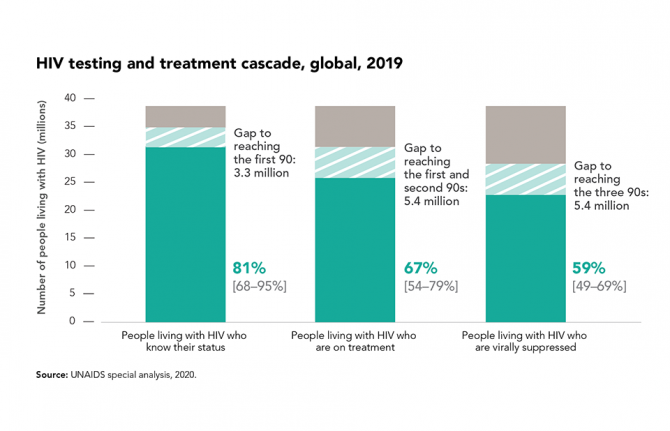
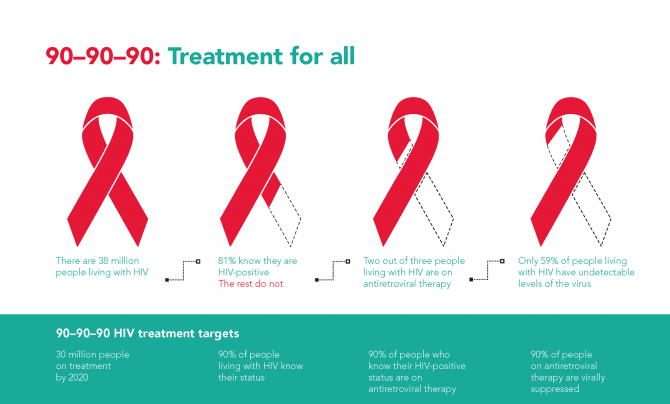
Globally, there have been remarkable gains across the HIV testing and treatment cascade. At the end of 2019, 81% of people living with HIV knew their HIV status, and more than two thirds (67%) were on antiretroviral therapy, equal to an estimated 25.4 million of the 38.0 million people living with HIV—a number that has more than tripled since 2010.

Gains in treatment effectiveness, as well as increases in the number of people who know their status and are on treatment, are reflected in the fact that viral load suppression levels among all people living with HIV increased by 18 percentage points between 2015 and 2019. Almost 59% of people living with HIV globally had suppressed viral loads in 2019. However, achieving the 90–90–90 targets results in a minimum of 73% of people living with HIV having suppressed viral loads, so the global target for the end of 2020 is unlikely to be met.

The COVID-19 pandemic also could have an impact on viral load. Early modelling showed that a severe disruption in HIV treatment could result in additional AIDS-related deaths in sub-Saharan Africa. Some countries have reported reductions in medicine collections of up to 20% in some areas and there have been multiple reports of people living with HIV not having enough antiretroviral medicine for a lockdown of more than 60 days, as well as reports of people having abandoned their HIV treatment due to a lack of food. However, monthly data from January to June 2020 reported by countries to UNAIDS have not shown substantial declines in the numbers of people currently on treatment over the six-month period.

Documents

Translating community research into global policy reform for national action: a checklist for community engagement to implement the WHO consolidated guideline on the sexual and reproductive health and rights of women living with HIV

20 December 2018

This Checklist supports the in-country implementation of the 2017 WHO and UNAIDS Consolidated guideline on the SRHR of women living with HIV. To guarantee the guideline’s effective implementation and fulfil its ground-breaking women-centred spirit and principles, its uptake must include the meaningful engagement of women living with HIV in all their diversity. This guideline was developed with engagement from communities of women living with HIV throughout its development, publication and dissemination.  In line with this collaborative process, it discusses implementation issues that laws, policies, health, social and other relevant initiatives and service delivery must address to achieve gender equality and support human rights. The overall objective of this Checklist is to support women living with HIV and community activists who care about the rights of women living with HIV to guarantee effective implementation of the WHO and UNAIDS Consolidated guideline on the SRHR of women living with HIV.

See also Web annex to the Consolidated guideline on the SRHR of women living with HIV - community-led strategies for implementation.

Press Release

Victoria Beckham visits UNAIDS in Geneva to lend her support to the AIDS response ahead of World AIDS Day

UNAIDS International Goodwill Ambassador urges people to test for HIV and to seek treatment if necessary  

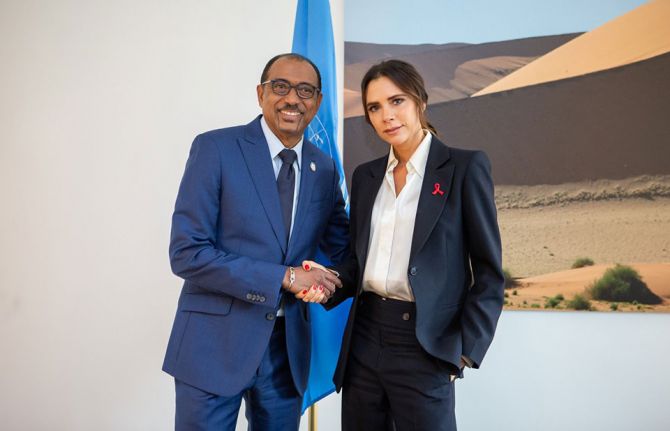
GENEVA, 23 November 2018—A little over one week before World AIDS Day, UNAIDS International Goodwill Ambassador Victoria Beckham has visited the organization’s Geneva, Switzerland, headquarters to support calls for people to know their HIV status and to seek treatment for HIV if necessary.

“I am really happy to be in Geneva to support UNAIDS in the run-up to World AIDS Day,” said Ms Beckham during her visit. “We need to make sure that people feel supported to take an HIV test by ending the stigma and discrimination still too often associated with the virus. Today, we have the medicines to keep people healthy and to stop the virus being transmitted. AIDS isn’t over yet, but it can be.”

UNAIDS estimates that there were around 36.9 million people living with HIV worldwide in 2017, with around 21.7 million people accessing life-saving medicines that keep people alive and well and stop the transmission of the virus. However, UNAIDS also estimates that around one in four people worldwide continue to be unaware that they are living with HIV.

During the visit, the UNAIDS Executive Director, Michel Sidibé, met with Ms Beckham to thank her for her support and to discuss the latest developments in the AIDS response.

“We have made a lot of progress in expanding access to treatment, but the number of people who don’t know their HIV status is still far too high,” said Mr Sidibé. “We have to make sure that people have access to testing services and are provided with treatment immediately if they need it. We also have to make sure that people have access to the full range of HIV prevention options to bring down the number of new HIV infections.”

Thanks to antiretroviral therapy, AIDS-related deaths have been reduced by more than 51% since the peak in 2004. In 2017, 940 000 people died from an AIDS-related illness worldwide, compared to 1.9 million in 2004. In 2017, however, there were 1.8 million new HIV infections.

In many regions of the world, women continue to be the worst affected by the epidemic and every week 6600 young women aged 15–24 years become infected with HIV. In sub-Saharan Africa, three in four new infections among adolescents aged 15–19 years are among girls, and young women aged 15–24 years are twice as likely to be living with HIV than men.

In other regions, the epidemic is concentrated among key populations, such as gay men and other men who have sex with men, sex workers, transgender people, people who inject drugs, prisoners and other incarcerated people and migrants.

It is estimated that around 35.4 million people worldwide have died from an AID-related illness since the start of the epidemic.

Contact

UNAIDS Geneva
Sophie Barton-Knott
tel. +41 22 791 1697
bartonknotts@unaids.org

Press centre

Download the printable version (PDF)

Documents

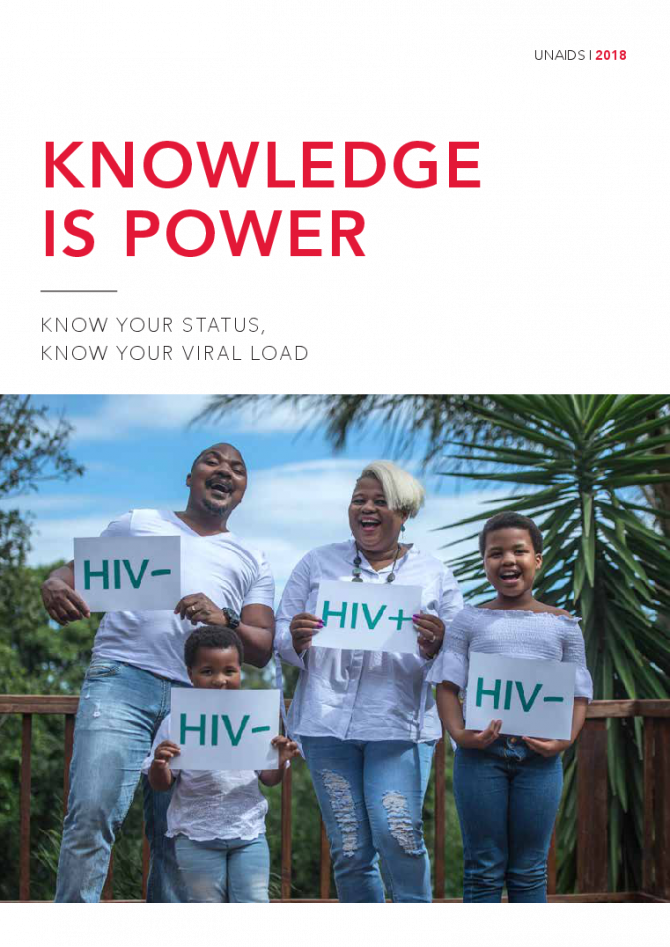
Knowledge is power — Know your status, know your viral load

22 November 2018

For people who may have been exposed to HIV, knowledge is critical to making informed decisions about their future. An HIV test is a serious event with potentially serious outcomes. But no matter the result, the test provides vital information. A negative result is an opportunity to take deliberate steps to prevent future acquisition through prevention methods tailored to that individual’s risks. A positive test result—and a confirmatory diagnosis—is never welcome news, but for people living with HIV, it is a necessary first step towards a long and healthy life.

Feature Story

Russian Federation commits to reach 75% antiretroviral therapy coverage in 2019

12 September 2018

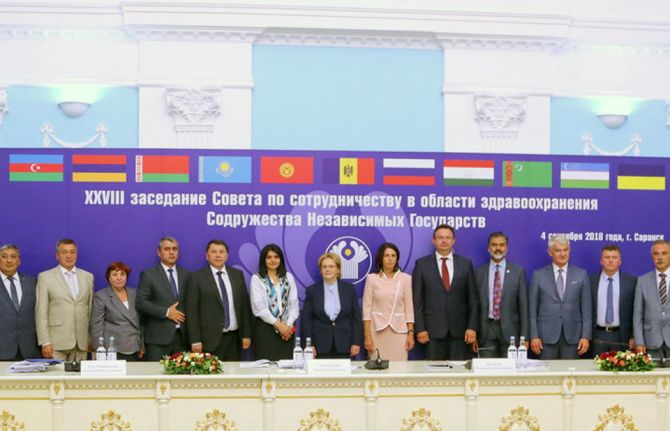
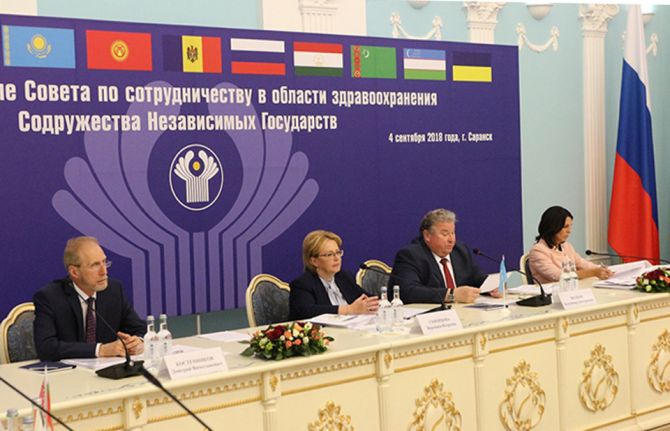
The Russian Minister of Health, Veronika Skvortsova, has reiterated the commitment to reach the targets agreed at the 2016 United Nations General Assembly High-Level Meeting on Ending AIDS.

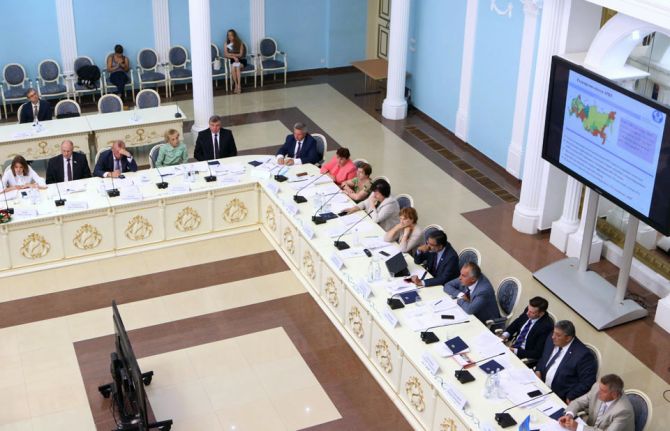
“We have to provide every person living with HIV with quick access to the correct treatment. The Ministry of Health plans to increase the coverage of people living with HIV who know their status on antiretroviral therapy to 75% by 2019, and by 2020 the figure should reach 90%,” said Ms Skvortsova at the 28th meeting of the Health Council of the Commonwealth of Independent States, held in Saransk, Russian Federation, on 4 September 2018.

In 2018, the Russian Federation reported for the first time on national progress towards the 90–90–90 targets—in 2017, 81% of people living with HIV in the Russian Federation knew their status, 45% who knew their status were on treatment and 75% who were on treatment were virally suppressed.

In order to improve strategic information and build evidence for decision-making at the local level, the Russian Ministry of Health recently conducted a workshop on HIV estimates for representatives of 10 Russian regions. Regional experts were trained on modelling HIV estimates, which will help to ensure a more complete picture of the number of people living with HIV and of the 90–90–90 targets at the subnational level.

Eastern Europe and central Asia is the only region in which the numbers of new HIV infections and AIDS-related death are still on the rise. At the end of 2017, the number of new HIV infections in the region reached 130 000. At the end of 2017, it was estimated that the 90–90–90 cascade in the region was 73%, 50% and 72%.

“The Russian Minister of Health’s statement is another important step in a series of consistent actions undertaken by the Government of the Russian Federation to accelerate the country’s Fast-Track approach to reach 90–90–90 by 2020,” said Vinay P. Saldanha, Director of the Regional Support Team for Eastern Europe and Central Asia.

Region/country

Feature Story

Situation rooms bring actionable data to decision-makers

27 August 2018

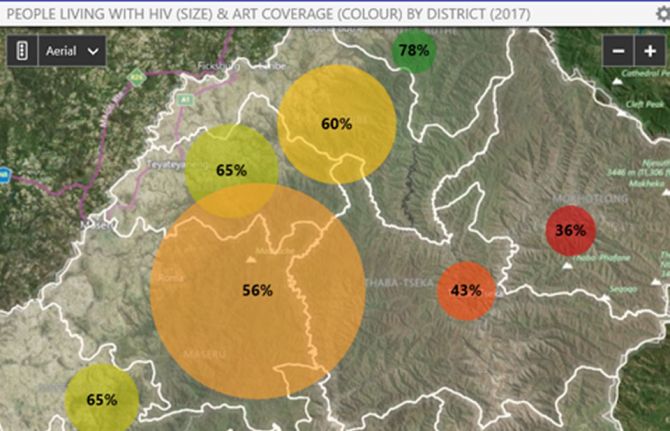
Health situation rooms—software platforms designed to support decision-making on countries’ health responses—are opening up across Africa, bridging data and decision-making in order to improve the health and lives of tens of millions of the world’s most vulnerable people.

Data integration, data warehousing and data visualization are the core of the situation room concept, providing transparent and improved information on a range of diseases. While situation rooms are virtual working space, some countries also use physical rooms in which the analytics can be discussed and acted upon.

The idea of a health situation room is that data—whether on the availability of HIV medicines, the effects of a strike by health-care workers or diagnoses of cervical cancer—are centralized, yet accessible to everyone. Whereas in the past health data on different diseases would be spread around several databases in assorted government ministries, disease-specific organizations, etc., situation rooms collect the data in one place, on one system, in a form that is easily shared. The information held by the situation room can be utilized on tablets or computers throughout the country.

“We must continue to innovate in our response to HIV,” said Michel Sidibé, the UNAIDS Executive Director. “Having reliable and up-to-date information is vital if the world is to meet its commitment to end AIDS and reach the Sustainable Development Goals.”

By pooling the health data in the virtual situation room, better and more focused health services can be made available to the people who need them. For example, having data on specific parts of a city helps to drive a location–population approach to HIV prevention services, ensuring that the right people are reached in the right place with the right services.

Through combining data on, for example, HIV, tuberculosis and cervical cancer, interlinkages between the diseases can be seen and responded to. Data can be viewed in real time, so, for example, levels of HIV medicines can be monitored in order to anticipate and respond to medicine stock-outs. Studying the effects of HIV test and treat campaigns in Uganda, the effectiveness of cervical cancer screening in Côte d’Ivoire and malaria testing and new diagnoses in Zambia are other examples how health situation rooms are benefiting health responses.

Five countries—Côte d’Ivoire, Kenya, Lesotho, Zambia and Uganda—have launched situation rooms. Data on indicators, including on HIV, tuberculosis, malaria, noncommunicable diseases and reproductive, maternal, newborn and child health are gathered, with different countries collecting different information depending on the local situation. Namibia, Mozambique and Zimbabwe are preparing to launch situation rooms, and several other countries are in the planning stage.

As part of its work, UNAIDS has been helping countries to set up their situation rooms, with UNAIDS working with countries to select the specific indicators and connecting data in the country to their situation room. Countries with existing data collection systems, that collect data separated by age and sex and at the local level, that have good Internet connectivity and that have qualified local staff are best placed to establish their own situation rooms.

The situation room programme has resulted in UNAIDS’ support to countries being enhanced, with UNAIDS able to support health information systems in a way unique in the United Nations system. UNAIDS is therefore supporting country and programmatic monitoring in a more meaningful way in those countries that have invested in situation rooms.

“For us, its strength is in bringing multiple data sets together, and sharing powerful analytics in a visual and understandable way,” said Andrew Kashoka, Deputy Director of Information Technology, Zambia Ministry of Health.

For the future, UNAIDS plans to ensure that countries have technical support so that they can continue to operate their situation rooms without support from UNAIDS. UNAIDS will also work with partners, including the Africa Centres for Disease Control and Prevention, the private sector and others, to reduce the dependency of countries on UNAIDS’ support in setting up and running the platforms.

Such investments in technology and collaboration between UNAIDS, governments and partners are driving innovative approaches to responding to AIDS and to ultimately ending the AIDS epidemic as a public health threat by 2030.

Resources

Press Statement

UNAIDS welcomes additional evidence from Cameroon, Côte d’Ivoire, and South Africa on progress towards the 2020 targets

Results from population-based HIV impact surveys provide insight into where investments are needed

AMSTERDAM/GENEVA, 22 July 2018—Cameroon, Côte d’Ivoire, and South Africa have released new survey data on progress towards the 2020 targets. The Cameroon and Côte d’Ivoire population-based HIV impact assessment (PHIA) surveys and the South African survey all studied knowledge of HIV status, new HIV infections, condom use, voluntary medical male circumcision, antiretroviral therapy coverage, viral suppression and other indicators. 

In South Africa, which has the largest HIV epidemic in the world with more than 7 million people living with HIV and the largest treatment programme in the world with 4.4 million people on antiretroviral therapy, the new data combined with similar data from an earlier survey indicate that there has been a 40% reduction in the rate of new adult HIV infections between 2010 and 2017.

“These surveys are incredibly important and play a vital role in helping countries to review and refine their HIV programming to make sure that the right services are reaching people affected by HIV,” said Michel Sidibé Executive Director of UNAIDS.

The survey data confirm UNAIDS estimates which indicate that South Africa has also improved treatment coverage and is very close to reaching the 90-90-90* treatment targets. It found that 85% of people living with HIV knew their HIV status, 71% of people who knew their status were accessing antiretroviral treatment and 86% of people who were accessing treatment had supressed viral loads.

Viral load suppression among all people living with HIV in Cameroon and Côte d’Ivoire however was less than 50% reflecting low treatment coverage. The two countries are far from reaching the 90-90-90 targets at 47%, 91% and 80% and 37%, 88% and 76% respectively.

The largest difference between the southern African country and the two western and central African countries is observed in knowledge of HIV status, indicating that HIV testing services need to be significantly scaled up in west and central Africa.

The PHIA surveys provide key information for identifying characteristics of the populations that are not receiving services. In Cameroon, viral load suppression varied by province from 28% to 63%. In South Africa less than 50% of children and young men (ages 15-34 years) living with HIV had suppressed viral load (compared to 67% among the women aged 15-49). These data will provide critical information to allow programme managers to direct their responses to the populations and locations most in need of services.

The PHIA surveys, were led by Columbia University in collaboration with country governments and supported by the United States President’s Emergency Plan for AIDS Relief. The South African survey was conducted by the Human Sciences Research Council

* 90% of people living with HIV know their HIV status, 90% of people who know their status are receiving antiretroviral treatment, and 90% of people on treatment have suppressed viral loads.

UNAIDS

The Joint United Nations Programme on HIV/AIDS (UNAIDS) leads and inspires the world to achieve its shared vision of zero new HIV infections, zero discrimination and zero AIDS-related deaths. UNAIDS unites the efforts of 11 UN organizations—UNHCR, UNICEF, WFP, UNDP, UNFPA, UNODC, UN Women, ILO, UNESCO, WHO and the World Bank—and works closely with global and national partners towards ending the AIDS epidemic by 2030 as part of the Sustainable Development Goals. Learn more at unaids.org and connect with us on Facebook, Twitter, Instagram and YouTube.

Press centre

Download the printable version (PDF)

Subscribe to 90-90-90 treatment target