Feature Story
The impact of donor cuts on community-led responses in Tajikistan
08 December 2025
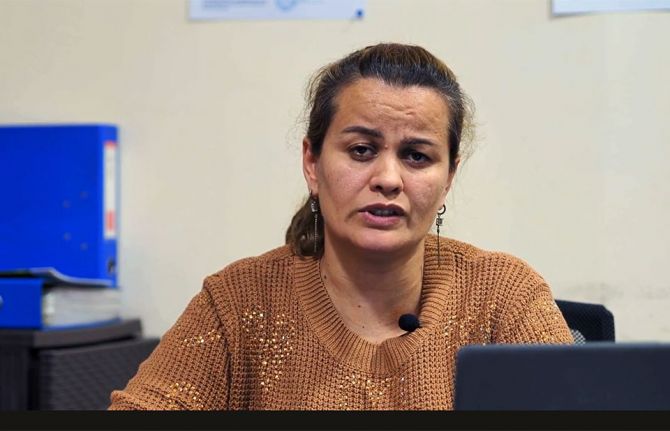
08 December 2025 08 December 2025Takhmina Haidarova and Pulod Jamalov are among the very few HIV activists in Tajikistan living openly with HIV. For years, they have been the public faces of courage—challenging stigma, supporting others and ensuring no one faces HIV alone. Through their organizations, the Tajikistan Network of Women Living with HIV and Spin Plus, they have built lifelines for people living with HIV and people from key populations, including people who use drugs.
Now, those lifelines are at risk of disappearing. Recent funding freezes and cuts to international HIV assistance threaten to close community-led programmes across the country. “People are panicking,” says Takhmina. “If our support services shut down, women affected by HIV, families with children living with HIV, and people from key populations will have nowhere to turn.”
Tajikistan is a small, mountainous, landlocked country in central Asia, bordered by Afghanistan, China, Kyrgyzstan and Uzbekistan. Despite economic growth, it remains the poorest country in the region, with nearly a third of its gross domestic product coming from remittances. It faces deep social and structural challenges—a fragile health system, restrictive laws, gender inequality, and powerful traditional and religious norms that fuel stigma and discrimination.
For people living with HIV, these challenges can be overwhelming. Nearly 97% of women living with HIV in Tajikistan conceal their HIV status, even from family members, and 64% report discrimination, including from health-care providers.
For Takhmina, the fight is personal. She acquired HIV from her husband, a labour migrant in the Russian Federation, and was rejected by the family after his death. “I did not even know HIV existed in Tajikistan,” she says. “I had no knowledge, no support, no one to turn to.” Now, through the Tajikistan Network of Women Living with HIV, she helps other women navigate the isolation she once faced.
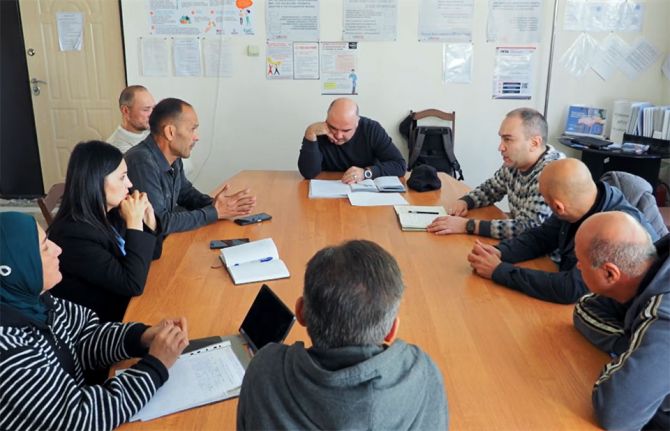
“Community groups like ours are the only ones people trust,” says Pulod Jamalov, Director of Spin Plus. “We go where the system does not reach—into prisons, remote villages and migrant families. Without us, many people will simply be left behind.”
Until now, international partnerships have made real progress possible. HIV-related mortality has halved since 2020 in Tajikistan, and vertical transmission dropped to 0.8% in 2024, with only one such case recorded that year.
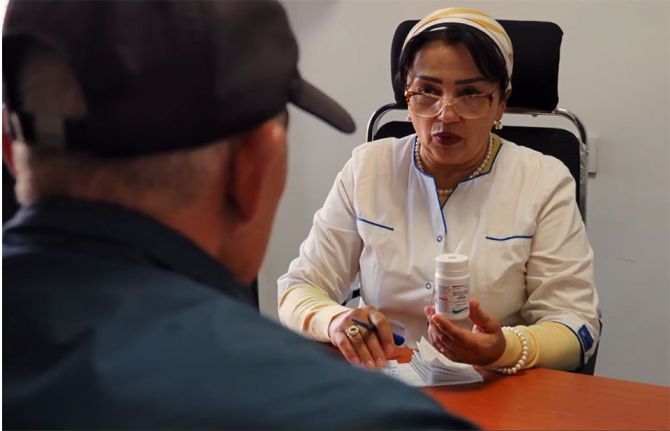
But this progress is fragile. About 60% of the HIV response in Tajikistan depends on international donors, of which about 20% was funded by the United States President’s Emergency Plan for AIDS Relief (PEPFAR) until January 2025. Around 37% of the national programme is now financed domestically, marking a step towards sustainability. The Government covers all costs for prevention of vertical HIV transmission, including HIV testing for pregnant women. In 2025, for the first time, the Government of Tajikistan allocated national funds to procure 10% of the country’s antiretroviral (ARV) medicines.
National authorities estimate that even a 10–20% reduction in funding could trigger a 135% increase in the number of new HIV infections and a 5% increase in mortality, erasing years of gains.
In January 2025, two major community health centres providing stigma-free care were closed, and outreach, testing and counselling stopped altogether. When these centres temporarily resumed their operations, they recorded a noticeable decline in the number of clients seeking or referred for services. Community-led monitoring, once a key accountability tool, has been completely discontinued.
Tajikistan has shown what is possible with targeted support. But unless donors, governments and international partners act quickly to protect community-led services, those gains will be reversed.