Feature Story
Multisectoral resilience to funding cuts in Guatemala
22 December 2025
22 December 2025 22 December 2025This story first appeared in the recently released World AIDS Day report 2025.
In 2025, cuts in international support for the HIV response in Guatemala and a reduced HIV allocation from the Global Fund caused immediate challenges for the HIV response. Some services were curtailed or discontinued altogether in clinics affected by the cuts, and remaining service providers struggled to absorb clients who had lost their service access. Furthermore, a substantial portion of the personnel at HIV comprehensive care units and community outreach workers that help facilitate and maintain access to services for people from key populations were also affected as their work had long been funded by external donors.
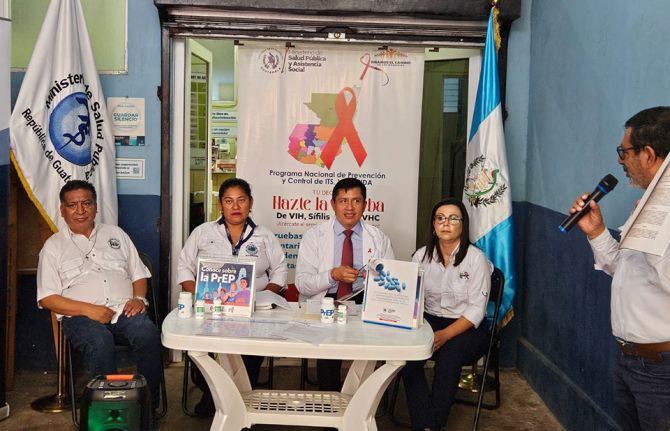
In response to these cuts in external funding, the Ministry of Health stepped in to ensure continuity of care by covering the salaries of 81 staff members, thereby sustaining the operation of numerous comprehensive care units and guaranteeing service delivery to thousands to clients across the country. This intervention was critical to maintain access to lifesaving HIV treatment and preserve the integrity of the national HIV response.
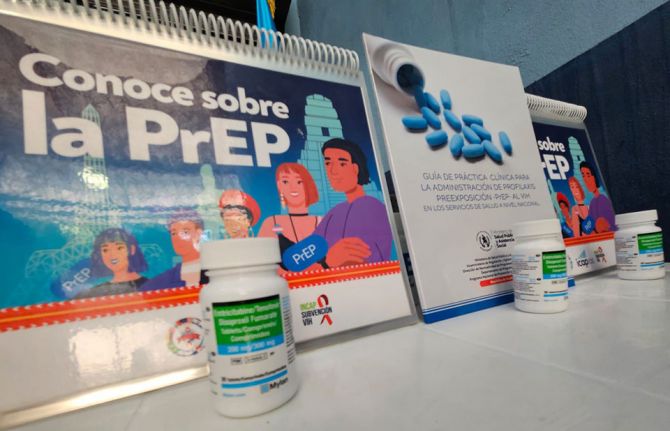
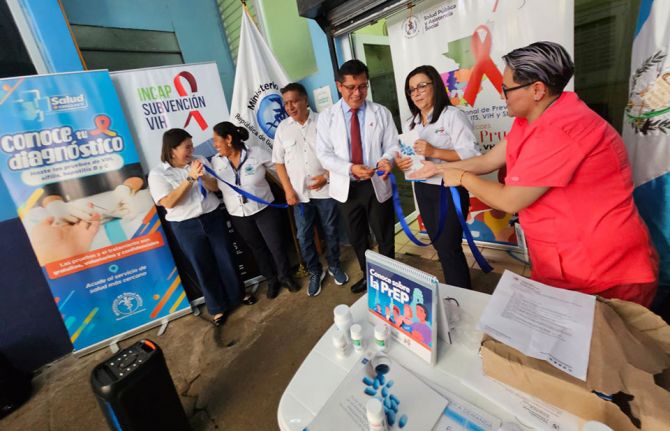
The Government also intervened to fill the gap when a key implementer and PrEP provider lost its financing. In 2025, Guatemala moved to quantify PrEP needs, develop targets for scale-up and launch access to PrEP in three departments. However, gaps persist with respect to HIV prevention programmes for people from key populations.
Community-led responses have also stepped into the breach created by the loss of international assistance. Colectivo Amigos contra el Sida (CAS), an organization focused on HIV prevention among gay men and other men who have sex with men and transgender women, moved to assume responsibility for supporting PrEP delivery to clients of a large PrEP programme that lost its funding. CAS collects voluntary donations for services from clients who can afford to pay, which helps to co-finance operational costs that are no longer covered by international donors.
Community-led responses play a critical role in the efforts to end AIDS as a public health threat. For that reason, Guatemala, with the support of UNAIDS, is working to ensure communities have access to financial and technical support. UNAIDS is collaborating with the Global Fund to help build the knowledge and capacity of civil society organizations to lobby more effectively for greater domestic resources.
Planning for the sustainability of the HIV responses is an urgent priority for many countries including Guatemala. Now that the Global Fund is set to phase out its support given Guatemala’s status as an upper-middle-income country, UNAIDS is collaborating with the Ministry of Health and the national AIDS programme to roll out the UNAIDS Rapid AIDS Financing Tool, aimed at facilitating decision-making and actions to effectively respond to the AIDS epidemic amidst a resource-limited environment.