Feature Story
Seeing what others miss: Inclusion in Papua New Guinea’s HIV Response
14 August 2026
14 August 2026 14 August 2026During a recent monitoring visit to an HIV clinic in the Highlands of Papua New Guinea, Brenda Lombange noticed a person with a physical disability leaving the building. Several steps led up to the entrance.
“I was thinking, ‘how can a wheelchair go there?’” Ms Lombange recalled.
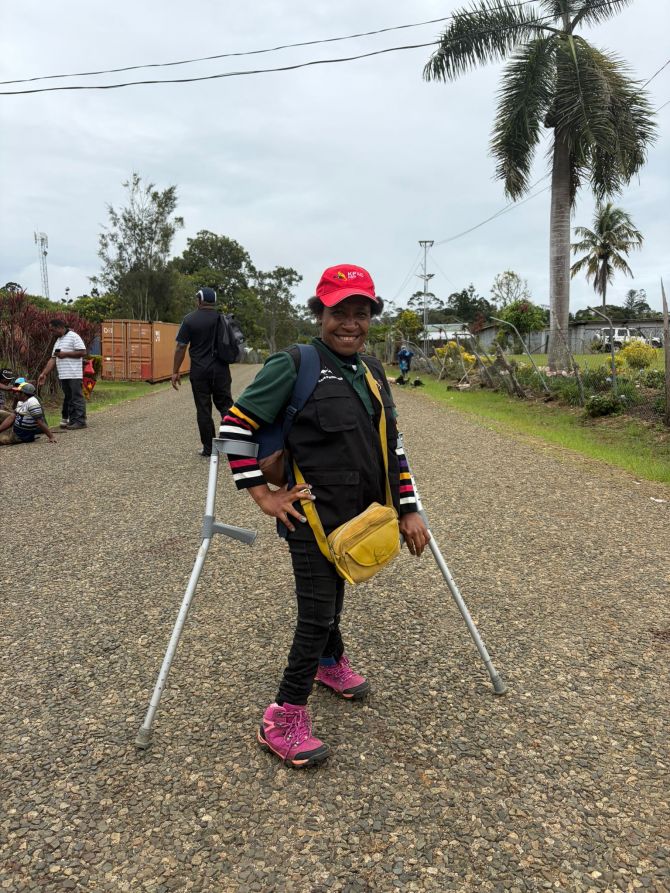
For her, the question is personal. Ms Lombange leads the community-led monitoring team at the Key Population Advocacy Consortium (KPAC), a national coalition representing communities most affected by HIV and tuberculosis. She also lives with a disability herself.
For her, accessibility goes beyond ramps and steps.
“Some people have hearing difficulties. Some cannot walk long distances. Others have eyesight problems and cannot read the small print,” Ms Lombange explained. “Through our work, we can identify what support people need, whether that means information in different formats or better communication.”
In her mind, the worse is an insensitive response from a health worker, which is why she goes out and meets people.
“We visit clinics not only to check whether essential tests, medicines and supplies are available, but also to understand what people experienced when they sought care,” Ms Lombange said. “We listen to whether they could even access the clinic, afford the services, understand the information they received and feel safe, respected and included.”
More than 1.5 million people - around one in six Papua New Guineans - are estimated to live with some form of disability. A national Gender Equality, Disability, and Social Inclusion (GEDSI) assessment found that inclusion had not yet been embedded across PNG’s HIV response and was not included in its community-led monitoring tools.
In 2025, Papua New Guinea declared HIV a public health crisis. The estimated number of new HIV infections doubled since 2010, with around 30 people acquiring HIV every day—an estimated 11,000 new infections in 2024 alone.
Alarmingly, half are among children and young people under 24. New infections are also rising among women and children, while rates of mother-to-child transmission remains critically high.
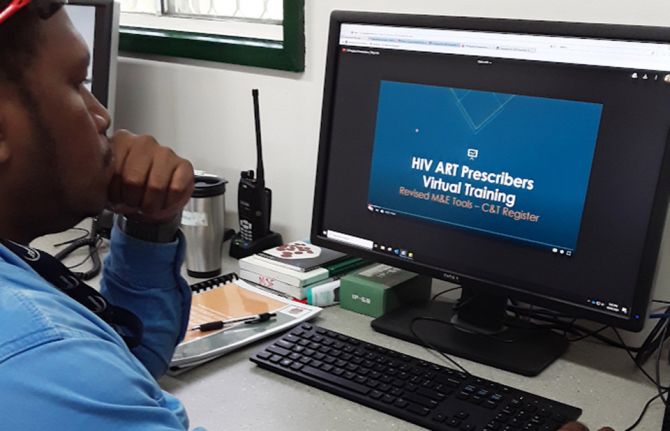
With support through the Indo-Pacific HIV Partnership, monitoring tools were revised to address this gap.
Community-led monitoring teams can now better identify and document barriers faced by people with disabilities, including disabilities that may not be immediately visible. Using the internationally recognized Washington Group questions on functioning—covering seeing, hearing, mobility, cognition, self-care and communication—they can assess accessibility in both HIV services and antenatal clinics.
Cathy Ketepa, a woman with a disability and chair of KPAC, emphasized, “Having two women with disabilities in leadership positions shows that we are not only beneficiaries, but also leaders and decision-makers in our movements.”
Lesley Bola, KPAC’s Executive Director, describes his peers living with disabilities as the organization’s “eyes and ears.”
“They sensitize us and open our minds to inclusion,” he said. “There are many people living with HIV who are also persons with disabilities. Disability is cross-cutting. When we go into provinces, we find vulnerable communities who are part of us, but who need extra support.”
A sentiment echoed by Health Equity Matters.
“KPAC already has the trust, knowledge and lived experience of the communities it represents,” said Jess Hill, the Pacific Program Lead. “Our role is to help strengthen the organization behind that work so community evidence can influence decisions and lead to lasting change.”
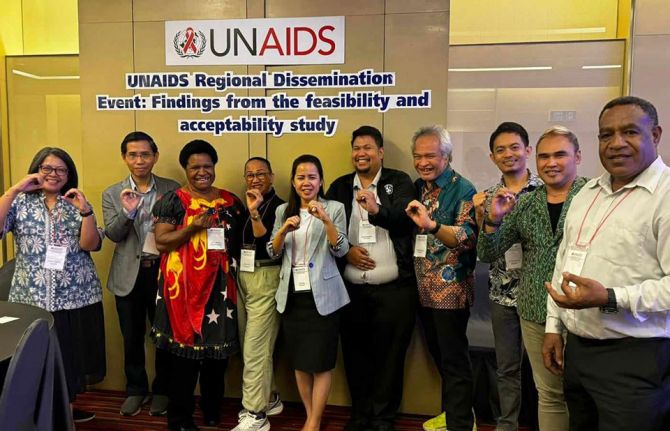
KPAC’s work was supported through the Australian Government-funded Indo-Pacific HIV Partnership, with Health Equity Matters providing organizational strengthening and UNAIDS contributing technical and policy support.
“We are grateful to the Australian Government for investing not only in community-led activities, but also in the leadership and capacity needed to sustain them,” said Manoela Manova, UNAIDS Country Director for PNG. “KPAC’s progress shows what is possible when organizations rooted in communities have the tools and support to turn evidence into action.