Feature Story
South Sudan: raising HIV awareness among displaced communities
08 September 2014
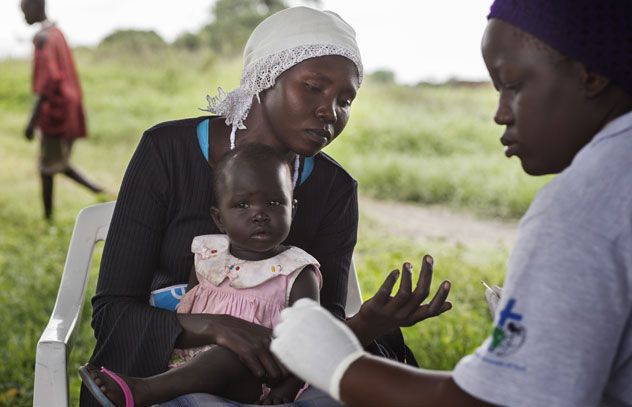
08 September 2014 08 September 2014Anywur Mayan took her first HIV test two years ago. A health worker came to her house in rural Jonglei State and briefly explained that he was checking her for a virus. He pricked her finger and drew some blood. A few minutes later he told her the test had come back negative and left.
She did not really learn what HIV is or how it is spread until early June this year, after she had moved hundreds of miles from her Jonglei home to escape fighting there. Her new settlement Nimule—a border town near South Sudan’s border with Uganda—is safer, but has much higher HIV prevalence.
Behind there, there is nothing,” said Anywur, pointing in the direction of Jonglei. “Our houses, our belongings, they were all destroyed.
Fighting broke out in the South Sudanese capital, Juba, in mid-December and spread rapidly across nearly half the country. The United Nations Office for the Coordination of Humanitarian Affairs estimates that tens of thousands of people have been killed and more than 1.7 million have fled from their homes since December 2013—about 1.3 million displaced internally and 448 000 seeking refuge in neighbouring countries.
Raising awareness
Anywur, with her husband and infant son, set out in January for Nimule, where the HIV prevalence—estimated at 4.4%, according to the 2012 Antenatal Clinics Surveillance Report—is well above the national average of 2.6%.
In Anywur’s new home in Nimule a collection of local organizations has taken on the task of raising awareness about HIV. Anywur said she only found out what HIV is when a team of community educators gave a detailed presentation about the virus with the aid of information, education and communication materials created by the South Sudan AIDS Commission (SSAC) and UNAIDS.
Where we came from, this kind of education, it is not there,” she said.
But local activists and health workers said they still have thousands more people they need to reach and not enough resources to do it. At the same time, the new arrivals add a layer of complexity to the work they were already doing in the community.
HIV services
The highway connecting Juba to Uganda and the rest of eastern Africa cuts through Nimule, which hosts the country’s most active border crossing. Overloaded trucks rumble through the town at all hours, carrying fruits and vegetables, mattresses and anything else that can be sold in Juba’s markets.
Like many border towns, Nimule has its share of sex workers and their clients, especially long-distance truck drivers. The 2013 South Sudan Global AIDS Response Progress Report estimates that 62.5% of all new adult HIV infections in the country last year arose from sex work, the majority being clients of female sex workers.
Before the fighting broke out, Patrick Zema, Nimule Hospital’s HIV testing and counselling supervisor, said they were making significant progress in increasing awareness about the virus, reducing stigma and linking people to services. The hospital currently has 1 300 clients enrolled in antiretroviral therapy.
But now they are starting from the beginning with the displaced communities. “They come and they fear to test their blood,” said Pascalina Idreangwa Enerko, the chairperson of the local Cece Support Group of People Living with HIV, who attributes this behaviour to a combination of a lack of knowledge about the virus and stigma that comes with an HIV-positive diagnosis. “Thanks to the health education provided, they come out. It is important that they know their status.
Since April, Cece has teamed up with two community-based organizations—Humans Must Access Essentials (HUMAES) and Caritas Torit—to do near-daily mobile awareness-raising campaigns within the far-flung displaced community.
The community mobilizers begin with an hour-long presentation on HIV awareness and prevention. Then they encourage people to visit different stations, including one for paediatric consultations, a free drug dispensary and an HIV testing centre.
Reena’e Awuor Ondiek, Caritas Torit’s HIV counsellor, said her table was not popular when they first started in February, but she has noticed a change in people’s attitudes as she has made repeated visits to the same communities.
The programme has also helped address one of the other major challenges created by the crisis. “The conflict moved people from one place to another and interrupted follow up,” said Habib Daffalla Awongo, SSAC’s director general for programme coordination. “Some patients have been lost within host populations.” During their community visits, a Caritas team has already located people who stopped treatment as they fled the fighting and restarted them on antiretroviral therapy.
The team is still facing challenges, the most critical being a shortage of money. They are unable to hire the vehicles they need to reach thousands of displaced people who are camping outside of Nimule and who have almost no access to HIV services.
But Ondiek said there is no shortage of people like Anywur who need their services in the communities they can reach.
Region/country

Feature Story
Giant agriculture show in Zambia breaks new ground with HIV prevention efforts
06 August 2014
06 August 2014 06 August 2014Among the cattle, helicopters and bands, the 88th Agricultural and Commercial Show of Zambia lived up to its 2014 theme: “Breaking new ground”—with a lively HIV prevention exhibit.
The trade show served as the stage for UNAIDS and its partners to reach young people with information and services aimed at preventing sexually transmitted infections and HIV.
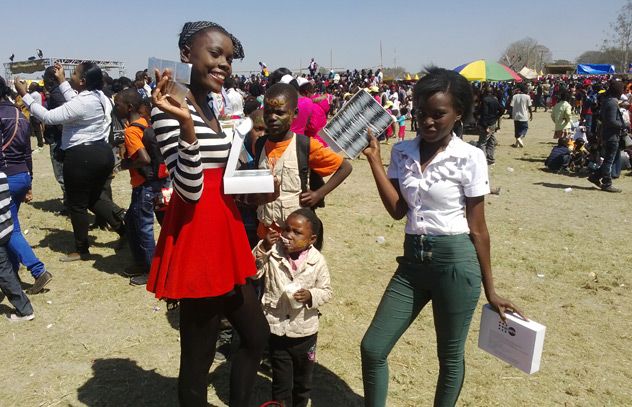
Each day, more than 80 000 young people attended the trade show, which was held in Lusaka from 30 July to 4 August 2014.
The UNAIDS office in Zambia brought together popular bands and service providers so that young people could get information on sexual reproductive health and services in an adolescent friendly way.
Bands from Lusaka and provinces across the country drew large crowds with fun and energetic performances. Musicians playing at the Band Stand, the most popular arena among youth, delivered prevention messages. They also promoted individual responsibility for protecting themselves and their partners.
“The success of our joint initiative highlights that when young people can act immediately on the messages they hear and access services, they are more than willing to do so,” said Helen Frary, UNAIDS Country Director for Zambia. “Providing these services in an environment they identify with can go a long way in stopping stigma.”
Voluntary counselling and testing services and male and female condoms were readily available near the stage. Led by the United Nations Population Fund, the Condomize! Campaign drew attention to the fact that a low rate of condom use is one of the reasons behind HIV infections in Zambia. More than 120 000 condoms were distributed free of charge with UNAIDS support.
“It is refreshing to see young people taking condoms without fear or diffidence,” said Clementine Mumba of the Condomize! campaign.
More than 1096 people got counselling and testing through the Society for Family Health and the Community for HIV/AIDS Mobilization Program. The number of people who received counselling and testing exceeded expectations, with providers running out of test kits midway through the last day of the event.
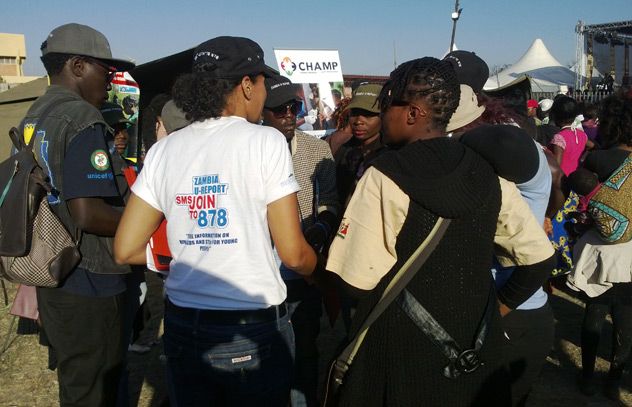
The United Nations Children’s Fund called on adolescents and young people present at the event to join its Zambia U-Report SMS platform and interact with counsellors via text messages on issues related to sexual health and HIV. New members topped 2200.
Region/country


Feature Story
Scaling up cash transfers for HIV prevention among adolescent girls and young women
18 August 2014
18 August 2014 18 August 2014Now a 19-year-old university student in South Africa, Noxolo Myeketsi started receiving a social welfare grant in 2005. Part of a state-run programme to assist poor households, the cash transfers allowed her to stay in school and her grandmother to buy food and pay their bills.
The grant changed Noxolo’s life for the better. Other girls turned to having sex, often with older men, in exchange for basic needs, and potentially exposed themselves to sexually transmitted infections and HIV.
“I believe that without the grant assistance, I would not have been able to make healthy decisions in my life. Maybe I would have ended up being a sugar daddy’s girl, like others from my area, or ended up contracting HIV,” Noxolo said.
Social protection schemes, including financial incentives, can make a difference in a number of ways. The World Bank reports that, globally, there is strong evidence that cash transfers improve the education, health and lifelong income of beneficiaries.
“Cash transfer programmes work for HIV prevention and a host of other human development outcomes as well, and they are scalable,” said David Wilson, Director of the World Bank’s Global HIV/AIDS Program.
Studies conducted in South Africa show that small cash grants provided to poor households allow teenage girls to make safer sexual choices and can significantly reduce the number of new HIV infections. When psychosocial care and support are added to the cash, the results for girls are even better.
At the UNAIDS Programme Coordinating Board (PCB) meeting held in Geneva in July a thematic session was organized on addressing the social economic drivers of HIV through social protection, at which Noxolo spoke about the positive impact grants can have.
Following up on the PCB meeting, UNAIDS and the World Bank pledged to assist governments in the process of scaling up social protection programmes, including cash transfers, for HIV prevention in eastern and southern Africa, covering Botswana, Kenya, Lesotho, Malawi, South Africa, Swaziland, United Republic of Tanzania and Zambia.
“It is befitting that South Africa is the centre of the initiative because the country accounts for 23% of sub-Saharan Africa’s new HIV infections, 18% of the global HIV burden and has one of the world largest social protection programmes,” said Benjamin Ali, UNAIDS Country Director for South Africa.
Countries and partners will be urged to collaborate in a comprehensive review of social protection systems. Proposals to make such systems HIV sensitive include modifying age bands and other inclusion criteria to ensure that the groups most affected and at risk of HIV infection are covered, providing some cash directly to girls and young women and linking cash incentives to their adherence to HIV prevention and treatment programmes.
Region/country

Feature Story
Civil society provides essential services in the Comoros
30 July 2014
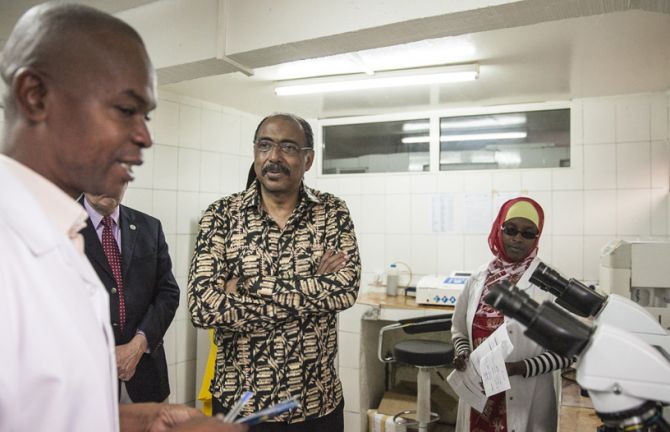
30 July 2014 30 July 2014UNAIDS Executive Director Michel Sidibé recently visited a centre in Moroni that primarily provides antenatal care for pregnant women and prevention of mother-to-child transmission of HIV. It is run by the Association comorienne pour le bien-être familial (ASCOBEF), a nongovernmental organization.
At the centre, women have access to health services early in pregnancy and are offered an HIV test so that, if they need it, they can get treatment for themselves and appropriate postnatal care for their infants. The work ASCOBEF does at the centre highlights the critical role that civil society plays in supporting the Government of the Comoros in its response to HIV.
During his visit, Mr Sidibé had the opportunity to meet with members of civil society whose organizations conduct HIV counselling and testing, awareness-raising and community mobilization. They discussed their activities and the challenges they face in providing comprehensive care for people living with HIV, including the limited support they get from other sectors.
“We must not tolerate the shrinking of a democratic space of nongovernmental actors. The role of civil society is essential,” said Mr Sidibé.
Mr Sidibé reiterated the important role of civil society in advocating a human rights approach, especially in the context of the post-2015 development agenda and the rights and gender action that is needed to ensure that no one is left behind.
Region/country


UNAIDS Executive Director Michel Sidibé with the Minister of Health of Indonesia Nafsiah Mboi. Melbourne, Australia, 22 July 2014.
Feature Story
Countries stepping up
23 July 2014
23 July 2014 23 July 2014At the 2014 International AIDS Conference in Melbourne, Australia, one of the questions being asked is: “Where should the world focus its attention in the AIDS response?”
In the recent Gap report, UNAIDS highlighted the importance of location and population. The report shows that 15 countries account for more than 75% of the 2.1 million new HIV infections that occurred in 2013. The countries—Brazil, Cameroon, China, India, Indonesia, Kenya, Mozambique, Nigeria, Russian Federation, South Africa, Uganda, United Republic of Tanzania, United States of America, Zambia and Zimbabwe—can all make a positive impact by scaling up HIV services where they are most needed to reduce new HIV infections.
This was one of the issues highlighted by the UNAIDS Executive Director, Michel Sidibé, when he met with Nafsiah Mboi, the Minister of Health of Indonesia—which is working to increase access to HIV testing and early treatment—at the conference.
“I know that Indonesia can quickly change the trajectory,” said Mr Sidibé. “The government is committed and has the capacity to accelerate scale-up and I expect we will see the results soon.”
Countries often face multiple epidemics and hence there is an increased urgency to focus at the city and district level in order to effectively reach the people currently being left behind.
“Countries with the highest burden have to do the heavy lifting to end the AIDS epidemic and provide services to all affected people—location by location, population by population,” said Mr Sidibé.
Populations at higher risk of HIV infection are often difficult to reach. India has sustained investments in key populations for more than a decade and expanded outreach in more than a thousand locations within the country. In the Russian Federation, despite clear scientific evidence of the impact of harm reduction services, very few people who inject drugs have access to opioid substitution therapy and needle–syringe programmes.
Brazil, which has been a pioneer in the AIDS response, has recently seen HIV infections rise among young gay men and other men who have sex with men. Health authorities and civil society groups in Brazil are exploring innovative new ways to get life-saving information and treatment to a new generation of young men who may not know they are at higher risk of becoming infected.
In Mozambique, new data analysis shows that the districts with the highest density of people living with HIV are located along transport corridors and in important seaports in the central and southern regions of the country, and the country is now beginning to expand access to HIV services in these areas.
In Nigeria, a similar analysis led to a focus on 13 states, including the Federal Capital Territory, which includes Abuja, for intensifying scale-up. South Africa, the country with the largest number of people living with HIV, has made significant gains in stopping the AIDS epidemic. A national HIV testing campaign, combined with intense civil society engagement, led to more than 2.5 million people having access to antiretroviral therapy.
“This is why the exchange of ideas is so important,” said Mr Sidibé. “When we can share data and best practices, we can close the programmatic gaps.”
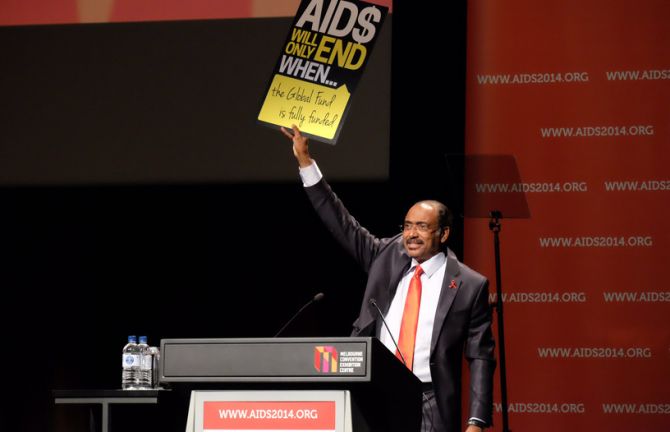
UNAIDS Executive Director Michel Sidibé speaking at the opening ceremony of the AIDS 2014 conference in Melbourne, Australia, 20 July 2014.

Opening ceremony of the AIDS 2014 conference in Melbourne, Australia, 20 July 2014.
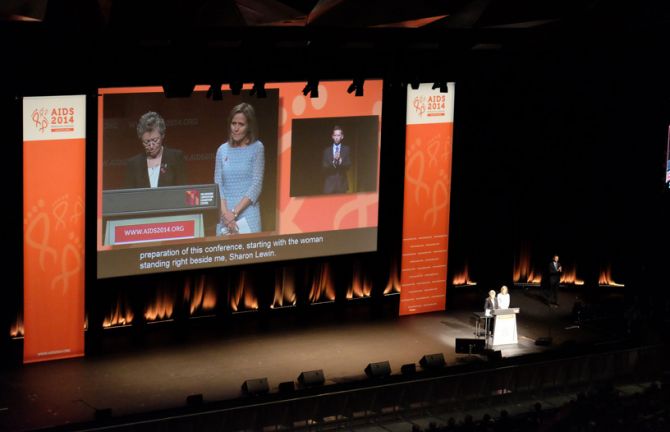
Opening ceremony of the AIDS 2014 conference in Melbourne, Australia, 20 July 2014.
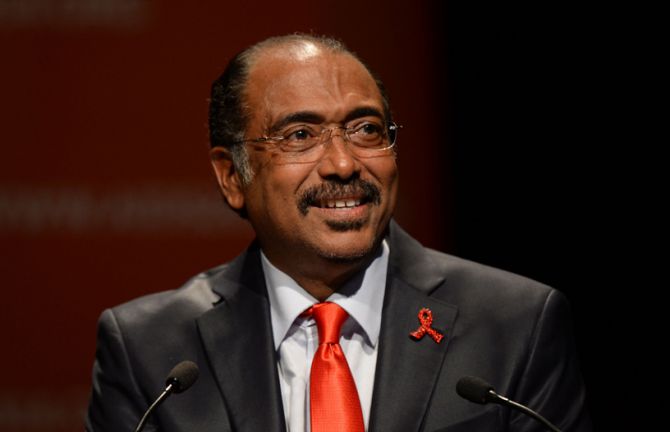
Opening ceremony of the AIDS 2014 conference in Melbourne, Australia, 20 July 2014.

Opening ceremony of the AIDS 2014 conference in Melbourne, Australia, 20 July 2014.
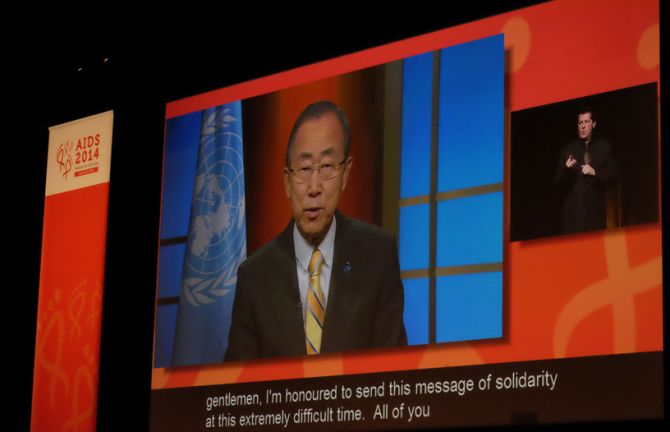
Opening ceremony of the AIDS 2014 conference in Melbourne, Australia, 20 July 2014.
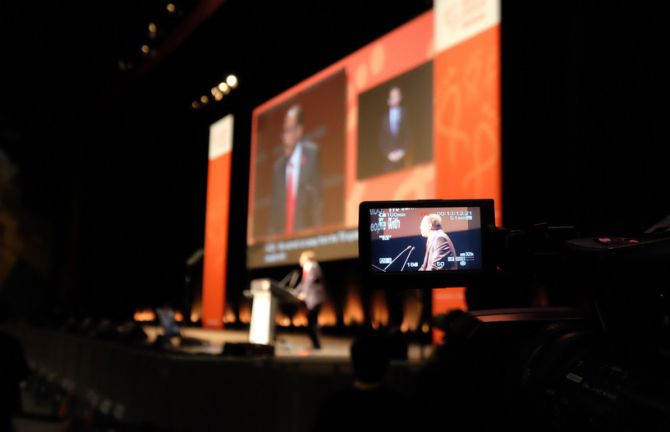
Opening ceremony of the AIDS 2014 conference in Melbourne, Australia, 20 July 2014.
Feature Story
Opening ceremony honours missing delegates and calls for ending AIDS by 2030
20 July 2014
20 July 2014 20 July 2014The 20th International AIDS Conference opened in Melbourne, Australia, on 20 July 2014 with a moving and powerful range of statements from leading figures in the response to HIV. The ceremony was dedicated to the memory of the victims lost in the international tragedy—several of whom were on their way to participate in AIDS 2014.
Nobel laureate and President of the International AIDS Society Professor Françoise Barré-Sinoussi paid tribute to the friends and colleagues who died. “We dedicate AIDS 2014 to them, we will remember their legacy and keep them in our hearts,” she said.
Michel Sidibé, Executive Director of UNAIDS, gave an inspiring address calling for an end to the AIDS epidemic by 2030 and stressed the need for a new “catch-up” plan to leave no one behind. “Now, more than ever, we must concentrate our limited resources on where most infections occur and on where most people die,” he said. “The world needs a new “catch-up” plan for the 15 countries that account for 75% of new HIV infections.”
UNAIDS Goodwill Ambassador and Master of Ceremony James Chau guided the speakers through the special memorial opening session. He extended a warm welcome to Ayu Oktariani, a young woman living with HIV from Indonesia, who spoke passionately about the challenges she faces in her daily life, “Living with HIV is not easy,” she said. “It's not only about HIV; it's about people’s judgement of my sexual behaviour.” She talked about discriminatory attitudes of health-care workers and the lack of information on sexual and reproductive health. “Many of us have HIV because we did not have the means or information to protect ourselves,” she added.
Co-chair of AIDS 2014 Professor Sharon Lewin told the participants how important the conference was to Australia and the world. A sentiment echoed by the Premier of the State of Victoria, Denis Napthine, “This conference is about stepping up the pace, making a difference and making the world a better place,” he said.
Aboriginal Elder Joy Wandin Murphy extended a warm welcome to Australia to all the participants. She talked about the country’s past struggles and stressed the importance of tolerance and acceptance. “If we understand each other we can live in harmony, and, if we do, we can eliminate stigma and discrimination so we can all live together.”
The Jonathan Mann memorial lecture was given by Justice Michael Kirby, who strongly emphasized the importance of equality and justice for all. He talked about the impact of punitive laws and the devastating impact they can have on people living with and affected by HIV. He stressed that, “Law and policy must be made part of the solution and not part of the problem for AIDS.”
The United Nations Secretary-General Ban-Ki moon and the Prime Minister of Australia Anthony Abbott delivered video messages expressing their sorrow for all who died on flight MH17 and encouraged participants to take the opportunity provided by the conference to advance the response and reach the end of the AIDS epidemic.
Deputy Prime Minister of Australia Warren Truss stated that Australia will pursue an ambitious commitment to ending AIDS as part of the post-2015 agenda. The event was closed by a concert from Dan Sultan.
The 20th International AIDS Conference will run from 20 to 25 July in Melbourne, Australia. The delegates will review and present the latest scientific findings as well as the social and structural innovations and challenges in the AIDS response.
Related

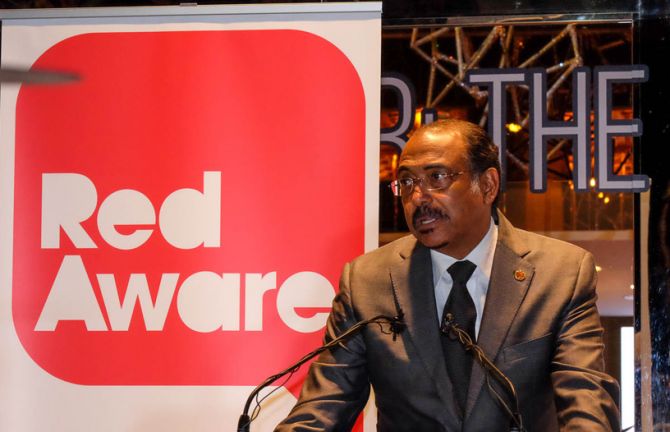
UNAIDS Executive Director Michel Sidibé speaks at the lighting of the AIDS2014 sign on the Princes Bridge in Melbourne, Australia, 18 July 2014.
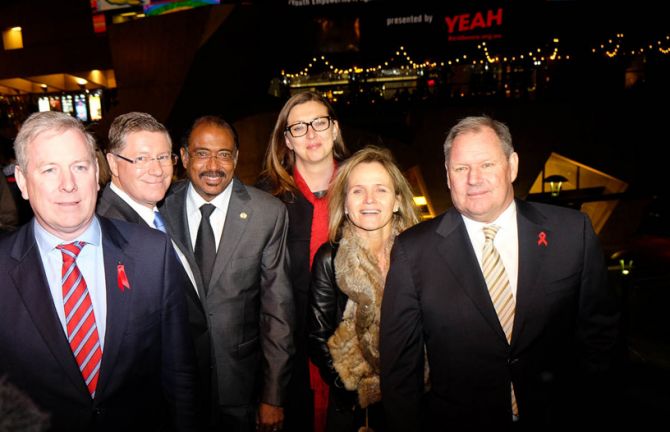
Victorian Premier Denis Napthine; Victorian Minister for Health David Davis; UNAIDS Executive Director Michel Sidibé; YEAH CEO Alischa Ross; Co-Chair of AIDS2014 Sharon Lewin; Lord Mayor of Melbourne Robert Doyle at the lighting of the AIDS2014 sign on the Princes Bridge in Melbourne Australia, 18 July 2014.
Feature Story
AIDS 2014 opens in Melbourne overshadowed by an international tragedy
18 July 2014
18 July 2014 18 July 2014AIDS 2014 opened overshadowed by an international tragedy. During a ceremonial inauguration to welcome the conference participants to the city, the organizers expressed deep sadness for the loss of the many delegates travelling on flight MH17.
Speakers at the event stressed the importance of honouring the legacy of the researchers and AIDS advocates who died by increasing efforts and commitments to pursue their cause. “It is a difficult moment. We lost friends, activists and people who are the voice of the voiceless,” said UNAIDS Executive Director Michel Sidibé.
The Premier of Victoria, Denis Napthine, said, “This is a massive loss to our community, who worked together across the world to tackle HIV.”
Mr Sidibé participated together with the Lord Mayor of Melbourne, Robert Doyle, and the co-chair of the AIDS 2014 conference, Sharon Lewin, in the lighting of the AIDS 2014 sign event. Messages from international leaders, including President Barack Obama, the Lord Mayor of Melbourne, and the Mayors of Milan, Osaka, Tianjin and Thessaloniki, were projected onto the façade of the Arts Centre Melbourne’s Hamer Hall. Mr Sidibé’s message read “Ending AIDS is the only dream we should all have.”
The 20th International AIDS conference will take place from 20 to 25 July in the Australian city of Melbourne under the theme “Stepping up the pace”.
AIDS 2014
Delegates from all over the world will participate in a series of sessions, panels and community-led discussions to take stock of the progress made, analyse the latest scientific advances and mobilize governments and communities to chart the way forward to end the AIDS epidemic.
This year’s theme recognizes the many advances made in the past few years in the areas of vaccine research, the growing number of people receiving antiretroviral therapy and the falling number of new HIV infections. However, “Stepping up the pace” also stresses the need to keep HIV as a priority in the global agenda and that more investments, collaborative research and political commitment are needed to ensure that no one is left behind.
UNAIDS Executive Director Michel Sidibé will be among the high-level speakers participating in the conference, together with President Bill Clinton and artist and activist Bob Geldof. UNAIDS will be participating in a number of events before and during the conference, including the preconference sessions on youth, men who have sex with men, and interfaith communities, as well as other sessions on HIV treatment, adolescents, prevention of mother-to-child transmission and human rights, among others.
Related
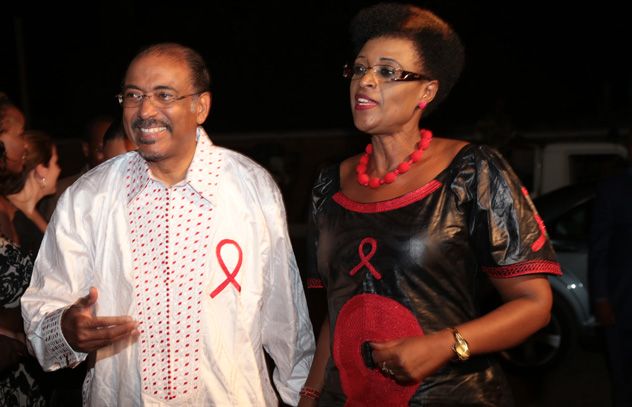
UNAIDS Executive Director Michel Sidibé and President of the ANSS, Jeanne Gapiya.
Update
ANSS: 20 years responding to the HIV epidemic in Burundi
08 July 2014
08 July 2014 08 July 2014The Burundian National Association of Support for People Living with HIV and AIDS Patients (ANSS) marked the twentieth anniversary of its creation on 4 July during a gala event that took place in Bujumbura, Burundi.
Created in 1993, ANSS’ mission is to promote the prevention of HIV transmission and to improve the well-being of people living with and affected by HIV. The ANSS was the first civil society organization in the country to provide HIV services to people living with HIV, including the distribution of antiretroviral therapy. At the end 2013, the ANSS was providing treatment to more than 6000 people in Burundi. From 2007 to 2013, the association provided HIV counselling and testing to more than 56 000 people as part of its HIV prevention efforts.
During the event, UNAIDS Executive Director Michel Sidibé commended the leadership of the association and its key role in providing services to people living with HIV in the country. The President of the ANSS, Jeanne Gapiya, committed to increasing access to antiretroviral therapy in Burundi as well as to continue working to ensure that the rights of people living with HIV are respected.
Quotes
"This is a remarkable day for us. Today we can look back and be proud of what ANSS has achieved during the past 20 years in terms of the HIV response in Burundi. In the future we will make sure that more people have access to antiretroviral therapy."
Region/country
Related
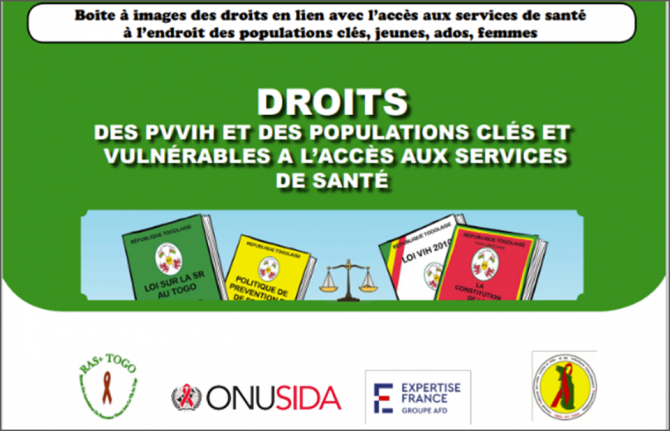

Illustration on the cover page of the report.
Feature Story
Urgent need for sensitive social protection schemes for people living with HIV
30 June 2014
30 June 2014 30 June 2014People living with HIV who have access to social protection programmes enjoy a range of benefits, such as being more likely to retain their jobs and keep their children in school, but too many of the most vulnerable are out of reach of these programmes, says a new report by the International Labour Organization (ILO).
Access to and effects of social protection on workers living with HIV and their households draws its conclusions from research conducted in four countries, Guatemala, Indonesia, Rwanda and Ukraine, that are currently developing or scaling up their social security systems.
Across the countries a variety of social protection schemes are used to support the most vulnerable and to avoid increased vulnerability. These include establishing poverty alleviation and reduction programmes, prioritizing the poor in economic development strategies, providing access to social security systems, greater labour opportunities for women, and providing health insurance and pensions and social assistance for low-income individuals and families.
The report notes that social protection programmes can reduce the disadvantages, inequalities and structural barriers that make people more vulnerable to HIV. It reveals that, in the studied countries, between 63% and 95% of people living with HIV who had access to social protection were able to keep their jobs or some form of productive activity, 49–99% said that their children remained in school and 72–86% were able to access life-saving antiretroviral treatment.
It notes that the social protection systems of the four governments are much more readily accessed by those under the umbrella of the public and formal sectors. People living with HIV are often in the informal economy and therefore much more likely to miss out. This may be a particular issue for women and key populations at higher risk.
There is a tendency to address HIV by concentrating on enabling access to HIV treatment. The study stresses that in order to be effective, a social protection safety net that works for HIV-positive people must be multilayered, addressing wider social and economic vulnerabilities, and not just about making free antiretroviral medicines available.
Access to antiretroviral treatment keeps people living with HIV alive. But too often, the lack of broader social protection benefits keeps women and men, and their households, vulnerable and poor.
Alice Ouedraogo, Chief of ILO’s HIV/AIDS and the World of Work Branch (ILOAIDS)
“Access to antiretroviral treatment keeps people living with HIV alive. But too often, the lack of broader social protection benefits keeps women and men, and their households, vulnerable and poor,” said Alice Ouedraogo, Chief of ILO’s HIV/AIDS and the World of Work Branch, which produced the report.
The study examines a number of challenges to accessing services, such as a lack of awareness that the programmes actually exist or that the process involved in getting services is too complicated or cumbersome.
There is also the issue of out-of-pocket expenses, including transport costs to get to health centres and money to pay for treatment of opportunistic infections. ILO argues that a combination of income, livelihood and employment support is needed, in addition to health services, to further increase the impact of social protection.
“As we prepare for the post-2015 development agenda, it is important to invest in policies and programmes that leave no one behind, including people living with HIV and key populations,” Ms Ouedraogo concluded.
Aditya Wardhana, Executive Director of the Indonesia AIDS Coalition, welcomed the new research and the light it shines on a key area that has so far received relatively little attention. He said, “ILO’s research has opened a discourse on the urgent need for a sensitive social protection scheme towards people living with HIV and AIDS-affected communities, who have been long neglected by the existing social protection system.”
Related
A key focus of the wide-ranging World drug report 2014 is the relationship between injecting drug use and HIV.
Feature Story
World drug report 2014: more needs to be done to tackle injecting drug use and HIV
26 June 2014
26 June 2014 26 June 2014There must be a stronger focus on the health needs and human rights of all people who use drugs, especially people who inject drugs and are living with HIV, according to World drug report 2014, launched on 26 June—International Day against Drug Abuse and Illicit Trafficking—by UNODC Executive Director Yury Fedotov.
For many of the world’s drug users there is a worrying lack of evidence-informed programmes focusing on prevention, treatment, social rehabilitation and integration. “There remain serious gaps in service provision. In recent years, only one in six drug users globally has had access to or received drug dependence treatment services each year,” Mr Fedotov said.
Injecting drug use and the associated increased vulnerability to HIV remains a critical issue and is worsening in some regions, such as parts of Europe. Using joint estimates for the first time from UNODC, UNAIDS, the World Bank and the World Health Organization, the report states that of the 12.7 million people who inject drugs globally, around 1.7 million are living with HIV (13%).
The situation is said to be particularly serious in two regions, south-west Asia and eastern Europe, where HIV prevalence among people who inject drugs is 28.8% and 23%, respectively. The report cites statistics showing that for the 49 countries for which data are available, HIV prevalence among injecting drug users is more than 22 times higher than in the general population, and at least 50 times higher for 11 countries.
We have seen that countries that have adequately invested in harm reduction services have lowered remarkably HIV transmission among people who inject drugs.
Yury Fedotov, Executive Director, United Nations Office on Drugs and Crime
The World drug report 2014 emphasizes the need to implement harm reduction services, the most important of which for avoiding HIV infection are needle and syringe programmes, opioid substitution therapy, voluntary counselling and testing, and antiretroviral therapy. Where these programmes are available, such as countries in western and central Europe, there has been a decline in both HIV incidence and in the number of AIDS-related deaths caused by unsafe injecting drug use.
As Mr Fedotov maintains in the preface to the report, “We have seen that countries that have adequately invested in harm reduction services have lowered remarkably HIV transmission among people who inject drugs.”
As well as examining injecting drug use and HIV, the report explores a number of other central issues in a world where drug use prevalence is reported as now stable. These include: the effects of a surge in opium production in Afghanistan; the decreasing global cocaine supply; the mixed picture of cannabis use dropping globally but increasing in North America; and the more than doubling in seizures of methamphetamine between 2010 and 2012.