Feature Story
Protection of health-care workers essential for well-functioning health systems
01 December 2014
01 December 2014 01 December 2014When looking after people in health-care settings, health-care workers can be exposed to a broad range of infections, including HIV. Accidental exposure to HIV in health-care settings can largely be prevented by countries creating an enabling environment and providing the services that allow health-care workers to protect themselves and others from the risk of HIV infection. However, the use of criminal law can lead to miscarriages of justice.
In Uganda, the High Court of Kampala has released Rosemary Namubiru, a 64-year-old nurse living with HIV who was convicted of negligently exposing a child to HIV while at work. The decision of the High Court to release Ms Namubiru, who has been in detention since January 2014, comes after several months of advocacy and legal procedure.
A coalition of civil society organizations, legal experts and public health professionals led the efforts and, with the support of UNAIDS, engaged the government and the judiciary to advocate for a measured, evidence-informed and rights-based response to the case.
“I am relieved that dignity has prevailed and that Ms Namubiru can return to her family,” said UNAIDS Executive Director Michel Sidibé, who joined efforts to support her release. “I thank all those in Uganda and globally who have supported this outcome. Let us continue our efforts to expand evidence and human rights as critical to ending the AIDS epidemic.”
Region/country






Feature Story
Cambodian entertainment workers welcome new regulation on labour rights
12 November 2014
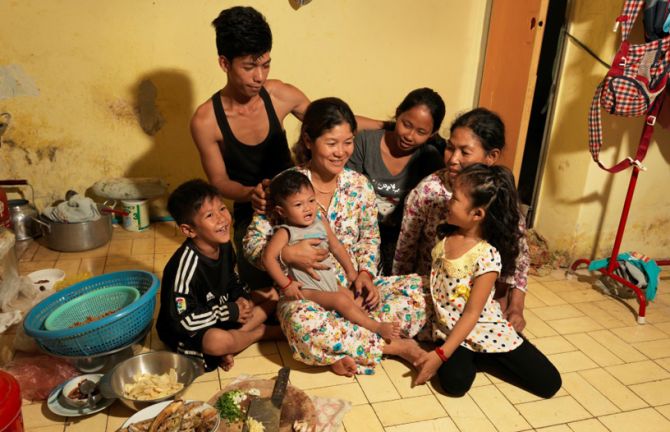
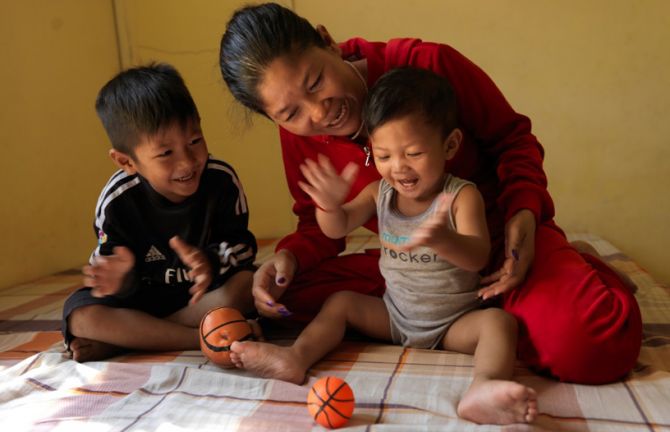
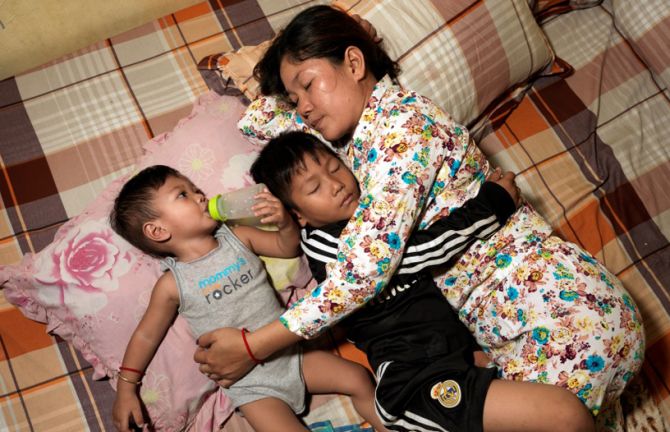
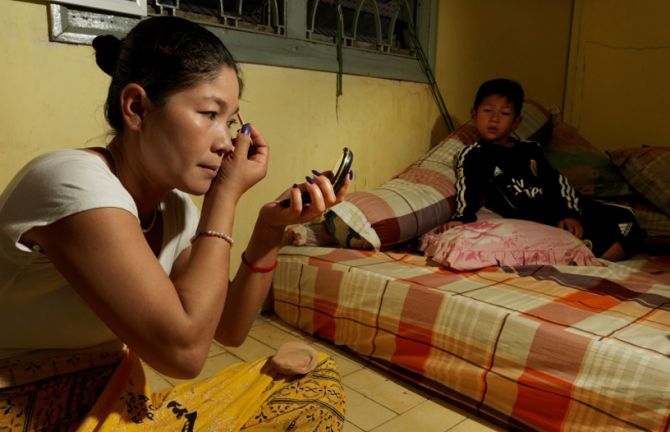
12 November 2014 12 November 2014When Sopheap comes back from work at 2 a.m., she tiptoes around her one-room flat, because everyone is sleeping. The 35-year-old mother slides into the bed she shares with her two young sons and catches a few hours of sleep, before getting up to make breakfast.
“I’m the family breadwinner. I support my boys, my niece and my mother,” said Sopheap. “I also send money home to my brothers and sisters.”
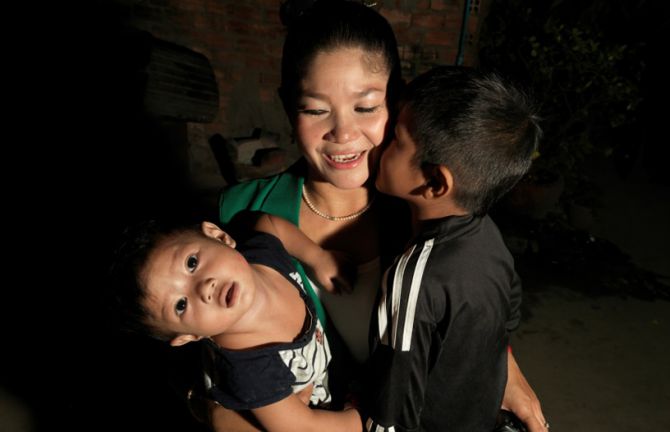
Like other mothers working the night shift, she enjoys being able to spend her days in quality time with her children: playing, cooking and caring for them. At night her own mother babysits.
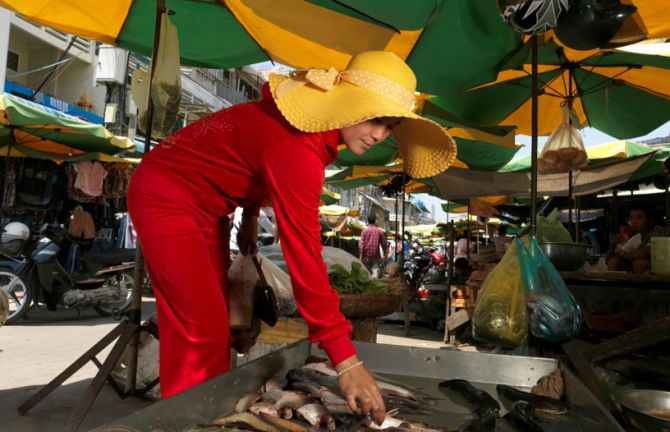
Sopheap is an entertainment worker, who spends her evenings in a beer garden in Phnom Penh. She got into the business after she moved to the Cambodian capital seven years ago—a far cry from her job as a fruit and vegetable seller in the local market in her home town.
“I make about US$ 120 a month now, that’s a lot more than what I brought in as vendor. Before, I couldn’t make ends meet,” said Sopheap.
Like many other Cambodian entertainment workers, with her finances precarious she decided to head for the capital. She says she was lucky because she was pretty and liked to sing. Her first job was entertaining clients in a restaurant and then she moved to her current establishment a year ago.
“It’s not easy. You know sometimes the men force us to drink. They harass us and can even become violent. But I’m lucky because my boss is understanding. If we aren’t feeling well, he even lets us take sick leave,” said Sopheap.
Sick leave is one of the basic worker rights recognized by Cambodia’s Labour Law, but until recently few entertainment workers were given that benefit. Now sick leave is recognized as a right for all entertainment workers. This comes following last month’s decision by the Cambodian Ministry of Labour and Vocational Training to issue a new ministerial regulation that calls for the protection of the occupational safety and health and labour rights of all entertainment workers. The term entertainment workers applies to a range of people in Cambodia who work in hotels, restaurants, guesthouses, karaoke parlours, discotheques, beer gardens, casinos and massage parlours, among other settings. While Sopheap says she does not engage in sex work, it is generally recognized that the job can lead to paid sex.
The move was welcomed by trade union representatives. “The government has finally recognized that entertainment workers are actually workers like all others and should be protected under labour law,” said Chan Dyna, representative of the National Entertainment Workers’ Network.
Many entertainment workers face poor working conditions, with excessively long hours, low pay and sexual harassment. Employers also often demand that their employees pay penalties when they are late or unexpectedly sick, trapping workers as they try to pay off their debts. The new regulations prohibit such penalties, as well as forced labour of any sort, and forced alcohol and drug consumption and abortions, helping to build an enabling environment for entertainment workers to receive health education and access to health services.
The International Labour Organization (ILO) is working with the Cambodian Government to train all labour inspectors on the new regulations by June 2015. The training programme includes not only education in occupational safety and labour rights but also HIV prevention and reducing stigma and discrimination of entertainment workers living with HIV.
“This latest positive development in labour rights for entertainment workers really evolved out of all the work that was done around HIV,” said Richard Howard, Senior Specialist on HIV and AIDS at the Regional Office for Asia and the Pacific of the ILO.
Through their participation in HIV programmes, entertainment workers learned not only to prevent and mitigate the impact of HIV, but to call for their sexual and reproductive rights, as well as social protection.
“The HIV movement helped empower women. It built the foundation for solidarity and became a platform for broader rights,” said Mr Howard.
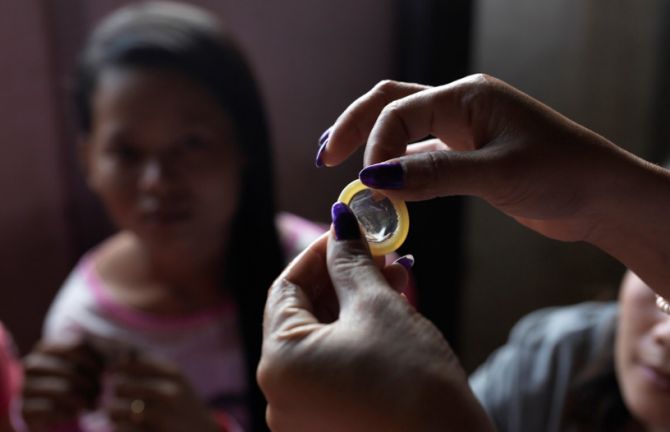
Sopheap is also a peer outreach worker and shares information on HIV with other entertainment workers. “We face a lot of stigma and discrimination. I hope the new guidelines will encourage people to respect us as professional women,” she said.
Multimedia
Region/country
Related
 Communities, authorities and UNAIDS coordinate to maintain HIV care during emergencies in Colombia and Venezuela
23 September 2026
 UNAIDS works with partners and communities to support Zambia's rollout of Lenacapavir to prevent new HIV infections
09 September 2026
 Built on trust - Community-led HIV responses in Thailand
26 August 2026

Feature Story
Accelerating HIV prevention and treatment in Namibia
06 November 2014
06 November 2014 06 November 2014The Government of Namibia has launched a three-year strategic action plan to accelerate nationwide HIV testing and counselling. The action plan, launched on 4 November, was developed by the Ministry of Health and Social Services in consultation with the United States Centers for Disease Control and Prevention, the United Nations Joint Team on AIDS and other development partners.
The main aims of the plan are to improve early detection of HIV and create effective linkages to integrated HIV prevention, treatment and care services in Namibia. It will also focus on strengthening linkages to increase early initiation of treatment, improving testing among key populations and scaling up integration of routine testing in clinics.
“The impact of the HIV testing and counselling strategy depends on linkages to care and treatment services, particularly for people living with HIV. This strategy marks our move from emergency response programming to a more sustainable and evidence-based approach,” said Petrina Haingura, Deputy Minister of Health and Social Services.
Government figures show that around 178 200 people living with HIV were receiving antiretroviral therapy in Namibia by the end of 2013. Between 2005 and 2013, Namibia had an estimated 33% reduction in new HIV infections and 8400 fewer AIDS-related deaths. However, most of the people living with HIV in Namibia do not know their status and often come for testing late, preventing timely access to HIV services.
“The new strategy will allow Namibia to move closer to reaching the new UNAIDS 90-90-90 target. Through our continued collaboration, quick response to epidemic changes and creative use of combination interventions we can achieve and AIDS-free generation in Namibia,” said Simon Alogory, CDC Director of the Centers for Disease Control and Prevention in Namibia.
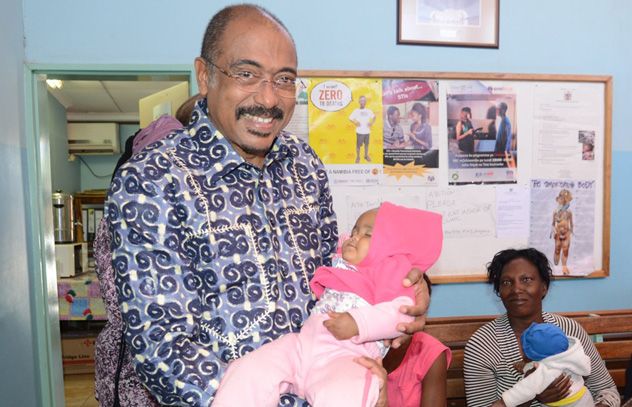
The Executive Director of UNAIDS, Michel Sidibé, was in Namibia for the launch of the plan, where he stressed the importance the new plan would have on achieving the new 90–90–90 targets recently announced by UNAIDS. Achieving the 90–90–90 targets would mean 90% of people living with HIV knowing their HIV status, 90% of people who know their status accessing HIV treatment and 90% of people on HIV treatment having a supressed viral load.
“The 90–90–90 target reinforces everyone’s right to know their HIV status and to access the best possible treatment,” said Michel Sidibé, Executive Director of UNAIDS.
Besides creating linkages to services, 90–90–90 is an essential entry point to addressing challenging social and structural issues, including equity, stigma and violence against women.
The Executive Director of the Global Fund to Fight AIDS, Tuberculosis and Malaria, Mark Dybul, was also present at the launch. He said, “Integration is about putting people at the centre of our service delivery. It is about bringing communities together to lift up that adolescent girl.”
Region/country



Feature Story
Viet Nam gets more value for money through integration of HIV services
24 October 2014
24 October 2014 24 October 2014A “one-stop-shop” health centre in Hanoi is providing integrated HIV and other healthcare services that are achieving progress and maximizing investments in the AIDS response in Viet Nam. Hanoi’s South Tu Liem district health centre is a model that the Viet Nam Authority for HIV/AIDS Control plans to replicate in high-burden areas of the country.
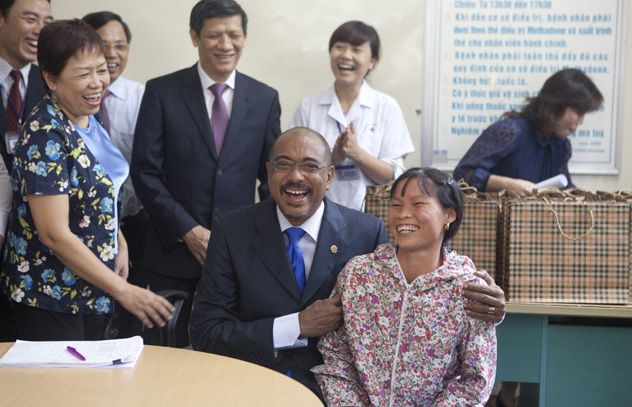
“Today I saw three things which will help not only Viet Nam but also other countries; integration and decentralization of services; a patient-centred approach; and peer support,” said UNAIDS Executive Director Michel Sidibé during a tour of the health centre. “It is important to bring people together from different social backgrounds and support them to become actors for change for HIV.”
The health centre provides a full range of HIV services to key populations, including people who inject drugs, sex workers and men who have sex with men. It is also the primary healthcare centre for the district’s general population. More than 500 people are receiving antiretroviral treatment and more than 300 people who inject drugs are on methadone maintenance therapy. The health centre also has peer outreach services, including needle and syringe distribution, HIV counselling and testing, tuberculosis diagnosis and treatment, prevention of mother-to-child transmission, as well as home-based care and peer support for treatment adherence.
Integration and decentralization of HIV service delivery systems, including health systems strengthening, is one of the strategic priorities put forward by Viet Nam’s new Investment Case for an optimized HIV response. The Investment Case, developed by the Minister of Health with support from UNAIDS and other development partners, aims to improve the effectiveness, efficiency and sustainability of the national response as international donors reduce their support to rapidly developing Viet Nam.
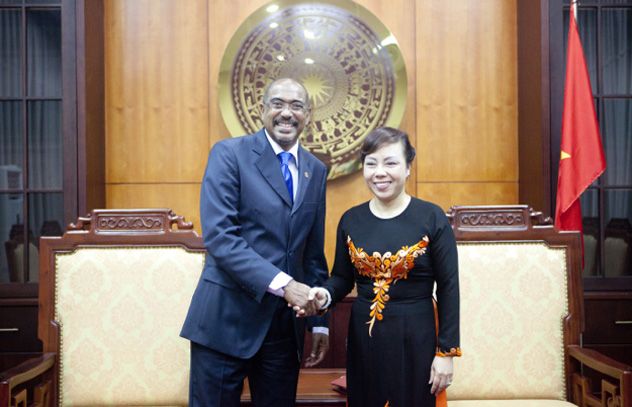
During a meeting with Mr Sidibé the Minister of Health Nguyen Thi Kim Tien said that Viet Nam is committed to following the Investment Case and increasing the domestic budget for the HIV response. However, she said Viet Nam needed the continued support of the international community to achieve global HIV targets. “We are faced with some challenges and difficulties, but we will try our best and work to sustain the HIV response and make greater achievements,” said Nguyen Thi Kim Tien.
The Investment Case finds that integration and decentralization will save money and help sustain HIV services by avoiding parallel spending on infrastructure, human resources and commodities; taking advantage of the health system’s existing cost efficiencies; creating links between related services; and facilitating referrals.
This approach will also help address some of the concerns that civil society have in Viet Nam. People living with HIV and key populations at higher risk of HIV infection worry that less donor funding could mean reduced access to affordable services.
“I’ve been on antiretroviral treatment for 10 years and I feel very good, like many other people,” said Nguyen Xuan Quynh, 41. “I heard that international support will end soon and maybe we must pay. But most of us are very poor.”
As part of his two-day official visit to the country, Mr Sidibé also met with leaders of civil society networks. He urged them to continue raising their voice on the issues that matter most, and to work closely with the public healthcare system to play a greater role in the provision of lower-cost and higher-impact HIV services.
Region/country


Feature Story
Ensuring access to generic antiretroviral medicines in low- and middle-income countries
29 October 2014
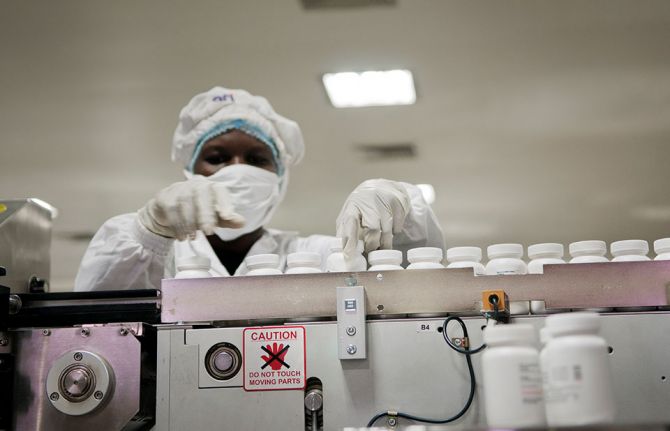
29 October 2014 29 October 2014The recent scale-up of the number of people living with HIV accessing antiretroviral therapy can be linked to the increased availability of generic antiretroviral medicines. Given that people living with HIV will need life-long access to such medicines, there is a need to scale up the research and development, production and distribution of generic antiretroviral medicines that are both effective and affordable.
A new journal supplement explores the production of antiretroviral medicines in resource-limited countries and their delivery to people living with HIV and how production and delivery can be made more effective and efficient. The publication also explores the lessons for the production and delivery of a broader set of drugs in low- and middle-income countries. Consisting of a compilation of 13 articles, Ensuring access to generic antiretroviral drugs in low- and middle-income countries is the result of a collaboration between UNAIDS and the journal Antiviral Therapy.
The task of ensuring that medicines and other health technologies are reliably and sustainably manufactured and are available to people in resource-limited countries is complex. According to the articles, the global community needs to focus on three key pillars that will help to ensure access to medicines: political vision and commitment; partnerships; and sharing of knowledge and technologies.
“The political commitment and partnerships exist and we have the tools and science to advance this agenda,” said UNAIDS Executive Director Michel Sidibé. “To meet this challenge, all partners must come together to cultivate a strong vision, backed up by an actionable plan, political leadership and sufficient and sustainable resources,” he added.
The authors of the supplement recognize that manufacturing and distributing medicines occurs within regulated free-market economic systems and that there is a need to deal with increasingly multifaceted patent issues, which affect price but ensure quality.
The authors conclude that as life expectancy grows, as countries develop and as the health needs of populations worldwide increase, the global community needs to ensure access to medicines for all. The AIDS response has often been at the forefront of the development agenda, and again must lead the way.


Feature Story
Leadership and focus on key affected populations frame Indonesia’s response to HIV
27 October 2014
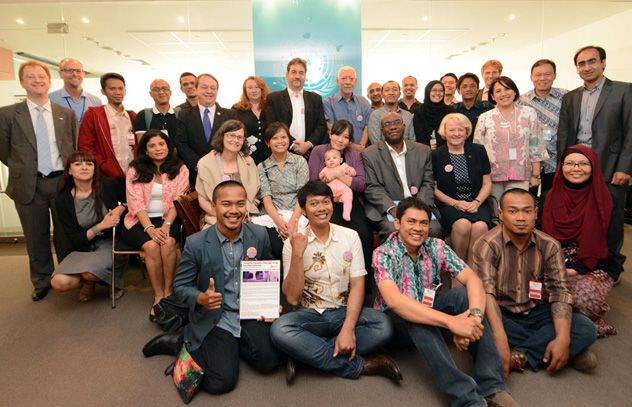
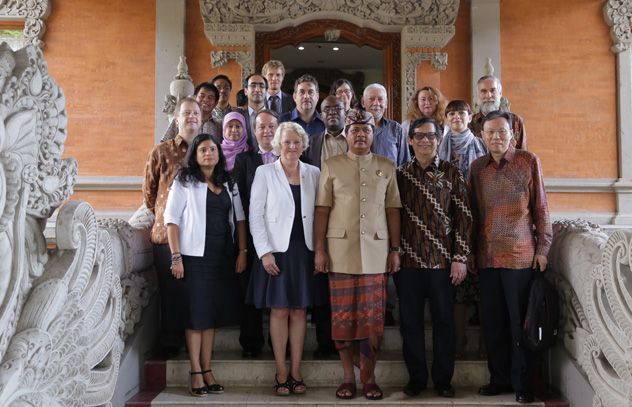
27 October 2014 27 October 2014A delegation of the UNAIDS Programme Coordinating Board (PCB) conducted a field visit to Indonesia from 22 to 24 October to see how the country has implemented an integrated and decentralized response to AIDS that has accelerated the strategic use of HIV treatment, increased testing and counselling and strengthened HIV prevention services for key populations.
Indonesia demonstrates how a multisectoral approach to HIV, combined with consistent leadership at all levels, is helping the country to stabilize the epidemic, accelerate treatment and provide innovative and comprehensive HIV services. The country’s AIDS response is guided by an investment strategy, developed with support from UNAIDS, which focuses resources and efforts where they are most needed.
“Indonesia’s response shows that cross-sectoral engagement and leadership—including impressive and vibrant civil society involvement—is critical for turning strategies into action,” said UNAIDS Deputy Executive Director Jan Beagle, who was leading the visit. “As we look towards ending the AIDS epidemic by 2030, continued commitment at all levels will be key to effective impact—for AIDS and the broader health and development agenda.”
According to national estimates, 638 000 people are living with HIV across Indonesia, and latest national data show that new infections are stabilizing, although there are increases among men who have sex with men. Indonesia’s epidemic is largely concentrated among key populations, including sex workers and their clients, men who have sex with men, people who inject drugs and transgender people. While national HIV prevalence is low, a higher burden of HIV is found among key populations and in certain geographic areas, such as urban settings and in the Papua provinces.
Indonesia’s response shows that cross-sectoral engagement and leadership—including impressive and vibrant civil society involvement—is critical for turning strategies into action
Jan Beagle, UNAIDS Deputy Executive Director
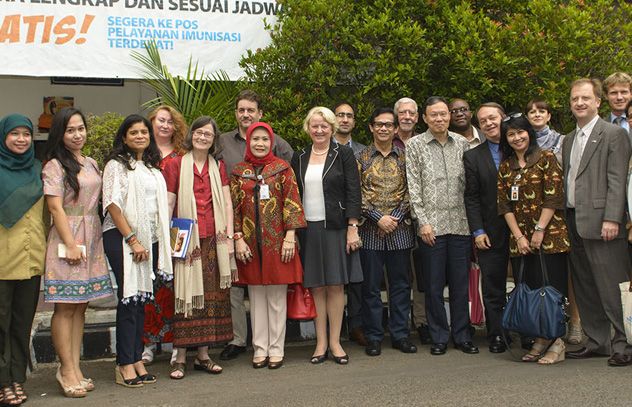
The delegation, which included members from Australia, Brazil, El Salvador, Iran (Islamic Republic of), Luxembourg, Ukraine and Zimbabwe, as well as the PCB NGO delegation and UNAIDS Cosponsors, met with a range of national partners, including senior government representatives at the national, provincial and city levels, the National AIDS Commission, development partners, civil society organizations and the United Nations Country Team. The delegation also visited several sites to see examples of scaling up access to HIV testing and treatment and ways of addressing stigma and discrimination.
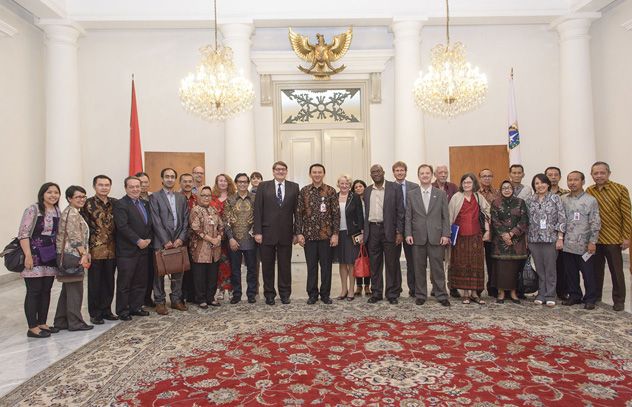
During a meeting with the PCB delegation, the Acting Governor of Jakarta, Basuki Tjahaja Purnama, highlighted the city government’s response to HIV in the capital. The Acting Governor underscored the significant investments that the local government has made to HIV programmes, including increasing access to HIV treatment, and expressed his commitment to prioritize health, education, employment and housing for people living with HIV, ensuring that no one is left behind.
Over the past years, Indonesia has increased its domestic financing to 42% of its total spending on AIDS. Throughout the visit, political commitment to further increase domestic funding was emphasized at all levels. However, government officials also stressed that international financing remains critical to scaling up the response, in particular for accelerating access to HIV treatment.
Community-friendly services key to a sustainable response
At a gathering of civil society groups, including networks of people living with and most affected by HIV, the delegation was presented with an overview of how youth organizations are mobilizing young Indonesians, as part of the ACT 2015 initiative, to ensure that HIV and sexual and reproductive health and rights remain a priority for the country’s new government and in the next development era.
Site visits to a number of public and private HIV service-providing institutions in Jakarta and Denpasar showcased how community-friendly and community-led services are improving uptake of services and reducing stigma and discrimination. Examples included the country’s main HIV treatment referral hospital in Jakarta, which runs programmes to sensitize staff on the specific needs of key populations at higher risk, and the Yayasan Kertipraja Foundation and the Bali Medika Clinic in Denpasar, where a number of programmes are led by key populations and provide easy-to-access services after work hours and on Saturdays. As well as increasing demand among key populations, such programmes have also led to early uptake of HIV treatment. The National AIDS Commission, with support from UNAIDS, is looking at how to further replicate and scale up such models across the country.
Region/country


Feature Story
Harnessing the power of technology for social transformation
27 October 2014
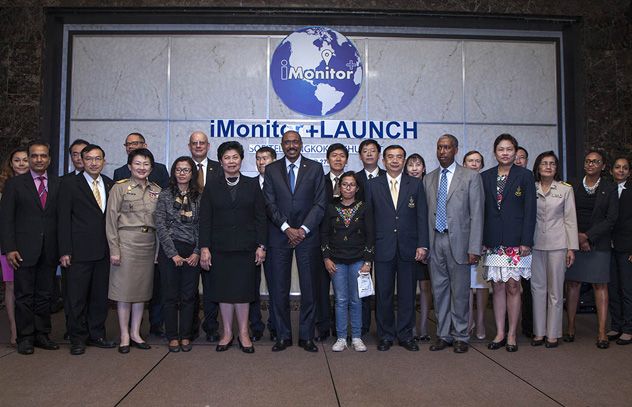
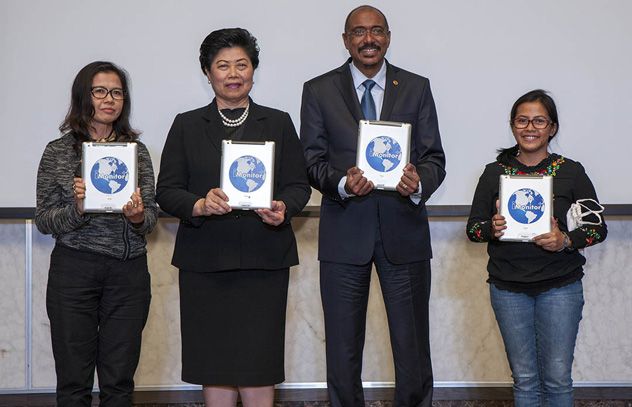
27 October 2014 27 October 2014Civil society, public and private organizations and UNAIDS are leveraging advances in mobile technology to empower communities. Together they have produced a new mobile application called iMonitor+, which enables users to access HIV prevention and treatment services and provide feedback on the quality of such services.
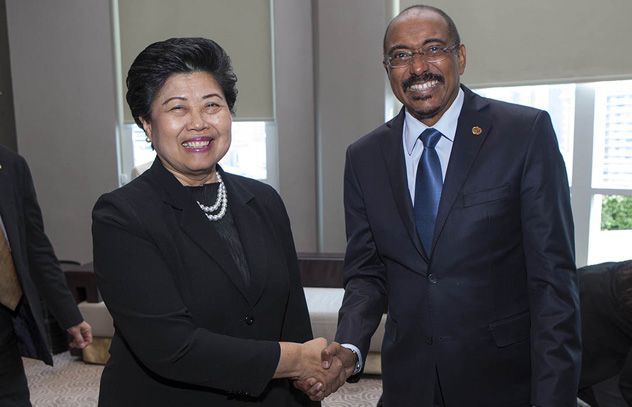
The Deputy Governor of Bangkok, Pusadee Tamthai, the UNAIDS Executive Director, Michel Sidibé, the Public Campaign Officer of the Indonesian AIDS Coalition, Ayu Oktariani, and the Director of Service Workers in Group Foundation (SWING), Surang Janyam, launched iMonitor+ on 27 October in Bangkok, Thailand.
“This is a data revolution: real-time, mobile health information systems. iMonitor+ is not just a gadget, but a tool for social transformation. It will empower people to demand services and foster public accountability,” said Mr Sidibé.
iMonitor+ uses global positioning satellite technology to locate a user, who can then receive information on where to access condoms, HIV testing, counselling and treatment and other key services. If there are stock-outs of antiretroviral medicine and other HIV commodities, the user can send alerts to a central dashboard and be directed in real time to other services nearby. Users can also report any experience of stigma or violation of their rights in HIV service and other delivery settings to the dashboard. Public health authorities and community partners are working together to resolve as quickly as possible issues raised by the alerts.
“iMonitor+ has great potential as an important early warning tool, which can notify public health authorities of gaps in key services,” said the Deputy Governor of Bangkok. “By working with civil society to develop iMonitor+ we have opened up an important channel for dialogue and strengthened key partnerships for social transformation.”
Since early June more than 100 volunteers from five community networks in Thailand, Indonesia, India and the Philippines have been pilot testing iMonitor+ to provide feedback and adapt the application to each network’s specific needs. In Thailand, the Bangkok Metropolitan Administration has partnered with SWING to test and fine-tune the application.
“iMonitor+ is an effective platform with which to work with public health authorities,” said the Director of SWING. “It is providing us with an opportunity to directly influence the way the services are delivered to communities.”
The Indonesian AIDS Coalition has been running a trial with iMonitor+ in four cities, including Jakarta. Ayu Oktariani said, “We are finding that health authorities are taking the real-time alerts we register with iMonitor+ seriously and that they move much more rapidly than before to close service delivery gaps.”
The feedback from communities and service providers will ensure continuous innovation and adaptability of the app. This participatory monitoring tool is not only an important community tool for quality assurance and responsiveness of HIV services, but can give people the power to monitor services in many areas aside from public health and serve as an instrument for improved public accountability.
Region/country
Feature Story
Thailand reaffirms its commitment to ending the AIDS epidemic by 2030
27 October 2014
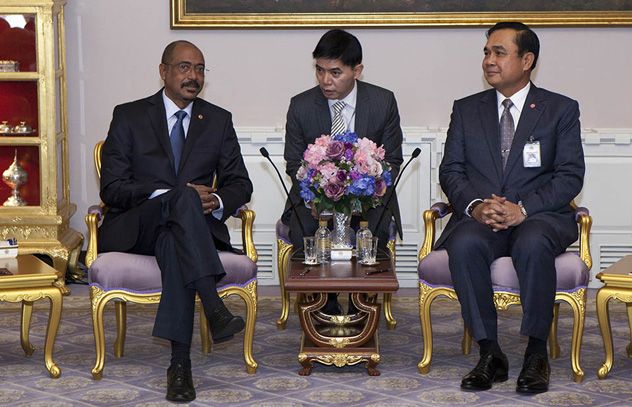
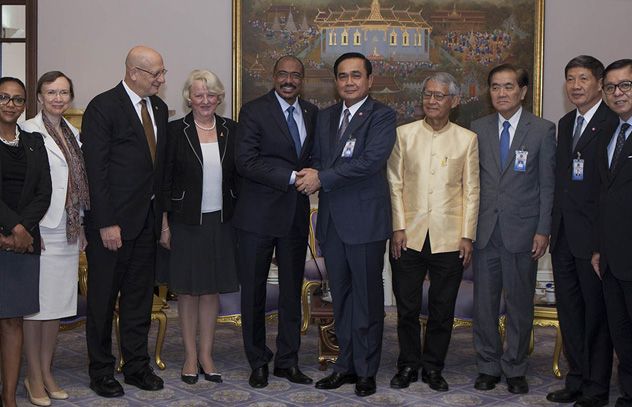
27 October 2014 27 October 2014Thailand remains committed to working with other partners to end the AIDS epidemic in the region. Speaking to UNAIDS Executive Director Michel Sidibé on 27 October in Bangkok, Thailand, Prime Minister Prayut Chan-o-cha emphasized that Thailand will maintain its efforts in the HIV response and will share its experience with neighbouring countries and the world. He also stressed that Thailand’s commitment to the three zeroes—zero new HIV-infections, zero discrimination and zero AIDS-related deaths—is absolutely unwavering.
Through its innovative Ending AIDS by 2030 strategy, on 1 October the country became the first in Asia to offer life-saving treatment to everyone living with HIV. Documented and undocumented migrants can access a similar package of services. The Prime Minister said that globalization and migrant labour is a reality and there is a need to ensure that no one is left behind.
Mr Sidibé congratulated the Prime Minister for Thailand’s innovation and remarkable progress in placing people at the centre of the AIDS response. “Thailand showed that with commitment and vision it is possible to reach the three zeroes,” said Mr Sidibé. “We see Thailand as a strong transformative force for social justice in the AIDS response.”
Mr Sidibé is on a two-day trip to the country, during which he is meeting government leaders and key civil society organizations.
In 2013, Thailand estimates that almost 460 000 people were living with HIV, which is a 33% reduction since 2000. There were 8256 new HIV infections in 2013, which was a reduction of 71% from 2000, and nearly 21 000 people died of AIDS-related causes, which was a decrease of 62% since 2000.
Feature Story
Myanmar confirms increasing domestic HIV funding by US$ 5 million
17 October 2014
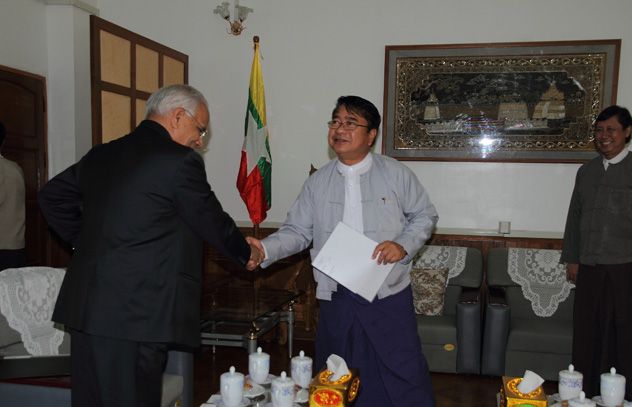
17 October 2014 17 October 2014Myanmar’s Minister for Health, Than Aung, confirmed during a meeting with the United Nations Secretary-General’s Special Envoy for AIDS in Asia and the Pacific, J.V.R. Prasada Rao, that domestic funding for HIV treatment will be increased by US$ 5 million. Mr Rao completed a five-day visit to Myanmar on 17 October, in which he focused on supporting the country’s efforts to rapidly and effectively scale up its AIDS programme.
There were 190 000 people living with HIV and 6700 new HIV infections in Myanmar in 2013. More than 65 000 people were receiving HIV treatment in 2013 and the Ministry of Health estimates the new funding will enable 40 000 additional people living with HIV to access antiretroviral medicine and will increase the national HIV treatment target coverage to 85%. The Minister of Health has asked his staff to work with UNAIDS to determine the cost of reaching 100% coverage.
Mr Rao welcomed Myanmar’s commitment to the HIV response and said, “The government is showing remarkable leadership in its national AIDS response and I ask the country’s leaders to extend strong support to the goal of ending AIDS by 2030. This goal must be a part of the sustainable development goals on health, which countries will adopt in 2015.”
The Minister of Health also pledged an additional US$ 1 million to further scale up opioid substitution therapy for 10 000 people by the end of 2016. Studies show that harm reduction programmes such as needle–syringe exchange programmes and opioid substitution therapy are effective in reducing the spread of HIV.
In Myanmar, key populations, including people who inject drugs, sex workers, men who have sex with men and transgender people, are at higher risk of HIV infection. Mr Rao urged the government to amend policies that violate the human rights of key populations and praised the country’s draft intellectual property law, which will help protect access to affordable medicines.
During his mission Mr Rao met other top officials, including the Attorney General, Tun Shin, the Deputy Minister for Home Affairs, Kyaw Kyaw Htun, and the Deputy Minister of Foreign Affairs, Thant Kyaw. He also met with Aung San Suu Kyi, Chairperson of the National League for Democracy and Member of Parliament, who expressed her support for efforts to reform laws and policies.
Mr Rao also met civil society representatives from key populations while participating in a panel discussion on the sustainable development goals and HIV.
Region/country
Feature Story
WHO report shows progress on HIV-associated TB but pace needs to be faster
22 October 2014
22 October 2014 22 October 2014A new report on Tuberculosis (TB) released on 22 October by the World Health Organization shows that 9 million people developed TB in 2013, and 1.5 million died, including 360 000 people who were living with HIV.
The Global Tuberculosis Report 2014 highlights that while the number of TB deaths among people living with HIV has been falling for almost a decade—from 540 000 in 2004 to 360 000 in 2013—early case detection, antiretroviral treatment, preventive therapy and other key activities need to be further scaled-up.
According to WHO, one of the keys to reducing the number of deaths from HIV-associated TB is early case detection through the provision of HIV testing to all TB patients and routine TB screening among people attending HIV care. In 2013, 48% of TB patients had a recorded HIV test result and only half of those estimated to be co-infected with HIV-related TB were identified. Since 2012, WHO has recommended antiretroviral therapy (ART) for all TB patients testing positive for HIV within the first 8 weeks of initiation of TB treatment (and within 2 weeks of TB treatment for TB patients with profound immunosuppression). From 2012 to 2013, HIV treatment coverage among recorded TB patients rose encouragingly from 60% to 70% but this still represents less than a third of those estimated to be living with both TB and HIV.
Uptake of isoniazid preventive therapy (IPT)—which prevents people living with HIV from developing active TB—is rising slowly, the report finds. However, while the provision of IPT is increasing in Africa, only 21% of countries globally and 14 out of the 41 high burden TB/HIV countries reported provision of IPT to HIV positive people in 2013.
The implementation of collaborative TB/HIV activities has not evolved evenly across countries. The report stresses that further scale up of collaborative TB/HIV activities could be facilitated by joint TB and HIV programming, which would help to overcome constraints, promote synergies and achieve efficiency gains, especially between TB and HIV programmes.
WHO recommendations on the activities needed to prevent TB in HIV-positive people and to reduce the impact of HIV co-infection among HIV-positive TB patients have been available since 2004. These include establishing and strengthening coordination mechanisms for delivering integrated TB and HIV services; HIV testing for all patients with presumptive and diagnosed TB, providing antiretroviral therapy and co-trimoxazole preventive therapy to all HIV-positive TB patients, providing HIV prevention services for TB patients, intensifying TB case-finding among people living with HIV, offering IPT to people living with HIV who do not have active TB, and preventing the transmission of TB infection in health care and congregate settings.
The report concludes that despite encouraging progress, reaching the global target of halving deaths from HIV-associated TB is at risk, if countries don’t intensify the collaborative HIV/TB activities.