

Feature Story
Impact of US funding cuts on HIV programmes in Namibia
14 March 2025
14 March 2025 14 March 2025Funding and Implementation
The CDC Cooperative Agreement (CoAG) implementing partners, including the Ministry of Health and Social Services (MoHSS), have received approval and funds to implement the Co-Ag from April to September 2025, pending final review from the US Government.
Impact on Services
- ART Services: Facilities providing antiretroviral therapy (ART) are operating at full capacity, but there are challenges with paediatric HIV treatment services, due to disruptions in referrals and linkages.
- Community Health Workers: Funding cessation has affected community health workers responsible for adherence support and retention.
- Data Collection: Data collection continues at all facilities, but data quality control and collation are impacted.
- Stock Availability: ARV supplies, HIV, viral load and other lab test kits are available with minimal disruption. However, there are intermittent condom stock-outs, which may worsen in the next 3-6 months if procurement and supply chain issues, including condom distribution are not urgently addressed.
- Service Disruptions: Reduced capacity in community-based paediatric HIV services, HIV prevention and community health worker programs.
Primary HIV Prevention Services
- Disruptions: There are disruptions in the distribution of condoms and other prevention commodities, reduced availability of pre-exposure prophylaxis (PrEP) services, suspension or reduction of HIV prevention education and awareness campaigns, decreased access to HIV testing and counselling services, delays or disruptions in community-based HIV prevention outreach programs, limited or suspended implementation of voluntary medical male circumcision (VMMC) services, and reduction in funding for HIV prevention, research and innovation.
Impact on Key Populations
- Adolescent Girls and Young Women (AGYW): Disruption in access to PrEP services, reduced capacity of service delivery points, discontinuation of some outreach programs, reduced availability of HIV testing services, reduced availability of education and awareness campaigns, and reduction in counselling and social support services.
- Sex Workers, MSM, and Transgender Persons: Disruption in access to PrEP services, reduced capacity for HIV prevention services, , reduced availability of HIV counselling and testing, and disruption in access to antiretroviral therapy services as well as adherence and retention support.
- Human rights, key and vulnerable populations Namibia received PEPFAR funding for work on stigma, discrimination and enabling legal environments. These included USAID-led LIFT UP Equity Incentive initiative, which was supporting efforts to strengthen human rights and equity for Key Populations, AGYW and children (priority populations) to new and groundbreaking levels. Most programs have now resumed with some work ongoing with reduced capacity. This funding has not been redirected to other programs. Some communities have not been collecting data on human rights issues, including increased levels of stigma and discrimination and health service delivery monitoring, due to not receiving the funds, while others have received some funding. One major assignment affected by the cuts is the Key Population Integrated Biobehavioral Survey (KP IBBS) 3, which focused on gay men and other men who have sex with men (MSM), female sex workers (FSW), and transgender women. The survey had just started, but had to be halted due to the funding cuts,
Civil society impact, resilience and response: The impact of the US Government cuts on community-led organizations service delivery includes reduction or suspension of services (at community-led or peer-led facilities and services, and international NGO-run services), increased demand with fewer resources, loss of staff and funding cuts. CLOs also face reduced participation in policy discussions and limited ability to advocate for key issues, as well as reduced ability to collect and report data.
Politically Relevant Updates
- Government Actions: The Minister of Health has briefed the Cabinet, and the National Planning Commission has been tasked to coordinate stakeholder engagement. The Sustainability Planning Steering Committee is planning for the implementation of the Sustainability Roadmap, and will among others, conduct a gap analysis using the UNAIDS RAFT tool to highlight the critical funding gaps to be presented to the leadership.
- Taskforce Formation: The National Planning Commission has been tasked to form a taskforce to coordinate stakeholders’ engagement to respond to the US Government shift impact, although the timeline is unclear.
Region/country
Related

Feature Story
Impact of US funding freeze on HIV programmes in Haiti
13 March 2025
13 March 2025 13 March 2025Immediate Risks and Disruptions
- PrEP Services Halted: The halt to pre-exposure prophylaxis (PrEP) services remains a significant public health risk. PEPFAR-supported sites cover 80% of PrEP patients nationwide, with most new cases concentrated in the West and Artibonite Departments. Due to the US funding freeze, PrEP services (except for pregnant and lactating women) have been completely halted, along with communication and community engagement strategies. The National HIV Program (NAC) foresees a monthly rise of 30 to 50% in new HIV infections in the absence of communication and prevention activities.
- ART Access: As of December 2024, 85% of people living with HIV (PLHIV) had access to antiretroviral therapy (ART). However, beyond the initial halt of ART distribution across all PEPFAR sites, stock shortages and budget cuts threaten the continuity of this coverage. A humanitarian flight from Washington D.C. delivered supplies in February 2025, ensuring ARV availability for the next six months, but sustainability remains uncertain due to unpaid staff salaries and lack of operational support. In addition, 35,000 patients will likely be impacted as access is provided to them through USAID-financed sites.
- Supply Chain Challenges: Logistical issues have caused shortages of essential HIV medications and other critical medical supplies. The continuity of the USAID-led Global Health Supply Chain Program is uncertain, which could further disrupt service delivery, as well as causing potential loss of stock
Politically Relevant Updates
- Government and NAC Efforts: The Ministry of Health and the National AIDS Council (NAC) have conducted rapid assessments to identify service disruptions caused by funding cuts, staff shortages, and supply chain challenges. They are prioritizing vital services and exploring alternative funding sources and service delivery models, including on in the short term for guaranteeing access to treatment to 35,000 patients.
- Stakeholder Coordination: Efforts are being made to ensure continuity of HIV, viral hepatitis, and STI services. Coordination with PAHO/WHO and UNAIDS is ongoing to keep health sector partners informed and aligned.
- Civil Society Impact: Civil society organizations (CSOs) have been significantly impacted, particularly those providing services for key, priority, and vulnerable populations. The loss of key population-focused interventions has increased vulnerability to stigma and discrimination and weakened responses to sexual and gender-based violence (GBV). Furthermore, access to healthcare, education, nutrition, shelter, psychosocial support, economic empowerment programs for caregivers, and comprehensive sexual and reproductive health and GBV education has been directly affected, including via the DREAMS program.
Community Impact
- Community Resilience and Response: Despite the challenges, community-led initiatives have mobilized to support the government in maintaining critical services. Peer education and sensitization campaigns, community health agents delivering treatment and medication, and psychosocial support services for HIV patients are ongoing.
- Mental Health Support Initiative: With UNAIDS' support, a stress counselor network has been established to assist community health workers and clients in need.
- Housing Works Haiti Workshop: On February 19, Housing Works, as part of the Forum of CSOs and Community Led Monitoring (CLM), organized a workshop with key stakeholders under the theme "Together for the Future: Advocating for HIV Services in Haiti." This event highlighted the importance of continued advocacy and support for HIV services.
HIV programs in Haiti are facing significant challenges due to funding cuts, supply chain disruptions, and halted services. However, coordinated efforts by the government, international organizations, and civil society are ongoing to mitigate these risks and ensure the continuity of essential services. Community resilience and innovative responses are crucial in maintaining support for those affected by HIV in Haiti.
Related resources
Region/country

Feature Story
Impact of US funding freeze on HIV programmes in Kenya
13 March 2025
13 March 2025 13 March 2025Immediate Risks and Disruptions
- Human Resources Impact:
- Affected Personnel: Doctors, clinical officers, nurses, laboratory technologists, pharmacists, community health workers and staff funded by the US Government have been impacted.
- Service Disruptions: Some facilities providing Antiretroviral Therapy (ART) were closed without clear referral pathways. However, some have since reopened except for PEPFAR supported DICEs. Community-led and peer-led services have stopped, including community-led monitoring and community-based HIV prevention outreach programs.
- Commodity Shortages:
- Health products and technologies: The Country has adequate stocks for most HIV products and technologies except Nevirapine, Viral Load, HIV test kits, and Early Infant Diagnosis (EID) that are running low, with stock-outs foreseen in the coming days if PEPFAR supported commodities are not distributed.
- Service Reductions:
- Pediatric HIV Treatment: Facilities are working at reduced capacity, particularly for sample networking for Early Infant Diagnosis and Viral Load.
- Prevention Services: Disrupted for Adolescent Girls and Young Women (AGYW) and key populations, including PrEP and HIV counseling and testing. The DREAMS programme has been impacted, and outreach prevention activities for AGYW have been stopped. Additionally, community-led responses and community based out reaches have been disrupted.
- Supply Chain Challenges:
- The USAID funded procurement agency is unable to distribute products due to the stop-work order, affecting the supply chain for HIV commodities.
Politically Relevant Updates
- Government Actions:
- Supplementary Budget: The government is analyzing the cost of covering US Government-funded human resources as well as other affected services to be presented to the Cabinet through a cabinet memo.
- Resource Reallocation: Advocacy for reallocation of domestic resources to priority HIV programs.
- Integration of Services: The Government has advised the integration of HIV services into other health services for continuity and sustainability. Plans are underway to conduct rapid assessment of integration of HIV services to inform documentation of case studies and development of the integration blueprint.
- Social Health Authority (SHA) and Social Health Insurance Fund (SHIF): Ongoing advocacy to include HIV in the SHA benefit package.
- Civil Society and communities Impact:
- CSO Challenges: Civil society, including community-led and community-based organizations face funding cuts and loss of staff, leading to reduced or suspended services.
- Increased Demand: Remaining organizations face increased demand with fewer resources.
- Communities have reported abrupt integration without preparation, anxiety and panic leading to hoarding of ARV, unintended disclosure by health care workers leading to increased incidences of stigma and discrimination.
- UN Response:
- Impact Assessment: UNAIDS Kenya Country office supported communities to assess the impact of US Government stop work order. The UN country team continues to guide assessment of the impact on the UNSDCF programs across Agencies.
Related resources
Region/country
Related
Feature Story
Impact of US funding cuts on the global AIDS response — Weekly update 10 March 2025
12 March 2025
12 March 2025 12 March 2025This weekly update summarizes reports on the impact of US funding cuts on national AIDS responses from 20 UNAIDS Country Offices received during the week of 3-7 March 2025. These reports show that an increasing number of US-funded implementing partners—including in Botswana, South Africa and Zambia—have received notices that their funding awards have been terminated. In some cases, these notices have led to the closure of HIV services that had previously been allowed to operate under terms of waivers.
Many national AIDS responses impacted by the freezing or termination of US funding are prioritizing the continuation of antiretroviral therapy for people living with HIV, including the procurement of life-saving antiretroviral medicines (ARVs). Despite these measures, there have been reports of panic and hoarding of medication among people living with HIV who fear that their governments and remaining partners may struggle to maintain these services – and that stockouts will occur. Multiple countries have reported significant impacts to human resources for health supported in part or in full by US funding. This includes 1,952 doctors, 1,234 nurses, and 918 technical and management staff in Kenya; 8,600 healthcare providers and community workers in Côte d’Ivoire; 423 medical and technical staff in Namibia; and about 250 health professionals that provided technical assistance to the HIV program in Angola. The previous week South Africa reported that more than 15,374 HIV response staff at national level and across 27 priority districts were impacted by US funding cuts.
HIV prevention, testing and support services for populations at high risk of infection, as well as community services and structural enablers work, have been hard hit by funding cuts. Many US-funded drop-in centres and other safe spaces for highly stigmatized key populations and adolescent girls and young women have been closed, and US funding for the provision of pre-exposure prophylaxis (PrEP) to these populations has been largely halted. US support to community-led monitoring programmes has been frozen or terminated, and community-led organizations in Kenya and other countries have lost funding to engage in advocacy and policy design.
Related resources
Download situation report
Related
Feature Story
Impact of US funding freeze on HIV programmes in Kazakhstan
12 March 2025
12 March 2025 12 March 2025- CDC-Funded Programs:
- CDC-funded programs continue operations with ICAP as the implementer, applying the conditions of the Temporary Restricting Order (TRO) and the Limited Waiver to Pause focusing on health system strengthening, laboratory support, and medical worker capacity-building.
- USAID-Funded Activities:
- Status: Remain paused as the waiver related to USAID funding has not been operationalized.
- Global Fund (GF):
- The Global Fund is considering using savings to maintain the national electronic register as an immediate mitigation measure, with the National Center taking ownership and transitioning it to national hosting.
- Reduction in Services:
- HIV Testing and Outreach: 90% reduction for key populations, affecting four HIV-servicing NGOs in two regions. These regions account for 20% of the population of people who use drugs and 9% of the population of men who have sex with men (MSM).
- Impact: Expected to affect national targets on new case detection, treatment adherence, and PrEP scale-up.
Politically Relevant Updates
- Government Mitigation Measures:
- Domestic Funding: There is a commitment to use domestic funding to cover outreach work gaps in two regions, allowing AIDS centers to contract outreach workers, given that the funding pause will lead to termination after the 90-day freeze.
- Civil Society Response:
- Mitigation Strategies: Some of the mitigation strategies and innovations by civil society (including community) include maintaining services through volunteering, applying for social contracting, shifting outreach workers to AIDS center contracts, transitioning to web outreach, reviewing plans with mid- and long-term scenarios, and engaging in dialogue with the Global Fund on the uptake of some service funding after the 90-day pause and once there is more clarity on the final decision.
- National Consultation: Convened by UNAIDS with national partners to assess risks and possible scenarios.
- Joint UN Team Meeting: Conducted to assess the potential impact on cooperation, technical assistance, and partnerships.
- Community Engagement: Civil society and community representatives actively involved in maintaining services and planning for mid- and long-term scenarios.
UN Response:
- National Consultation: Convened by UNAIDS with national partners to assess risks and possible scenarios.
- Joint UN Team Meeting: Conducted to assess the potential impact on cooperation, technical assistance, and partnerships.
- Community Engagement: Civil society and community representatives actively involved in maintaining services and planning for mid- and long-term scenarios.
Related resources
Region/country
Related
Feature Story
Impact of US funding freeze on HIV programmes in Tanzania
11 March 2025
11 March 2025 11 March 2025Immediate Risks and Disruptions
- Total Pause of HIV Prevention Programming: There is almost complete halt of HIV Prevention interventions that were fully funded by PEPFAR. This includes DREAMS programme targeting vulnerable adolescent girls and young women, orphans and vulnerable children and voluntary medical male circumcision. In addition, there is significant impact to other HIV prevention interventions that were largely supported by PEPFAR including PrEP for at risk populations (key populations). There is the risk of wastage of commodities related to prevention.
- Fear of Service Interruption: There is severe and widespread fear of service stoppage, leading to reports of hoarding antiretroviral (ARV) drugs and patients dropping out of care due to the risk of treatment interruption. There was disruption of samples transportation for testing. Implementing partners with waivers are not fully operational due to slow payment systems among other reasons, thereby affecting efficiency of services.
- ARV Stock: The current ARV stock is expected to last for the next four months and shipments are on their way that will ensure commodity security until the end of 2025. The forecast for 2026 is not clear. Close monitoring is required as the pause in programming might impact the demand and implementation of lab services.
- Technical Support: Technical support to regions, councils, and health facilities has been paused.
Politically Relevant Updates
- Government Actions: The Tanzania AIDS Commission plans to conduct a detailed assessment of the impact of the US funding pause. There are discussions in parliament regarding future budgetary allocations by the government for the purchase of antiretroviral therapy (ART). The government has reassured that there will be no disruption of ARV medications with commitment to allocate adequate funds to purchase and distribute ARVs free of charge.
- Global Fund Discussions: The Global Fund Principal Recipient (PR1) is in discussions regarding the possibility to reinvest savings from the Global Fund HIV grant into HIV commodities to ensure security.
- UN Engagement: UNAIDS and WHO have engaged with the Tanzania AIDS Commission to assess the impact and discuss fundraising modalities to continue ongoing activities.
- Civil Society Response: Civil society organizations are calling for expansion on the implementation capacity of the Global Fund grant to mitigate the impact of the pause.
- Government Mitigation Measures: Strategies are being implemented to absorb the human resources for health (HRH) to ensure continuity in care. The government is in the final stage of launching a web-based Care and Treatment Centre (CTC) database that will mitigate absence of data clerks who were USAID supported; the health care workers will be able to directly feed the database which is integrated to DHIS-2; this will be linked with all the electronic medical records in both private and public facilities. The government will continue to carry out storage and distribution by the Medical Stores Department (MSD) of the Ministry of Health. Plans are also in place to use government postal services for the transportation of lab samples.
Region/country
Related
Feature Story
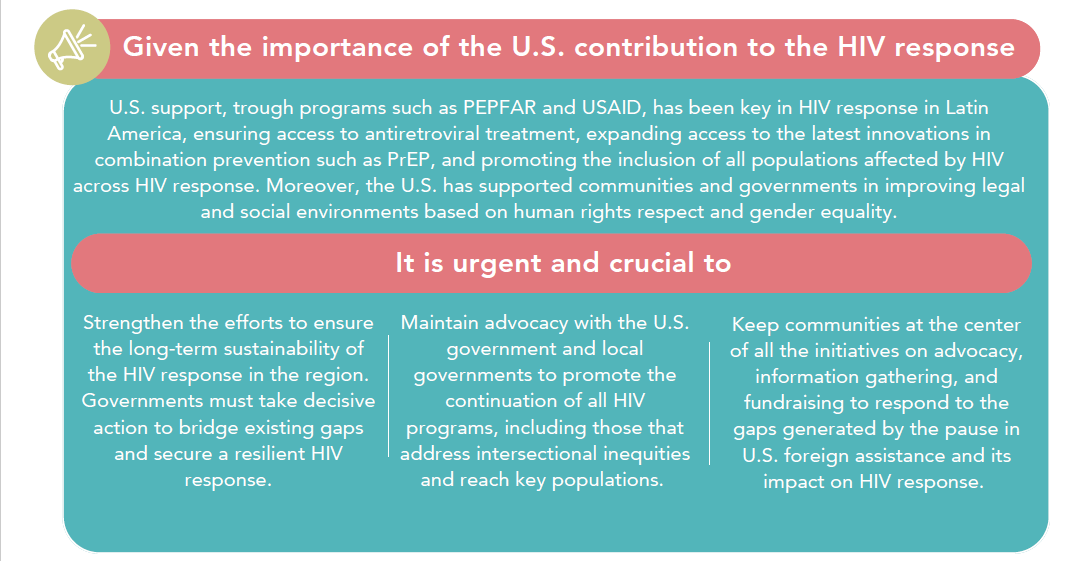
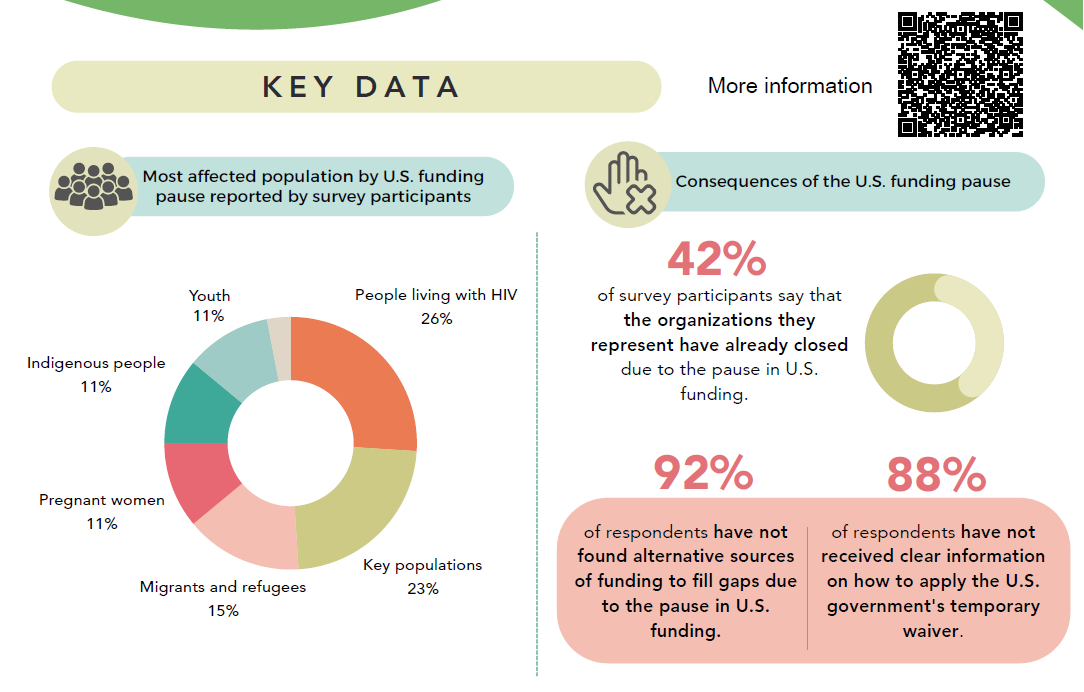
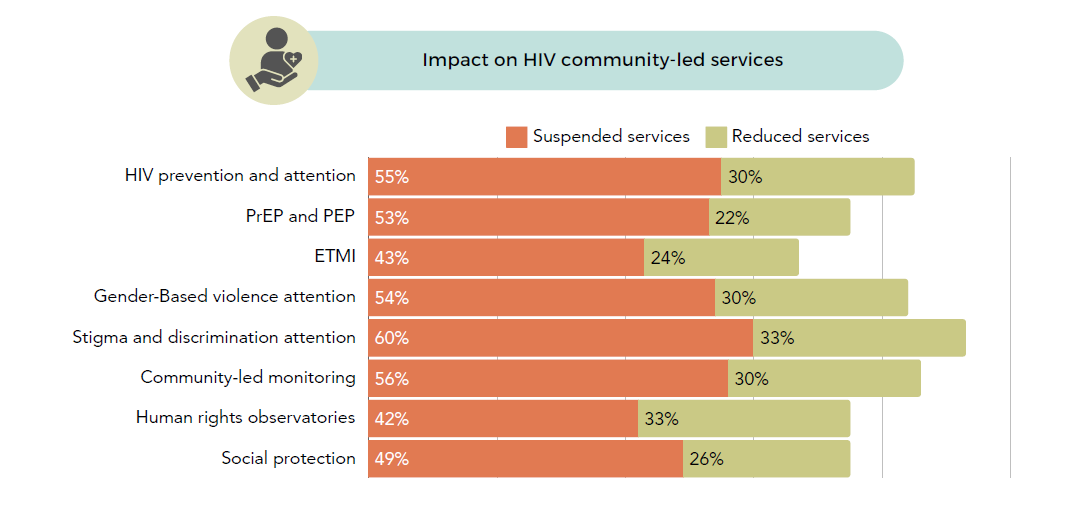
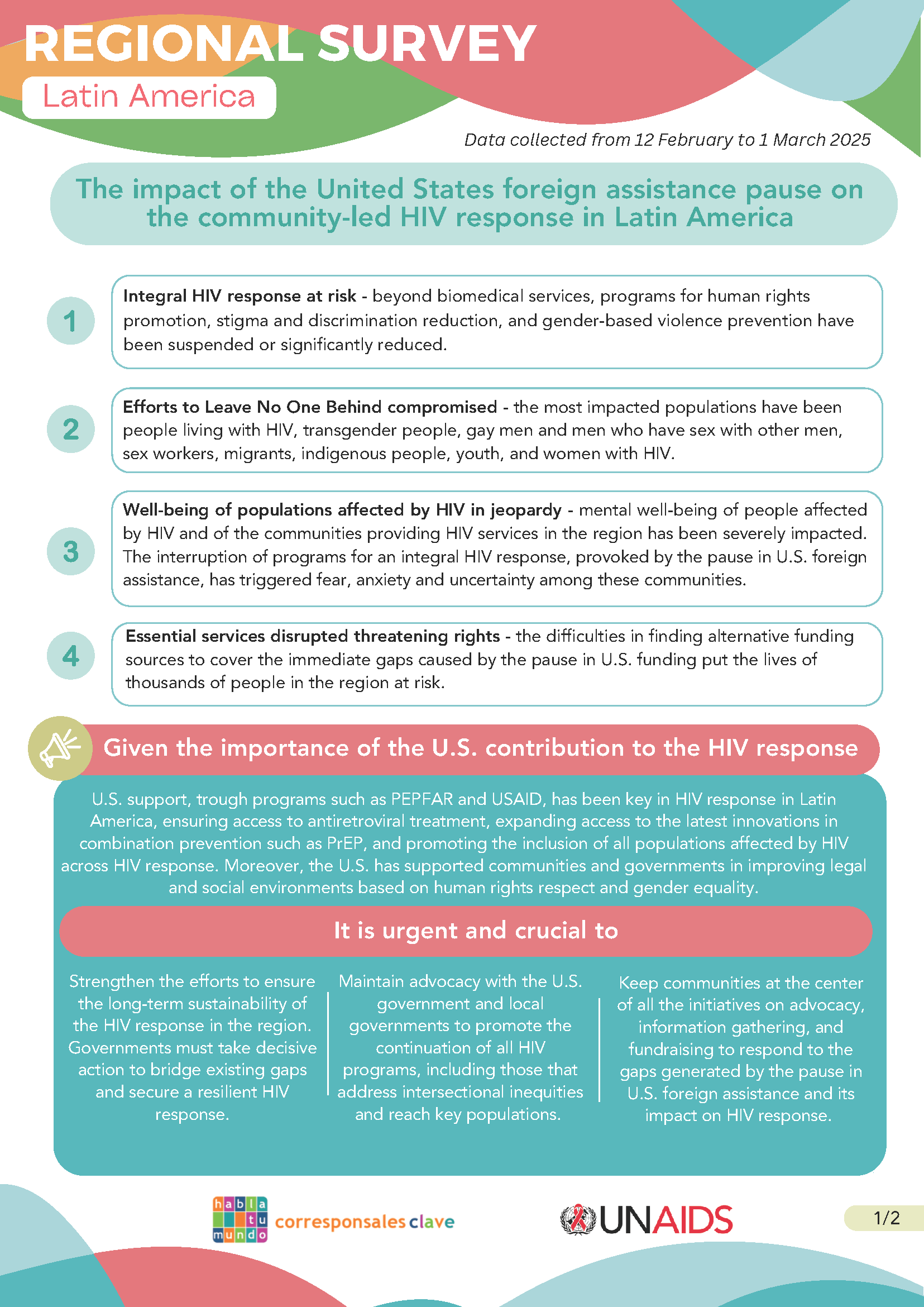
The impact of the United States foreign assistance pause on the community-led HIV response in Latin America
03 March 2025
03 March 2025 03 March 2025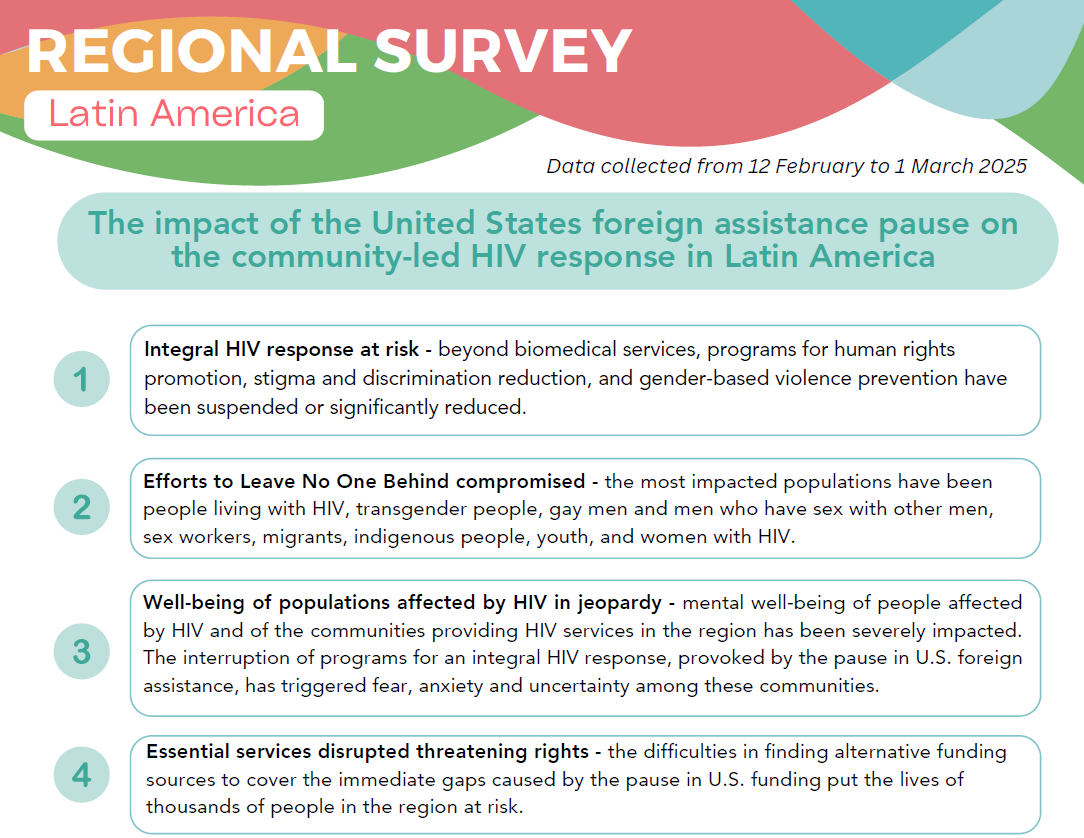
Feature Story
Impact of US funding freeze on HIV programmes in Peru
11 March 2025
11 March 2025 11 March 2025Immediate Risks and Disruptions
The US decision to freeze all funding for foreign assistance has impacted HIV prevention services in several countries in Latin America, including Peru. This has led to significant disruptions in HIV treatment and PrEP programmes for groups of migrants with HIV and migrant key populations. It also reduced community-led HIV prevention efforts, and decreased treatment adherence, counseling, and social support activities for migrants with HIV or at risk. Consequently, in a country that already has an increasing number of new HIV infections, there are increased risks of more new HIV infections, higher mortality rates, and a deterioration in the quality of care for migrants living with HIV.
Current Situation:
- ICAP: This NGO, serving 2,300 migrants with HIV, has resumed antiretroviral therapy (ART) activities after receiving a letter two weeks ago. However, community-based services supporting recruitment and adherence have not resumed and are seeking alternative funding sources.
- IMPACVIH: This community-based organization (CBO) was negotiating US Government grants for Indigenous people living with HIV before the funding freeze. They are now seeking new donors.
- Community-led and peer-led facilities: These have been most impacted, with reduced ability to participate in policy discussions and collect/report data.
Disruptions:
- Distribution of condoms and other prevention commodities: There is sufficient stock for 6-12 months, but access to PrEP services for adolescent girls and young women (AGYW), sex workers, men who have sex with men (MSM), and transgender (TG) people has been disrupted.
- Reduced HIV prevention capacity: Availability of counseling and testing for sex workers, MSM, people who inject drugs (PWID), TG people, and prisoners has been affected.
- Migrants with HIV: Migrant key populations are the most affected.
Region/country
Related
Feature Story
Impact of US funding freeze on HIV programmes in Liberia
10 March 2025
10 March 2025 10 March 2025Government Commitment & Advocacy
- President Joseph Nyumah Boakai reaffirmed his administration's commitment to supporting people living with HIV, emphasizing the importance of implementing the Safeguard Policy Exit Roadmap recommendations to the Global Fund by December 2024 to regain confidence and support and pledged timely and necessary assistance to combat HIV.
Impact of Foreign Aid Withdrawal & Mitigation Efforts
- The Ministry of Finance and Development Planning (MFDP) assessed the impact of foreign aid withdrawal and is working on an impact mitigation plan, including prioritization strategies.
- The Ministry of Health (MOH) allocated $300,000 for commodity distribution to minimize disruptions after support from the World Food Programme was suspended. MOH utilized its own resources to prevent service interruptions, assigning staff under its payroll for HIV services to ensure integration and sustainability.
Documented Impact on Services
- FHI360 (USAID-funded): Experienced a suspension but later received a waiver, allowing 26 facilities across four counties to resume case finding, PrEP for key pregnant and breastfeeding mothers, prevention, and referral services. However, prevention services for key populations remain excluded from the waiver.
- JHIEPGO & Global Fund-Supported KP Programmes: Community PrEP and above-site support, previously suspended, resumed two weeks ago. Human rights, key and vulnerable populations US-funded (FHI) key populations programmes remain ceased, with seven implementing partners canceled, causing significant gaps in HIV prevention services and case finding for key populations.
LGBTIQ+ Context & Rising Tensions
- The introduction of an anti-LGBTIQ+ bill on July 17, 2024, proposing life imprisonment for homosexuality, has created an environment in which it is difficult to deliver HIV testing, prevention and treatment services. The bill, sponsored by Hon. Johnson S. N. Williams, has fueled public hostility and increased risks for LGBTIQ+ individuals.
- A crisis within the Liberia Annual Conference of the United Methodist Church has further exacerbated anti-LGBTIQ+ sentiments. LGBTIQ+ communities have been sharing PrEP amongst themselves as they await the resumption of services.
Region/country
Related
Feature Story
Impact of US funding freeze on HIV programmes in Botswana
10 March 2025
10 March 2025 10 March 2025Immediate Risks and Disruptions
- Termination of CSO Funding: Civil Society Organizations (CSOs) received termination letters on 27 February, leading to significant disruptions in HIV services.
- Service Disruptions: The closure of drop-in centers for key populations has disrupted HIV testing, treatment, care, and support services. There are challenges in referring clients to government facilities, as service providers are no longer working, and there has been no proper handover of client files.
- Confusion Among Clients: The lack of reliable information and guidance has led to confusion and reluctance among clients to access services at other health facilities.
Politically Relevant Updates
- Government Response: The Ministry of Health has assured clients of continued access to ART services and encouraged CSOs to refer clients to government facilities. A task team, including the Ministry of Health, NAHPA, CSOs, and UN agencies (represented by UNAIDS), has been established to monitor the impact of the stop work order.
- EU Budget Cuts: While the EU ambassador confirmed drastic budget cuts in development financing, they pledged to fulfill their HIV commitments up to 2027. However, these funds will not bridge the gap left by the US Governement funding cuts.
Community Impacts
- Civil Society Resilience: Despite the challenges, CSOs have shown resilience by conducting rapid surveys to assess the impact of the stop work order. They are part of a multi-stakeholder task team and are actively participating in platforms facilitated by UNAIDS to discuss implications and share updates.
- UN Support: UNAIDS has been proactive in convening meetings with CSOs and facilitating discussions on the way forward. The UN country team and JUTA have been collectively discussing the implications, although there is still limited information on the next steps.