

Feature Story
Empowering people who inject drugs in Uganda
18 January 2022
18 January 2022 18 January 2022The hardships caused by the COVID-19 pandemic have magnified the challenges that people who use drugs face.
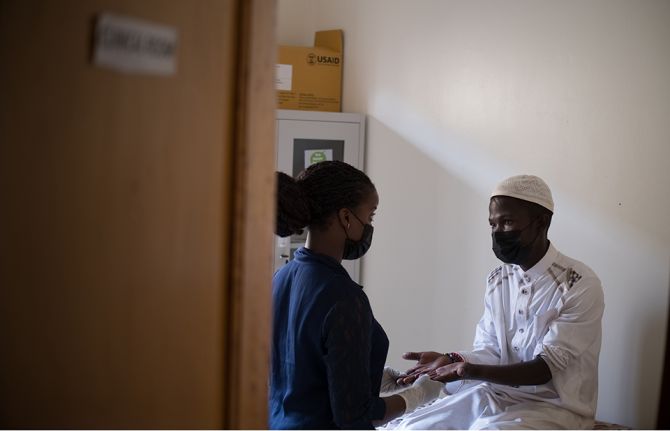
In Uganda, during the COVID-19 lockdowns there was limited access to HIV treatment and other health services, including access to medically assisted therapy, which provides daily doses of methadone to people who use drugs. Access to support systems, such as drop-in centres, was also affected.
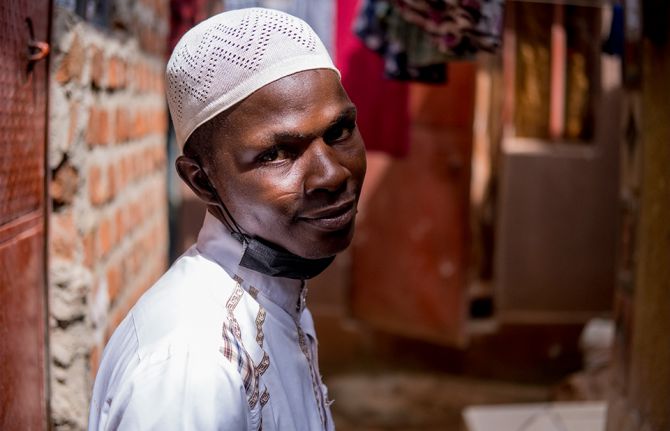
“During the COVID-19 lockdown, access to medically assisted therapy for a daily dose was really hard for me, since movement was restricted and we required permission from the area local council. However, getting permission for a travel permit from the local council was very hard and took time, so it became challenging to sustain without access to these crucial services,” said Nsereko Joshua (not his real name), who is currently undergoing medically assisted therapy.
An analysis conducted by the Uganda Harm Reduction Network (UHRN) in July 2020 on the effects of the COVID-19 pandemic showed a decline in access to condoms, pre-exposure prophylaxis, counselling, psychosocial support, HIV testing, sexual and reproductive health services and legal aid services. It also highlighted a 25% increase in human rights violations reported among people who inject drugs during the COVID-19 lockdown. Issues included an increase in arrests and detentions, gender-based violence and eviction from their houses by the police at night.
When the UNAIDS Solidarity Fund for key populations was announced in December 2020, Wamala Twaibu, the founder and Chairperson of the Eastern Africa Harm Reduction Network and UHRN, saw an opportunity to empower people who inject drugs. He envisioned a transformed community that could support one another when in need, managing their own income sources.
“I was an injecting drug user for more than seven years, and I know what a drug user goes through daily. My aspiration is to improve the health, human rights and socioeconomic well-being of people who use drugs,” he said.
Mr Twaibu noted that injecting drug use and drug dependence often have long-term impacts on a person’s socioeconomic status and health outcomes. The lack of work skills, past criminal histories, stigma and discrimination and the criminalization of drug use are some of the main issues that people who inject drugs face regularly.
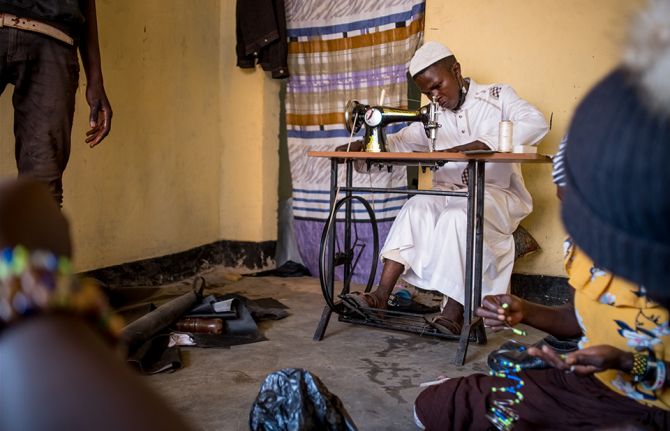
UHRN applied for the UNAIDS Solidarity Fund grant to kickstart the Empowered PWID Initiative for Transformation (EPIT) project, which was awarded in 2021. Through the EPIT project, community members currently on medically assisted therapy will be equipped with skills in craft-making for a sustained livelihood. Mr Twaibu noted that knowledge and skills in small-scale business management for people who inject drugs will form the core of the project.
About 80 people who inject drugs on medically assisted therapy will be engaged in the EPIT project, clustered in 16 cohorts with five members in each cohort and with at least six women-led cohorts across the five divisions of Kampala.
To ensure the sustainability of the initiative, a “Save, take and return” approach will be used. This strategy encourages beneficiaries to save some of the profits of the social enterprises every day, which they can get back after a few months.
“This fund looks at the socioeconomic empowerment of key populations, led by the affected community. That is the catch. Community ownership of the initiative is important because nothing for us without us,” said Mr Twaibu. “Change is possible when we support each other without discrimination and stigma. I wish to see a transformed and empowered people who inject drugs community that can support one another when in need,” he added.
Thinking about the effects of the COVID-19 pandemic so far, Mr Twaibu worries that the next wave of COVID-19 might affect the programme. However, he envisions a fully established and functional craft-making programme in the five divisions of Kampala and a scale-up in other regions where UHRN works.
Now that he is a part of the EPIT project, Mr Joshua expresses hope for a brighter future. “I yearn to have a complete recovery from drug addiction, and I believe that medically assisted therapy will do this for me,” he said. “And I believe the EPIT programme will give me an opportunity to develop and demonstrate my readiness for my recovery with the ability to earn something for my survival and for transport to seek my treatment. I think even after this programme, the skills will help me to sustain my family and myself as well.”
Our work
Region/country
Related

Feature Story
Co-creating a new global initiative to end AIDS among children, adolescents and their mothers
10 December 2021
10 December 2021 10 December 2021A global consultation process to co-create a new initiative to eliminate vertical (mother-to-child) transmission of HIV and end AIDS among children was launched by the UNAIDS Joint Programme and partners at the 2021 International Conference on AIDS and STIs in Africa in Durban, South Africa.
Previous global partnership initiatives, such as the Start Free, Stay Free, AIDS Free framework increased HIV treatment coverage for pregnant women living with HIV from 45% in 2010 to 85% in 2020 and reduced new HIV infections among children by 54% over the same period. Despite these successes, children, adolescents and mothers have been disproportionately impacted by HIV and left behind by the global AIDS response.
In 2020, there 150 000 new HIV infections among children, mostly occurring because adolescent girls and women could not access or continue with the HIV testing, prevention and treatment services they need throughout pregnancy and breastfeeding. One of the most glaring disparities is our failure to meet the needs of children living with HIV. While 85% of pregnant women living with HIV were receiving HIV treatment, only 54% of children living with HIV were on treatment in 2020. Only 40% of children living with HIV had viral load suppression, compared to 67% among adults. Almost half (46%) of the 1.7 million children living with HIV are not receiving life-saving HIV treatment and 60% are aged five to 14 years.
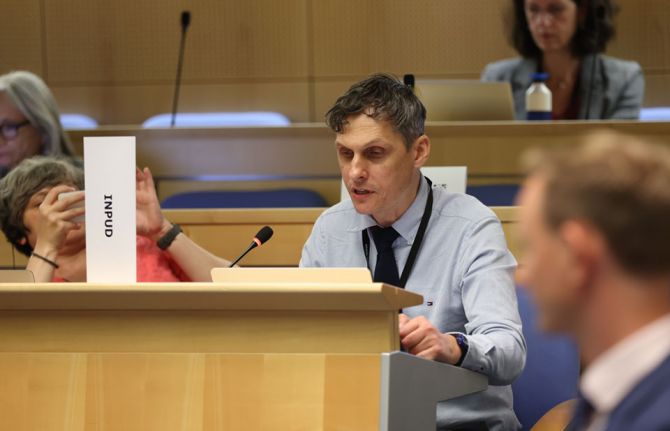
The session was opened by two powerful voices from affected communities. Dudu Dlamini, from the Sex Worker Education and Action Trust South Africa, highlighted the intersecting challenges, stigma and discrimination faced by mothers living with HIV who are also from key populations. Miriam Hisasha, from the Uganda Network of Young People Living with HIV/AIDS, is a young mother living with HIV who noted that young women often do not have the power or knowledge to make positive choices.
The need for urgent action at the community, national, regional and global levels was explained by Meg Doherty, from the World Health Organization. Ms Doherty outlined what needed to be done differently by a new global initiative to bring about rapid change for children, adolescents and mothers living with or affected by HIV.
The global consultation process, including an online survey, was launched. All partners and stakeholders were encouraged to take part in the survey before 20 December.
National and provincial department of health officials from Nigeria and South Africa gave powerful presentations on their successes and also their needs for support to achieve better services to eliminate vertical transmission and end AIDS among children.
Many conference participants and technical and implementing partners gave statements of support for the new initiative during the discussion session.
Shannon Hader, the UNAIDS Deputy Executive Director, Programme, concluded the session by emphasizing that a new global initiative should place children, adolescents and mothers at the centre, not just as recipients but as leaders of the HIV response. Leadership from all levels will be essential to build political commitment, create and share innovative responses and establish mutual accountability. Strengthened community-led and community-based action will increase impact and support workers on the pandemic front lines. Better collection and use of data will help targeted action. Human-rights and societal enablers must be meaningfully addressed to achieve comprehensive impact. Equitable access to innovative health technologies for children and pregnant and breastfeeding women should be prioritized. The time to act is now in order to end AIDS among children, adolescents and mothers.
Quotes
"Progress in ending AIDS in children and mothers has stalled due to ingrained inequalities and disparities, but the solutions are already out there. Experiences of transformative strategies, ‘surges’ of innovative programs engaging communities and delivering rapid results need to be shared and amplified, so that countries can reach all women and children in need. It is time to come together and co-create an innovative new coalition that will boost and support urgent community and country action for and with children, adolescents and women.”
“Children continue to be left far behind by innovations in HIV prevention, testing and treatment. In addition, gaps in reaching at-risk pregnant and breastfeeding adolescents and women living with HIV with much needed HIV prevention and treatment services persist. PEPFAR is committed to joining a renewed global partnership to urgently end AIDS in children and mothers.”
“As adolescent girls, we face many challenges that make it harder for us to protect ourselves from HIV and early pregnancy. Sometimes, we do not have the power or knowledge to make positive choices.”
“While great progress has been made to reduce new HIV infections in children, we still had 150 000 children born with HIV in 2020. This is unacceptable, because every one of these infections is preventable. A prolonged COVID-19 pandemic is deepening the inequalities that lead to more infections among children. Much more needs to be done to scale up needed antenatal and postnatal HIV services for women and their children, particularly in west and central Africa and among key and vulnerable populations. We are failing to detect many paediatric infections because of limited scale up of point-of-care technologies for early infant diagnosis and prompt treatment initiation for those that are infected. We are failing to avert new infections due to limited progress in integrating service delivery systems that protect mothers—especially young mothers—and infants throughout the breastfeeding period. The Global Fund is committed to working with the global community to address these challenges and reach our common goal to eliminate these preventable HIV infections in children.”
Our work
Related
Feature Story
The need for wider implementation of people-centred differentiated service delivery for HIV testing and treatment in Africa
10 December 2021
10 December 2021 10 December 2021Despite the remarkable progress made in the AIDS response in Africa, considerable gaps and challenges remain for achieving the 95–95–95 testing and treatment targets by 2025 and putting the continent on track to ending the AIDS epidemic by 2030. UNAIDS, the World Health Organization (WHO) and partners came together at a satellite session at the 2021 International Conference on AIDS and STIs in Africa to discuss how differentiated service delivery can bring the world closer to the targets.
People-centred differentiated service delivery is critical to accelerating access to and uptake of HIV testing and treatment services. While the COVID-19 pandemic has made many countries adapt HIV services to include delivery outside health facilities and by communities, and by scaling up multimonth dispensing of HIV and other medicines, it has also revealed a lack of resilience in key areas of systems for health, including the ability to ensure uninterrupted supplies of medicines and commodities, adequate funding for community-led organizations to provide services and support and the provision of integrated services for multiple health conditions. These adaptations and gaps have underlined the feasibility and importance of delivering differentiated, decentralized, integrated and community-based models of testing and treatment services across different settings.
During the session, representatives of ministries of health and communities, programme implementers, researchers and development partners highlighted ways in which differentiated service delivery has enhanced national efforts to reach their testing and treatment targets for all relevant population groups. They also presented new partnerships, tools, policies and best practices, and called attention to important policy shifts and innovations for scaling up differentiated service delivery, such as targeted community testing and self-testing for HIV, wider spacing of antiretroviral therapy dispensing and clinic visits, community antiretroviral therapy distribution and peer support for linkage to and retention in care for key and vulnerable populations.
“We see huge differences in testing and treatment uptake in different populations across different settings in Africa. For example, children are lagging behind adults, men are lagging behind women, and key populations living with HIV are lagging behind the general population of people living with HIV. Ensuring people- and community-centred differentiated service delivery approaches that respond to barriers to access and the diverse needs across all relevant populations together with conventional facility-based service delivery is critical to leaving no one behind,” said Ani Shakarishvili, UNAIDS Special Adviser, Access to Treatment, Care and Integration.
In April 2021, WHO released new guidelines on HIV prevention, testing, treatment, service delivery and monitoring. Updated service delivery recommendations include the initiation of antiretroviral therapy outside of the health facility, clinic visit spacing and dispensing of antiretroviral therapy every three to six months. The criteria for when a person is eligible to benefit from differentiated service delivery for HIV treatment have also been updated.
“The changes that have been made allow more people to access differentiated services for HIV treatment earlier in order to support their retention in care, meeting their needs and preferences and moving away from one-size-fits-all to more person-centred approaches,” said Clarice Pinto, a consultant on differentiated service delivery for HIV treatment at WHO.
On implementing and scaling differentiated models in countries, Anthony Ashinyo, the Deputy Programme Manager for the National AIDS/STI Control Programme in Ghana, underlined the need for multisectoral collaboration and partnerships between the government, implementers and communities to increase the uptake of differentiated service delivery.
“I see us being in the driving seat. I see us strengthening the influence of people living with HIV, recipients of care and affected communities in the design and implementation of national strategies and plans, so that they adequately reflect and respond to our lived realities and needs,” said Elsie Ayeh, the President of the Network of Persons Living with HIV/AIDS, Ghana.
The session concluded with the launch of a call to action to leave no one behind by scaling up differentiated HIV testing and treatment service delivery in Africa.
Read more about the session and watch pre-recorded presentations on differentiated service delivery from the speakers here.
Our work
Region/country
- West and Central Africa
- Benin
- Burkina Faso
- Burundi
- Cameroon
- Cape Verde
- Central African Republic
- Chad
- Congo
- Côte d'Ivoire
- Democratic Republic of the Congo
- Equatorial Guinea
- Gabon
- Gambia
- Ghana
- Guinea-Bissau
- Guinea
- Liberia
- Mali
- Mauritania
- Niger
- Nigeria
- Sao Tome and Principe
- Senegal
- Sierra Leone
- Togo
- Eastern and Southern Africa
- Angola
- Botswana
- Comoros
- Eritrea
- Ethiopia
- Kenya
- Lesotho
- Madagascar
- Malawi
- Mauritius
- Mozambique
- Namibia
- Rwanda
- Seychelles
- South Africa
- South Sudan
- Eswatini
- Uganda
- United Republic of Tanzania
- Zambia
- Zimbabwe
Feature Story
Empowering sex workers through social enterprises
08 December 2021
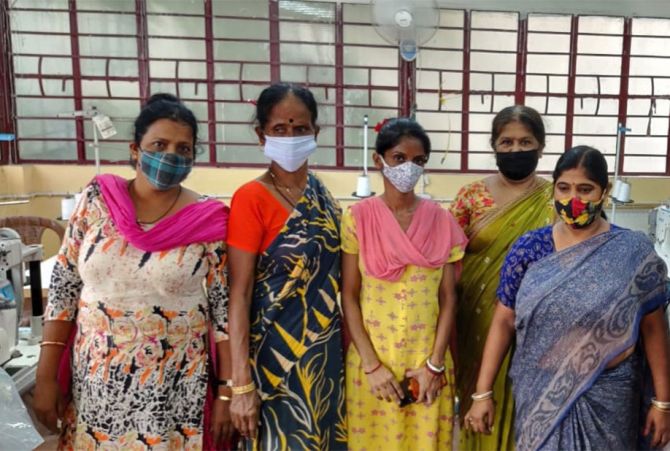
08 December 2021 08 December 2021For Ruma Khatri, the social entrepreneurship initiative by Usha Multipurpose Cooperative Society Limited is an opportunity to earn a livelihood in the face of the COVID-19 pandemic and the resulting income loss.
“I have been working with the sex worker community supported by Usha Multipurpose for the past 10 years. I work at the parlour instituted by Usha. But due to the COVID-19 pandemic restrictions, I took part with the community in the production of sanitizer and masks through Usha to earn supplemental income. Through this social entrepreneurship project, I hope to set an example and further empower the sex worker community,” Ms Khatri said. Established with the support of the UNAIDS Solidarity Fund, Usha Multipurpose’s social entrepreneurship initiative engages sex workers in producing masks, hand sanitizer and personal protective equipment kits in Kolkata, India.
Sex workers in several parts of the world have faced a huge economic impact due to COVID-19-related restrictions on physical contact and movement. Additionally, the criminalization of sex work in many countries has disproportionately given way to stigma, discrimination, violence and inability to access essential health-care services. Sex workers have also been left out of financial and social support schemes by many governments. These factors, among others, make it challenging for sex workers to engage in supplemental income generation activities.
In response to these challenges, several grantees of the UNAIDS Solidarity Fund are supporting the economic capacity of sex workers across five pilot countries. The Solidarity Fund was set up to provide grant seed funding to empower social entrepreneurs from key populations to scale up existing or develop new business initiatives that can generate sustainable economic value and social impact for their communities.
In northern Uganda, the sex worker and lesbian, gay, bisexual, transgender and intersex communities supported by the Health and Rights Initiative (HRI) recently produced their first set of shea-based products and acquired new machinery to scale up production. Through comprehensive market analysis, they identified the potential of processing shea-nut seeds to create value-added products, such as lotions, bathing oils, soaps and hair oils.
“Small-scale production and sales of shea nut products change the outlook for the members of the sex worker community. Through the support of the UNAIDS Solidarity Fund, our organization can act as a safety net to protect the business and community members as they implement the joint enterprise,” said Lucy Akello, the Executive Director of HRI.
Above, beneficiaries of HRI with shea-based products produced through their social enterprise. Credit: Health Rights Initiative
While production of tangible items is one aspect, the Alliance of Women Advocating for Change (AWAC), also in Uganda, is empowering more than 20 adolescent girls and young women, especially those living with disabilities, to set up social enterprises built on skills such as tailoring and designing. Talking about the Make Her Visible project, Macklean Kyomya, the Executive Director of AWAC, said, “Adolescents and young women, including those with disabilities, are at particular risk due to the socioeconomic impact of COVID-19. Risks include heightened destitution, violence, stigma and discrimination. The Make Her Visible project supports their economic capacities to help them better respond to these challenges.” The young sex workers are also being trained in financial management involving credit and savings along with business plan development to effectively manage these enterprises.
Above, young women being trained in tailoring as a part of the 'Make Her Visible' social entrepreneurship project of AWAC. Credit: Alliance of Women Advocating For Change
Creating strategic market linkages has been the focus of India-based Asha Darpan, a female sex worker-led community-based organization that is creating micro-entrepreneurs out of sex workers based in Mumbai. Their Shakti project is focused on empowering women between the age of 18 and 49 years from urban and semi-urban settings and living in lower-middle class and poor environments to establish their own footwear manufacturing business. Devta Metri sees growth in the future of these enterprises. She said, “No one foresaw the COVID-19 pandemic. The need for sustainable income sources for the sex worker community was amplified when we saw a loss in income sources. My hope is to see our social enterprise grow. In the next few months, our aim is to increase sales of footwear we produce, make a name for Asha Darpan and provide a sustainable income source for the members.”
These are thoughts echoed by Sanyu Hajjara Batte, the Executive Director of Lady Mermaid, which is supporting 168 female sex workers organized in 10 Women-Up groups in Uganda. “We have to support sex workers’ entrepreneurship skills if we truly want to create supplemental income sources for the community. Lady Mermaid is working to rebuild the sex worker community from COVID-19 pandemic effects through economic recovery programmes,” said Ms Batte. Through the grant received by the Solidarity Fund, sex workers are being trained in setting up demand-based social enterprises in areas including food selling, renewable charcoal-making, briquette-making, liquid soap-making and baking, among others. The initiative supports government registration, financial management and implementation to ensure sustainability of the enterprises.
Above, beneficiaries of Lady Mermaid engaged in briquette-making as a part of supplemental income generation through social entrepreneurship. Credit: Lady Mermaid
The Solidarity Fund grantees clearly highlight the ingenuity and leadership role that key population-led organizations and networks play when it comes to building community resilience and supporting communities during the pandemic. As the COVID-19 pandemic remains intertwined with daily realities, communities must be at the centre of pandemic response and preparedness. The response calls for critical action grounded in human rights principles, to protect the health and rights of sex workers. The provision of seed funding enables innovative business ideas owned by key populations to flourish and the creation of sustainable supplemental revenues to empower key populations most affected by the pandemic.
Related
Feature Story
UNAIDS Health Innovation Exchange hosts dialogue to explore how to connect funding to the most critical innovations in health care
20 December 2021
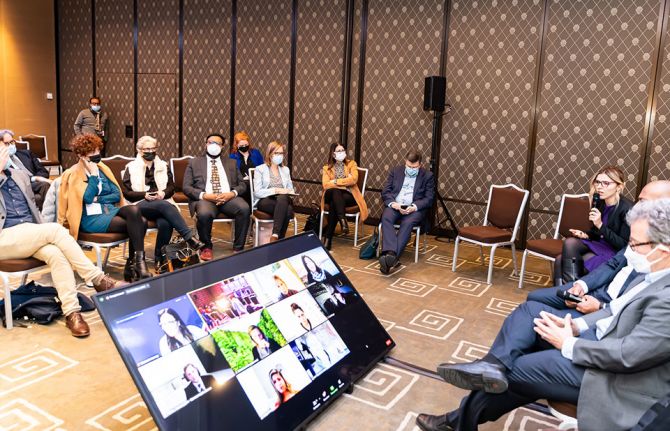
20 December 2021 20 December 2021On the margins of a special session of the World Health Assembly on pandemic preparedness, the UNAIDS Health Innovation Exchange (HIEx) hosted a dialogue between key leaders from both the public and private sectors on the importance of innovations and investments for resilient health systems. The dialogue allowed policymakers to exchange ideas with leading investors and innovators on how to develop innovative models of funding and on ecosystem-building for scaling access to health care and connect financing partnerships to the essential innovations.
“COVID-19 was not just a wake-up call for our global pandemic preparedness, it was a wake-up call to every health system around the world that unless we truly embrace the technology that is at our fingertips, we will be killing many multiples of the number of victims claimed by COVID-19. Health care is one of the few industries left to make this transition, COVID-19 has given us the vital catalyst to do so,” said Joe Stringer, the Managing Partner of Octopus Ventures.
The COVID-19 pandemic has underscored the fragility of health systems around the world and highlighted the critical importance of building resilience. The special session of the World Health Assembly brought countries together to discuss a pandemic treaty, with hopes of agreeing on a new global architecture that can help prevent future outbreaks.
Averting future pandemics will require scaling up investments in building resilient health systems. The COVID-19 pandemic has demonstrated the potential of innovation, from the use of artificial intelligence for diagnosis, to rapid repurposing of telemedicine platforms to train health-care workers, to the development of new vaccines and therapeutics. It has also reinforced the importance of connecting communities and the public and private sectors in building trust and delivering on scale.
“We need to invest in innovations that can help rapidly scale up access to health care for all,” said Pradeep Kakkattil, the Director of the UNAIDS Office of Innovations and the co-founder of HIEx. “Creating a strong and functioning innovation ecosystem along with new financing models that leverage public and private investments for impact is essential to avert future pandemics and enable countries to reach their health goals,” he added.
Exploring through practical examples the role that innovations, including digital health solutions, can play in future-proofing health systems, the event showcased outstanding innovations with the potential to transform health-care systems. These high-potential innovations included a safe last mile transport solution for essential biologicals such as vaccines and medications (Blackfrog Technologies), a virtual platform that enables real-time clinical exchange and surgical collaboration (Proximie), an innovative lighting technology that sanitizes spaces (BIOVITAE), accessible diagnostic solutions (Molbio Diagnostics), drone-based logistics for health care (RigiTech) and real-time community data on health-care challenges and quality of services (Dure Technologies), among others. Despite diverse thematic areas, a common thread that connects these innovations is the underlying need to build solutions that address global health-care challenges and enhance pandemic preparedness.
“COVID-19 has taught us that innovative solutions to fighting pandemics are both essential and investible. Local innovators are best equipped to create these solutions for their own communities but often lack resources outside of mature innovation ecosystems, most notably access to early-stage capital,” said Andrew Nerlinger, the Managing Partner of the Global Health Security Fund. “The private sector can’t just sit back and watch. We need to support these innovators by actually investing while building confidence in other impact investors to do the same.”
Recognizing the integral role that health innovations play in strengthening health systems, StartupBlink and HIEx launched the Coronavirus Resilience Innovation Map. It is a dynamic mapping of private sector innovations and start-ups that have strengthened the capacities of many countries in responding to health crises. The map also celebrates the locations where COVID-19-related innovations were created, with preliminary rankings of innovation output in 150 cities and 60 countries. The comprehensive database can allow investors, leaders and policymakers to connect with relevant innovators to identify gaps and advance shared health-care objectives.
In line with its role as a global health and innovation connector, HIEx also used the event to present a number of new initiatives, innovations and partnerships that will form key pieces of the future health innovation ecosystem, have a potential to work with countries to improve their health outcomes and that strengthen the HIEx partnership network.
HIEx and Tata Consultancy Services will partner on a Specialized and Proficient Integrated Network of Experts (SPINE) for health and well-being to leverage the expertise across sectors around the globe to leverage innovations and develop solutions for scaling access to health care. SPINE will be available to countries to prototype innovations to address their specific health challenges.
HIEx will also partner with Health in your Hands, an initiative developed under the aegis of the United Arab Emirates’ Sustainable Development Goals (SDGs) Global Council SDG 3 initiative. The partnership will bring together the respective health innovation pipelines of the two entities to facilitate effective collaboration across innovators for scale and impact.
HIEx is a UNAIDS-initiated partnership platform bringing together policymakers, innovators and investors to leverage health innovations and investments to save and improve lives around the world. It fosters public–private partnerships that can help to scale proven technologies and innovations to maximize reach and health impact, especially for the most vulnerable communities.
Feature Story
A song to stop discrimination
17 December 2021
17 December 2021 17 December 2021Humanity is behind in eradicating AIDS by 2030. This delay is not due to a lack of knowledge, capacity or means, but to structural inequalities such as stigma and discrimination which are obstacles to access health services.
Viruses such as HIV or COVID-19 do not differentiate between people, but societies do. They stigmatize and discriminate against people living with HIV, mostly out of ignorance, because they are afraid of the disease.
Discrimination remains one of the biggest battlefields in the Central African Republic and this is why the country was the first in the world to join the Global Partnership to fight against all forms of HIV-related discrimination and stigma.
To make this Global Partnership a reality, a Zero Discrimination Platform was established. It is composed of about thirty partners representing ministries, the National AIDS Council, UN agencies, technical and financial partners, civil society, human rights organizations and other organizations. With UNAIDS support, the Platform called on Ozaguin, the "king of Central African rumba" to use music and art to convey its messages of tolerance and compassion.
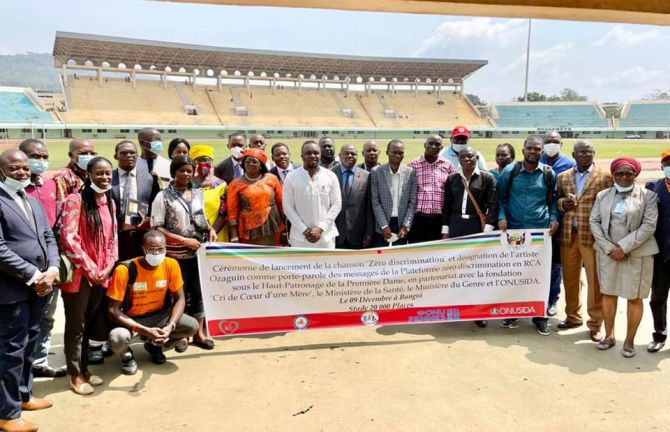
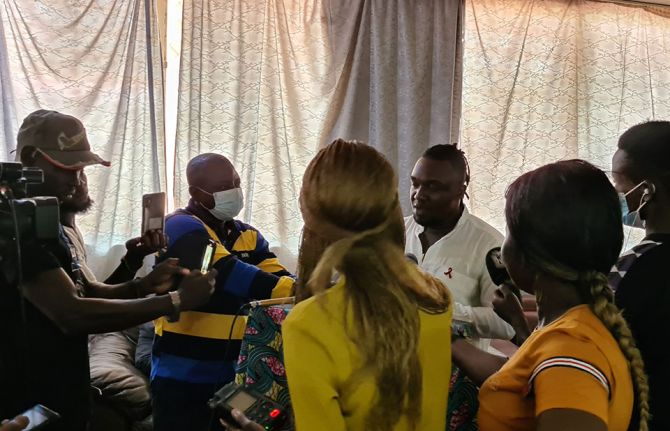
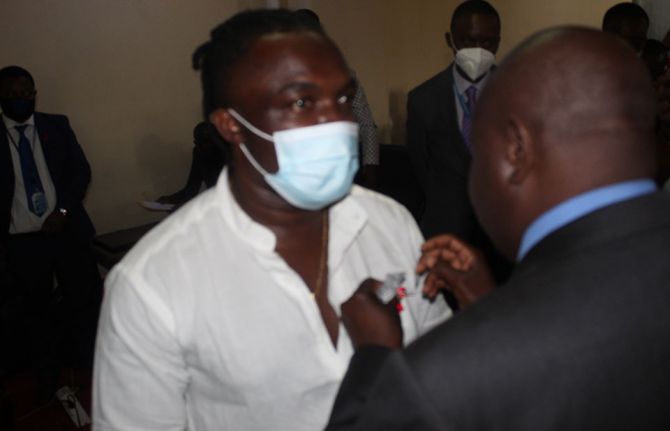
At the launch ceremony for Ozaguin's new song against discrimination, which took place on 9 December 2021 at the 20,000-seat stadium in Bangui, he was also nominated as a spokesperson for the Platform.
On behalf of the First Lady of the Central African Republic, the Minister of Health and Population invited every one, and in particular all institutions and influential personalities, not only not to discriminate, but also to fight against discrimination and stigmatization. "We must collectively report discrimination and stigma as soon as we see it and set an example. Discrimination kills. It exacerbates emergencies and fuels pandemics," said Minister Pierre Somsé.
The leadership shown by communities that are victims of discrimination and stigmatization remains a source of inspiration. Their determination, courage and vision are a star in the firmament, as demonstrated by the moving testimony of Ms. Christine Wilikon, a member of the national network of people living with HIV (RECAPEV) during the ceremony. "The first reactions to knowing my positive HIV status were dismay, and a desire to end my life. Rejection by my family members amplified my mental and social disorientation. But the support and advice provided by my parish priest gradually led to my social reintegration through income-generating activities such as petty trade, agriculture and market gardening.”, Christine shared. Her brave words were received with a standing ovation. She urged all Central Africans to put an end to feelings of guilt and shame, and to get tested to know their HIV status and if necessary, take the treatment which is free.
Region/country

Feature Story
We need your thoughts and ideas on how to end AIDS among children, adolescents and mothers—new global online survey launched
08 December 2021
08 December 2021 08 December 2021The UNAIDS Joint Programme and partners agree that a new initiative is needed to accelerate and support action at the global, regional, country and community levels to urgently end AIDS among children, adolescents and mothers. To meet the needs of all stakeholders and ensure the engagement of all partners, we are undertaking a global consultation survey to gather ideas and opinions on what the priorities should be for ending AIDS among children, adolescents and mothers.
Eliminating vertical (mother-to-child) transmission of HIV and ending AIDS among children are among the global priorities highlighted in the new Global AIDS Strategy 2021–2026: End Inequalities, End AIDS.
In 2020, there were 1.7 million children living with HIV globally, almost half (46%) of whom were not on life-saving HIV treatment. In the same year, there were 150 000 new HIV infections among children. Most of these new child infections could have been prevented if adolescent girls and women had universal access to HIV testing, prevention and treatment services and the support they need to stay in prevention care or on HIV treatment throughout pregnancy and breastfeeding.
Over the past decade the Global Plan towards the Elimination of New HIV Infections among Children by 2015 and Keeping their Mothers Alive, followed by the Start Free, Stay Free, AIDS Free 2016–2020 framework, helped to coordinate, accelerate, support and monitor the global response to HIV among children, adolescents and mothers. Significant progress was made from 2010 to 2020, with coverage of HIV treatment to prevent vertical transmission for pregnant women living with HIV increasing from 45% in 2010 to 85% in 2020 and with a 53% reduction in new child HIV infections over the same period. However, this progress was not enough to reach any of the global targets set for the end of 2020.
New targets have been set for ending AIDS among children, adolescents and mothers in the Global AIDS Strategy 2021–2026. Urgent and coordinated action is needed, from the global to the community levels, to reach these ambitious new targets, and we need your input on how best to accelerate action, especially at the community and country levels.
Please complete the online survey, which is available in English, French, Russian and Spanish, by 20 December.
- Consultation for English speakers - https://bit.ly/3DMkjJ2
- Consultation for French speakers - https://bit.ly/30MT7f7
- Consultation for Spanish speakers - https://bit.ly/3rBc27F
- Consultation for Russian speakers - https://bit.ly/3G13wm2
Our work

Feature Story
Jamaican parliamentarians committed to ending discrimination
25 November 2021
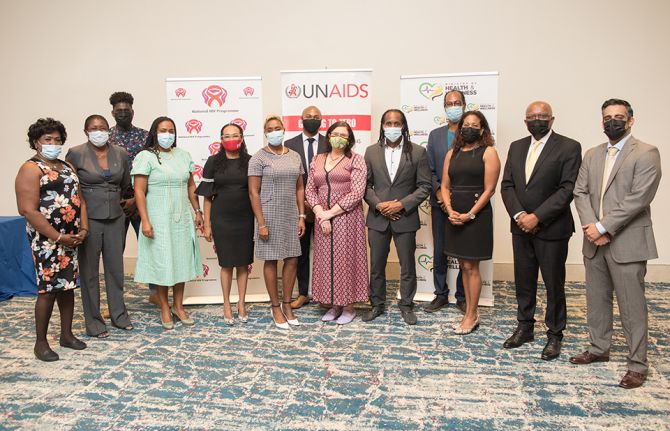
25 November 2021 25 November 2021Members of parliament have reaffirmed their commitment to tackle all forms of HIV-related stigma and discrimination in Jamaica and to help enhance efforts to create an enabling environment for people living with and affected by HIV.
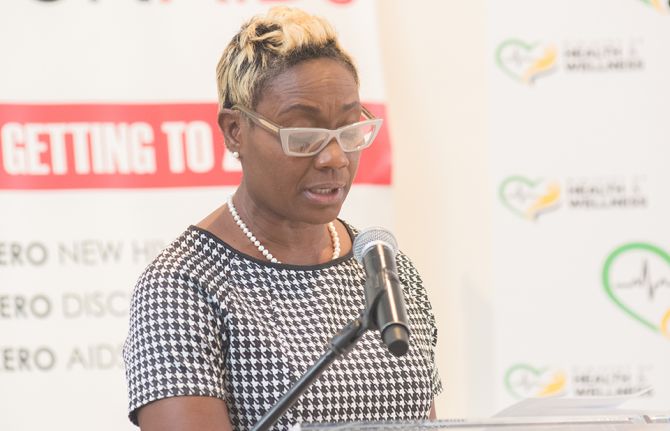
At a meeting co-hosted by UNAIDS and Juliet Cuthbert-Flynn, the Minister of State for Health and Wellness and Chair of the country’s Partnership for Action to Eliminate all Forms of HIV-Related Stigma and Discrimination, members of parliament, from both the ruling and opposition parties, came together to review evidence on stigma and discrimination in Jamaica and its impact on health outcomes and to craft a way forward in which their role as lawmakers can contribute to eliminating stigma, discrimination and violence.
Jamaica’s legal landscape poses substantial barriers for people living with and affected by HIV to access health services. For example, same-sex sexual relations are criminalized in Jamaica, which continues to represent a considerable deterrent for marginalized communities. Moreover, the country lacks general legislation against discrimination, a national human rights institute and a gender recognition law that could provide further protection for transgender and gender non-conforming people in Jamaica.
Harmful laws, policies and generalized stigma and discrimination against people living with and affected by HIV have a profound negative effect on people’s health outcomes and life prospects. The most recent Knowledge, Attitudes, Practices and Behaviour Survey and the People Living with HIV Stigma Index showed that only approximately 12% of the general population have accepting attitudes towards people living with HIV, while close to 60% of people living with HIV have feelings of self-stigma. A 2019 study about the economic survivability of transgender and gender non-conforming communities in Jamaica found that experiences of workplace stigma and discrimination were widespread, with about 60% of survey respondents declaring such incidents. Furthermore, 71% of respondents felt that transgender and gender non-conforming people had a harder time getting jobs than cisgender people. Another study suggests that approximately 20% of lesbian, gay, bisexual and transgender people in Jamaica have been homeless at some point of their lives.
In view of these pending challenges in the country’s HIV and human rights response, members of parliament explored creating a working group tasked with performing periodic reviews of relevant data, supporting the enactment of protective legislation, challenging harmful laws and policies and hosting permanent dialogues with communities of people living with and affected by HIV.
“We have a lot of work to do to ensure that all Jamaicans enjoy the full respect, protection and promotion of their rights. This meeting and its outcomes are a small step to achieving that goal, but a step that certainly is pointing us to the right direction on the role that members of parliament should play to end discrimination,” said Ms Cuthbert-Flynn.
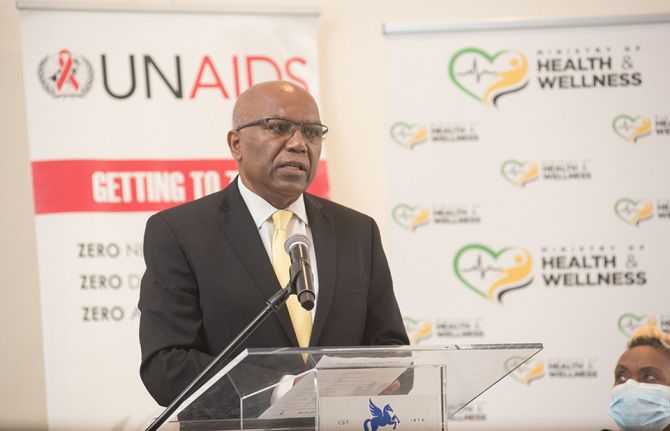
These efforts, which aim to tackle deeply rooted misconceptions in society, require strong partnerships. As stated by Morais Guy, the Opposition Spokesperson on Health, who co-chaired the meeting, “The enhancement of people’s rights and collective efforts to ensure that every Jamaican can live a life free from stigma, discrimination and violence is not an issue of only one person, one entity or one political party. It is the business of all of us, to work in partnership for the dignity of all Jamaicans.”
Members of parliament also discussed some of the challenges that they face as legislators to perform their duties, and the contributions that UNAIDS can make in facilitating a more efficient, effective and transparent law-making process in parliament. Moreover, options to mobilize and engage citizens at the community level to challenge stigma were also discussed in response to the critical need of raising more awareness, tolerance and respect towards people living with and affected by HIV.
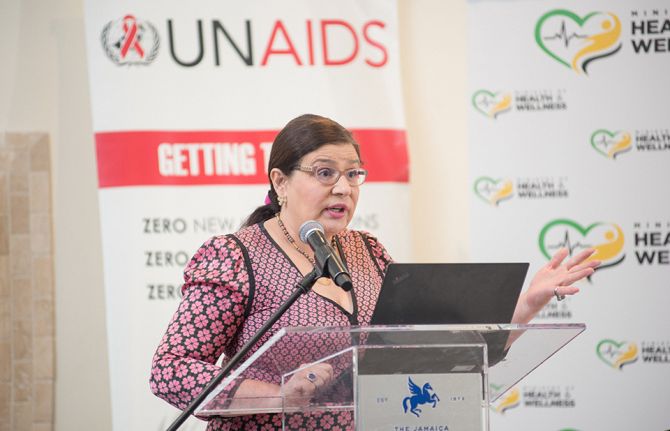
“We are proud to partner with members of parliament to tackle stigma and discrimination in Jamaica and to provide all of the evidence, instruments and support that we can mobilize to leverage their role as allies and critical influencers in the future of the country,” said Manoela Manova, the UNAIDS Country Director for Jamaica.
Region/country
Feature Story
Community outreach fills the gap in Mauritania
25 November 2021
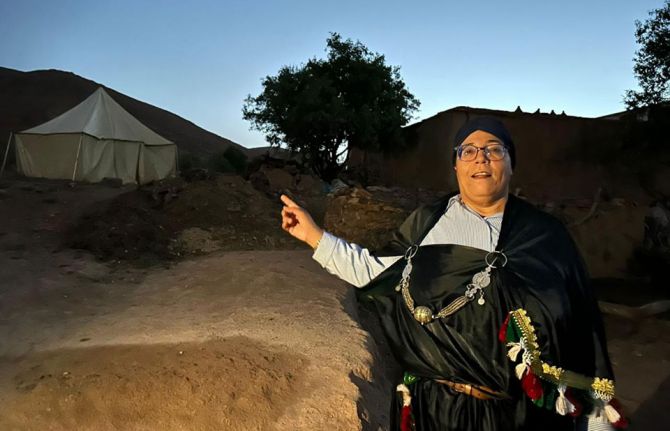
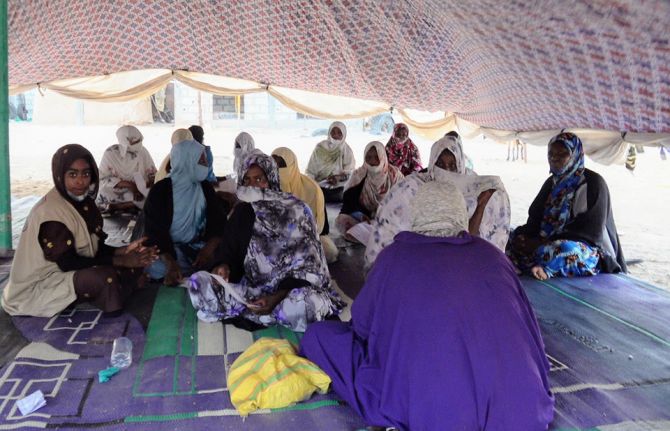
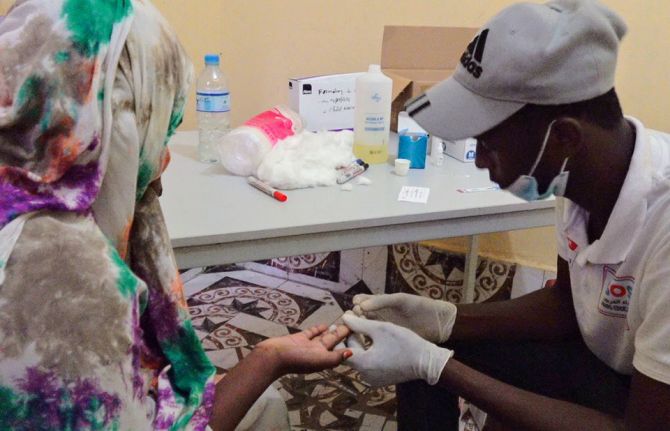
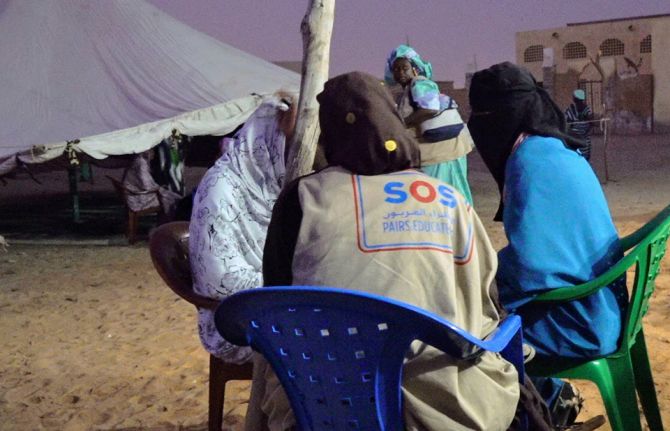
25 November 2021 25 November 2021In a suburb of Nouakchott, Mauritania, a tent has gone up for an evening of counselling and HIV testing. Staff of the nongovernmental organization SOS Pairs Educateurs field questions, and people wanting to know their HIV status queue for a rapid test.
Mohammed Bilal, above, is supervising the evening event, along with peer educators, a nurse and a social worker. Pointing behind him to a small concrete house with a corrugated roof, he said that to keep all tests anonymous, people are given a number and they enter the makeshift office one by one. “We do counselling before the HIV test and after the person gets the results,” Mr Bilal said.
More than 70 men and women have opted to get a rapid test today.
In the El Mina neighbourhood, where the outreach event is taking place, Mr Bilal says that most people scrape by making a living, many women live alone raising children and most children don’t attend school. He grew up here and knows the community well. He and his team also know the needs of the people. For Mohammed Mouloid, above right, the Programme Coordinator at REMAP+, a network of people living with HIV, community outreach fills a big gap. During the COVID-19 restrictions, for example, they teamed up with SOS Pairs Educateurs, UNAIDS and others to distribute food kits.
Adjusting his glasses, Mr Mouloid said, “Before a person takes their medicine, they have two other priorities. The person has to eat first and find transportation to pick up their treatment. If both are not combined, then the third priority falls by the wayside and the person will never take their treatment.”
“Our biggest problem in Mauritania is stigma associated with HIV,” Mr Mouloid said, explaining that people living with HIV often drop out of treatment programmes. Only 40% of the 8500 people living with HIV in the country are on life-saving treatment. Mr Mouloid has lived with HIV for nearly 20 years and was one of the first people in Mauritania to take antiretroviral medicines, in 2004. “I have been married twice and have two children who are both HIV-negative, so I am a testament to living a healthy life, but things are tough in our society,” he said.
The HIV epidemic in Mauritania is concentrated in cities and among key populations. HIV prevalence among adults is around 0.3%, but is 9% among sex workers and 23% among gay men and other men who have sex with men. Mauritania criminalizes sex work and same-sex sexual relations, so people tend to hide.
To reach out to key populations, SOS Pairs Educateurs, with the support of the United Nations and partners, recently opened a drop-in centre, above, in front of the bus station in the capital city (they have eight other drop-in centres around town). A television blasts in the corner as peer educators mill about chatting with a truck driver. A pilot project distributing HIV self-test kits that people can use in the privacy of their own home has also been undertaken.
Sharif (he did not want to give his last name) explains that he stops by regularly to pick up condoms and get information from the counsellor. “I came here to know more about COVID-19 and other health risks,” he said. He said he had never taken an HIV test, which are provided for free, but was thinking about it.
According to the UNAIDS Country Director for Mauritania, El Mustapha Attighie, community outreach like this is a way to support vulnerable groups.
“Stigma hinders our response to HIV and if human rights are not respected and people are left behind, this increases the risks of HIV,” he said. He added that UNAIDS’ mandate clearly states advocating for rights and treatment for all and as a trained doctor he focuses the debate on people accessing health care.
He believes that Mauritania could end AIDS by 2030. “We have the opportunity to make this objective a reality,” he said. “Channel more money and means where the epidemic is, to quash it and also stop it from reaching a broader population.”
SOS Pairs Educateurs has expanded its activities to reach different populations. It founded a school for street children and children who have dropped out of school and organized trainings for girls in sewing as well as a teen dance group. “Here for many the reality is that you have little hope so by having kids succeed in school or on the dance floor, it boosts them and impacts the entire family,” said the SOS Pairs Educateurs Director, Djibril Sy, above. He grew up in El Mina and still lives there, saying that countless people have benefitted from its work in the past 20 years. “Aside from hope, we really try to instil a sense of self-worth,” he added, explaining now that he wants to give young people trainings in entrepreneurship.
Despite progress, western and central Africa represents 8% of the world population but is home to 12% of all people living with HIV globally and experiences 22% of all AIDS-related deaths in the world.
Watch
Region/country
Feature Story
Community health workers strengthen HIV and COVID-19 responses
02 December 2021
02 December 2021 02 December 2021In 2001, Micheline Léon felt unwell. The then 33-year-old mother of three journeyed from her home in the small town of Corporand in central Haiti to a clinic in Cange. There she was diagnosed with HIV and tuberculosis.
Fortunately, three years earlier an organization called Zanmi Lasante—Haitian Creole for Partners in Health—had launched the HIV Equity Initiative. (Zanmi Lasante is the sister organization of the United States-based nonprofit health-care group Partners in Health.) This was one of the first projects in the world to effectively deliver antiretroviral therapy in poor, rural settings.
Twenty years later, Ms Léon is one of 2000 community health workers called accompagnateurs in the Zanmi Lasante network. Multiskilled teams of accompagnateurs are the link between patients and health facilities. They are also part of all HIV Equity Initiative discussions regarding patient care, treatment and social support.
Community health workers live in the areas where they work. They help to ensure that patients recover and stay healthy. Their main roles include medicine distribution and home visits, as well as linking people to care. They accompany patients to clinics and track those who have missed appointments. During the COVID-19 pandemic, the accompagnateurs were key to Zanmi Lasante’s care and treatment work. The home-based care and contact tracing skills refined in response to HIV are now being used for COVID-19.
Zanmi Lasante has a holistic approach to care that includes social services such as providing accommodation, food and transport. Community health workers help to coordinate all the support needed. They also serve the wider community by running educational campaigns on topics such as mental health and sexually transmitted infections.
Critically, the accompagnateurs empower and inspire people to take charge of their own health. Ms Léon is a role model within reach. Since starting treatment she has stayed adherent to it and her HIV viral load has remained undetectable since she began receiving viral load tests in 2017. She owns a small fruit and poultry business and sometimes spends time in Port au Prince, where she has a new grandson. She takes part in various group activities at the Zanmi Lasante site in Cange, including support groups, viral load classes and mothers’ clubs.
“The psychosocial support I received from Zanmi Lasante made me realize that my diagnosis was not a death sentence and I could go on and live a healthy and fulfilled life,” Ms Léon said.
Another stalwart Haitian HIV programme employs a community health approach. GHESKIO, the Haitian Study Group on Kaposi’s Sarcoma and Opportunistic Infections, was founded in 1982, the year before HIV was formally discovered. It is the world’s oldest HIV organization and has conducted research and provided clinical care over the past four decades.
GHESKIO has leveraged a community-based model to help Haiti respond to HIV and other public health crises. When the COVID-19 pandemic reached the country in March 2020, GHESKIO reinforced an existing programme—Distribution of ART in the Community—to ensure that clients living with HIV were provided with a three-month supply of medication. From a small room at the National Solidarity Association (ASON), a team packages medicines into plastic bags and pours over their client list. If a person is unable to come for their medicines, they’ll receive a home delivery.
GHESKIO also strengthened training activities for their multiskilled community health workers. In this way they provided social support for patients as well as home care for cases that did not require hospitalization.
“Our Community Unit played an essential role in the acceptance of new COVID-19 treatment centres in the impoverished, crowded slums,” said GHESKIO’s Program Coordinator, Patrice Joseph. “In collaboration with the Ministry of Health, we have strengthened contact tracing, case investigation and outbreak management for COVID-19.”
One of the newest community health workers is CV, a 35-year-old mother of three from Village de Dieu, a slum south of Port au Prince. She herself survived COVID-19. When she began feeling ill a community health worker accompanied her to get tested. Following five days at GHESKIO’s COVID-19 hospital, a community team conducted home visits to ensure her full recovery.
Now she works as a greeter at GHESKIO. She is also a GHESKIO community health agent, encouraging patients to come to scheduled visits. CV supports community sensitization around COVID-19 prevention by promoting sanitation and educating people about the importance of COVID-19 vaccination.
“I don’t take one day for granted,” she said.