Feature Story
Francophonie calls for equitable distribution of COVID-19 vaccines
30 November 2020
30 November 2020 30 November 2020The Parliamentary Network to Combat HIV/AIDS, Tuberculosis and Malaria of the Parliamentary Assembly of the Francophonie has adopted a declaration inviting heads of state and government to consult and commit to defining vaccines against COVID-19 as “universal common goods.”
“It is our role as parliamentarians to explain to our fellow citizens that it is better to vaccinate the vulnerable around the world against COVID-19 than to vaccinate the entire population of certain countries that can afford to purchase large volumes of vaccine quickly. This is both more effective and fairer. If the epidemic is to be reduced in our constituencies, we need a global rollout,” said Christian Levrat, President of the Parliamentary Network to Combat HIV/AIDS, Tuberculosis and Malaria.
At the annual meeting of the francophone network, UNAIDS also urged parliamentarians to stop the disproportionate use of criminal law in responses to public health crises. UNAIDS also called for the promotion of additional investments in social safety nets, for livelihood and economic empowerment programmes and for the fostering of the resilience of vulnerable groups and community-based organizations. UNAIDS urged countries to put communities at the centre of the epidemic and to recognize community health services and civil society organizations as legitimate key actors in the responses to both HIV and COVID-19
“We need more support—political, technical and financial—from governments for community-based responses, demedicalization, decentralization and the endorsement of new community-based health tools such as HIV self-testing kits and pre-exposure prophylaxis,” said Patrick Brenny, Director of the UNAIDS Regional Support Team for West and Central Africa.
A conversation on the criminalization of HIV also took place during the meeting. The HIV Justice Worldwide coalition presented the parliamentarians with an update on legislative reform efforts in various francophone countries to address HIV criminalization. Not only does HIV criminalization exacerbate the stigma faced by people living with HIV and lead to serious violations of their human rights, it also erects barriers to accessing HIV prevention, testing and treatment services. UNAIDS and HIV Justice Worldwide are calling for legislative reforms in several francophone countries, including Burkina Faso, Canada, Côte d’Ivoire and Niger.
Our work
Related
Feature Story
In South Africa, young women leading HIV and violence prevention say men’s involvement is key
01 December 2020
01 December 2020 01 December 2020This story was first published by UN Women
On World AIDS Day, UN Women spoke to survivors and community changemakers in South Africa who as part of UN Women’s HeForShe community-based initiative and a joint UNAIDS programme are engaging men and women to reject violence against women and seek HIV testing and treatment.
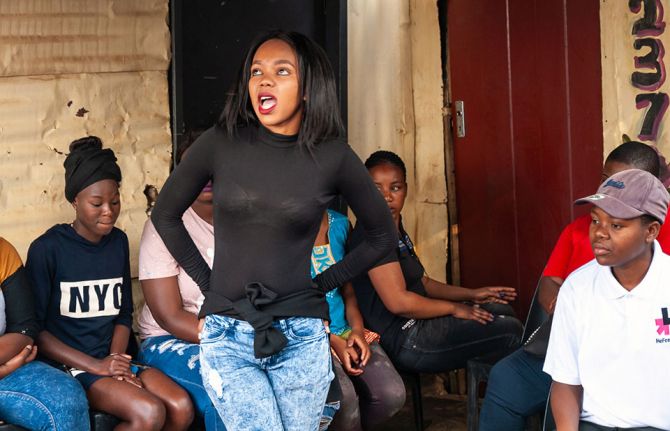
Until two years ago, Karabo Chabalala (28) and Sarah Baloyi (26), young women from Mamelodi — a township northeast of Pretoria in Gauteng, South Africa — were living very different lives.
“I was in a very dark place. I had multiple sexual partners and was part of a lifestyle that was not good or healthy for me,” says Baloyi. Her friend, Chabalala says, “I had many personal problems. I engaged in a transactional relationship with an abusive older man to fund my education and provide for my family.”
Their lives turned around following their involvement in UN Women’s HeforShe community-based initiative that aimed at improving attitudes and behaviours around gender-based violence (GBV) and HIV.
“Karabo introduced me to HeForShe, a community that cares for one another,” says Baloyi. “The dialogues showed me that I am not alone in my mistakes and could change my life. I have been inspired to promote safe and healthy living for young girls and to provide them with the same loving acceptance that was extended to me.”
Chabalala adds, “Many young women don’t open up at home about problems they are facing. These dialogues give us a space to express our thoughts and feelings and to ask any questions that we have about life.”
Led by UN Women’s partner, Southern Africa Catholic Bishops Conference (SACBC), and funded through the Joint United Nations Programme on HIV/AIDS (UNAIDS), the HeforShe dialogues have since 2018 engaged 115,000 men and women across seven districts (Mamelodi, Klerksdorp, Bojanela, Sedibeng, city of Johannesburg, Ehlanzeni and CapeTown) in South Africa’s five provinces.
“The dialogues are coordinated by 151 trained women and men ‘changemakers’, including young women like Baloyi and Chabalala, equipped with knowledge on HIV and violence prevention, unequal gender norms, the importance of HIV testing and adhering to treatment, responsible sexual behavior, and how socio-economic factors can drive HIV infections among men and women,” explains UN Women's South Africa Multi-Country Office Representative, Anne Githuku-Shongwe.
“Many women in Mamelodi have been victims of abuse or witnessed femicide in their homes, often at the hands of men who [are alcoholic].” says Baloyi.
“All I feel is anger,” says Chabalala. “These men don’t respect us. Women in our community are being raped and killed. Some men who perpetrate these crimes are out on bail the following day.”
“There has been a rise in GBV since the COVID-19 lockdown,” says Baloyi. “Abusive partners have been stuck at home and they are frustrated. They are no longer able to spend their time working or drinking with friends, and take it out on their partners and children. This is especially the case in informal settlements, where families live in one- or two-room shacks.”
South Africa is home to almost one-fifth of people living with HIV worldwide and has an HIV prevalence rate of 20.4 per cent among adults (15-19 years). In line with trends across Sub-Saharan Africa, in 2019, women accounted for the majority of new infections in the country. Structural gender inequalities, discrimination, violence against women and girls, and unequal gender norms continue to undermine efforts by women and girls to prevent HIV and use HIV/AIDS services.
“The stigma around HIV prevents people from seeking treatment. I have met some older patients who still fear going to the clinics because they feel judged or embarrassed,” says Chabalala.
To increase the uptake of HIV testing, the changemakers partnered with 20 local HIV counselling and testing clinics across participating districts. They also facilitated outreach for HIV testing at community and church events and developed a referral system. In two years, the HeforShe initiatives have resulted in 62 per cent of those engaged testing for HIV, and 36 per cent returning and adhering to their antiretroviral treatment. However, because of the COVID-19 pandemic, people living with HIV and people at higher risk of HIV infection are facing life-threatening disruptions to health services.
Inspired by the positive impact of UN Women initiatives in communities and empowered by the change makers, Mamelodi community members founded the national ‘Young Women for Life Movement (YWfLM)’, which has grown to 2,035 members. With support from the SACBC, the group is currently monitoring the proceeding of 30 cases of sexual and gender-based violence and 17 cases of femicide in the justice system, as well as supporting the families of survivors. They also played a crucial role in organizing food supply drives to the most vulnerable households in their communities during the COVID-19 lockdown.
“I started the Mamelodi chapter of the Young Women for Life Movement,” says Chabalala. “Being part of this community of 200 powerful young women has taught me so many things and helped me grow. It has changed my life”.
“As a YWfLM member, I work with our local clinic and visit people living with HIV in our community to confirm that they are taking their medication and to ask if they need any assistance or additional supplements,” says Baloyi. “We also have an HIV-positive support group that now mainly connects online due to the pandemic.”
Both Baloyi and Chabalala believe that men need to be more involved in initiatives to improve attitudes and behaviours to prevent GBV and HIV. “Young men need to not only be part of this conversation, they must have their own dialogues where they focus on how to change their mindset,” says Chabalala.
Baloyi adds, “Many more men need to join women in our fight. Men must join us in court and in the streets. They must fight with us.”
Related resources
Region/country
Feature Story
Study shows how COVID-19 is impacting access to HIV care in the Russian Federation
27 November 2020
27 November 2020 27 November 2020A new study shows the negative impact that the COVID-19 pandemic is having on access to HIV care in the Russian Federation and shows that people living with HIV in the country are more susceptible to COVID-19 but less likely to seek testing or treatment.
More than a third of people living with HIV who were surveyed reported some impact on HIV services, including about 4% who reported that they had missed taking antiretroviral therapy because they could not get the medicine and nearly 9% who reported that they had missed taking medicine for tuberculosis prevention. However, the majority of respondents (about 70% of people living with HIV) did not experience problems obtaining antiretroviral therapy and about 22% reported that antiretroviral medicines were delivered to their home. More than 900 respondents from 68 regions of the Russian Federation, including people living with HIV and those who are not, were reached by the study.
“This study answers some of the most important questions about the impact of COVID-19 on people living with HIV in our country,” said Natalya Ladnaya, Principal Investigator and Senior Researcher at the Central Research Institute of Epidemiology of the Federal Service for Surveillance on Consumer Rights Protection and Human Wellbeing (Rospotrebnadzor).
According to Ms Ladnaya, the study confirmed that it is crucial for people living with HIV to protect themselves against the new coronavirus. The authors of the study also note the need to provide uninterrupted HIV treatment during the COVID-19 pandemic.
“Encouraging results were obtained on how the pandemic affected access to HIV treatment—many specialized institutions have been able to adapt to the new reality,” said Alexey Mikhailov, Head of the Monitoring Department of the Treatment Preparedness Coalition, who took part in the study.
According to the study, the number of people living with HIV with COVID-19 markers was four times higher than that of HIV-negative respondents. At the same time, they were half as likely, compared with HIV-negative respondents, to be tested for coronavirus infection and were less likely to seek medical help, even if they had symptoms.
The majority of respondents with HIV and COVID-19 coinfection had a higher risk of contracting COVID-19 due to the significant number of local cases of COVID-19 and the low level of use of personal protective measures, as well as an underestimation of the real personal risk of COVID-19 disease.
Although more than two thirds of the study participants were women, among people living with HIV and having had COVID-19 the majority of respondents were men who had lived with HIV for more than 10 years.
The authors of the study point to the need for further investigation into the causes of the increased incidence of COVID-19 and the low demand for medical care to treat the symptoms of COVID-19 among people living with HIV.
“The COVID-19 pandemic continues to affect all areas of our lives. We need to closely monitor the colliding pandemics of COVID-19 and HIV and provide support so as not to lose the gains in the response to HIV that have been achieved,” said Alexander Goliusov, Director, a.i., UNAIDS Regional Support Team for Eastern Europe and Central Asia.
The study was conducted by the Central Research Institute of Epidemiology of Rospotrebnadzor together with the Treatment Preparedness Coalition with the support of UNAIDS and Rospotrebnadzor.
Feature Story
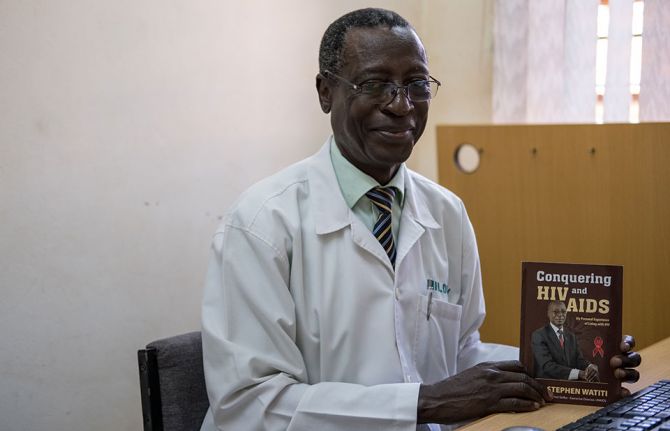
Stephen Watiti: a personal journey that imprints on others
27 November 2020
27 November 2020 27 November 2020Nearly 40 years into the HIV response, improved access to HIV treatment means the 26 million people living with HIV globally who are on HIV treatment can live long and healthy lives. But what does health care for an ageing population of people living with HIV look like?
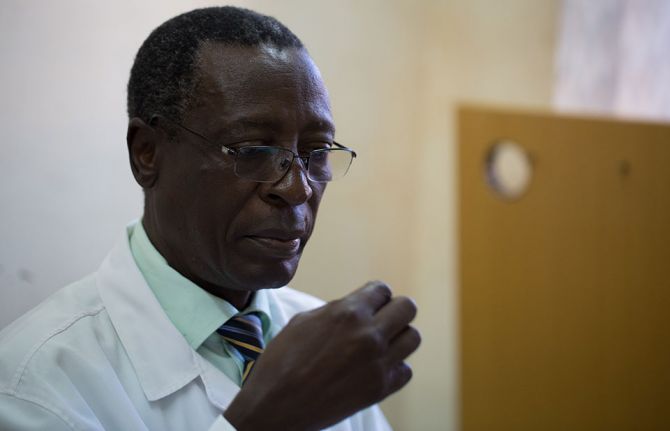
Having lived with HIV for more than 30 years, this is a question 66-year-old Stephen Watiti from Uganda has been considering.
“My needs are going to be changing … and in the future most of the people living with HIV will be 50 years and above,” said the celebrated medical doctor, who is based at Mildmay Uganda Hospital, in Kampala.
In the eastern and southern Africa region, approximately 3.6 million of the 20.7 million people living with HIV are over the age of 50 years.
The new UNAIDS World AIDS Day report, Prevailing against pandemics by putting people at the centre, calls for a differentiated HIV response that is more intensive and more effective at ensuring that we reach those who until now have been left behind. This includes expanding treatment access equitably by providing people-centred, age-sensitive and integrated health services.
People living with HIV should be supported to lead long and healthy lives and people over 50 years of age should have equal access to social protection, employment and social integration.
Mr Watiti said little attention has been given to this phenomenon. “We have worked a lot in paediatric HIV. In geriatric HIV, there is no person who is trained in preparation for that,” he said.
Back in 1999, a period void of HIV treatment and substantial HIV knowledge and training among people in eastern and southern Africa, Mr Watiti experienced multiple AIDS-related illnesses. He had a “frightening” near-death experience where his CD4 count plummeted. His ailing body had to battle tuberculosis, cryptococcal meningitis and Kaposi’s sarcoma—all at the same time.
Mr Watiti started HIV treatment in 2000. However, due to the affordability and accessibility of the antiretroviral medicines in his regimen at that time, his adherence was poor, and he fell sick due to treatment failure.
In 2003, with a new antiretroviral regimen, and the unwavering support of a counsellor from the AIDS Support Organization in Uganda, Mr Watiti realized he was “no longer dying.”
During this period, he realized the need for him to educate and inspire his patients living with HIV. And so he returned to work.
Mr Watiti has come a long way. Despite living with uncertainty as part of an older generation living with HIV, Mr Watiti intends to live a full life, practising medicine well into his seventies.
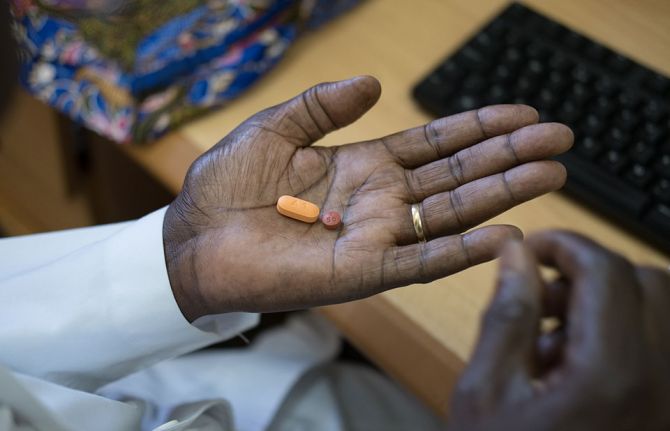
“I’ll have to keep swallowing this medicine unless there’s a cure by then,” he said.
However, Mr Watiti wants to know what can be done to ensure that people living with HIV who are on treatment have a good quality life, including access to mental health services.
This is a question he raised during a conversation with UNAIDS Executive Director Winnie Byanyima at the launch of the UNAIDS World AIDS Day report.
Ms Byanyima agreed. “Considering that someone is going to live off a tablet for the rest of their lives and sometimes that person is living in poverty or hiding their secret because of stigma, this is a huge challenge of the mental and emotional well-being of a person,” she said. “People living with HIV need a wider comprehensive package of services, including mental health. The AIDS response cannot be narrowed just to the tablet.”
Mr Watiti was a beacon of hope for people who were living with HIV at a time when surviving AIDS was a grim prospect and is an example of resilience for people living with HIV today.
Mr Watiti says as he counsels his patients to overcome HIV stigma and about the importance of diligently taking their medication, it was as if he was talking to himself: “To tell you the truth, if there’s one person I've helped the most, it is me.”
Our work
Region/country
Related
Feature Story
New awareness campaign on gender-based violence in the Middle East and North Africa
25 November 2020
25 November 2020 25 November 2020Like HIV, the COVID-19 pandemic thrives on inequalities and inequities. In addition to its impact on people’s health, the COVID-19 pandemic has resulted in significant increases in gender-based violence around the globe, including in the Middle East and North Africa.
Some countries in the region lack essential services for survivors of violence, especially in, for example, rural areas, conflict zones or humanitarian settings. Where services do exist, they do not always reach marginalized women and girls, and in many cases have been reduced or de-prioritized during the pandemic. Gender-based violence in the Middle East and North Africa is also sometimes not prioritized by the police and justice systems and many countries do not criminalize domestic violence, marital rape and other forms of gender-based violence that are particularly relevant in the region, such as female genital mutilation.
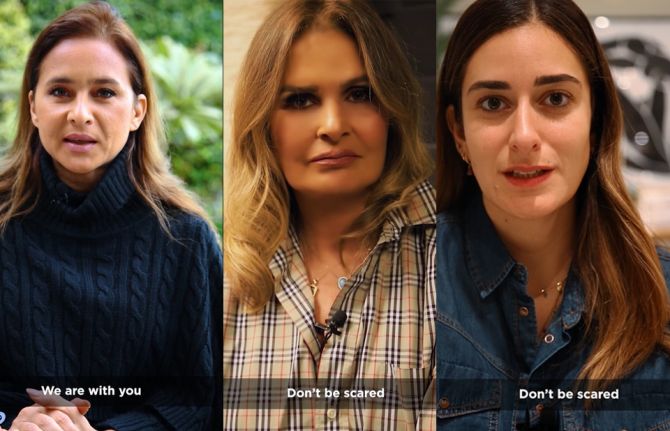
The United Nations Issue-Based Coalition on Gender, Justice and Equality is taking a twin-track approach to gender-based violence in the region, combining a programmatic response that prevents gender-based violence and supports survivors with the launch of a region-wide awareness campaign. The campaign uses the regional goodwill ambassadors of the coalition United Nations agencies to shed light on the risks that women and girls face as a result of the health crisis and to raise people’s awareness on how to counter gender-based violence and support survivors.
“Any form of violence against women and girls is a direct violation of human rights. I want to assure every violated woman and girl through this campaign that we are all with you,” said Yousra, UNAIDS Goodwill Ambassador for the Middle East and North Africa.
The joint campaign is an illustration of the strength of collaboration among United Nations agencies and what partnerships can do in building and empowering the global appeals and calls to action of the United Nations Secretary-General and the Spotlight Initiative, a global, partnership between the European Union and the United Nations to eliminate all forms of violence against women. The campaign leverages the ability of regional celebrities to reach local communities to raise awareness on the compounding impact of COVID-19 on gender-based violence and the vulnerabilities of marginalized and vulnerable groups.
“The response to COVID-19 in this region, and globally, has shown us that when we act in solidarity, in true partnerships and with a sense of shared responsibility, we can win against the intertwining health threats of COVID-19, HIV and the shadow pandemic of gender-based violence,” said Rangayian Gurumurthy, Director, a.i., of the UNAIDS Regional Support Team for the Middle East and North Africa.
“During COVID-19, most of us are confined in our homes with our partners. This has increased relationship problems, as well as social and economic problems. Many are subjected to violence from our close family or our intimate partner. That is why our nongovernment organization dedicated a hotline for psychological support,” said a woman living with HIV in the Islamic Republic of Iran.
Multimedia
Feature Story
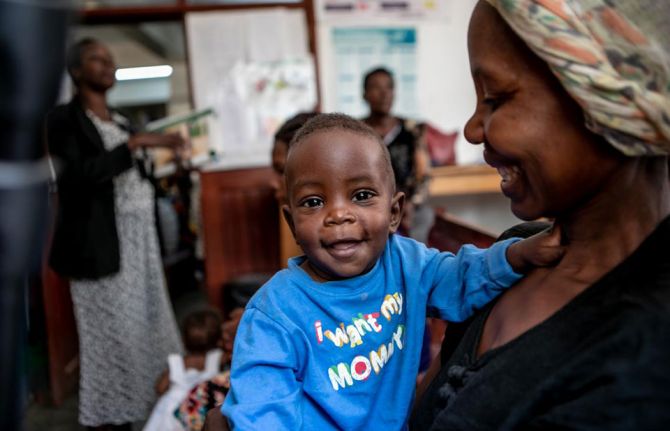
UNAIDS joins partners to call for better testing, treatment and prevention of HIV and TB among children
20 November 2020
20 November 2020 20 November 2020On World Children’s Day, UNAIDS is joining with partners to call for accelerated access to better tools to prevent, diagnose and treat HIV in children and tuberculosis (TB) in children living with HIV with a joint statement announcing the launch of the Rome Action Plan 2020.
Children living with HIV are disproportionately being left behind by the HIV response. Treatment coverage among children globally is extremely low. In 2019, only 53% of the estimated 1.8 million children living with HIV were found and on treatment. That means that 850 000 children living with HIV are not on life-saving HIV treatment. More than half of those missing children are in just five countries—the Democratic Republic of the Congo, Kenya, Mozambique, Nigeria and South Africa—and two thirds of those children are aged 5–14 years. Furthermore, we are not doing enough to prevent new infections, with 150 000 new HIV infections among children aged under 15 years in 2019. Therefore, specific programmes and activities must be rapidly deployed to reach those children and allow them to benefit from the extraordinary expansion of paediatric innovations.
The reasons for this are manyfold. Mothers are not tested for HIV during pregnancy and breastfeeding and therefore cannot receive HIV treatment that will keep them healthy and prevent their child becoming HIV infected. Children are not tested for HIV at or shortly after birth so cannot benefit from early HIV treatment with better outcomes. The most commonly available HIV treatments for HIV are not child-friendly, often tasting bitter and cannot be dissolved or sprinkled on food for infants and young children who cannot swallow tablets.
Children and especially children living with HIV are particularly vulnerable to TB, which is the commonest cause of death among people living with HIV. TB among children living with HIV is difficult to diagnose and the treatment is complicated and unpleasant to take, especially in combination with HIV treatment.
“The Rome Action Plan has driven new diagnostics and more effective, affordable and palatable treatments for children living with HIV. We have a moral obligation to now ensure those tools actually reach the children who need them most,” said Shannon Hader, UNAIDS Deputy Executive Director, Programme. “We need action—to reach those children countries need to focus in on their data, understand where and how the children who are missed are likely to be reached and eliminate any artificial barriers—from policy to implementation—that get in the way. And as for innovation—better diagnostics and treatments for both HIV and TB among children—we’re not done yet. We will continue to advocate and partner for more and better.”
Since 2016, as part of the UNAIDS and United States President’s Emergency Plan For AIDS Relief faith initiative, the Vatican has been bringing together key partners in a series of high-level dialogues to find better ways to prevent, diagnose and treat HIV in children, and this year included a focus on TB among children living with HIV for the first time. On 5 and 6 November, the Vatican’s Cardinal Turkson convened the virtual Rome Five meeting. This innovative dialogue brought together leaders from the private and public sectors, governments, regulatory authorities, faith-based and community-based organizations and other implementing partners to find solutions to reduce the burden of HIV and TB among children.
The meeting resulted in a new Rome Action Plan 2020, a series of ambitious commitments made by participating organizations aimed at overcoming the bottlenecks to HIV and TB services for children. Among the many commitments made by the partner organizations, UNAIDS has committed to supporting governments to collect and report on the burden of HIV and TB among children so that national responses can be targeted to where they are most needed. UNAIDS will set and report on ambitious age-specific global targets for the prevention, testing and successful treatment of HIV in children and TB in children living with HIV. UNAIDS will continue to advocate at the highest political level for increased investment and committed actions at the country level so that the world can get on track to ending AIDS and TB among children living with HIV.
Our work
Related
Related
Feature Story
Turning around the HIV response in Odesa
24 November 2020
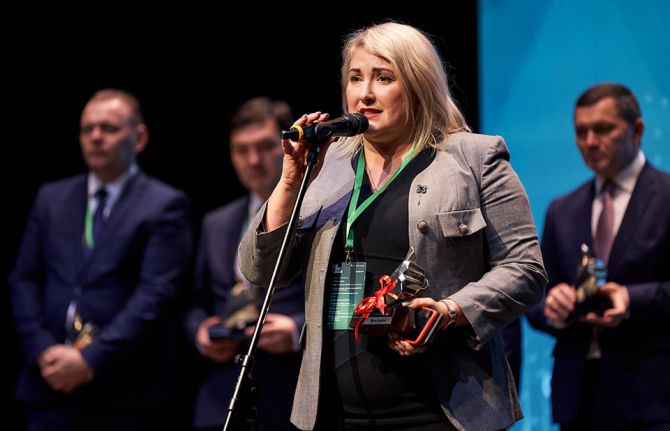
24 November 2020 24 November 2020Irina Kutsenko, a deputy of the Odesa City Council in Ukraine responsible for social issues, is an active advocate of community rights who campaigned for medical and social services for HIV to be brought closer to the most disadvantaged. She is the first and so far the only government official nominated by civil society for the #inYourPower award. The award, which is given by civil society to leaders, government officials and eastern European and central Asian politicians, is given to people who have contributed to improving the financial sustainability and effectiveness of HIV programmes for key populations and to removing legal barriers to HIV services and protecting human rights.
However, the route to the award was not straightforward. “As a deputy, I closed the opioid substitution therapy site in my district. I collected signatures from people against the gay movement in our city,” she said. But after completing a course run by the International Academy of Harm Reduction, she began to research the topic in more detail. “I started reading about the issue on the Internet, listening to interviews of people, listening to life stories, until I understood that I was wrong!”
Ms Kutsenko started to cooperate with community organizations to make Odesa a safer city for key populations.
“When representatives of community organizations came to me with a harm reduction project in the city, I already understood what they were talking about. At that moment, I realized that nongovernmental organizations today know more than officials. At the beginning, I was only listening,” she said.
The first task for Ms Kutsenko and the community organizations was to find a common language and common platform. “We needed everyone: doctors, the authorities and public organizations to unite and work towards one common goal,” she said. “It didn't work out when everyone was separate.”
But, as Gennadiy Trukhanov, the Mayor of Odesa, said, it was not easy for the city. The city authorities, in addition to responding to local everyday problems also need to address global challenges, in particular helping health-care workers to fight the COVID-19 pandemic. “Mayors are assessed by the state of the city: roads, public spaces, etc. We can have clean cities, but with the spread of infectious diseases around the world, the time may come when there will be no one to walk along these roads,” he said.
Over the past few years, Odesa has been implementing steps within the framework of the Paris Declaration to end the AIDS epidemic in cities and was the first city in Ukraine to commit to the Zero TB Cities initiative. The city has initiated outpatient treatment of tuberculosis, instead of in hospital, and has begun widescale testing programmes for HIV, increasing the detection rate of HIV and ensuring that people who test positive access treatment.
“Of course, there are still many problems, but, step by step, we are changing the situation in the city,” said Ms Kutsenko.
Ms Kutsenko’s story can be viewed on YouTube.
Related
Feature Story
Updated dashboard supports differentiated HIV testing services
12 November 2020
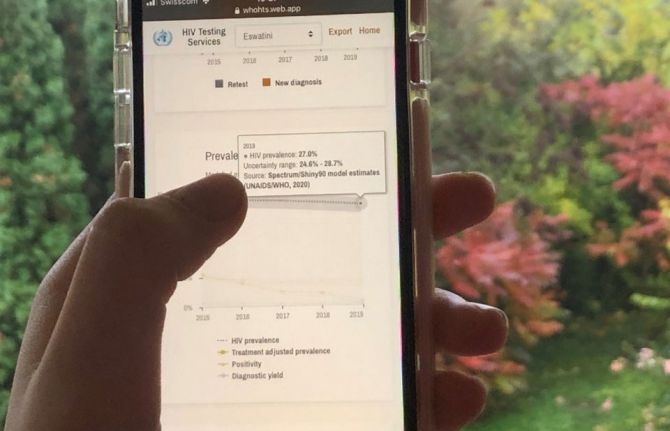
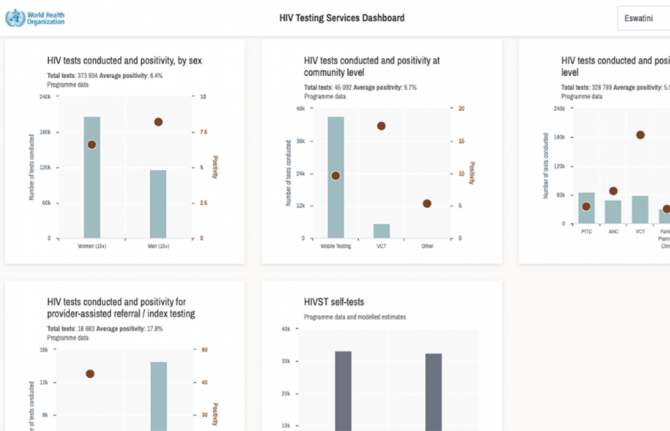
12 November 2020 12 November 2020The World Health Organization (WHO), in coordination with UNAIDS, has updated its HIV Testing Services dashboard with new data for 2020, ahead of this year’s World AIDS Day.
The interactive dashboard gives users a wide range of information on HIV testing from countries worldwide on, for example, HIV prevalence, the number of people testing positive for HIV and the number of people testing for HIV for the first time or repeating a test. Data are given in charts and tables and are differentiated by age, sex and other characteristics.
“It is critical to have differentiated HIV testing data at this stage in the epidemic,” said Cheryl Johnson, WHO Technical Officer. “Having such data will help programmes to implement the World Health Organization’s guidelines so that they may reach the remaining people living with HIV who do not know their status. We look forward to working with countries on how they can use their data to guide efficient and effective HIV testing services.”
Countries need to have a range of testing approaches to reach people living with HIV who do not know their status and others at risk of acquiring HIV. The dashboard will help countries to develop the best mix of testing services—such as self-testing, index testing and various forms of community and facility-based testing services—suitable for their settings. Countries can also monitor the progress of the number of people who newly learn their HIV status.
“We are using data to intensify our efforts to reach the remaining people living with HIV who don’t know their status and to facilitate linkage to care by prioritizing and differentiating testing so we can reach underserved geographies and populations in Uganda. The dashboard is a useful tool to help guide decision-making and our national strategy moving forward,” said Geoffrey Taasi, Programme Officer, HIV Testing Services, Ministry of Health, Uganda.
The information on the dashboard is a mixture of WHO and UNAIDS data, national programme data, modelled estimates and population survey data—it also includes the implementation status of testing services and national policies. The data used were selected in consultation with representatives of ministries of health, research partners, local and international implementing partners and donors.
In addition to the website, the dashboard can be accessed through the WHO HTS Info app using a smartphone or tablet.
“Expansion of relevant HIV testing approaches is critical for Viet Nam to achieve the 90–90–90 targets. With support from the World Health Organization and other partners, we have successfully piloted community-based HIV testing, including lay provider testing and self-testing. We are now working to scale up these approaches nationwide,” said Nguyen Hoang Long, Director-General of the Viet Nam Authority of HIV/AIDS Control, Ministry of Health, Viet Nam.
HIV Testing Services Dashboard
Our work
Feature Story
New faith-based initiative launched in Côte d’Ivoire
16 November 2020
16 November 2020 16 November 2020Côte d’Ivoire has launched its Harnessing the Power of Partnerships faith-based initiative.
As one of several focus countries for an initiative of the United States President’s Emergency Plan For AIDS Relief (PEPFAR) and UNAIDS, which was launched in June 2020 to leverage global and country leadership by faith-based organizations in the HIV response, Côte d’Ivoire will work with faith-based organizations in the country to align their activities to faith action plans in support of the national HIV response. Experience shows that such an alignment results in a better coordinated and sustained participation of the faith sector in national responses to HIV.
Faith-based organizations have always played an important role in the response to HIV through their strong links with communities and their broad network of hospitals, clinics and other health facilities. However, to unleash the full potential of those organizations, there is still a need to reinforce their capacities to adopt new policies and innovations, to improve their collaboration and coordination with partners in the HIV response and to further address HIV-related stigma and discrimination within faith communities.
“This initiative will build on the global and national leadership of faith-based organizations in the response to HIV, with a particular focus on areas where faith-based organizations have a real and sustainable impact,” said Samba Mamadou, Director-General of the Côte d’Ivoire Ministry of Health and Public Hygiene.
Through the partnership, PEPFAR’s implementing partners in the country will work with faith-based organizations to develop messages of hope to reduce HIV-related stigma and discrimination and increase demand for HIV services. Key issues to be addressed will include treatment cessation through “faith healing” and the need for strengthened HIV literacy.
The next steps of the initiative include convening a meeting with all the relevant stakeholders to develop a faith action plan in support of the national HIV strategic plan for 2021–2025.
“The initiative is designed as a consortium of longstanding faith-based organizations and partners working together to build and combine their strengths, promote evidence-informed policy and practice and strengthen advocacy efforts,” said Brigitte Quenum, UNAIDS Country Director for Côte d’Ivoire.
The initiative, which is under the leadership of the Ministry of Health and Public Hygiene and the National AIDS Control Program, and is supported by UNAIDS, was launched in mid-October at an event attended by more than 50 partners that was hosted by UNAIDS and streamed online.
"The faith-baith institutions welcome this interfaith initiative to strengthen the contribution of our institutions and leaders in a more synergistic way,” said Pastor Yapi, Deputy Vice-President of the Alliance des Religieux pour la Santé Intégrale et la Promotion de la Personne Humaine.
Region/country
Related
Feature Story
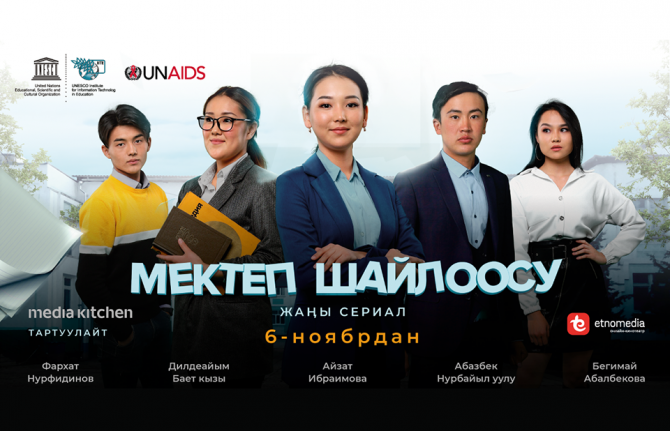
Interactive TV series about HIV launched in Kyrgyzstan
13 November 2020
13 November 2020 13 November 2020A new television series for young people in the Kyrgyz language, School Elections, was launched online last week. During six 15–20-minute episodes, a girl, Ayana, who is living with HIV, tells her story of bullying, friendship and the fight for human dignity. The producers of the series hope that Ayana’s example will give hope to young people who face similar challenges.
“We have a simple idea to promote: you may differ from others in your health, appearance or level of wealth. But regardless of this, we all deserve respect, friendship, love and happiness. This series is about kindness and acceptance of others as they are,” said Azim Azimov, Head of Production at the Media Kitchen production studio and the main screenwriter of the series.
Starting on 6 November, new episodes will be aired weekly on YouTube and will also be broadcast on television, Instagram and the teens.kg youth project website. Additionally, each series has one to three interactive episodes—the leading actors invite the viewers to look at the problems raised in the series through the viewers’ eyes, experience each situation for themselves and make their own decisions.
According to the United Nations Educational, Scientific and Cultural Organization (UNESCO), more than 30% of students around the world experience various forms of bullying at the hands of their classmates. Students who are perceived as “different” are often subjected to bullying for reasons of appearance, health status, including HIV status, sexual orientation and gender identity, social status or the economic situation of the family.
“This series tells people about the complex issue in simple and understandable language, to show how strong-willed and honest young people can overcome ignorance, indifference, cruelty and injustice, inspire others and change life for the better,” said Tigran Yepoyan, UNESCO Regional Adviser on HIV, Education and Health.
“This series is a powerful new instrument for reducing stigma in our society, it not only shows the difficulties of living with HIV, discrimination and bullying but also motivates our adolescents not to be afraid to fight for dignity and justice and move forward towards their dreams,” said Meerim Sarybaeva, UNAIDS Country Director for Kyrgyzstan.
The official soundtrack of the series, which was supported by the UNESCO Institute for Information Technologies in Education and UNAIDS, was performed by the singer Ayim Ayilchieva.