

Feature Story
Artificial intelligence not necessarily beneficial for LGBTI community
21 May 2018
21 May 2018 21 May 2018One of the most watched events of the year got Cynthia Weber wondering: can the use by Sky News of artificial intelligence (AI) at the wedding of Prince Harry and Meghan Markle be a good thing?
For the first time in history, a news broadcaster used AI facial recognition technology during a live broadcast. Cynthia, a professor of international relations and gender studies at the University of Sussex, explained that using software to name wedding guests may be a nifty trick, but there are worries about the implications.
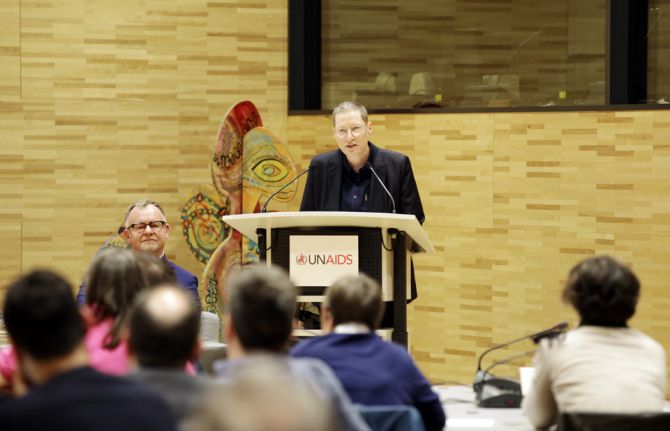
“Some claim that this technology can identify a person’s sexual orientation,” Cynthia said while speaking during an event for the International Day against Homophobia, Transphobia and Biphobia in Geneva at UNAIDS headquarters.
Referring to a Stanford University study that analysed more than 35 000 images on a United States dating website of white, able-bodied, 18–40-year-olds, the researchers compared their AI-generated sexual orientations against sexual orientations researchers found in dating profiles. The study claimed that AI facial recognition technology could determine a person’s sexual orientation with up to a 30% greater accuracy than people can.
Cynthia said that LGBTI advocacy organizations labelled the study junk science—the study used a skewed sampling in terms of race and age and the study equates sexual orientation with sexual activity. “The result is that the study’s artificial intelligence algorithm only finds what it was programmed to find: stereotypes about straights, gays and lesbians,” said Cynthia.
Cynthia believes that AI knowledge may generate opportunities in many fields, but sees far more risks and dangers than advantages for LGBTI people.
When AI meets facial recognition technology and a sexual orientation algorithm, at least four issues arise. First, privacy. In national and international law, a person’s face is not protected by privacy laws. That allows faces to be scanned and read by everyone, from governments to Sky News.
Secondly, accuracy. “In a world beyond the royal wedding, artificial intelligence facial recognition technology is far from perfect, even when it just tries to match names with faces, much less when it tries to match presumed sexual orientations with faces,” Cynthia said.
For Cynthia, the key issue is knowledge. How does a sexual orientation algorithm know better than an individual his or her sexuality? Cynthia considers the binary approach of code and computer-readable data not compatible with the vast gender and sexuality spectrum.
Finally, the issue of what the AI information will be used for worries Cynthia. “Let Sky News use it for wedding commentary, but what if the police use it in countries where homosexuality is outlawed?” Cynthia asked.
For Cynthia, AI and sexual orientation are not necessarily mutually beneficial. Cynthia understands that AI influences imagination and drives innovation, but believes that categorization of people usually introduces more harms than benefits.
Cynthia concluded by saying, “People have to make sure that artificial intelligence is ethically driven, not just technologically driven.”
The event was organized with the Swiss LGBTI Pride@Work association and UN Globe, a United Nations-wide LGBTI organization, and was held on 16 May.
Partner
International Day against Homophobia, Transphobia and Biphobia
Feature Story
Ending double jeopardy for women with HIV
18 May 2018
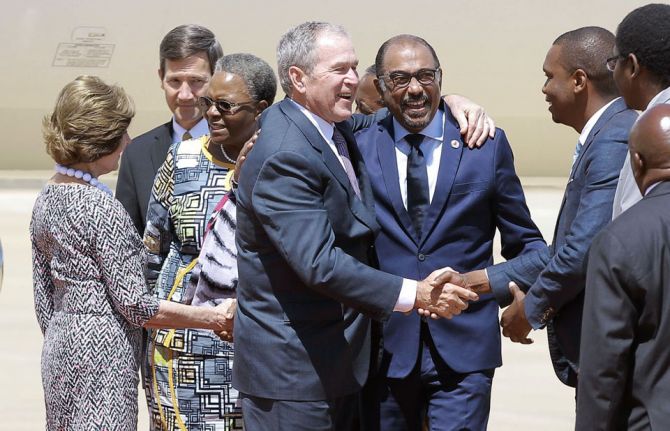
18 May 2018 18 May 2018A new US$ 30 million partnership to help end cervical cancer led by the United States President’s Emergency Plan for AIDS Relief (PEPFAR), the George W. Bush Institute and UNAIDS will accelerate life-saving efforts in eight African countries.
Studies show that women living with HIV are four to five times more likely to develop invasive cervical cancer. However, the disease is preventable through screening and early treatment of precancerous lesions. Early detection and treatment of cervical cancer can dramatically increase a woman’s chance of survival—women with preinvasive lesions have a five-year survival rate of nearly 100%.
Because of the high prevalence of HIV in sub-Saharan Africa, and because women in sub-Saharan Africa are not screened or treated as early or frequently as women in other parts of the world, cervical cancer remains the number one cancer killer of women in the region.
To address the disproportionate risk of cervical cancer among women living with HIV and the need for increased rates of screening and treatment in sub-Saharan Africa, PEPFAR the George W. Bush Institute and UNAIDS recently announced a new partnership—the Partnership to End AIDS and Cervical Cancer—designed to effectively eliminate cervical cancer deaths among women living with HIV in sub-Saharan Africa within a generation. The partnership will build on successful efforts over the past seven years of the Pink Ribbon Red Ribbon initiative and, pending Congressional approval, will be supported by an initial investment of US$ 30 million from PEPFAR.
“When we confront suffering—when we save lives—we breath hope into devastated populations, strengthen and stabilize society, and make our country and the world safer,” said President George W. Bush. “This week, we are announcing the next phase of our partnership with the United States President’s Emergency Plan for AIDS Relief and UNAIDS: a plan to effectively eliminate cervical cancer amongst HIV-positive women within a generation.”
The partnership will focus its work in eight sub-Saharan African countries where the burdens of HIV and cervical cancer are high—Botswana, Lesotho, Malawi, Mozambique, Namibia, Swaziland, Zambia and Zimbabwe. There are about 6 million women living with HIV in those eight countries. More than 100 000 women are diagnosed annually with cervical cancer in sub-Saharan Africa.
“The partnership will allow us to screen for, and treat, precancerous lesions among women living with HIV like never before,” said Michel Sidibé, the Executive Director of UNAIDS. “The partnership’s new strategy, which includes cervical cancer screening every two years for women living with HIV over the age of 30 years, aims to reduce cervical cancer incidence by 95% among this population in eight sub-Saharan African countries.”
The partnership will engage with governments in each of the countries to ensure that women and girls living with HIV are a priority in national cervical cancer prevention and control programmes. It will also leverage the powerful advocacy of first ladies, ministers, civil society, global health leaders and funders to improve implementation efforts and speed progress against the goal of eliminating cervical cancer.
“Thanks to the generosity of the American people, the United States President’s Emergency Plan for AIDS Relief has saved the lives of millions of HIV-positive women around the world,” said Deborah Birx, United States Global AIDS Coordinator and Special Representative for Global Health Diplomacy. “We must ensure these same women—mothers, daughters, aunts, and grandmothers—who are living with HIV and thriving do not succumb to cervical cancer.”
The new partnership builds on the successful efforts of the Pink Ribbon Red Ribbon initiative. Since its inception in 2011, Pink Ribbon Red Ribbon and its partners have screened more than half a million women for cervical cancer in Botswana, Ethiopia, the United Republic of Tanzania and Zambia, treated almost 32 000 women for precancerous lesions and vaccinated almost 150 000 girls aged 9–13 years against human papillomavirus type 2.
Partner
Related
Feature Story
Health is made at home, hospitals are for repairs
22 May 2018
22 May 2018 22 May 2018Calls to increase the number of trained and paid community health workers and reach more people with primary health care have been made for decades. However, countries are still struggling to expand the number of health workers serving in their own communities. This is despite overwhelming evidence of the gains made through such programmes in improving overall health, particularly maternal health and child health.
Rwanda’s investment in a combination of community-based insurance and community health workers led to the lowest maternal mortality in history for the country, showing that investments save lives.
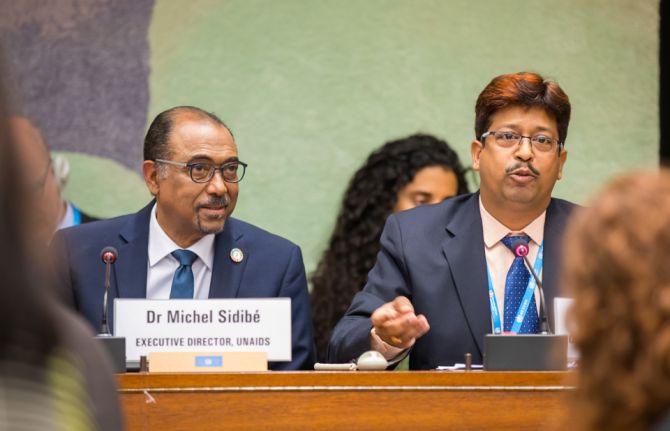
“Africa bears 25% of the global disease burden, but has barely 3% of all health workers,” said Michel Sidibé, Executive Director of UNAIDS. “We need a shift in perspective to invest in community health workers to ensure healthy families and health security and to reach the people left behind.”
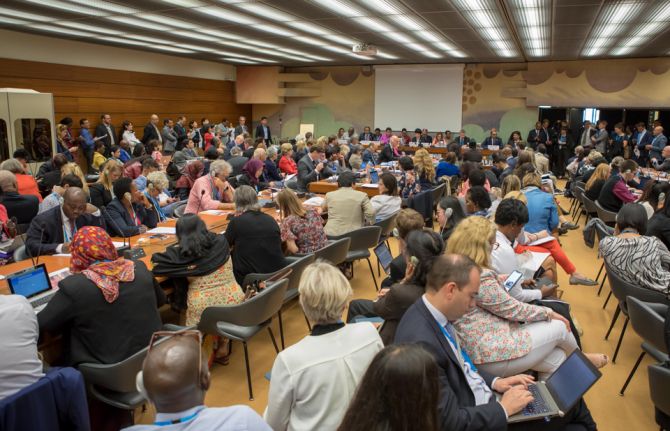
Forty years after the Declaration of Alma-Ata, which identified primary health care as the key to attaining health for all, global health leaders came together at an event to promote the effectiveness of community health workers by sharing their experiences and looking at ways of advancing the agenda on a global scale.
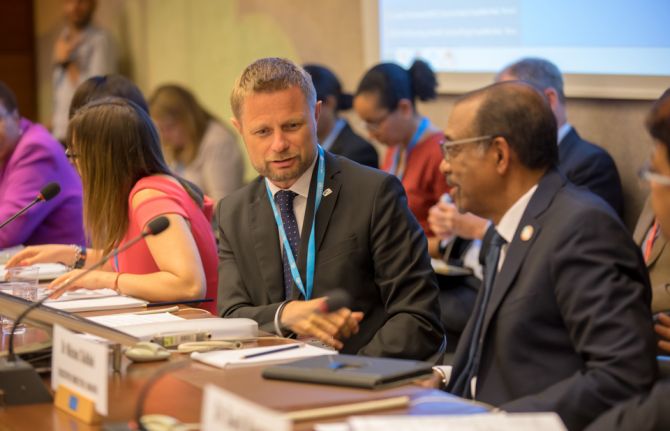
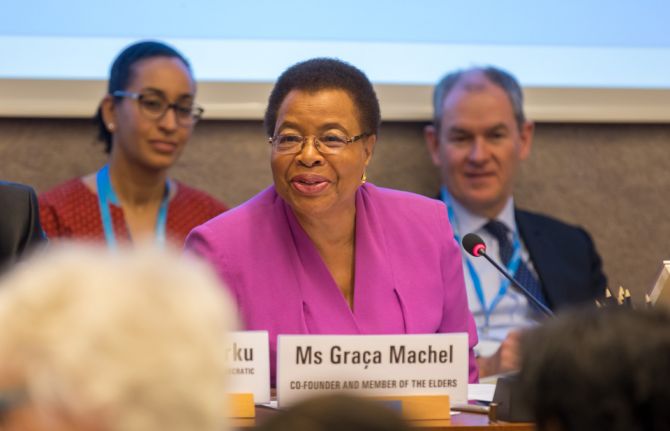
The event, convened by Ecuador and Ethiopia, was held on the sidelines of the 71st World Health Assembly in Geneva, Switzerland, on 21 May and joined together community health workers, ministers of health, programme managers, the Director-General of the World Health Organization, Tedros Adhanom Ghebreyesus, Graça Machel, a co-founder of the Elders, and Mr Sidibé.
Sunil Kumar, a community health worker in India, gave his account of how important medical services are to people in remote communities. He explained how he managed to reach a pregnant woman in a remote area of India in the rainy season. Despite a dangerously overflowing river, he and his colleague went the extra mile to ensure that her baby was delivered safely—a stark reminder of the unique added value of community health workers.
The Ministers of Health of Ecuador, Ethiopia and Namibia and the Permanent Secretary of the United Republic of Tanzania talked about the successes and challenges they are facing in trying to expand the number of community health workers in their countries.
The State Minister of Health of Ethiopia shared a successful model that has been scaled up in the country. Ethiopia now has more than 38 000 paid and trained health extension workers following the 2004 launch of the health extension programme, financed by a mix of government and international donor funds. The programme has made significant contributions to declines in maternal mortality, improvements in hygiene and sanitation and a reduction in major communicable diseases.
“We are seeing momentum for universal health coverage,” said Mr Tedros. “Primary health care is both promotion and prevention and community health workers are the backbone.”
In July 2017, the African Union Commission launched an initiative to recruit, train and deploy 2 million community health workers by 2020, an initiative championed by UNAIDS. UNAIDS, in close collaboration with the World Health Organization and the United Nations Children’s Fund (UNICEF), recently supported the African Union Commission to undertake the first stocktaking exercise on the status of community health workers across the whole of Africa. The findings and recommendations will be submitted to heads of state during the African Union Summit in June 2018. UNAIDS is supporting countries to implement this important initiative.
Although positive steps have been made, many countries are still struggling to scale up. “In Namibia, we adopted the Ethiopian model, as it has been so successful,” said the Minister of Health of Namibia. “We trained 2000 people, which is small for a population of 2.3 million, and not all have been deployed due to budget cuts, inefficiencies and fraudulent use of resources.”
Other challenges cited by the speakers include transport issues, a lack of technology and communications support, such as smart phones, and political leadership at the very top levels.
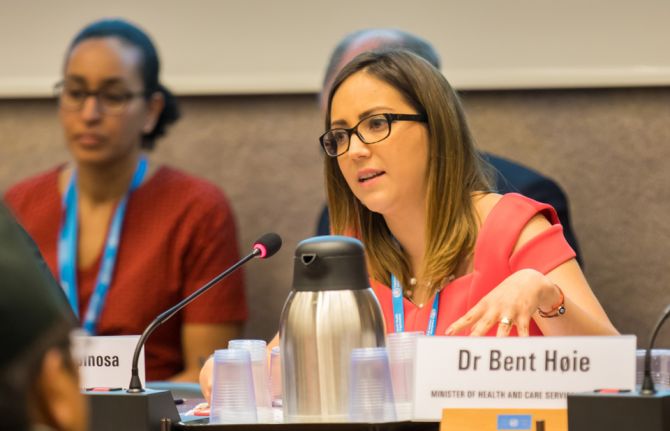
“Health systems need to be built from the bottom up,” said Bent Høie, Norwegian Minister of Health and Care Services. “And that starts with community health workers.”
Stefan Swartling Peterson, Chief of Health at UNICEF, embodied the sentiment of the meeting by sharing a saying his professor, Francis Omaswa, former Minister of Health of Uganda, often reminded him of, “Health is made at home, hospitals are for repairs,” and stressed that community health workers cannot be alone, that systems, supply chains and data management are needed to make the programmes a true success.
Urging for a global movement with every country making a commitment to increase the number of trained and paid community health workers, Graça Machel concluded by saying, “Let us not come back in 2030 and say we promised but we failed … it is not allowed.”
Feature Story
Women living with HIV in Rajasthan push for social protection and economic opportunities
17 May 2018
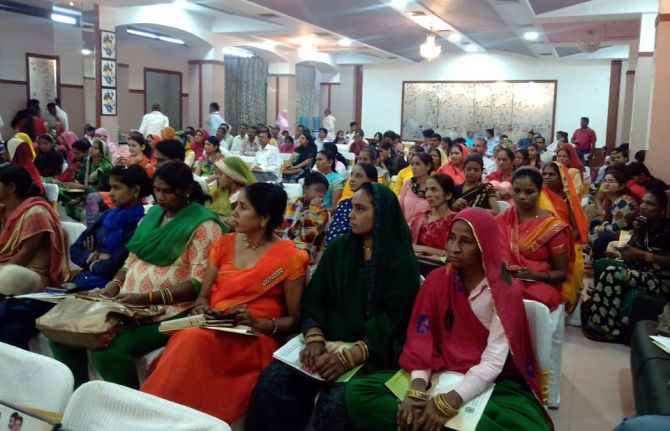
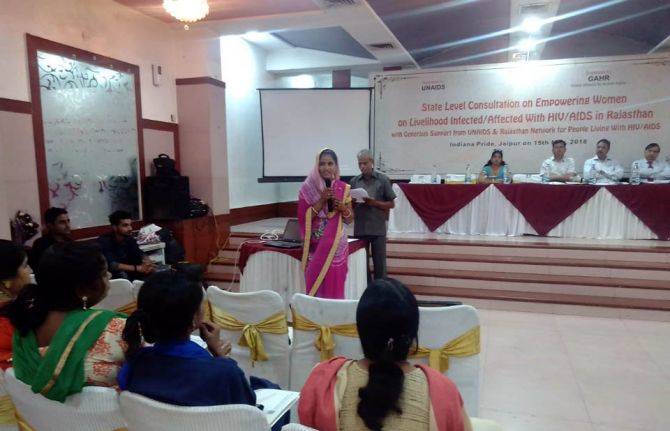
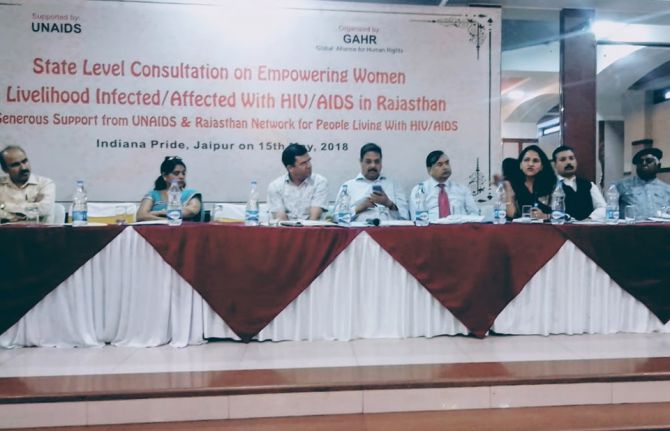
17 May 2018 17 May 2018Women living with HIV in Rajasthan, India, have come together to lobby the State Government of Rajasthan for improved provision of social protection services. The Global Alliance for Human Rights and the Rajasthan Network of People Living with HIV organized an advocacy session in Jaipur on 15 May with more than 100 women living with HIV during which they presented their needs, including dairy booths for income generation and schooling for adolescents living with HIV.
In addition to the importance of access to social protection and economic opportunities, discussions were also held around the global 90–90–90 targets, the elimination of mother-to-child transmission of HIV by 2020 and ending AIDS by 2030. The Indian HIV/AIDS Act 2017 and its importance in protecting against discrimination and opening access to the law in the event of human rights violations against people living with and affected by HIV in India were also discussed.
The women living with HIV presented some heartening real-life stories on their struggle to look after their families. A widow with three children said, “I am facing stigma and discrimination in my family and I am fighting hard to ensure that my rights to property are protected so that I can continue to provide good care to my children. I am under a lot of pressure to withdraw, but I will not give up the fight.”
Many commitments were made during the session. “We commit ourselves to look for legal clearance in support of the allocation of dairy booths for 1000 women living with HIV in Rajasthan,” said Devi Singh Bhatti, a politician and former member of the Rajasthan Legislative Assembly.
Brijesh Dubey, of the Global Alliance for Human Rights and Rajasthan Network of People Living with HIV, concluded the event with a strong message to the officials of the Government of Rajasthan and other stakeholders present. “The Rajasthan Network of People Living with HIV will continue to focus its efforts on two major areas—firstly, the roll-out of the HIV/AIDS Act 2017 through the establishment of legal clinics and, secondly, ensuring access to quality livelihood options for people living with HIV, especially women and adolescents living with HIV.”
Region/country

Feature Story
Addressing the detrimental health and human rights impacts of criminal laws
08 May 2018
08 May 2018 08 May 2018People have a fundamental human right to make decisions about their lives and bodies. These rights relate to personal choices on, among other things, health care and treatment. For sexual and reproductive rights, key issues include the right of people to decide when, whether and with whom to have sex, to have children and to get married and their ability to express their gender and sexuality.
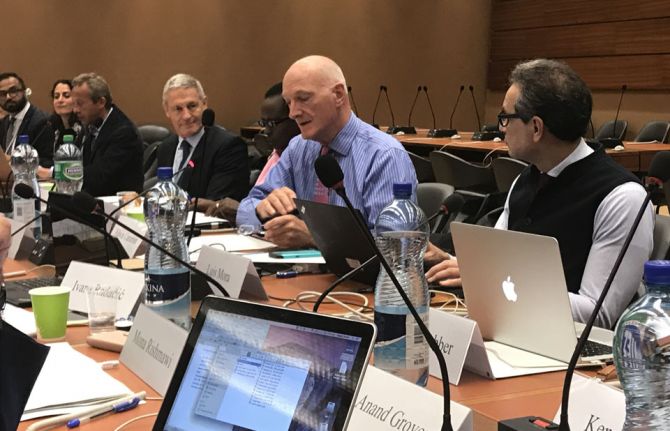
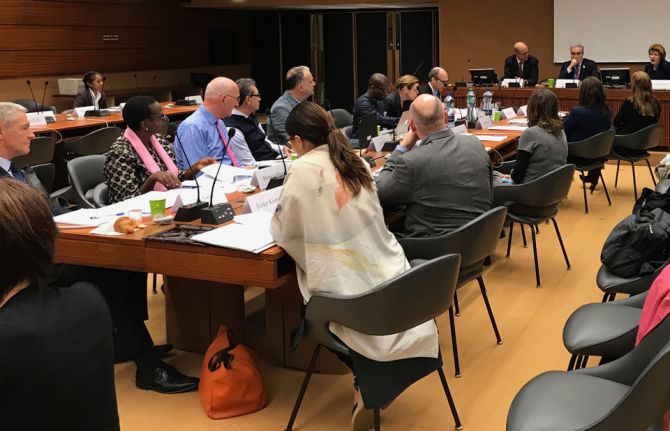
Leading legal experts from around the world recently met to lay the foundations for a set of principles to address the misuse and abuse of criminal laws that affect basic human rights and impact on health and equality. The principles will be developed in the coming months and will guide civil society and policy-makers in the development and use of laws that guarantee human rights and protect public health.
Tim Martineau, UNAIDS Deputy Executive Director, Programme, a.i., noted at the outset of the meeting that, “While there is significant progress in HIV prevention, treatment and care, there is a big discrepancy in HIV prevention in relation to key populations, who are more vulnerable to HIV infection in many respects because of a lack of legal protection and the unjust criminalization of their behaviour.”
The legal experts focused on criminalization related to sexuality, reproduction, personal drug use and the overly broad criminalization of HIV nondisclosure, exposure and transmission. Around the world, same-sex sexual practices are criminalized in 73 countries, with 13 states imposing the death penalty. Sex work is criminalized in approximatively 116 countries globally and some 72 countries criminalize HIV non-disclosure, exposure or transmission. Criminal laws often increase stigma against already marginalized and excluded groups and have been linked to discrimination and the denial of critical health services. Criminalization also creates an environment in which people are less likely to seek police assistance when their rights have been violated.
Kate Gilmore, the United Nations Deputy High Commissioner for Human Rights, emphasized that the criminal law plays an essential role in the recognition, protection and enforcement of rights, including by tackling impunity for violations of those rights. “Our purpose here is to raise the shield of criminal law by lowering its sword, ensuring better protection through criminal law by reducing the abuse of it.”
Sam Zarifi, the Secretary General of the International Commission of Jurists, said, “The misuse of the criminal law affects the most marginalized people and, in particular, the dispossessed and disenfranchised.”
The meeting was held on 3 and 4 May and was led by the International Commission of Jurists, in partnership with UNAIDS and the Office of the United Nations High Commissioner for Human Rights.

Feature Story
What needs to be done to Fast-Track social protection to end AIDS?
09 May 2018
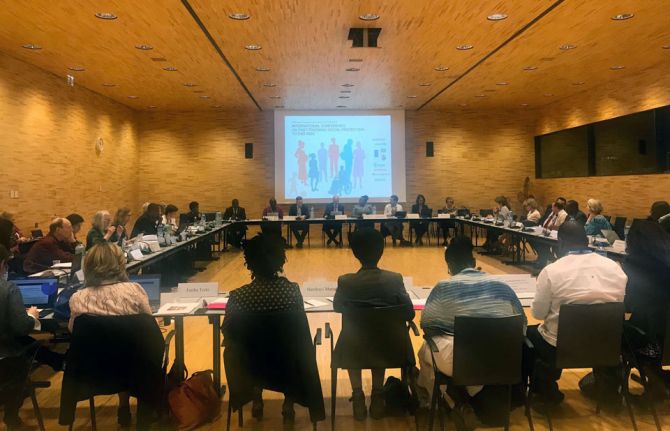
09 May 2018 09 May 2018In 2016, Member States agreed a set of targets at the United Nations High-Level Meeting on Ending AIDS to be met to put the world on course to end the AIDS epidemic by 2030. One of those targets was to strengthen national social and child protection systems to ensure that, by 2020, 75% of people living with, at risk of or affected by HIV benefit from HIV-sensitive social protection. The target is human rights-based. It feeds into and benefits from promoting, protecting and fulfilling all human rights and the dignity of all people living with, at risk of or affected by HIV.
Evidence of how social protection programmes meet the needs of people who are poor and excluded and benefit people living with, at risk of or affected by HIV is increasing. The question is not whether the AIDS response should increase attention to social protection, but how best to leverage resources and partnerships of movements working on ending poverty and inequality to work effectively towards ending AIDS.
Of 127 countries reporting in the UNAIDS National Composite Policy Index in 2017, 109 (86%) stated that they had an approved social protection strategy, policy or framework in 2016, and 99 of those countries (78%) were implementing those programmes. A total of 85 countries stated that their strategies were HIV-sensitive to at least some extent. More than half (47) of the 87 countries with a coordinating mechanism for their social protection strategy have included their national AIDS programme in that structure. However, only 12 countries reported that their social protection strategies were fully HIV-sensitive.
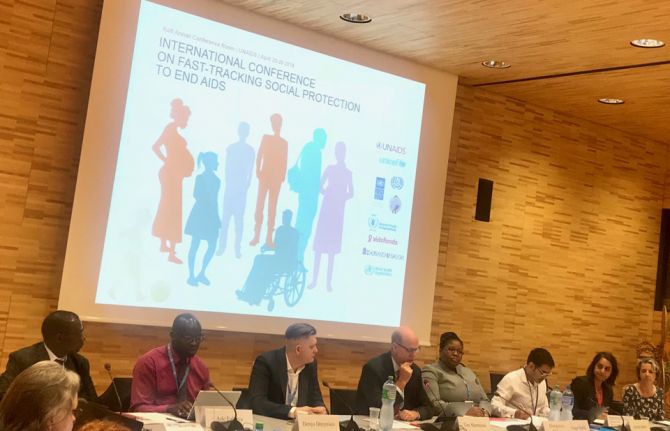
To step up efforts to get social protection on the Fast-Track, UNAIDS recently held a conference at which the participants heard about how to strengthen national social and child protection systems. The conference focused on three objectives: strengthening the links with social and other movements for ending poverty and inequality; intensifying action on social protection; and reinvigorating programming for HIV, food security and nutrition.
“Stronger linkages are required across health, education and community systems to reduce the vulnerability of people living with, at risk of and affected by HIV through social protection services,” said Tim Martineau, UNAIDS Deputy Executive Director, Programme, a.i.
The event also saw the launch of a new UNAIDS report, Social protection: a Fast-Track commitment to end AIDS. The report provides guidance on how to scale up what works in the context of different HIV epidemics and for different populations. It also provides guidance to governments, people living with or affected by HIV, policy-makers and other stakeholders on how to intensify the integration of HIV with social protection and other programmes for ending poverty and inequality towards ending AIDS.
“We must remember that without improving the material and emotional well-being of people, we cannot end the AIDS epidemic,” said Denys Dmytriiev, from the All Ukrainian Network of People Living with HIV.
The International Conference on Fast-Tracking Social Protection to End AIDS was held in Geneva, Switzerland, on 25 and 26 April.
Feature Story
UNAIDS Executive Director puts the spotlight on the HIV response in Lesotho, South Africa and Zambia during five-day visit
11 May 2018
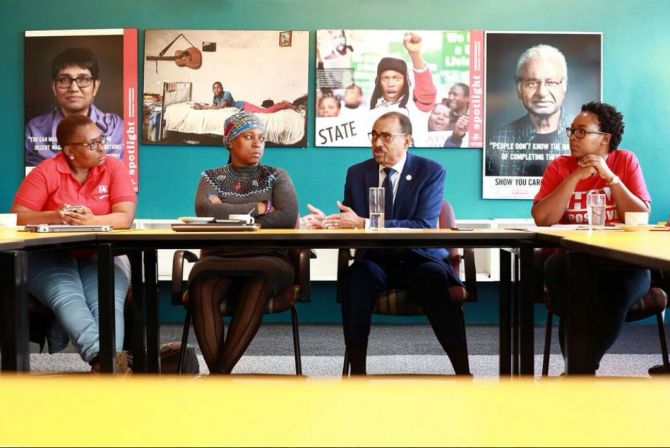
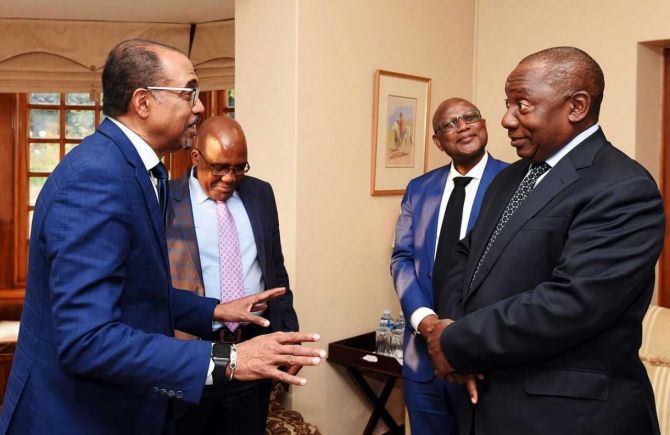
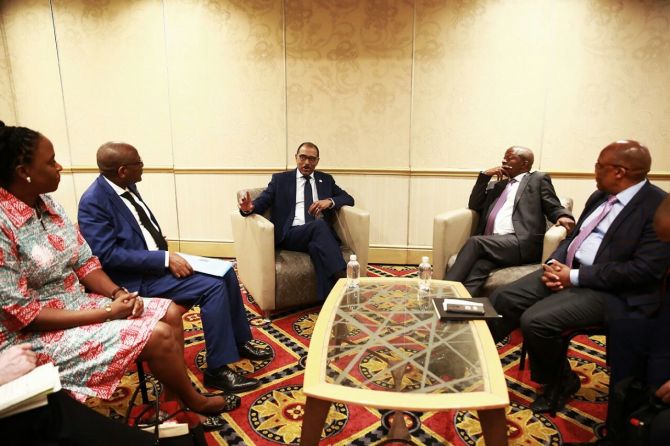
11 May 2018 11 May 2018The UNAIDS Executive Director, Michel Sidibé, has completed a five-day visit to three countries in southern Africa. The mission included high-level political discussions, the launch of the Lesotho HIV health and situation room and a frank and open dialogue with women activists about how to address sexual harassment and abuse.
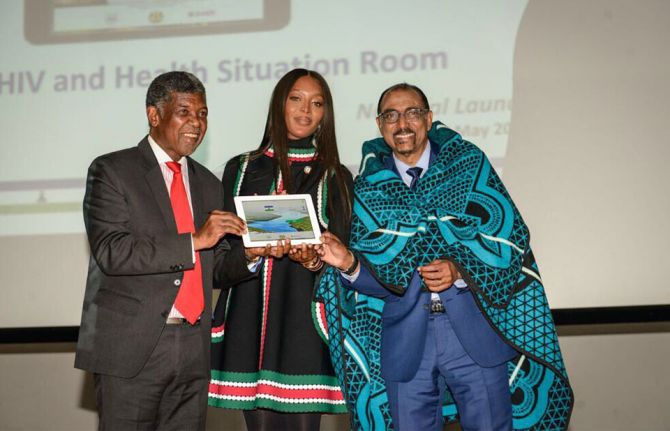
Beginning in Lesotho, Mr Sidibé attended the launch of the HIV health and situation room with the Deputy Prime Minister, Monyane Moleleki. Special guest Naomi Campbell was invited by UNAIDS to join the two-day country visit to learn more about the HIV response.
The Lesotho HIV and health situation room shows real-time service delivery data, producing a comprehensive picture and understanding of Lesotho’s HIV epidemic. It enables quick feedback on results at the national and community levels and identifies bottlenecks in access to health-care services.
“The launch of the Lesotho HIV and health situation room gives us access to data to shape impactful and efficient health programmes. These are the kind of innovations that will bring services to those who need them most and ensure that no one is left behind by the AIDS response,” said Michel Sidibé, the UNAIDS Executive Director.
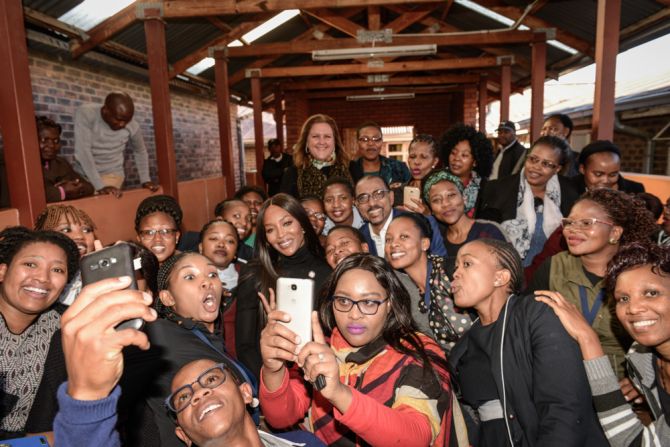
On the eve of the launch, Mr Sidibé and Ms Campbell visited the Queen II Hospital in Maseru, Lesotho, and met with young women living with HIV and others affected by the epidemic.
“I commend the Government of Lesotho and its partners for the progress made in the AIDS response. But the work is far from done. The reality is that we are not reaching adolescent girls and young women. I leave Lesotho today empowered, inspired, encouraged and determined to do all I can to highlight this critical issue,” said Ms Campbell.
In South Africa, Mr Sidibé addressed the Pan African Parliament and underlined the importance of integrated health approaches that were people-centred. He urged parliamentarians to commit more domestic funding for health services to increase the sustainability of the AIDS response and to put in place more preventative measures to improve people’s health. In addition, he called for laws to protect women and vulnerable groups.
Mr Sidibé left the parliamentary session to meet civil society activists concerned by UNAIDS' response to allegations of sexual harassment and abuse in the organization.
At a follow-up meeting the next day, Mr Sidibé and women activists met to discuss their concerns.
Mr Sidibé agreed with activists to issue a statement following the meeting. The statement begins:
‘During my recent visit to South Africa, I listened carefully to you, I heard you. The HIV epidemic is inextricably linked to sexual and gender-based violence and the two can never be separated. We need the passion of advocates to move issues forward.`
During his visit to South Africa, Mr Sidibé held separate meetings with the President, Cyril Ramaphosa, the Deputy President and South African National AIDS Council Chair, David Mabuza, and the Minister of Health, Aaron Motsoaledi. They discussed plans to increase the number of people on treatment by 2 million by 2020 and the need to empower local and provincial authorities to bring treatment and prevention services closer to vulnerable communities.
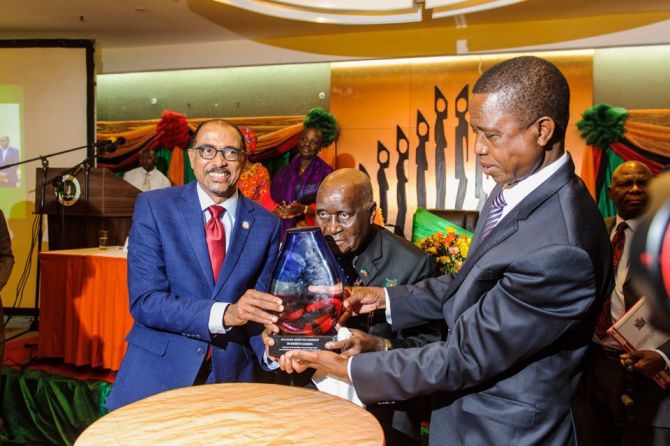
The last leg of Mr Sidibé’s visit saw him arrive in Lusaka, Zambia, to confer the 2018 UNAIDS Leadership Award upon Kenneth Kaunda for his efforts in strengthening the AIDS response.
Region/country

Feature Story
South Africa tests ATMs for medicine
03 May 2018
03 May 2018 03 May 2018People living with HIV and other chronic illnesses are getting faster, simpler access to essential medicines thanks to new medicine dispensing machines being piloted in Johannesburg, South Africa.
The non-profit organization Right to Care is testing three pharmacy dispensing units at a shopping mall and two hospitals. Most of the people using the new machines are accessing repeat prescriptions for HIV medicines.
The machines connect users to pharmacy assistants by video for remote consultations in any of the 11 official languages of South Africa. The entire process, from consultation to the release of the medicines from the machine, takes only a few minutes.
The machines are integrated with public health facilities responsible for patients with chronic conditions, in order to ensure that patients receive and adhere to effective treatments. The users of the machines get a printed receipt with the date of their next visit and receive a reminder by SMS. The system alerts pharmacists if patients are late to collect their medicines.
The device could be a game-changer for expanding access to HIV treatment. The South Africa UNAIDS Country Director, Mbulawa Mugabe, said, “One of our biggest challenges today in most countries in Africa is that health facilities are packed. We need to find ways in which we can relieve the congestion in the interest of patients themselves and also for the health systems.”
People living with HIV can often wait several hours to have their prescription filled at a local clinic. The process also takes up valuable time for skilled pharmacists. Now those tasks are being handled by junior pharmacists, who work with a robotic system to dispense pills in a matter of minutes.
The pharmacy dispensing units were engineered by Right to Care’s subsidiary Right e-Pharmacy in collaboration with the German company Mach4 and supported by German and American development agencies GIZ and USAID. The current trials are being conducted in collaboration with the Gauteng Department of Health and Right to Care hopes to expand the trial to two other African countries in the near future.
South Africa has the highest rate of HIV prevalence in the world and provides free treatment to 4.2 million people. The President of South Africa, Cyril Ramaphosa, recently set a target of expanding HIV treatment to an additional 2 million people by 2020. With millions of South Africans accessing medicines from clinics and hospitals, innovations such as these dispensing machines promise to help South Africa achieve its ambitious targets.
South Africa tests potential game-changer in HIV treatment
Zaheer Cassim reports for VOA from Alexandra township in Johannesburg.
Feature Story
Heads of H6 agencies embrace new results framework
07 May 2018
07 May 2018 07 May 2018Around the world, many women, children and adolescents still have little or no access to quality health services and education, clean air and water, adequate sanitation and good nutrition. And far too many face violence and discrimination, unequal access to power and opportunity, and numerous barriers that harm their physical, mental and emotional health and well-being.
To accelerate change, the executive heads of the H6 partnership met on the sidelines of the United Nations System Chief Executives Board in London, United Kingdom, on 2 May and agreed a new results framework, H6 Results 2020. H6 Results 2020 aims to shape the H6 partnership into a trusted, valued source for technical support, strategic policy advice and best practices for the health and well-being of women, children and adolescents.
Developed under the chairpersonship of UNAIDS Executive Director Michel Sidibé, H6 Results 2020 is closely aligned with the Every Woman Every Child Every Adolescent Global Strategy and the 2020 Every Woman Every Child Partners’ Framework. H6 Results 2020 sets ambitious goals while committing to deliver on a number of concrete results for 2020.
“I am excited about our revitalized H6 partnership. As the technical arm of the Every Woman Every Child movement, we plan to further streamline and simplify the health architecture, coordinating with key partners to leverage political capital, technical expertise and advocacy for results for women, children and adolescents everywhere,” said Mr Sidibé.
Taking forward the vision endorsed by the executive heads in March 2018, H6 Results 2020 builds on the achievements of the H6 to date and reinforces existing mechanisms while strengthening United Nations mechanisms to support countries. It outlines how the H6 will harmonize efforts of the six H6 organizations and with key partners at the country, regional and global levels and will focus on the countries with the highest burdens of maternal, child and adolescent mortality and morbidity for intensified action.
“The H6 partnership plays a critical role in ensuring that countries focus on the health needs of women in an intersectional way, with laser-like focus on gender equality, human rights and other enablers, such as education,” said Phumzile Mlambo-Ngcuka, the Executive Director of UN Women.
By amplifying its added value, the H6 partnership seeks to serve as a living laboratory for United Nations reform—heeding the call of the United Nations Secretary-General for a more country-focused, coordinated, efficient and accountable development system better able to assist countries in implementing the 2030 Agenda for Sustainable Development.
“It is important that the United Nation comes together to focus its technical support on key priorities in a few high-burden countries, and what must drive our focus is results for people,” said Tedros Adhanom Ghebreyesus, the Director-General of the World Health Organization.
While committed to driving progress across a range of priorities for women, children and adolescent health, H6 Results 2020 puts clear emphasis on reaching adolescents. Adolescent girls and boys (aged 10–19 years) remain a particularly underserved population by the health and social programmes of many countries. Ensuring the health and well-being of adolescents is critical to delivering on the mandate of each of the H6 partners.
“The H6 partnership has proven that working in close collaboration and bringing different expertise and experience to the table is not only effective in enabling countries to deliver rights-based quality care for the women and girls left furthest behind, but also ensures strong country ownership,” said Natalia Kanem, the Executive Director of the United Nations Population Fund.
Feature Story
Measuring progress against the 10 commitments through Global AIDS Monitoring
07 May 2018
07 May 2018 07 May 2018At the United Nations High-Level Meeting on Ending AIDS in 2016, countries pledged to achieve a set of 10 Fast-Track commitments by 2020—an acceleration agenda that aims to end the AIDS epidemic by 2030 as part of the Sustainable Development Goals. To help ensure that the deadlines are met, the United Nations General Assembly requested an annual report on progress achieved in meeting those 10 commitments.
UNAIDS supports countries to collect information on their national HIV responses through the Global AIDS Monitoring (GAM) framework—an annual collection of 72 indicators on the response to HIV in a country. These data form part of the data set used to report back to the General Assembly.
Different from the HIV epidemiological estimates that countries produce for data on the state of the epidemic in a country—that is, data for making estimates on the number of people living with HIV, AIDS-related deaths, etc.—GAM collects information on HIV programmes, including the number of people living with HIV who know their HIV status and people on HIV treatment, and on stigma and discrimination. A full list of the indicators is given in the GAM guidelines.
A remarkable feature of the data collection for GAM and the HIV epidemiological estimates is the speed with which the information is collected, submitted and disseminated. UNAIDS distributes the GAM guidelines to countries each December. Countries submit their data online by the end of March. In collaboration with the World Health Organization, the United Nations Children’s Fund and the European Centre for Disease Prevention and Control, the data are validated and finalized. The HIV epidemiological estimates are produced along the same timeline, with the software made available to countries in early January and the final estimates submitted by countries at the end of March. The analysis of the global results of both data collections are published in UNAIDS’ mid-year report and on the AIDSinfo website, and ultimately are reported to the United Nations General Assembly.
Despite the short reporting timeline, in 2017 a total of 174 countries submitted data on their programmatic response indicators through GAM. The proportion of countries submitting data through the GAM website has steadily improved, from 53% of countries reporting in 2004 to 96% reporting in 2012, although reporting dropped to 90% in 2017, when the reporting cycle changed from biennial to annual. Before 2015, GAM was known as the Global AIDS Response Progress Reporting (GARPR) and was used to report on global targets for the AIDS response under the Millennium Development Goals.
A key component of ensuring that HIV-related data are as accurate as possible is collecting the right information to begin with. Therefore, each year a review of each indicator is made and adjustments to the set of indicators are made in order to ensure that the information on the national AIDS responses is accurate and relevant. In 2018, two new indicators—on HIV testing among pregnant women and on experiences of HIV-related discrimination in health-care settings—were added, while others were modified.
The indicators are carefully selected in order to ensure the maximum data collection with the least burden on the countries’ monitoring systems and are aligned with the indicators for the Sustainable Development Goals. The indicators are also granular, with countries requested to provide data disaggregated to the city level for some indicators.
Looking to the future, community-led data collection, such as through mobile applications or community observatories, are being looked into as complementary data collection tools for different insights into countries’ AIDS responses.
GAM is yet another way that UNAIDS is helping countries to monitor and respond to their HIV epidemics and work towards ending AIDS by 2030.