

Press Statement
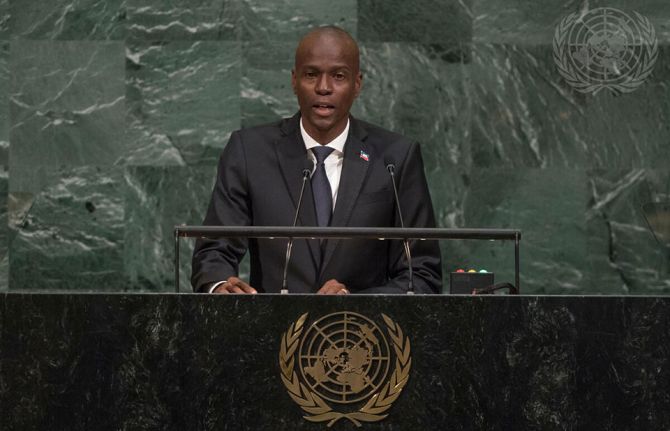
UNAIDS is shocked and saddened by the assassination of Jovenel Moïse, the President of Haiti
08 July 2021 08 July 2021GENEVA, 8 July 2021—UNAIDS is shocked and saddened by the assassination of Jovenel Moïse, the President of Haiti, during an attack by gunmen at his private residence. It also sends its sincere hopes that the First Lady, Martine Moïse, will recover from the injuries that she sustained during the incident.
“My thoughts are with the family of President Moïse at this incredibly difficult time,” said the UNAIDS Executive Director, Winnie Byanyima. “I sincerely hope that the First Lady will recover from her injuries. She is a strong friend to UNAIDS and a staunch champion in the response to the HIV epidemic, both in Haiti and across the region.”
Ms Moïse, above left, has chaired Haiti’s Global Fund to Fight AIDS, Tuberculosis and Malaria Country Coordinating Mechanism since 2017 and is a close ally of UNAIDS. She is also a member of the Spouses of Caribbean Leaders Action Network and champions its work around the Every Woman, Every Child initiative in Haiti. Among Ms Moïse’s priorities are combatting violence against women and girls, teen pregnancy and human trafficking. She also supports the agenda to prevent and eliminate mother-to-child transmission of HIV.
In June, Ms Moïse spoke on behalf of the Caribbean Community at the United Nations General Assembly High-Level Meeting on AIDS.
UNAIDS
The Joint United Nations Programme on HIV/AIDS (UNAIDS) leads and inspires the world to achieve its shared vision of zero new HIV infections, zero discrimination and zero AIDS-related deaths. UNAIDS unites the efforts of 11 UN organizations—UNHCR, UNICEF, WFP, UNDP, UNFPA, UNODC, UN Women, ILO, UNESCO, WHO and the World Bank—and works closely with global and national partners towards ending the AIDS epidemic by 2030 as part of the Sustainable Development Goals. Learn more at unaids.org and connect with us on Facebook, Twitter, Instagram and YouTube.
Region/country
Press Statement
UNAIDS calls on Hungary to immediately remove amendments discriminatory to LGBTI people from newly adopted law
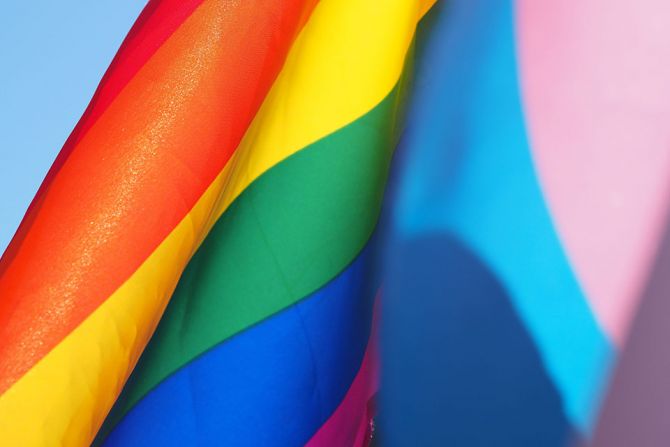
06 July 2021 06 July 2021GENEVA, 6 July 2021—UNAIDS is deeply concerned by new legislation in Hungary that includes discriminatory amendments against lesbian, gay, bisexual, transgender and intersex (LGBTI) people.
The amendments include banning the dissemination of content in schools and public service announcements deemed to “promote gender identity different from sex assigned at birth, the change of sex and homosexuality” to people under the age of 18 years. The amendments were tacked on to a popular bill to increase the criminalization of paedophilia, which was signed into law by Hungary’s President, János Áder, on 23 June 2021.
“The association of sexual orientation and gender identity with criminal acts such paedophilia is not only wrong, it is intolerable,” said Winnie Byanyima, the Executive Director of UNAIDS. “To end the AIDS epidemic, we need laws that protect, not harm, already marginalized communities.”
Criminalization and discrimination against LGBTI people hinder the availability, access and uptake of HIV prevention, testing, treatment, and care and support services. Data from UNAIDS show that knowledge of HIV status among gay men and other men who have sex with men who are living with HIV was three times higher in countries with the least repressive LGBTI laws than in countries with the most repressive LGBTI laws.
In response to a recent question on the new law, the United Nations Secretary-General, António Guterres, said, “No discrimination is acceptable in any circumstances, and any discrimination against LGBTIQ+ people is totally unacceptable in our modern societies.”
The new legislation will also present new barriers to addressing discrimination against LGBTI people in school settings. According to the United Nations Educational, Scientific and Cultural Organization’s Global Education Monitoring Report, launched last May, more than half of LGBTI students in Europe have experienced bullying in school at least once based on their sexual orientation, gender identity, gender expression or variations of sex characteristics.
The President of the European Commission, Ursula von der Leyen, called the Hungarian bill a “shame”, saying that it “clearly discriminates against people on the basis of their sexual orientation and goes against the fundamental principles of the European Union.”
In the recently adopted Political Declaration on HIV and AIDS: Ending Inequalities and Getting on Track to End AIDS by 2030, United Nations Member States committed to “urgent and transformative action to end the social, economic, racial and gender inequalities, restrictive and discriminatory laws, policies and practices, stigma and multiple and intersecting forms of discrimination, including based on HIV status, and human rights violations that perpetuate the global AIDS epidemic.”
UNAIDS will continue to advocate with legislators, other government authorities and civil society around the world to establish anti-discrimination and protective laws, to eliminate the discrimination and violence faced by LGBTI people and to advance the right to health for all people without exception.
UNAIDS
The Joint United Nations Programme on HIV/AIDS (UNAIDS) leads and inspires the world to achieve its shared vision of zero new HIV infections, zero discrimination and zero AIDS-related deaths. UNAIDS unites the efforts of 11 UN organizations—UNHCR, UNICEF, WFP, UNDP, UNFPA, UNODC, UN Women, ILO, UNESCO, WHO and the World Bank—and works closely with global and national partners towards ending the AIDS epidemic by 2030 as part of the Sustainable Development Goals. Learn more at unaids.org and connect with us on Facebook, Twitter, Instagram and YouTube.
Region/country
Press Statement
UNAIDS strongly condemns violence against LGBTI activists in Tbilisi, Georgia
07 July 2021 07 July 2021GENEVA, 7 July 2021—UNAIDS strongly condemns the attacks on lesbian, gay, bisexual, transgender and intersex (LGBTI) activists and journalists at Tbilisi Pride’s offices and surrounding areas, which have forced the cancellation of Gay Pride events in the city. UNAIDS expresses its solidarity with all LGBTI people in Georgia.
“The shocking violence suffered by LGBTI activists and journalists in Tbilisi is completely unacceptable,” said Winnie Byanyima, Executive Director of UNAIDS. “The authorities must take urgent measures to protect the human rights of the LGBTI community, including their right to freedom of expression and assembly, and to bring those responsible for the attacks to justice.”
On 1 December 2018, Tbilisi signed the Paris Declaration to end the AIDS epidemic by 2030, joining more than 300 municipalities in the Fast-Track cities initiative, which was initiated by the Mayor of Paris, UNAIDS, IAPAC and UN-HABITAT in 2014. The initiative commits Tbilisi to work closely with communities, including gay men and other men who have sex with men and transgender people, to foster social equality.
The new UNAIDS Global AIDS Strategy 2021–2026: End Inequalities, End AIDS is also clear that stigma and discrimination against LGBTI people violates human rights, deepens inequalities and acts as a critical barrier to ending AIDS as a public health threat by 2030. A crucial element of the strategy is to address the challenges faced by key populations (gay men and other men who have sex with men, sex workers, transgender people and people who use drugs) so that less than 10% experience stigma, discrimination and violence by 2025. The strategy calls on countries to take immediate action to reduce stigmatizing attitudes and discrimination on the basis of sexual orientation and gender identity as a critical element to ending AIDS by 2030.
UNAIDS
The Joint United Nations Programme on HIV/AIDS (UNAIDS) leads and inspires the world to achieve its shared vision of zero new HIV infections, zero discrimination and zero AIDS-related deaths. UNAIDS unites the efforts of 11 UN organizations—UNHCR, UNICEF, WFP, UNDP, UNFPA, UNODC, UN Women, ILO, UNESCO, WHO and the World Bank—and works closely with global and national partners towards ending the AIDS epidemic by 2030 as part of the Sustainable Development Goals. Learn more at unaids.org and connect with us on Facebook, Twitter, Instagram and YouTube.
Region/country
Press Statement
UNAIDS is deeply saddened by the death of the former President of Zambia, Kenneth Kaunda
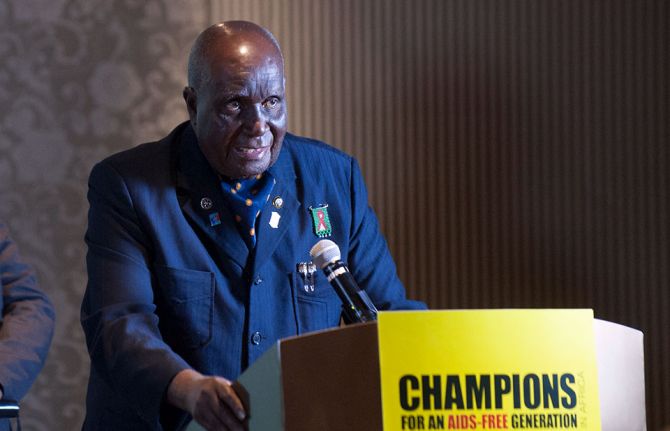
18 June 2021 18 June 2021GENEVA/LUSAKA, 18 June 2021—UNAIDS is deeply saddened by the death of the first President of Zambia, Kenneth Kaunda, and expresses its sincere condolences to his family, his friends and the country. Mr Kaunda was a strong supporter of the AIDS response and showed great leadership and courage in speaking out against HIV-related stigma and discrimination in the early days of the epidemic.
Mr Kaunda, who lost a son to AIDS in the 1980s, was one of the first members of the Champions for an AIDS-Free Generation in Africa, a distinguished group of former presidents and influential African leaders mobilizing political leadership to end AIDS as a public health threat on the continent by 2030. Mr Kaunda also dedicated time and effort to the AIDS response through his Kenneth Kaunda Children of Africa Foundation and through the Zambian Chapter of the Brothers for Life Campaign, which aimed to encourage healthier lifestyles among young men.
In 2018, UNAIDS conferred its Leadership Award on Mr Kaunda for his services to the global, regional and national AIDS response. Upon accepting the honour, he dedicated it to the people who had died of AIDS-related illnesses as well as those on the front line of fighting HIV. Mr Kaunda is also fondly remembered for performing at public events his song: We Shall Fight and Conquer AIDS.
“The sun has set on a great and good man, freedom fighter, pan-Africanist, founding parent of the Organisation of African Unity and giant of the HIV response,” said UNAIDS Executive Director, Winnie Byanyima. “He was brave, compassionate and tireless in confronting HIV-related stigma and discrimination from the early days of the epidemic and his contribution to Africa’s response will not be forgotten. We shall fight and conquer AIDS.”
Press Statement
COVID-19: make it the last pandemic
12 May 2021 12 May 2021GENEVA, 12 May 2021—UNAIDS strongly welcomes the report and recommendations of the Independent Panel on Pandemic Preparedness and Response. Amongst others, the panel calls for the establishment of a Global Health Threats Council with participation at the highest political level to coordinate global action against pandemics and secure agreement between governments in aligning efforts to tackle the health, social and economic challenges of major pandemics.
“The Independent Panel's recommendations are a wake-up call for transforming health systems across the world,” said Winnie Byanyima, Executive Director of UNAIDS. “Health is a universal public good in this interconnected society—no one is safe, until everyone is safe so we must reimagine health to provide the same quality of care regardless of geography, income or social status.”
UNAIDS shares the panel’s concerns on the impact of COVID-19 in deepening inequalities within and across countries. There has been a particularly uneven burden that women have had to endure. Despite constituting almost 60% of the health workforce and front-line workers, the needs of women have not been included in most COVID-19 responses, increasing the inequality gap.
“Like HIV, COVID-19 has exploited the fault lines of society and exposed the fragility of recent gains in public health, added Ms Byanyima. “Lessons from the AIDS response can help shape a new paradigm for global health in which people are placed at the centre, inequalities are erased and the right to health is enshrined in every part of the world.
UNAIDS also commends the report in highlighting the urgency for vaccine equity in calling for the urgent redistribution of 1 billion vaccines from rich to limited-resource countries by September 2021 to be followed by another 1 billion doses to be redistributed during 2022.
UNAIDS fully supports the call for G7 countries to commit to providing 60% of the US$ 19 billion required for ACT-A in 2021 for vaccines, diagnostics, therapeutics and strengthening health systems with the remainder being mobilized from others in the G20 and other higher income countries. A formula based on ability to pay should be adopted for predictable, sustainable, and equitable financing of such global public goods on an ongoing basis.
UNAIDS stands ready to support efforts to build pandemic resilience and preparedness, specifically building on UNAIDS experience with community-led responses, activism and rights-based approaches, and in leveraging investments in the unique HIV infrastructure and networks to create resilient health systems. UNAIDS urges all partners to apply the lessons learned from the HIV response to ensure a community led, equitable and human rights-based approach to support stronger pandemic preparedness and responses to ensure health for all.
HIV and pandemic preparedness will be discussed at the UN General Assembly High-Level Meeting on HIV between 8-10 June.
UNAIDS
The Joint United Nations Programme on HIV/AIDS (UNAIDS) leads and inspires the world to achieve its shared vision of zero new HIV infections, zero discrimination and zero AIDS-related deaths. UNAIDS unites the efforts of 11 UN organizations—UNHCR, UNICEF, WFP, UNDP, UNFPA, UNODC, UN Women, ILO, UNESCO, WHO and the World Bank—and works closely with global and national partners towards ending the AIDS epidemic by 2030 as part of the Sustainable Development Goals. Learn more at unaids.org and connect with us on Facebook, Twitter, Instagram and YouTube.
Our work
Press Statement
Statement from the Executive Director of UNAIDS, Winnie Byanyima on the decision by the United States of America to support the TRIPS waiver for COVID-19 vaccines
06 May 2021 06 May 2021I applaud the announcement from United States Trade Representative Katherine Tai supporting the waiving of intellectual property protections for COVID-19 vaccines.
This is the kind of global leadership the world desperately needs as we witness horrific scenes in countries like India, where only nine in 100 people have been vaccinated. To date, more than 1.1 billion doses of vaccine have been administered globally, but more than 80% of those have been administered in high- and upper-middle income countries, while just 0.3% have been administered in low-income countries.
We are in a race to vaccinate the majority of the world’s population to curb death tolls and before more potent variants of COVID-19 emerge, rendering current vaccines ineffective. The faster we can scale up global vaccine supply, the faster we can contain the virus and the less chance we will face a day when variants prove resistant to existing vaccines. As the United Nations Secretary-General, Antonio Guterres has said “no one is safe until everyone is safe”.
The TRIPS waiver would enable the sharing of technologies, data, know-how, patents and other intellectual property rights across the world. The announcement of the US administration sends a powerful signal to the rest of the G7 and to the European Union to also support the World Trade Organization TRIPS Waiver and inspire other countries to take a powerful stand in favour of people before profits. This remarkable position from the US government is a fundamental step towards a People’s Vaccine.
To ensure everyone, everywhere has access to a lifesaving vaccine, we also need to see a pooling of technology through the World Health Organization’s COVID-19 Technology Access Pool, as well as financing to help build a network of vaccine manufacturing in developing countries. These three actions can together build a sustainable system to vaccinate the world, reach the needed herd immunity and open the paths to make the world best prepared for future pandemics.
As we have learned from 40 years of fighting AIDS, equitable access to medical technologies is critical both for saving lives and for decreasing the impact of infectious diseases on people, communities and nations.
We are grateful to President Biden and his Administration for the generous humanitarian pledges made on COVID-19 and for the announcement.
UNAIDS
The Joint United Nations Programme on HIV/AIDS (UNAIDS) leads and inspires the world to achieve its shared vision of zero new HIV infections, zero discrimination and zero AIDS-related deaths. UNAIDS unites the efforts of 11 UN organizations—UNHCR, UNICEF, WFP, UNDP, UNFPA, UNODC, UN Women, ILO, UNESCO, WHO and the World Bank—and works closely with global and national partners towards ending the AIDS epidemic by 2030 as part of the Sustainable Development Goals. Learn more at unaids.org and connect with us on Facebook, Twitter, Instagram and YouTube.
Our work
Press Statement
UNAIDS condemns new law that further criminalizes and marginalizes vulnerable groups of people in Uganda
06 May 2021 06 May 2021GENEVA, 6 May 2021—UNAIDS is deeply concerned by the Ugandan parliament’s decision earlier this week to adopt the Sexual Offences Bill 2019, which includes provisions that further criminalize entire groups of people, such as the lesbian, gay, bisexual and transgender community, sex workers and people living with HIV. The bill criminalizes same-sex sexual relations, extends the criminalization of sex work and imposes mandatory testing for HIV and harsher sentences on people living with HIV than the general population accused of some similar crimes.
Although UNAIDS welcomes some aspects of the bill, such as the extension of protection from sexual harassment, violence and sexual exploitation to groups of people such as people in detention and migrant workers, it urges parliamentarians to reconsider the provisions that discriminate against some people.
“I am deeply troubled by the Ugandan parliament’s adoption of portions of this bill that further criminalize and marginalize vulnerable groups of fellow citizens and deny them their human rights, including their right to health,” said UNAIDS Executive Director, Winnie Byanyima. “Targeting people living with HIV, lesbian, gay, bisexual and transgender communities and sex workers increases stigma and discrimination and undermines the HIV response by preventing people from receiving the HIV treatment, prevention and care services that they so urgently need.”
UNAIDS recognizes the good progress that Uganda has made in recent years in reducing the impact of HIV. The number of AIDS-related deaths has fallen by 60% since 2010, with 1.2 million people out of 1.5 million people living with HIV on medicines to keep them alive and well. In addition, the number of new HIV infections has fallen by 43% since 2010. However, many vulnerable groups of people, such as gay men and other men who have sex with men and sex workers, continue to be less likely than the general population to receive the HIV treatment, prevention and care services they need.
UNAIDS urges Uganda to join the growing number of countries in Africa and globally that are removing unjust laws from their penal codes. The Ugandan parliament’s adoption of the new law comes just weeks before the United Nations General Assembly High-Level Meeting on AIDS, which will take place from 8 to 10 June 2021.
UNAIDS
The Joint United Nations Programme on HIV/AIDS (UNAIDS) leads and inspires the world to achieve its shared vision of zero new HIV infections, zero discrimination and zero AIDS-related deaths. UNAIDS unites the efforts of 11 UN organizations—UNHCR, UNICEF, WFP, UNDP, UNFPA, UNODC, UN Women, ILO, UNESCO, WHO and the World Bank—and works closely with global and national partners towards ending the AIDS epidemic by 2030 as part of the Sustainable Development Goals. Learn more at unaids.org and connect with us on Facebook, Twitter, Instagram and YouTube.
Press Statement
UNAIDS statement on UK’s proposed reduction in financial support
29 April 2021 29 April 2021GENEVA, 29 April 2021—The government of the United Kingdom of Great Britain and Northern Ireland (UK) has informed UNAIDS that funding for UNAIDS for 2021 is confirmed at GBP 2.5 million, compared to the GBP 15 million received by UNAIDS from the UK for 2020.
This cut of GBP 12.5 million (or more than 80%) is significant. It affects the provision of live-saving HIV prevention and treatment services around the world. It affects the empowerment of young women and adolescent girls and their access to sexual and reproductive health and rights across the world, and Africa in particular. It impacts on support to upholding the human rights of some of the most marginalized people, including lesbian, gay, bi-sexual, transgender, queer and intersex people in low- and middle-income countries. It reduces global health security.
UNAIDS recognizes the challenging situation facing many governments, yet deeply regrets this decision of our longstanding partner and advocate. We are assessing the full scope and impact of the cut and are actively formulating mitigation strategies.
The UK government has said the decision does not reflect a diminished commitment to UNAIDS or the HIV response. UNAIDS will continue working with the UK and partners to explore ways to ensure continuity and predictability of funding to sustain the hard-won gains in the fight against HIV and to end AIDS as a public health threat by 2030.
The UK has been a leader in the fight against AIDS. It has called for the G7 to be centred on beating pandemics and is rallying the world for girls’ education and empowerment. UNAIDS is determined to deliver breakthroughs on those together with the UK. We hope that the UK, which has rated UNAIDS ‘A’ for delivery, will decide to supplement its current allocation for 2021.
UNAIDS
The Joint United Nations Programme on HIV/AIDS (UNAIDS) leads and inspires the world to achieve its shared vision of zero new HIV infections, zero discrimination and zero AIDS-related deaths. UNAIDS unites the efforts of 11 UN organizations—UNHCR, UNICEF, WFP, UNDP, UNFPA, UNODC, UN Women, ILO, UNESCO, WHO and the World Bank—and works closely with global and national partners towards ending the AIDS epidemic by 2030 as part of the Sustainable Development Goals. Learn more at unaids.org and connect with us on Facebook, Twitter, Instagram and YouTube.
Programme area
Region/country
Press Statement
Statement by Winnie Byanyima, Executive Director of UNAIDS, on the occasion of World Health Day
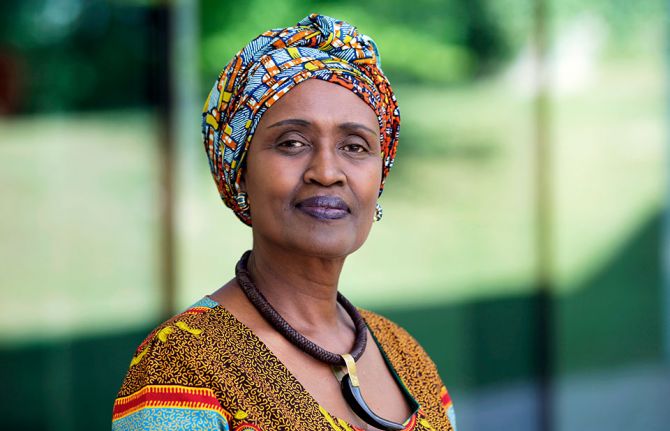
07 April 2021 07 April 2021Winnie Byanyima, Executive Director of UNAIDS and Under-Secretary-General of the United Nations
7 April 2021
Tisha (not her real name), a young woman from the slums in east Africa, was three weeks past her due date when she was referred as an emergency case to the maternity facility in the main town.
With specialist medical attention, Tisha gave birth to a healthy baby boy, whom she named Okello. But instead of being a moment of joy for Tisha and her family, when she was unable to pay the US$ 30 delivery fee the hospital refused to discharge her.
Tisha was promptly moved to a special detention ward housing 42 other poor mothers and allocated a bed already shared by two women and their babies. Tisha and Okello would not be allowed to leave until she cleared her bill, which, the nurses told her, would rise daily. Tisha and her son were held captive until she could find the money to pay her bill.
This tragic story is all too common. Paying for health is the most regressive way of financing health care. Yet, according to the World Bank, two thirds of African countries are charging user fees at all levels of care.
Ten thousand people die every day because they cannot access health care and the cost of health services mean that every year 100 million people are pushed into extreme poverty paying for them. That equates to three people every second.
These huge inequalities in health care continue to widen as health systems around the world increasingly become profit-led. Many of the poorest countries in the world are trying to sell health through health insurance and user fees. But how can you sell health to somebody who does not have even the basics to survive, to someone who doesn’t have a job and is struggling to find the next meal.
Many governments claim that they cannot afford to pay for health, but the reality is that they can if they tax progressively so that everyone pays their fair share, stop companies from hiding their profits offshore and end tax exemptions. This would go a long way towards balancing the glaring inequalities in access to public services, including health care.
These profit-driven models have fragmented already weak health systems that exclude many people—poor people, lesbian, gay, bisexual, transgender and intersex people, prisoners, sex workers, people who inject drugs and numerous marginalized groups. The way health is financed is inequitable. In addition, the lack of human rights for marginalized groups denies them access to quality health care.
Inequalities in human rights result in inequalities in health. The right to health of ALL is part of the 1948 Universal Declaration of Human Rights. It states that, “Everyone has the right to a standard of living adequate for the health and well-being of himself and of his family, including food, clothing, housing and medical care and necessary social services, and the right to security in the event of unemployment, sickness, disability, widowhood, old age or other lack of livelihood in circumstances beyond his control.”
The biggest steps forward in health have often happened in response to a major crisis—think of the post-Second World War health systems across Europe and in Japan, or how AIDS led to universal health care in Thailand.
Now, in the midst of the COVID-19 crisis, leaders across the world have an opportunity to build the health systems that were always needed, and which cannot be delayed any longer. We cannot tinker around the edges—we need radical, transformative shifts. The COVID-19 response gives us an opportunity to change the rules and guarantee equality.
On World Health Day 2021, let us make that call to ensure that people’s lives come before profits. Let governments make the commitment that they will guarantee that everyone, without discrimination, has access to quality health care. The right to health is an inalienable human right.
This coronavirus crisis we find ourselves in today could, like other global crises before, create the global and national solutions in health care we so desperately need. Let’s seize the moment!
UNAIDS
The Joint United Nations Programme on HIV/AIDS (UNAIDS) leads and inspires the world to achieve its shared vision of zero new HIV infections, zero discrimination and zero AIDS-related deaths. UNAIDS unites the efforts of 11 UN organizations—UNHCR, UNICEF, WFP, UNDP, UNFPA, UNODC, UN Women, ILO, UNESCO, WHO and the World Bank—and works closely with global and national partners towards ending the AIDS epidemic by 2030 as part of the Sustainable Development Goals. Learn more at unaids.org and connect with us on Facebook, Twitter, Instagram and YouTube.

Press Statement
UNAIDS welcomes bold support from the United States of America in response to colliding pandemics
18 March 2021 18 March 2021GENEVA, 18 March 2021—UNAIDS warmly welcomes the passing of the US$ 1.9 trillion American Rescue Plan Act. The historic legislation will deliver much-needed relief in the light of COVID-19, both in the United States of America and around the world.
The bill’s inclusion of nearly US$ 11 billion for global investments in COVID-19 will help to save many lives. The allocation of US$ 250 million for the United States President’s Emergency Plan for AIDS Relief (PEPFAR) and US$ 3.5 billion for the Global Fund to Fight AIDS, Tuberculosis and Malaria (Global Fund) will help to prevent hard-won progress against HIV, tuberculosis and malaria from being reversed.
“The support of the United States for the global response to COVID-19 is highly commendable, particularly as it grapples with the devastating impact of COVID-19 at home,” said Winnie Byanyima, Executive Director of UNAIDS. “With the American Rescue Plan Act the United States proves again its steadfast commitment to the AIDS response and to fighting other global pandemics. We look forward to continuing our strong partnership with the United States in our shared commitment to end AIDS and to overcome COVID-19,” said Ms Byanyima.
Generous bipartisan support from the United States has allowed great strides to be made against the AIDS pandemic. Investments made by the United States over the past 18 years through PEPFAR and the Global Fund have proved transformational—they have prevented millions of HIV infections and saved the lives of millions of people. People living with HIV who are on antiretroviral therapy can now enjoy long, healthy lives and the number of new HIV infections and AIDS-related deaths are on the decline, although the rate of decline is still far too slow.
“Despite the tremendous successes, the work is unfinished. AIDS remains an urgent global health crisis,” said Ms Byanyima.
Global averages conceal the reality that too many people are still being left behind. The world did not reach the 2020 Fast-Track prevention and treatment targets committed to in the UNAIDS 2016–2021 Strategy and the United Nations Political Declaration on Ending AIDS. Many countries and communities are not currently on track to end AIDS by 2030.
While 26 million of the 38 million people living with HIV are accessing life-saving treatment, which doubles as prevention by stopping the spread of the virus, another 12 million remain without. The rate of new HIV infections, especially for adolescent girls and young women in sub-Saharan Africa and members of key populations, remains high. In 2019, a further 1.7 million people worldwide were newly infected with HIV and 690 000 people died of AIDS-related illnesses. The rate of new HIV infections and deaths, especially among the hardest to reach populations, means that continued success requires greater effort, focus and commitments. This is doubly true as COVID-19’s impact puts added pressure on the HIV response.
“The global response to AIDS was off track prior to COVID-19. Unchecked, COVID-19 threatens to reverse valuable progress made against HIV. This confluence of pandemics requires an acceleration of efforts to close the gaps in HIV testing, prevention and treatment while working to stop COVID-19’s spread,” said Ms Byanyima. “Identifying where, why and for whom the HIV response could be improved has illuminated the inequalities, within and between countries, that contribute to the spread of HIV. The stark contrast of success in some places and among some groups of people and the failure in others confirms that HIV remains a pandemic of inequalities. That is why the new global AIDS strategy 2021–2026 contains new targets to help us reach those who are being left behind.”
Fortunately, investments in accelerating the HIV response do not come at the expense of the COVID-19 response, but rather support many of its most critical requirements. Nations combatting COVID-19 are already applying lessons learned from the HIV response, using the systems, human resources, know-how and laboratories built over the past two decades.
Efforts to reinforce and leverage the infrastructure built to end AIDS can optimize the health impact and sustainability of the response to COVID-19. Leveraging the experience of the HIV response offers a unique opportunity to build back better from COVID-19.
“These new investments from the United States in COVID-19 will save many lives in low- and middle-income countries and help strengthen the health systems that deliver care for HIV, COVID-19 and other health emergencies,” added Ms Byanyima.
UNAIDS
The Joint United Nations Programme on HIV/AIDS (UNAIDS) leads and inspires the world to achieve its shared vision of zero new HIV infections, zero discrimination and zero AIDS-related deaths. UNAIDS unites the efforts of 11 UN organizations—UNHCR, UNICEF, WFP, UNDP, UNFPA, UNODC, UN Women, ILO, UNESCO, WHO and the World Bank—and works closely with global and national partners towards ending the AIDS epidemic by 2030 as part of the Sustainable Development Goals. Learn more at unaids.org and connect with us on Facebook, Twitter, Instagram and YouTube.
Contact
UNAIDS GenevaSophie Barton-Knott
tel. +41 79 514 68 96
bartonknotts@unaids.org
UNAIDS Media
tel. +41 22 791 4237
communications@unaids.org
Press centre
Download the printable version (PDF)