


Feature Story
Supporting the rights of sex workers in Côte d’Ivoire
01 March 2018
01 March 2018 01 March 2018Singing “akouaba” (welcome), a group of young women crowded around Josiane Téty, the director of Bléty, a Côte d’Ivoire organization led by sex workers, as she arrived.
Located in Yopougon, a suburb of Abidjan, Ms Téty explained that in the centre one of the first things they do is give each other nicknames. Names such as Joy, Hope or Chance, because women, she said, often need a confidence boost and a sense of a new beginning.
“We take the time here to work on self-esteem, so that all the girls believe in themselves,” she said.
Most of the women at Bléty are current or former sex workers who carry out peer outreach, ranging from HIV awareness-raising and education about HIV prevention to promoting sex workers’ rights and continuing education.
“We seek to give young women opportunities and alternatives so that they are less vulnerable,” Ms Téty said. Pointing towards a young woman, she said that Happiness had started beginner accounting classes.
Ms Téty and other sex workers founded Bléty in 2007 because they realized that they had little information regarding their health or their rights and hated feeling stigmatized.
“Getting an HIV test doesn’t mean that you are living with HIV, but that is how we were perceived when we were seen leaving a clinic,” she said.
They set out to correct that and have implanted themselves in the community.
Marie-Louise Sery came to Abidjan to work following her parents’ death. She didn’t have much schooling and finding a job was difficult, so she started sex work. The 30-year-old, wearing braided pigtails, admitted being completely clueless about the risks she took.
“Bléty got me out of that situation,” Ms Sery said. This past year she became one of Bléty's peer educators.
Most of the time, she said, peer educators target bustling street corners to talk to sex workers, of which there are estimated to be more than 9000 in the country. Aside from handing out condoms, they also conduct rapid HIV tests and hand out cards with the contact details of Bléty’s various focal points, who can be reached day and night in the event of an emergency.
“My work involves giving a lot of support and hand-holding,” Ms Sery said.
Sex work is not illegal in Côte d’Ivoire, but the laws on it are vague. As a result, there is abuse and sex workers are vulnerable to violence. “We really stress to our friends out there that because they’re sex workers, it doesn’t mean people can take advantage of them,” Ms Téty said. If they have been abused they can call a Bléty peer educator and are accompanied to the police station or to the hospital.
Ms Téty said a recent victory had been to negotiate with doctors and health-care providers to provide a medical certificate free of charge, instead of for a US$ 35 fee. The law in the country requires a medical certificate in order to pursue a criminal case.
In its 10-year existence, Bléty has fended off pressure from the police and residents to change their attitudes towards sex work. Bléty has educated the police as well as sex workers in order to break the climate of mistrust between them.
“We have established good relationships with uniformed police, but there is a high turnover, so it can get frustrating to start all over again,” Ms Téty said.
Overall, she remains optimistic. Testing for HIV and sexually transmitted infections among sex workers is up, lawyers have stepped in to give legal advice and she sees her centre growing further.
Region/country
Related
Feature Story
Civil society has solutions that UNAIDS and partners need to harness
21 February 2018
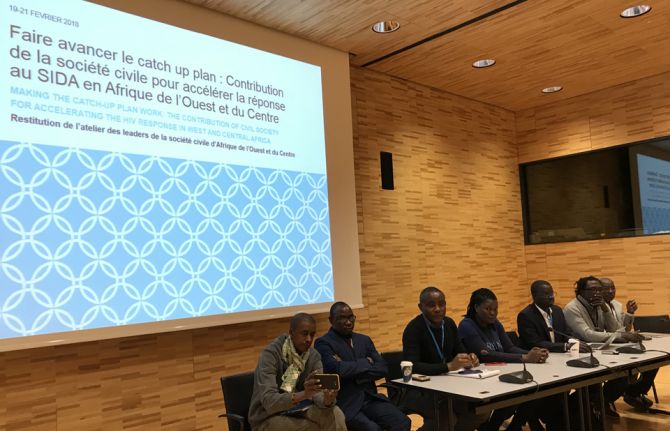
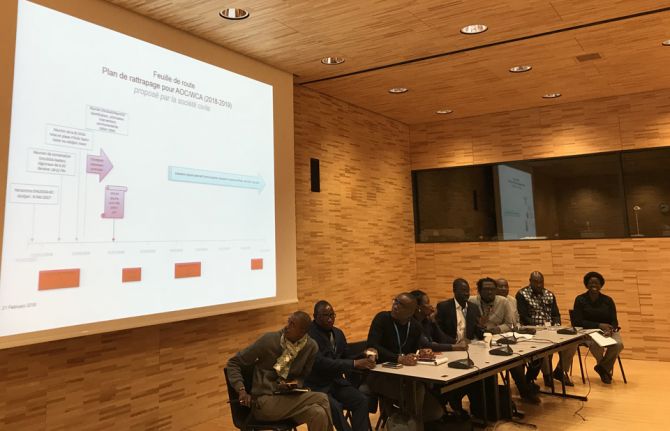
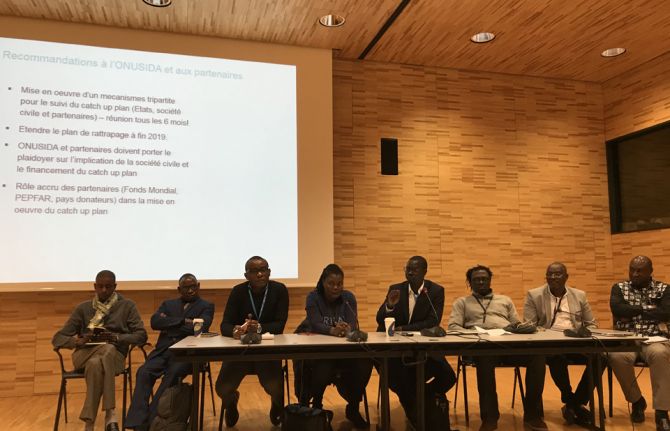
21 February 2018 21 February 2018Civil society leaders from western and central Africa have laid out a road map to take a more active role in scaling up HIV prevention and treatment services in the region. The eight leaders reiterated that without their involvement and help, it would be difficult to reach people and the treatment goals.
“We want to be more involved, because we are on the ground and we are the people concerned,” said Daouda Diouf, Director of ENDA Dakar and rapporteur of a three-day meeting of civil society, UNAIDS and partners held from 19 to 21 February in Geneva, Switzerland.
In 2016, the western and central Africa region faced disproportionately high AIDS-related deaths compared to its share of the world’s population. Although HIV prevalence in the region remains low, few people living with HIV there have access to treatment.
The leaders pointed out the many challenges they face. In many francophone countries, medical care remains too centralized, carried out mostly in clinics, limiting outreach from peer educators and community workers. They also said that stigma and discrimination keeps people away. National health policies often do not allow civil society to deliver key services, such as HIV testing.
Hidden fees for health services paid by the patient also dissuade people from seeking help. And funding and political will have waned in recent years, reducing their capacities.
Aliou Sylla, Director of Coalition Internationale Sida-Plus, stressed that civil society has many solutions and experience from pilot programmes that have been proven to work.
“Because we have clinics that do not look like clinics, because we do peer-to-peer HIV testing and because we offer counselling, we are much more capable of reaching vulnerable people,” he said. “Just have confidence in us.”
His colleague wholeheartedly agreed. Ibrahima Ba, coordinator at Bokk Yakaar, a nongovernmental organization and leader of the regional network for people living with HIV, added that not only can civil society reach people, it can also monitor the progress of national and regional HIV plans. “Count on us to be implementers, but also watchdogs, so that governments are held accountable.”
The road map includes an upcoming regional meeting bringing together civil society from 12 western and central African countries in order to incorporate their views in national HIV plans. UNAIDS will be advocating for them to have more influence in countries.
In closing the meeting, Deputy Executive Director Luiz Loures said, “The data and the evidence show that we are not optimizing our efforts in the AIDS response in this region.” Looking at the civil society leaders, he concluded, “We need to use civil society as an engine.”
Region/country
Feature Story
Partnership connects African law schools to the AIDS response
26 February 2018
26 February 2018 26 February 2018Stigma and discrimination, especially against women and girls and key populations, is a major barrier to people using HIV services. Up to 60% of countries report having laws, regulations or policies that deter people in key populations from being able to protect themselves from, or get treatment for, HIV.
There is therefore a need for legal services to challenge stigma and discrimination, but in many parts of the world such services are absent. Since teaching in law schools is often focused on core subjects, such as constitutional, administrative and criminal law, that often do not address legal issues related to HIV, most lawyers lack the specialized knowledge they need to take on HIV-related stigma and discrimination cases.
Academics sometimes need to give advice on key HIVrelated legal issues, such as the criminalization of HIV transmission. It is therefore important that they understand why human rights are essential to the response to HIV.
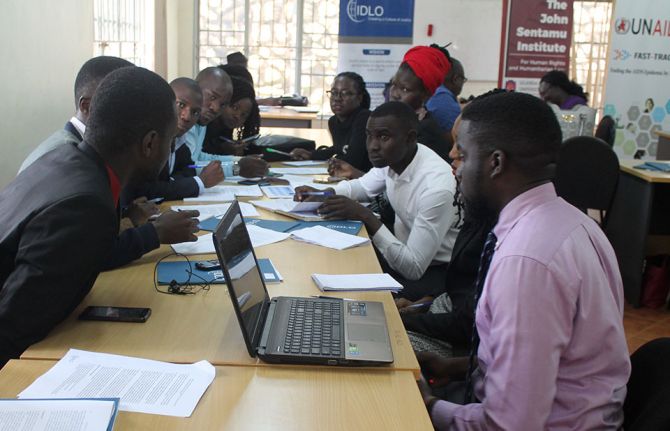
To respond to this lack of HIV-related legal knowledge, a unique pilot project has been set up with the law schools of the Universities of Dar es Salaam and Dodoma in the United Republic of Tanzania and Makerere University and Uganda Christian University in Uganda. The project will strengthen the legal environment for the response to HIV and give academics and students the skills they need to support human rights-based responses to HIV. It will also increase awareness in order to encourage communities to seek support from legal clinics.
“By training a committed and well-informed future generation of lawyers on HIV and the law and informing people about their rights, UNAIDS hopes to strengthen a human rights-based response to HIV in the United Republic of Tanzania and Uganda,” said Michel Sidibé, Executive Director of UNAIDS.
The project is the result of an agreement signed in 2014 by UNAIDS and the International Development Law Organization (IDLO) to scale up efforts towards zero HIV-related discrimination. The project is part of a collaboration that started in 2009 to strengthen and expand legal services for people living with HIV and key populations.
“HIV is not just a health issue, but a matter of social justice. It’s crucial that we equip the next generation of African lawyers with the knowledge and skills to effectively respond to HIV and end discrimination,” said Irene Khan, Director-General of IDLO.
The project will also see legal handbooks being developed for both the countries, which will serve as guidance on HIV and the law for students, lawyers and community leaders. The handbooks will consider HIV epidemiology in the region, the social and legal factors that contribute to HIV vulnerability, jurisprudence and common legal issues faced by people living with HIV and key populations. They will also give legal and non-legal options to address these issues.
“The project has exposed our students to new skills in responding to the challenges facing people living with HIV. The legal clinic now has the necessary skills to provide services to people living with HIV in Dodoma,” said Nicodemus S. Kusenha, a Lecturer at the University of Dodoma in the United Republic of Tanzania.
A UNAIDS, United Nations Development Programme and IDLO collaboration that started in 2009 has provided technical and financial support to HIV-related legal services in 18 countries and produced a publication on scaling up HIV-related legal services and elearning courses in four languages.
“Through an interaction with people living with HIV and key populations, we have been able to draw links between the theory of health law as we teach it and the beneficiaries of the law. This project has therefore made our teaching of the law more meaningful and with a human face,” said Zahara Nampewo, a Lecturer at Makerere University in Uganda.
Feature Story
Preventing and treating HIV in Saint Petersburg
20 February 2018
20 February 2018 20 February 2018According to the Centre for AIDS Prevention and Control in Saint Petersburg in the Russian Federation, fewer people are becoming infected with HIV in the city. “Ten years ago, Saint Petersburg was among the top five most affected cities in the Russian Federation. Now it is only the 14th most affected,” said Denis Gusev, Head Physician of the AIDS centre. “Saint Petersburg is the first urban metropolis in the Russian Federation where a steady decline in new HIV infections has been recorded,” added Vinay P. Saldana, Director, UNAIDS Regional Support Team for Eastern Europe and Central Asia.
In 2017, there around 1750 people newly diagnosed with HIV in the city, compared to nearly 2200 in 2015. In total, about 42 000 people have been diagnosed as living with HIV in Saint Petersburg, 80% of whom access services at the Centre for AIDS Prevention and Control. The AIDS centre provides not only antiretroviral therapy, but also a full range of specialized medical care and HIV prevention services.
Artem Vereshchagin, who answers calls at the AIDS centre’s hotline, has been a client of the centre for more than 18 years and more recently an employee. He notes that more and more people who call the hotline now ask practical questions, such as “How do I get HIV treatment” and “How much time is needed to get an undetectable viral load”.
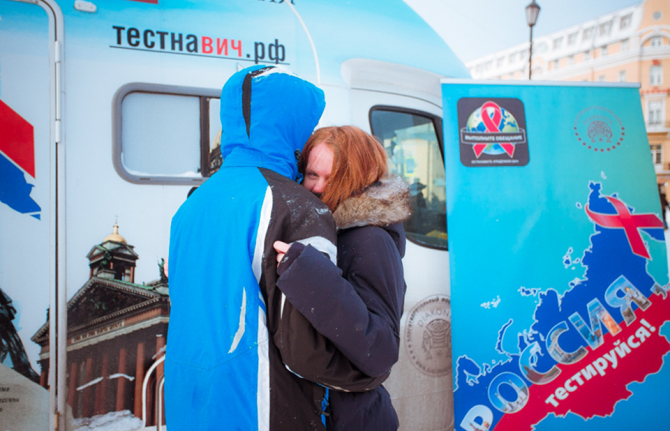
Saint Petersburg is one of the few cities in the Russian Federation that provides patients with virtually the entire range of HIV prevention and treatment services, including harm reduction. Prevention services are available at the city AIDS centre, where people can exchange syringes and get sterile equipment and condoms.
Quick testing for HIV is important, according to Mr Gusev, who says that the majority of people who are diagnosed with HIV in Saint Petersburg get immediate access to HIV treatment. “The main thing is for a person living with HIV to see a doctor and start antiretroviral therapy. Then we save a person’s life and help prevent new infections,” he said.
Saint Petersburg provides services for key populations, both in mobile clinics, in partnership with community-based organizations, and at the AIDS centre. “Women can get tested for HIV, receive condoms free of charge and talk to peer consultants,” said Irina Maslova, of the Astra Foundation, which works with female sex workers.
The Centre for AIDS Prevention and Control’s Department of Motherhood and Childhood provides services for women and children affected by HIV. The current level of mother-to-child transmission of HIV at the centre is 1%, but the staff want to reduce that to zero.
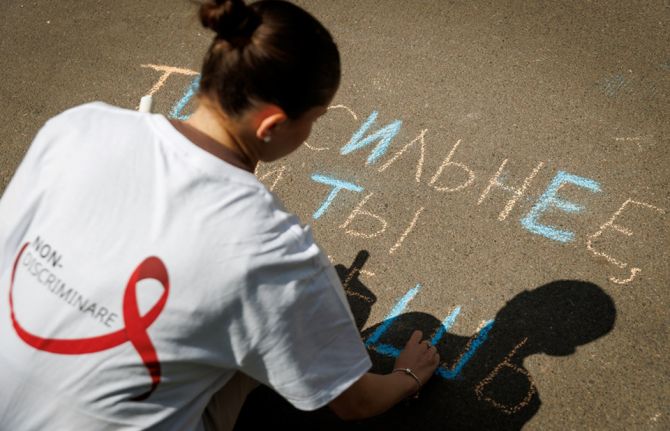
Saint Petersburg’s residents have been learning about HIV prevention services from a large outdoor advertising campaign and public service announcements across the city, supported by the city government. The advertising has three key messages—on HIV testing, the availability of HIV treatment and the elimination of all forms of stigma and discrimination against people living with HIV.
Credit for all photos above: UNAIDS/Olga Rodionova
Region/country

Feature Story
A champion for screening and treating cervical cancer among women living with HIV
08 February 2018
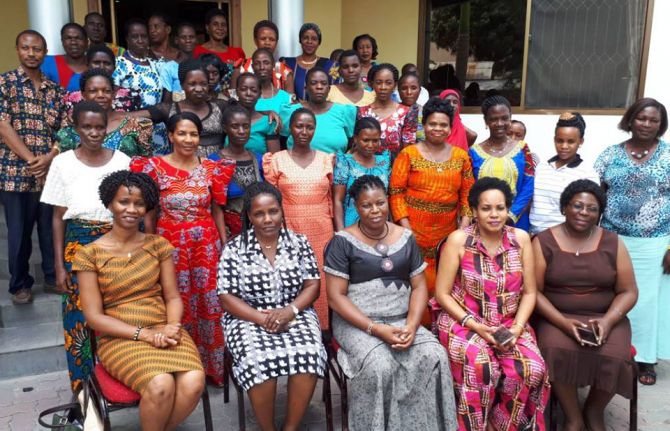
08 February 2018 08 February 2018Basilisa Ndonde has a big smile on her face as she walks into her office at Tanzania Health Promotion Support, a civil society organization. It is a special day for her—World Cancer Day, commemorated on 4 February each year. Ms Ndonde is at the forefront of the response to cancer on the ground, coordinating the Afya Jali project to raise awareness about, and uptake of, cervical and breast cancer services among women living with HIV.
Women living with HIV are four to five times more likely to develop cervical cancer than women who are HIV-negative. HIV weakens the immune system and reduces the body’s ability to fight opportunistic infections, such as the human papillomavirus (HPV), which causes 70% of cervical cancer cases.
The United Republic of Tanzania has the sixth highest incidence of cervical cancer in the world and has 1.4 million people living with HIV.
Ms Ndonde is proud of the achievements of the Afya Jali (which means “Taking care of your health” in Swahili) project so far, just a few months after its inception. In collaboration with the Ministry of Health, Community Development, Gender, Elderly and Children and the Tanzania network of women living with HIV, Ms Ndonde has facilitated the development of resource materials for health and community workers to sensitize women on the need to be screened for cervical and breast cancer. “For the first time in the country, we now have comprehensive guidelines for health workers on the prevention, screening and treatment of the cancers of reproductive organs,” she says.
Ms Ndonde has obtained the support of local government authorities in all four regions in which the project has been implemented. She has also organized a training of trainers workshop in the same regions for 30 women living with HIV, who sensitize other women on cervical and breast cancer and encourage cancer disclosure to mitigate stigma. “Each participant had to practice and demonstrate in front of the workshop’s audience that they know how to deliver the messages back to their respective communities,” says Ms Ndonde.
The project is funded by UNAIDS as part of the Pink Ribbon Red Ribbon (PRRR) initiative, a global partnership of governments, nongovernmental and multilateral organizations, foundations and corporations with a shared goal of reducing deaths from cervical cancer and breast cancer in low- and middle-income countries. PRRR’s mission in the United Republic of Tanzania is to build on existing health-care programmes to integrate cervical cancer prevention, screening and treatment and breast cancer services and to increase access to HPV vaccination.
UNAIDS is working with countries to achieve the commitment made by counties at the United Nations High-Level Meeting on Ending AIDS in 2016 to take AIDS out of isolation through people-centred systems to improve universal health coverage, including treatment for tuberculosis, cervical cancer and hepatitis B and C.
Region/country
Related

Feature Story
Promoting women's leadership in science and health
09 February 2018
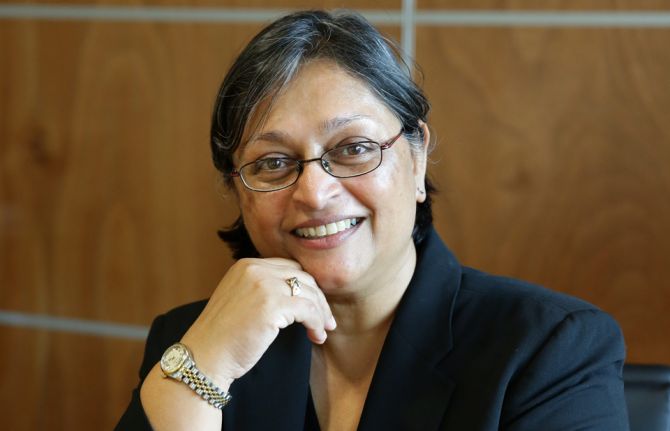
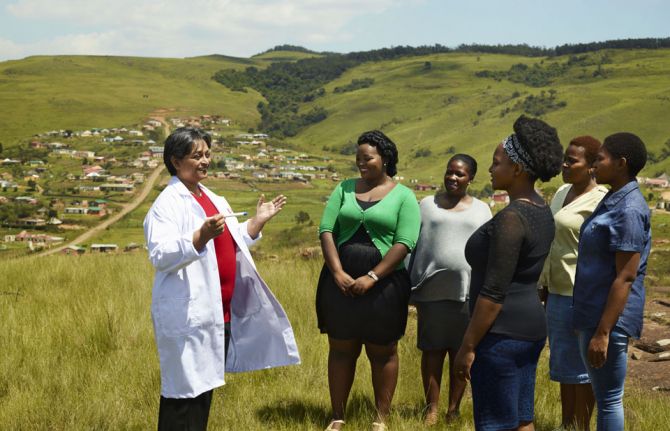
09 February 2018 09 February 2018The International Day of Women and Girls in Science is celebrated on 11 February. As part of UNAIDS’ Right to Health campaign last year, UNAIDS Special Ambassador for Adolescents and HIV and champion for young women in science, Quarraisha Abdool Karim, spoke with her daughter about her life’s work and the importance of women’s involvement in science and health.
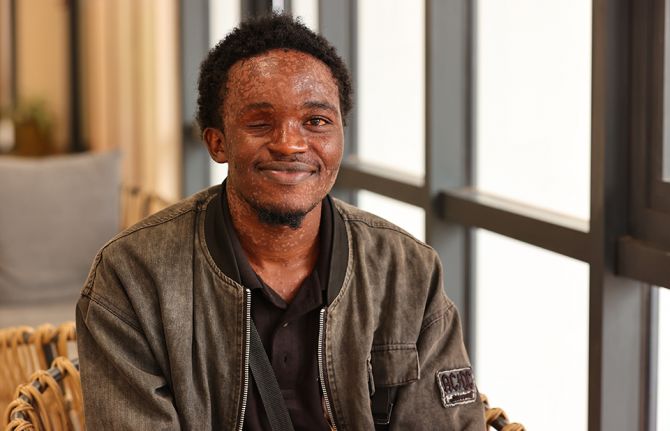
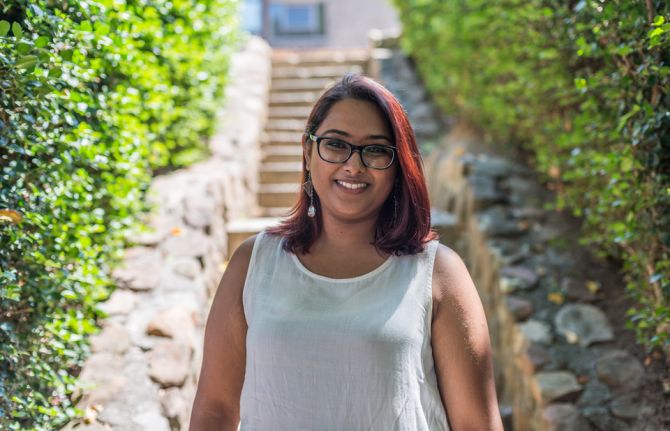
Mother and daughter, Quarraisha Abdool Karim (Q), the Associate Scientific Director of the Centre for the AIDS Programme of Research in South Africa, and Aisha Abdool Karim (A), a student at the Columbia University Graduate School of Journalism, spoke about health and what that means for young women in South Africa.
A: For me, growing up I was surrounded by science and it was part of my daily life, but what got you interested in science and health?
Q: Probably for most of my life I thought about science and its application to leaving people better off. So, I wanted to be a scientist and I wanted to do something that would help people.
A: Science continues to be a male-dominated field, like many others, so I feel like you brought an interesting perspective to your research. How do you think your experience as a young woman influenced your research?
Q: My very first study, when I was relatively young, 28, was when I did the first population-based survey in South Africa. The data were very clear, that young women had a four-times higher HIV infection rate than young men and that women acquired HIV about five to seven years earlier than men. And that intrigued me a lot and I spent the next 20-odd years trying to really understand that better. To understand why young women were getting infected but not young men and to understand what some of the factors were that were influencing young women to become sexually active.
A: It’s interesting to me that you chose to focus on understanding why women are becoming sexually active, because I feel like my high school education was very focused on abstinence. Even though we did have a version of sex education, it wasn’t very informative or useful. Do you feel like there’s been a change in education around topics like reproductive health since you were in school?
Q: You know, I grew up in a much more conservative era, where having relationships in high school and being sexually active were much more frowned upon. But I think that teachers still feel very uncomfortable talking about sexual health and choices and generally about reproductive health issues in South Africa, or, I would go so far as to say, in Africa.
A: I agree, I think there's still this hesitance to discuss sex openly at school. While the topic of sex might not have been off limits in our home, it definitely made some of my friends uncomfortable if I brought it up in conversation.
Q: You’re reminding me of something else that I’ve learned in working with young people, which is that they don’t like getting information from adults and people they’re familiar with. They're more comfortable getting information from their peers. It shows how knowledge is important, but also how it’s viewed in the community and how the society you live in influences your ability to act.
A: Well, you’re talking about the role of the community, which extends beyond just education and policies. Nowadays, I think people are becoming more aware of the intersectionality of issues and health is no exception. Young women have been a central part of your research. What are some of the other factors that affect their lives?
Q: I’ve learned that the vulnerability of young women is very much tied into gender power differences in society and these disparities are very important for perpetuating the vulnerability of young women socially, economically and politically. And that extends way beyond HIV.
A: The reality of gender power dynamics is something I only really began to understand when I was at university, because it wasn’t really an issue for me when I was at my girls high school. Do you think that the political landscape of South Africa changing to a democracy has had an impact on these gender dynamics?
Q: Although the politics has changed, that has not been translated to the grass-roots level. Younger women needed to understand that they are now in a different world in South Africa, with many more opportunities.
A: That comes back to the idea of gender dynamics and community. I feel that there’s this idea of girls lacking independence and that makes it more difficult, especially for young women, to feel like they can make their own decisions when it comes to their bodies.
Q: So, I think there is this tension, and I think you are in a better position to talk about women of your age or younger. There used to be this thing about how women should be ignorant about their bodies and their partners will be able to tell them everything. Whereas I think to be empowered, you actually need to know about your own body. It’s so important for young women to have access to information about health. We need to be encouraging an attitude where young women are no longer ashamed to know about their own bodies. Do you think there’s a way we can address this?
Q: Having a social environment that is supportive of those norms is critically important, because young women themselves have very little agency. But in order to create that climate and context, it will necessitate men taking greater responsibility, boys taking more responsibility for themselves and their behaviours.
A: Education is such a key part of creating that environment and addressing the topic of health. Being able to see the impact that your research had on public perceptions gave me a sense of the power that information can have and was part of the reason why I decided to be a journalist. This is something particularly important in this day and age, when we need to combat the spread of misinformation and debunk myths in health care and beyond.
Feature Story
The power of television to educate and entertain millions in western Africa
07 February 2018
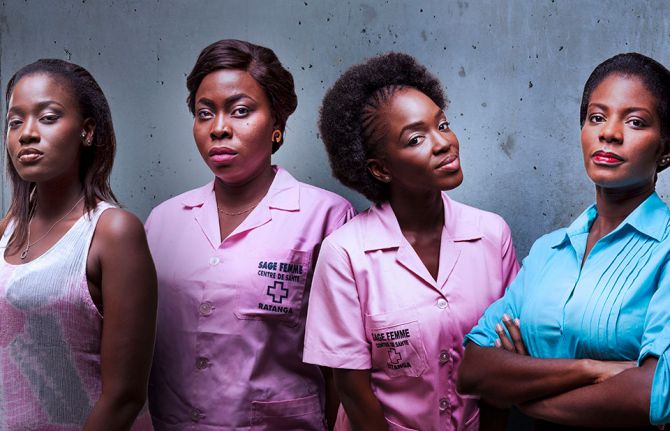
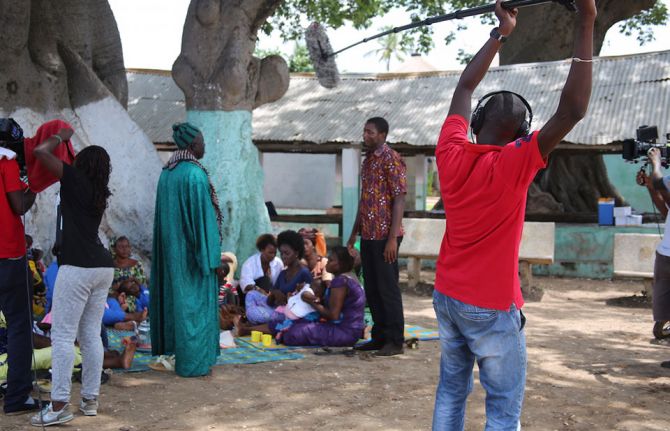
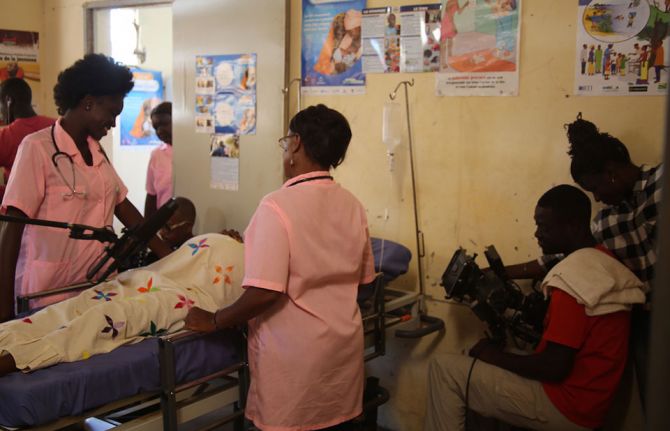
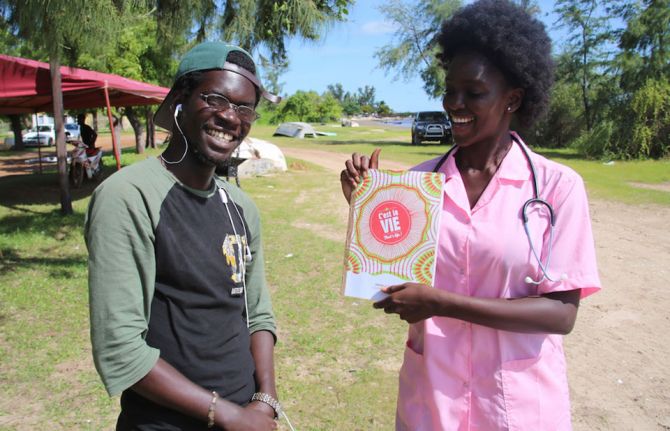
07 February 2018 07 February 2018A baby abandoned at a health clinic, an abusive boyfriend, dating woes and fake medicines are all plot twists in C’est la Vie (That’s Life), a television series based in, and produced in, Africa. Shot in Senegal, the sitcom takes place in the fictitious Ratanga health clinic, where midwives interact with patients and work on various cases. Their life stories and office politics come into play, adding intrigue, but the overall aim is to raise health awareness through entertainment.
The series, a first in western Africa, was inspired by Mexican pioneer Miguel Sabido—who used telenovelas to promote literacy and family planning—as well as by the educational television series Shuga. Shuga, the MTV English-language series, is now in its six season and has been so successful that it has moved its filming location from Kenya to capture new stories from Nigeria and South Africa.
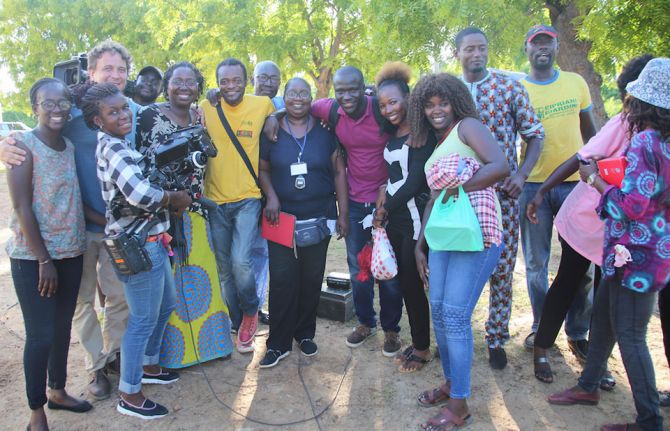
Réseau Africain d’Education en Santé (RAES), a nongovernmental organization backed by several United Nations agencies and the French Government, founded Keewu, a production company, to launch the show.
RAES founding member and now Keewu producer Alexandre Rideau’s motivation for launching C’est la Vie was to reach millions via television. “The statistics speak for themselves in western Africa,” Mr Rideau said. “Young people are clueless about sexuality, HIV prevention and simple things like menstruation.” He also added that it was obvious from the many questions received that people had real difficulty in accessing information.
The show highlights many of the realities of the region, from high levels of maternal deaths to HIV infection. Four in five children living with HIV in western and central Africa are still not receiving life-saving antiretroviral therapy and AIDS-related deaths among adolescents aged 15–19 years are on the rise in the region, according to a UNAIDS/United Nations Children’s Fund report, Step up the pace.
In its second season, C’est la Vie has gained in popularity, so much so that actors are being recognized in the street. Mr Rideau recounted that a toll collector in a toll booth in Dakar would not let an actress who plays an unpleasant character in the series go through in her car.
Broadcast in western and central African countries on A+ and TV5 Monde Afrique, as well as local channels, the show reaches about 100 million viewers. Mr Rideau explained that the series may not necessarily change people’s behaviour, but it gets crucial conversations started about health issues. In Senegal and Togo, open debates about the show’s themes take place in town squares following an airing.
Mr Rideau said that he wants to roll the show out in six other countries in 2018. A radio spinoff in the Hausa language is now being distributed in Niger.
PROMO REEL - C'est la vie! - Saison 1 from Keewu Production on Vimeo.
Region/country
Related


Feature Story
UNAIDS mourns the death of Jimmie Earl Perry
12 January 2018
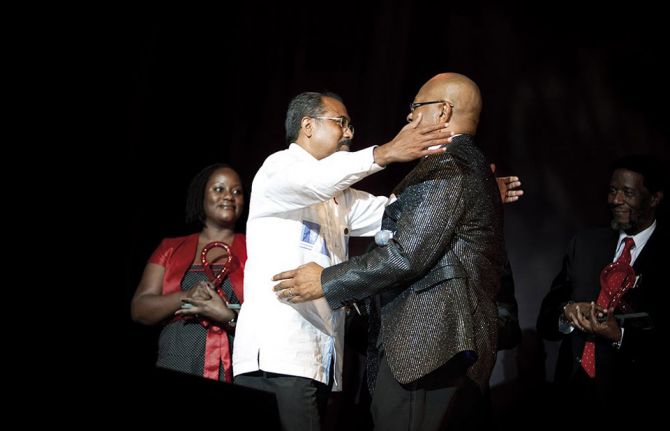
12 January 2018 12 January 2018Jimmie Earl Perry, the first UNAIDS National Goodwill Ambassador for South Africa, has died.
A seasoned singer and performer in theatre productions around the world, Mr Perry was notable for his work in using the creative arts to educate audiences. At the Africa Centre of HIV/AIDS Management at Stellenbosch University, South Africa, he staged HIV educational theatre productions that were performed to more than 3 million people in communities and workplaces nationally and internationally.
At the time of his appointment as UNAIDS National Goodwill Ambassador, Mr Perry said, “If we are to turn this epidemic around, South Africans have to really understand what the virus is, how it is spread, that it is not a death sentence thanks to medical treatment and to put an end to the fear and stigma of living with HIV.”
Michel Sidibé, UNAIDS Executive Director, said Mr Perry’s appointment in 2009 came at a critical time for the AIDS response in South Africa, with far-reaching policy changes announced by the President of South Africa, Jacob Zuma, on World AIDS Day of that year. “I decided to appoint Jimmie Earl Perry as National Goodwill Ambassador because of his capacity to inspire and his willingness to lead and empower others. He had a strong belief in the potential of people to rise above their circumstances and he encouraged the best in everybody he met.”
Mr Sidibé said Mr Perry’s passing was a great loss for the AIDS community. “Jimmie Earl Perry encouraged and inspired my global advocacy and efforts to end the AIDS epidemic as a public health threat by 2030. UNAIDS benefited a great deal from our association with Mr Perry, and we are grateful for his service and dedication. I am humbled and privileged to have counted him as my friend and brother,” he said.
Region/country

Feature Story
UN urges comprehensive approach to sexuality education
10 January 2018
10 January 2018 10 January 2018Close to 10 years after its first edition, a fully updated International Technical Guidance on Sexuality Education published today by UNESCO advocates quality comprehensive sexuality education to promote health and well-being, respect for human rights and gender equality, and empowers children and young people to lead healthy, safe and productive lives.
“Based on the latest scientific evidence, the International Technical Guidance on Sexuality Education reaffirms the position of sexuality education within a framework of human rights and gender equality,” says UNESCO Director-General Audrey Azoulay. “It promotes structured learning about sexuality and relationships in a manner that is positive and centred on the best interest of the young person. By outlining the essential components of effective sexuality education programmes, the Guidance enables national authorities to design comprehensive curricula that will have a positive impact on young people’s health and well-being.”
The Technical Guidance is designed to assist education policy makers in all countries design accurate and age-appropriate curricula for children and young people aged 5 – 18+.
Based on a review of the current status of sexuality education around the world and drawing on best practices in the various regions, the Guidance notably demonstrates that sexuality education:
- helps young people become more responsible in their attitude and behaviour regarding sexual and reproductive health
- is essential to combat the school dropout of girls due to early or forced marriage, teenage pregnancy and sexual and reproductive health issues
- is necessary because in some parts of the world, two out of three girls reported having no idea of what was happening to them when they began menstruating and pregnancy and childbirth complications are the second cause of death among 15 to 19-year olds
- does not increase sexual activity, sexual risk-taking behaviour, or STI/HIV infection rates. It also presents evidence showing that abstinence-only programmes fail to prevent early sexual initiation, or reduce the frequency of sex and number of partners among the young.
The publication identifies an urgent need for quality comprehensive sexuality education to:
- provide information and guidance to young people about the transition from childhood to adulthood and the physical, social and emotional challenges they face.
- tackle the challenges posed by sexual and reproductive health issues, which are particularly difficult during puberty, including access to contraception, early pregnancy, gender-based violence, sexually transmitted infections (STIs) and HIV and AIDS
- raise awareness of HIV prevention and transmission, of which only 34 per cent of young people around the world can demonstrate accurate knowledge
- complement or counter the large body of material of variable quality that young people find on the internet, and help them face increasingly common instances of cyberbullying.
The Guidance was produced in collaboration with UNAIDS, United Nations Population Fund (UNFPA), United Nations Children’s Fund (UNICEF), UN Women, and the World Health Organization (WHO).
UNAIDS Cosponsors
Related
Feature Story
Turning community action into results
15 December 2017
15 December 2017 15 December 2017Aisha Abdallah never misses her regular medical appointments at the Zanzibar Youth Education, Environment, Development Support Association (ZAYEDESA) care and treatment centre for HIV, located on the outskirts of Stone Town, Zanzibar.
She was diagnosed with HIV in 2006. “I went with a group of friends to get tested. I was keen to know my status because of my lifestyle. And I tested HIV-positive,” she says.
Ms Abdallah is engaged in sex work. “I was in a steady relationship with the father of my daughter,” she says. “But when he started to mistreat me, I had to run away from the Tanzania mainland to Zanzibar and find a way of living alone.” She says she often cries at the thought of leaving her daughter behind.
ZAYEDESA runs the only community-based HIV clinic in Zanzibar. Ms Abdallah found out about the new clinic in 2014 from a community outreach worker and a former sex worker. “In the first care and treatment centre where I used to go, I was treated like a kid and not getting the services which I needed. At ZAYEDESA, health-care workers talk to me in a friendly manner and understand my concerns,” she says. At the centre, she has also benefited from tuberculosis screening and treatment and family planning services, including condoms. “I trust the clinic. I know if I get ill I can get good service there.”
ZAYEDESA has established four youth-friendly health centres on both islands of Zanzibar, Unguja and Pemba, an anonymous toll-free AIDS helpline and a text message service to deliver HIV and sexual and reproductive health information. It is at the centre of the community-based AIDS response in Zanzibar and plays a critical role in offering stigma and discrimination-free services to key and vulnerable populations.
Stigma remains one of the major obstacles to accessing prevention, treatment and care services in Zanzibar. Ms Abdallah would like to pass on one message, “I want people to understand that HIV can affect anyone, anywhere.”
Ms Abdallah, who prefers not to use her real name, is on life-saving HIV treatment. “I know the importance of adhering to my antiretroviral treatment. My mum is very supportive, she calls me every day to check on me and remind me about the medicines.”
UNAIDS has supported the refurbishing of youth-friendly centres managed by ZAYEDESA. Currently, UNAIDS provides support to ZAYEDESA to ensure its meaningful participation in the development, implementation and review of the United Nations Joint HIV Plan in Zanzibar and on supporting its resource mobilization efforts.