

Feature Story
Women living with HIV in New Zealand talk about stigma
09 March 2015
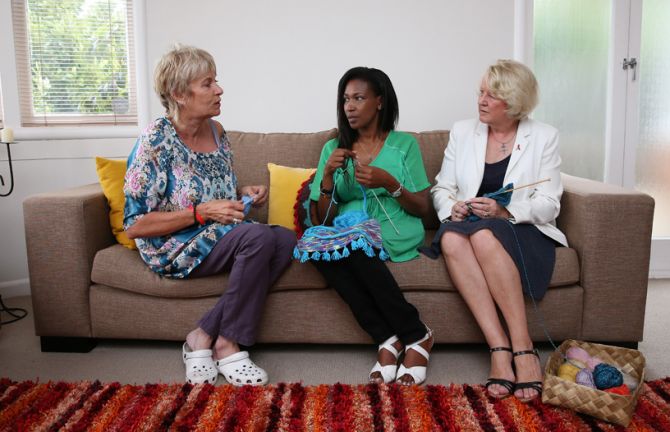
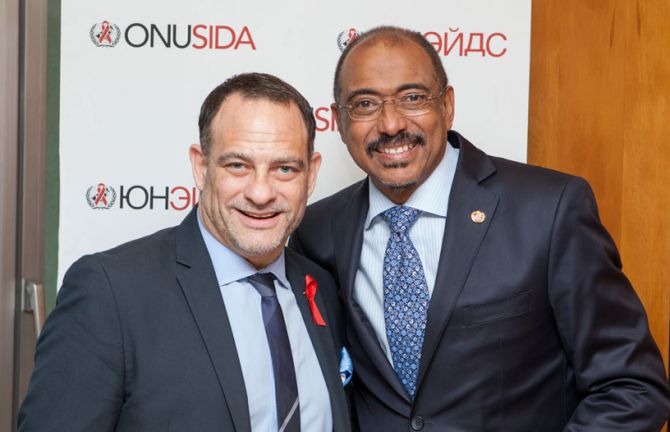
09 March 2015 09 March 2015In the lead up to International Women’s Day, UNAIDS Deputy Executive Director Jan Beagle joined a group of women living with HIV in Auckland, New Zealand, to hear about their experiences. The meeting was one of the regular meetings of Positive Women, a support organization for women living with HIV and their families. The group works on raising awareness of HIV in the community through educational and anti-stigma programmes.
Jane Bruning, National Coordinator of Positive Women Inc. said, “Living with HIV can be very isolating as many women don’t want to tell anyone about their status. So it’s extremely important to have a safe space where women can gather and speak openly without fearing they will be judged.”
Ms Beagle, who is originally from Auckland, said she was touched by the women’s stories. “I’ve visited women living with HIV in many countries, but it is special to hear from women living with HIV in my own country. I am moved by their stories and I am committed to work with them to address the stigma and discrimination that is so much a part of their daily lives.”
The women told Ms Beagle about their fear of disclosing their status publicly. Their reasons were often different. For some, there was concern over losing their employment, while others were worried their children would be ostracized because their mother is living with HIV.
Judith Mukakayange, who is now open about her status, said she came to New Zealand 15 years ago as a refugee, fleeing civil war in Rwanda. When she arrived she was overjoyed to start a new life. However, that dream quickly crumbled when as part of her application process to emigrate she took an HIV test and learned that she was HIV-positive. “When you hear you have HIV you feel so isolated, so it’s important to connect to other people who understand you,” said Ms Mukakayange.
“I have this story that I don’t tell anybody. Even my close friends don’t know. I just can’t say I have AIDS. It’s awkward, awkward, awkward. Coming here to Positive Women is great. I can’t imagine life without Positive Women,” another woman at the meeting said.
From the early days of the AIDS epidemic, New Zealand has taken a lead in the response. The country implemented evidence-informed programmes to ensure that key populations at higher risk of acquiring HIV received priority attention. In 1987, New Zealand was among the first countries to introduce needle exchange programmes for people who use drugs. It was also a regional pioneer in decriminalizing sex work and sex between men.
These initiatives are widely credited with having curbed the epidemic in the country. New Zealand has a very low HIV prevalence, with the Ministry of Health reporting around 0.1% of adults aged 15 to 49 living with HIV. In 2013, around 180 people were newly diagnosed with the virus.
However, despite this progress, people living with HIV still face stigma and discrimination. A recent survey conducted by local AIDS organizations found that 50% of people surveyed would be uncomfortable having food prepared by someone living with HIV.
Of Positive Women Ms Bruning said, “We may be a small organization but we punch well above our weight. I am proud of what we do.”
Partners
Region/country
Feature Story
A look inside The Elizabeth Taylor AIDS Foundation
26 January 2015
26 January 2015 26 January 2015During the 36th meeting of the UNAIDS Programme Coordinating Board, held in December 2014 in Geneva, Switzerland, unaids.org spoke to Joel Goldman, the Managing Director of The Elizabeth Taylor AIDS Foundation (ETAF), about how HIV programmes funded by private foundations are contributing to ending the AIDS epidemic, the work done by ETAF and the future of the AIDS response.
What is the goal of The Elizabeth Taylor AIDS Foundation?
ETAF is a nonprofit organization established by Elizabeth Taylor in 1991 to raise awareness and funds to respond to AIDS and to grant assistance to people living with HIV. Today, we support AIDS organizations in the United States of America and around the world—33 countries to date—which deliver direct care and services to people and/or provide HIV prevention education. ETAF has donated more than US$ 15 million in funding thus far.
What makes The Elizabeth Taylor AIDS Foundation unique?
Before she died, Elizabeth Taylor made provisions for her estate to cover all of ETAF’s operating expenses. This means that when people donate to our organization, 100% of every dollar goes directly to caring for people living with HIV and towards funding HIV prevention programmes. In addition, Ms Taylor deemed that 25% of all likeness and image royalties from her estate go to ETAF. So when someone buys an Elizabeth Taylor fragrance, like White Diamonds, or buys from the Elizabeth Taylor jewellery collection on QVC, they are also doing good and contributing to the response to AIDS.
How has the foundation evolved since its creation? And where do you see it going in the future?
Elizabeth Taylor co-founded amfAR in 1985 as a means for researchers to discover treatments and ultimately find a cure for AIDS. As HIV-positive people began to live longer, she also wanted to find direct ways to care and nurture people living with HIV. Since she faced many personal medical issues throughout her lifetime, she recognized the importance of access to medical care, housing, nutritious food and support as a way to fight illness. In 1991, Ms Taylor founded ETAF.
Through ETAF, she funded HIV prevention programmes on sex education, needle exchange, access to condoms, etc. No matter how publically unpopular the topic, she moved it forward. Ms Taylor was one of the fiercest advocates in Washington, DC, and on the global political stage for these and many other issues, including human rights for people living with HIV. Elizabeth Taylor remained at the helm of ETAF until she passed away in 2011.
As we move forward in this legacy era, ETAF is still dedicated to Ms Taylor’s vision of care, education and prevention. In November 2014, our Trustees and Advisory Board members reaffirmed our founder’s original mission and will focus current funding with three priorities in mind: marginalized populations, advocacy and innovation.
What do you think are today’s greatest challenges to an effective response to AIDS? And where can ETAF have the biggest impact?
The biggest challenge in the response to AIDS is the complacency that exists around the issue today, especially among young people. This is evident by the fact that the adolescent death rate from AIDS-related illnesses has risen by 50% over the last decade.
Although she is no longer with us, Elizabeth Taylor’s reputation and brand still retain the cache to partner with the right celebrities, the most effective organizations and foundations, the best corporations and strategic global leaders, like UNAIDS. There are also future marketing campaigns and programmes in the works that will reignite the conversation and heighten awareness for HIV education and prevention among the most vulnerable people.
Is there a particular project funded by the foundation that touched you personally or that you are most proud of?
I am most proud of the Global AIDS Interfaith Alliance (GAIA) / Elizabeth Taylor Mobile Health Clinics in Malawi. Ms Taylor recognized that chronic lack of access to health care is the biggest barrier in the battle against HIV in Africa. She said, “If people cannot get to health care, why can’t we get health care to the people?” In 2008, ETAF partnered with GAIA in creating mobile health clinics that provide HIV testing and prevention programmes to the most affected regions of Malawi. Every day of the week, our seven clinics rotate to a new location. Last year, an average of 1000 patients were treated each day, with 40% of them being children under the age of five.
For 2015, we are proud to acknowledge an important milestone in the Elizabeth Taylor mobile health clinic programme: every one of the 900 000 residents in Malawi’s Phalombe and Mulanje districts now lives within a one hour’s walk to life sustaining health-care services. This is a great achievement, especially given the challenging road infrastructure of the country.
On a personal level, I was diagnosed HIV-positive 23 years ago at a time when few HIV prevention programmes existed. So the projects that touch me most are those that promote HIV prevention among young people. When ETAF funds initiatives like the University of California, Los Angeles, Sex Squad to expand its education programme to high schools and colleges in the Southern region of the United States of America, or Grassroot Soccer to complement our mobile health clinics in Malawi, I am personally excited by these thoughtful, innovative and effective approaches reaching young people.
What do you think is the role of foundations in today’s global health landscape?
Foundations can fill the gaps in which some governmental agencies cannot work. Many private and family foundations have the ability to be flexible and fund innovation at a quicker rate. I was inspired by the UNAIDS Programme Coordinating Board’s bold declaration to end AIDS by 2030. However, many speakers said that the world would need to do business differently in order to achieve this objective. This is where foundations can play a role. If we band together in support of UNAIDS’ message on all fronts, while simultaneously pouring our collaborative efforts into developing and funding projects that bring us closer to this goal, our collective muscle can propel us forward.
Elizabeth Taylor brought AIDS out of the shadows and into the national and global spotlight. Now, it is up to us to take up her mantle, keep up the momentum I witnessed in Geneva, and eliminate this disease. Now is the time, especially when ending the AIDS epidemic is just beyond our grasp.
External links
Feature Story
Côte d’Ivoire’s First Lady honoured for her humanitarian commitment
19 December 2014
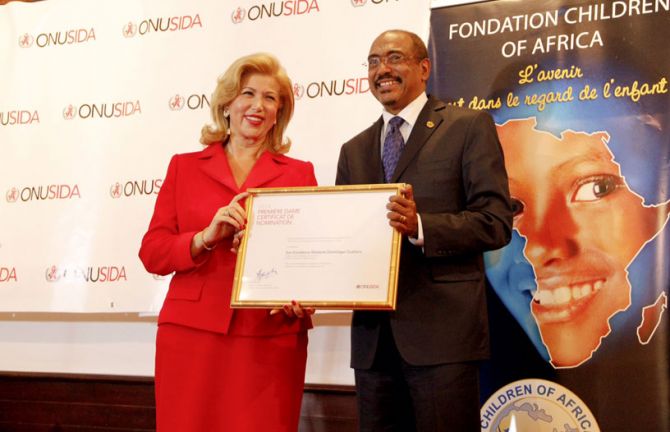
19 December 2014 19 December 2014At a ceremony in Abidjan, UNAIDS Executive Director, Michel Sidibé has honoured the First Lady of Côte d’Ivoire, Dominique Ouattara, for her humanitarian work and her commitment to improving access to paediatric treatment for children living with HIV.
“Ms. Ouattara’s personal involvement is the clearest sign of her commitment to the most disadvantaged and of her interest in the health of mothers and their children, not only in Côte d’Ivoire but in the whole of Africa,” said Mr Sidibé.
Ms Ouattara is to become a Special Advocate for UNAIDS, helping to raise awareness for programmes aimed at preventing new HIV infections among children and advocating for women and children living with HIV to access antiretroviral therapy.
“This distinction will be a catalyst for my commitment to the elimination of AIDS. From now on, every action to prevent mother-to-child transmission of HIV in Côte d’Ivoire, in Africa and in the world will find a favourable echo in me. I am fully engaged in this fight and I will remain committed until we reach an AIDS-free generation,” said Ms Ouattara.
Ms Ouattara has been involved in humanitarian issues for many years. In 1998, she created the Children of Africa Foundation, which has supported several projects in Côte d’Ivoire, including the construction of a school and a centre for unaccompanied children as well as the promotion of child immunization campaigns.
Region/country


Feature Story
People who inject drugs must not be left behind
16 December 2014
16 December 2014 16 December 2014Calls for renewed efforts to reduce the transmission of HIV and hepatitis C among people who inject drugs were heard at the thematic segment of the 35th meeting of the UNAIDS Programme Coordinating Board (PCB), which took place in Geneva, Switzerland, on 11 December.
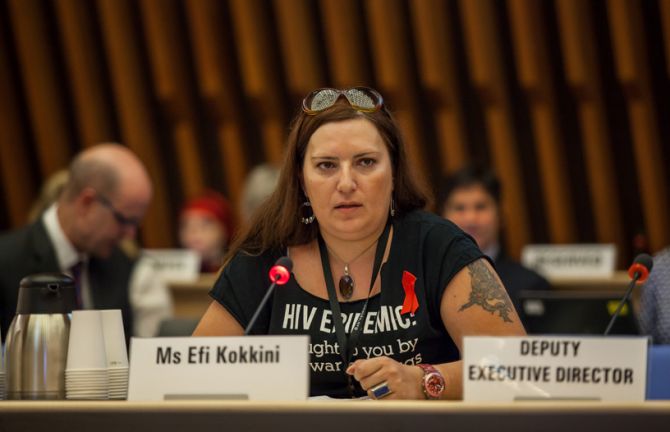
Speakers at the thematic segment included former President of Switzerland Ruth Dreifuss, a member of the Global Commission on Drug Policy, Efi Kokkini, the chair of the Greek Drug and Substitute Users Union, and representatives of United Nations Member States and organizations such as the United Nations Office on Drugs and Crime, the World Health Organization and the World Bank.
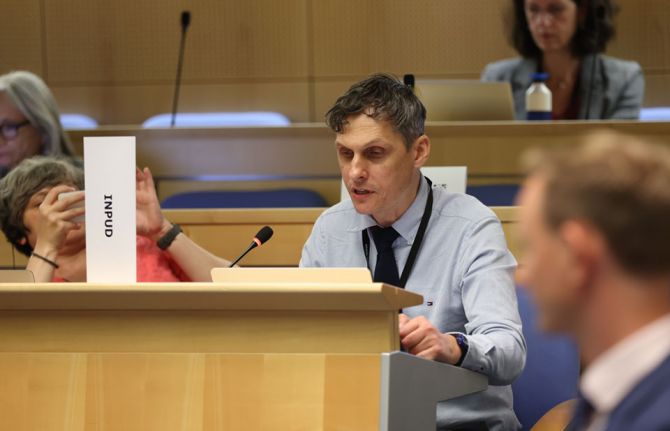
Key issues associated with HIV and injecting drug use were raised, including opportunities for and barriers to implementing harm reduction strategies. Examples from several countries focused on partnerships between governments and civil society that have proved successful in reducing the transmission of HIV among people who inject drugs.
“We need to examine what has failed and what can be done differently,” said UNAIDS Executive Director Michel Sidibé. “Reaching the 90–90–90 targets will not be possible without reducing new HIV infections among people who inject drugs.”
Mr Sidibé said he had witnessed many effective harm reduction programmes throughout the world, stressing that those that enable people who inject drugs to be part of the solution have the greatest impact. He noted that the 2016 Special Session of the United Nations General Assembly on the World Drug Problem was widely seen as critical and offers a key opportunity to redirect and reform global and national policies to reduce the adverse impact of drugs on public health.
In her contribution to the debate, Ms Dreifuss said international drug policy had failed over several decades. She said there needed to be a radical rethink of policies and the construction of practical solutions that respect human rights and empower the people most affected.
Participants at the PCB heard an impassioned contribution from Ms Kokkini, who said people who inject drugs are often excluded from HIV prevention and treatment services. She said that politicians even continued to deny that people inject drugs while in prison.
Detention environments are particularly significant for the issue of HIV and drugs use. In some countries, HIV prevalence among prisoners can be 50 times higher than among the general population, with injecting drug use an ongoing problem in detention settings. During the discussion, PCB participants heard that where implemented, community-based opioid substitution therapies were six times more effective and 12 times less expensive than detention-based programmes.
Major Gairat Rakhmanov, a senior police official from Kyrgyzstan involved in community-based therapies for released prisoners, said the participation of the police and prison services was essential in helping to keeping people who inject drugs alive. Speakers from New York State Health Department and from the peer-led Needle and Syringe Programme described how New York had halted and reversed the HIV epidemic in the decade between 1992 and 2002.
Other participants from Iran, Malaysia and Tanzania described partnerships with various authorities, but each expressed the need to engage with people who inject drugs at every stage of the planning, design and delivery of services for them.
It is currently estimated that worldwide some 12.7 million people inject drugs, around 1.7 million of whom are thought to be living with HIV.

Feature Story
A long walk to an AIDS-free generation
15 December 2014
15 December 2014 15 December 2014When Angelina Twoki Terso arrived at the Juba Teaching Hospital’s antenatal clinic in 2004, when one month pregnant with her third child, she met with an HIV counsellor but didn’t think there was a need to get tested for HIV. Ms Twoki thought only people who smoked, drank and did things that she considered immoral contracted HIV.
Her first husband had died a few years before and she had never known the cause of his death. She remembers the counsellor telling her that anyone can contract HIV and she should consider getting tested, just to be sure. When the results came back a few hours later and she learned she was HIV-positive, Ms Twoki was in shock.
“I was going to commit suicide,” said Ms Twoki. “I wanted to run to the Nile. I was going to run there and jump in.” But the counsellor explained that she could get treatment at the hospital to keep her healthy and prevent the transmission of the virus to her baby.
She enrolled in the prevention of mother-to-child HIV transmission (PMTCT) programme and returned every month to the hospital for a check-up and to get her medication. She delivered her baby at the hospital and her daughter, Grace, who is now nine years old, is confirmed free of HIV.
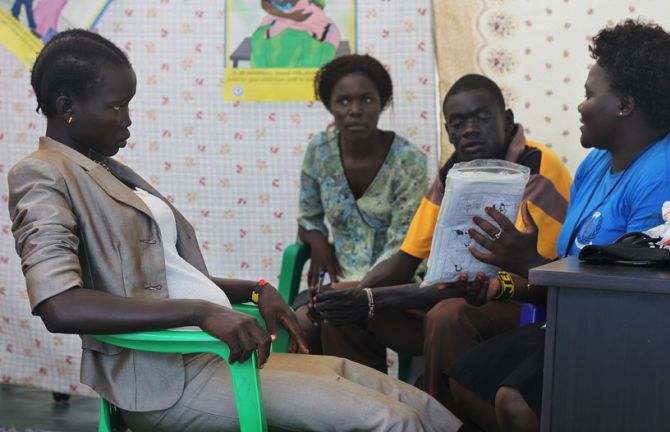
Ever since Grace’s birth, Ms Twoki has dedicated her life to helping other women access and adhere to PMTCT services. She visits eight different antenatal clinics in South Sudan’s capital, Juba. “Every day I share my testimony. Most of the women are accepting testing for HIV because they want to know their status. They want to stay healthy for their family and they want to have a healthy baby. It’s very important,” said Ms Twoki.
The main problem, she said, is that there are not enough sites where PMTCT services are offered in South Sudan. She counsels women who have to walk more than 12 hours to reach Juba to access services and medicines. She says, despite her best efforts to convince them to stick with the programme, dozens drop out owing to the long distance. “They complain. They say they are tired of running here. The place is very far and they don’t have transport,” said Ms Twoki.
There are only 75 facilities scattered across South Sudan that have integrated PMTCT services. In 2013, an estimated 2600 children were infected with HIV through mother-to-child transmission, and only 2% of children living with HIV had access to life-saving treatment.
Martha Cayad-an, health specialist at UNICEF, stresses the need to scale up access to quality PMTCT services in South Sudan—especially in rural areas, where more than 75% of women live—and to embed such services in a broader range of health services.
“Rather than asking women to go to one place for an HIV test and to another for immunization, health centres must offer integrated services,” said Dr Cayad-an. “When it’s a one-stop shop, the facilities become more user-friendly for women and children and therefore they attract more clients.”
However, scaling up HIV services will require substantial improvements to the country’s health sector, which is plagued by too few sites, too few health workers and a general shortage of resources as a result of decades of war.
Emmanuel Lino, Deputy Director of HIV/AIDS Services at the Ministry of Health in South Sudan, said the government is committed to scaling up integrated maternal and child health-care services.
“Only 22 PMTCT sites in the country provide antiretroviral treatment, but we are hoping that once the resources are available, those stand-alone PMTCT services will eventually be integrated with long-term HIV prevention and treatment, tuberculosis and malaria services,” said Dr Lino.
Dr Lino acknowledges that it will take time, certainly more than what will satisfy the needs of women living with HIV and advocates such as Ms Twoki. But he said the country is trying to lay the foundation for a system that will not just reduce future infections among children but that provides the comprehensive services to keep the nation healthy.
Region/country
Related




Feature Story
Opioid substitution therapy and HIV prevention in Belarus
11 December 2014
11 December 2014 11 December 2014Alexei injected drugs for over 15 years before opioid substitution therapy (OST) changed his life. He has now not injected drugs for the past three years, after starting an OST programme at the Psychiatry–Narcology Clinic in Minsk, Belarus.
“I had to do unimaginable things to find at least U$ 50 per day to sustain my heroin addiction,” said Alexei. “Since becoming a client of the methadone programme, I have not injected drugs, have completed my studies, got a job at the local factory and started a family. Thanks to this programme, I am still HIV-negative and I have my life back.”
Belarus aims to sustain and scale up its HIV prevention programme for people who inject drugs. Today, more than 1000 people who used to inject drugs are enrolled on the OST programme, which is available at 18 sites. Clients go every day to a participating health clinic to take a dose of methadone, which helps to treat their addiction to opiates.
About 30% of the people enrolled are living with HIV, and OST is used as a key tool to enhance their adherence to antiretroviral therapy. People who are HIV-negative rely on the programme to avoid HIV infection, as the virus can be transmitted through unsafe injecting.
Evgeny Golubitskiy, a psychiatrist/narcologist and head of the OST programme at the Minsk Oblast Narcology Clinic, said that the people who have graduated from the programme at his clinic are successfully managing their addiction to drugs, which has a positive impact on their overall health. In addition, he said that only one client had become infected with HIV in over four years of the programme.
According to a study conducted in Belarus, each dollar invested in OST programmes will produce a US$ 6 return. By treating people who inject drugs, savings are made with respect to possible HIV treatment, crime and unemployment. Research also shows that the employment rate among people receiving OST has jumped from 26% to 54% since the programme’s implementation.
“The results of the OST programme are clear and positive,” said Vasily Zharko, Minister of Health of Belarus. “We plan to continue these services by gradually increasing financing and support from the state’s budget."
Belarus plans to double the number of people receiving OST, to 2000, by the end of 2015. The target for 2020 is to have 10% of the 75 000 people who inject drugs in the country on the programme.
During his first official trip to Belarus, Vinay Saldanha, UNAIDS Regional Director for Eastern Europe and Central Asia, visited the OST programme at a health clinic in Minsk and learned that it also provides psychological and social support.
"The harm reduction programme in Belarus, including opiate substitution therapy, is impressive," Mr Saldanha said. “The OST programme in Belarus is saving lives and preventing the spread of HIV among clients.”
Region/country
Related

Feature Story
Cambodia commits to stopping new HIV infections by 2020
09 December 2014
09 December 2014 09 December 2014The Prime Minister of Cambodia, Hun Sen, has committed to stopping new HIV infections by 2020 and ensuring the sustainability of its HIV response. This comes as Cambodia allocates US$ 3.7 million of national funding to HIV treatment from 2015 to 2017. This is the first time that the government has earmarked funds for its treatment programme, which, owing to the large numbers of people receiving antiretroviral medicines, is where resources are most needed.
The Prime Minister reaffirmed the national commitment to HIV, tuberculosis and malaria programmes during his meeting with the UNAIDS Director of the Regional Support Team for Asia and the Pacific, Steve Kraus, in Phnom Penh, Cambodia. The Prime Minister said “the government will not allow any successful programme to go bankrupt.” He further stressed that “the key to the nation’s success against HIV is a concerted effort by everyone, especially people infected and affected by HIV.”
The country’s progress in its AIDS response has already been internationally recognized. New HIV infections have dropped by 67%, from 3500 in 2005 to 1300 in 2013. More than two thirds of the 75 000 people living with HIV receive antiretroviral therapy, the highest percentage of treatment access in the region. Nearly 80% of mothers living with HIV have received treatment preventing HIV transmission to their children. However, challenges remain. There are high rates of HIV infection among key populations at higher risk of HIV, including men who have sex with men, people who inject drugs, transgender people and entertainment workers. Gaps in access to HIV services persist.
During his meeting with the Prime Minister, Mr Kraus congratulated Cambodia for its remarkable progress and continued strong national leadership. He noted in particular that strategic and well-managed domestic and external investment will further transform the AIDS response.
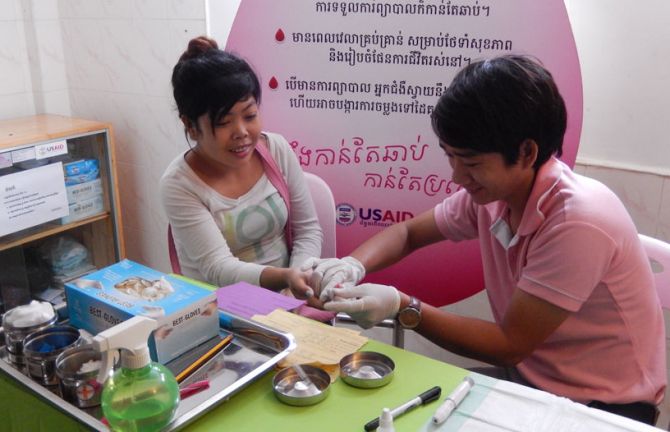
Cambodia is optimizing available resources by implementing more focused and efficient approaches for HIV prevention, treatment and care, particularly for key populations. More than 24 000 people in key populations used community-led fingerprick testing to learn their HIV status during the year to October 2014. People who test HIV-positive are accompanied by peers and counsellors to clinics to receive HIV treatment. Harm reduction services, including needle and syringe programmes, are also being expanded.
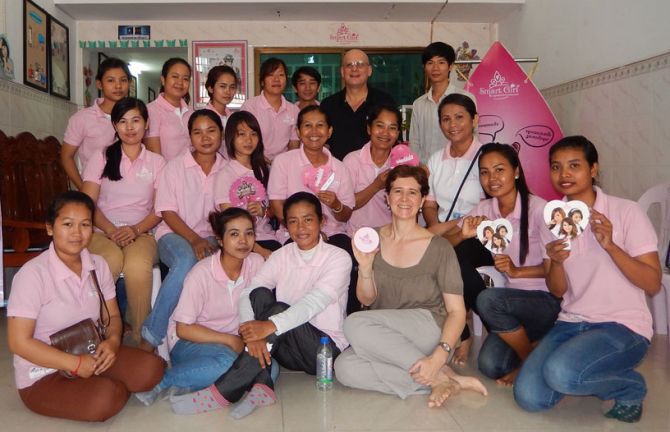
During his visit, Mr Kraus visited the Smartgirl programme, which empowers entertainment workers to know their sexual and reproductive health and rights and offers integrated access to family planning and HIV counselling and testing. Mea Sopheap of Cambodian Women for Peace and Development, which is implementing the Smartgirl programme, said, “we are proud to be part of the solution and work closely with the community, the local authorities and entertainment places.”
Recently the country adopted a landmark ministerial regulation to improve occupational safety and health and working conditions at entertainment places. The policy is the first of its kind in the Asia–Pacific region and reinforces labour rights for entertainment workers, including protection from sexual harassment and access to health services. This is one example of how Cambodia is using HIV programmes to find solutions to other health and human rights issues, an example that could be a model for the region, according to Mr Kraus.
Region/country


Feature Story
New documentary on how AIDS is affecting young people around the world
18 November 2014
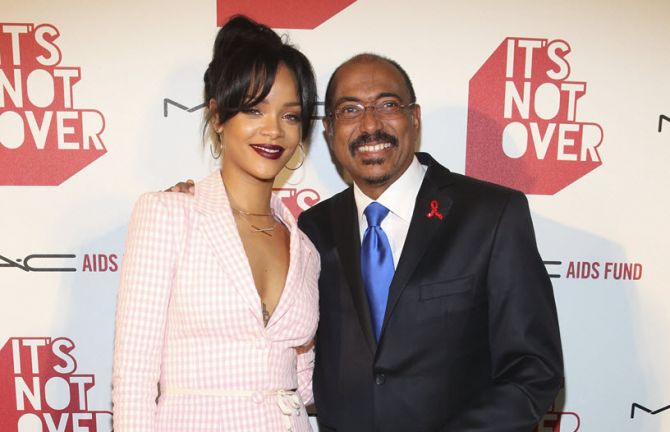
18 November 2014 18 November 2014Global musical artist Rihanna joined UNAIDS Executive Director Michel Sidibé and leaders of the MAC AIDS Fund at the Hollywood opening of a new documentary film focused on how the AIDS epidemic is affecting young people around the world.
The film, It’s Not Over, profiles the lives of three young people from India, South Africa and the United States of America. Directed by award-winning director Andrew Jenks in partnership with the MAC AIDS Fund, the film explores how young people are responding to the epidemic through activism, partnerships and social networking.
“Our global quest to end the AIDS epidemic as a public health threat aims to ensure that young people can come of age in a world that is safer, healthier and more just,” said Mr Sidibé. “This film shows how young people are using emerging communications and social networking technologies to raise awareness about the epidemic and advocate for continued attention to HIV.”
The partnership of the MAC AIDS Fund and UNAIDS has a particular focus on young people. Together, the MAC AIDS Fund and UNAIDS are working to encourage young people to learn their HIV status, leveraging social networking, film and other tools.
In 2014, a grant from the MAC AIDS Fund supported UNAIDS’ efforts to deliver HIV treatment and care for adolescents and young people worldwide.
The Fund is fully supported from the sale of Viva Glam Lipstick and Lipglass, with Rihanna lending her celebrity to spur purchase and awareness.
Related


Feature Story
United States of America: new initiatives to scale up efforts to end the AIDS epidemic by 2030
03 December 2014
03 December 2014 03 December 2014The United States of America unveiled on 3 December two new initiatives to scale up efforts to end the AIDS epidemic by 2030.
Reaching out to some of the most vulnerable populations being left behind in the AIDS response, the new initiatives will focus on adolescent girls and on speeding up the development and delivery of drugs to treat paediatric AIDS.
These new United States commitments will bring attention to the urgent need for more effective programmes to reduce the disproportionately high levels of new HIV infections in young women and to urgently scale-up treatment services for children.
UNAIDS Executive Director Michel Sidibé welcomed the announcement and commended the United States President's Emergency Plan for AIDS Relief (PEPFAR) on its significant achievement in increasing the numbers of people on HIV treatment.
“We congratulate PEPFAR on these two new initiatives. If we are to meet our goal of ending the AIDS epidemic by 2030, we must all fast-track our work to reduce new infections to less than 500 000 a year, scale-up treatment to meet the 90-90-90 targets, and eliminate stigma and discrimination,” said Mr Sidibé. “We will continue to need the United States to help lead the way towards the achievement of these ambitious targets.”
PEPFAR also released a new report titled PEPFAR 3.0 – Controlling the Epidemic: Delivering on the Promise of an AIDS-free Generation. The report documents the programme’s progress and unveils PEPFAR’s strategy for working with partners to reach the UNAIDS 90-90-90 targets and to achieve an AIDS-free generation.
The PEPFAR programme is currently providing life-saving HIV treatment to 7.7 million people and has provided HIV testing and counseling for more than 56 million people in 2014.
Partners
Region/country

Feature Story
The urgent need for evidence-informed and rights-based drug dependence treatment in Asia
28 November 2014
28 November 2014 28 November 2014The continued existence of compulsory drug detention and rehabilitation centres across Asia remains a serious concern. People who are suspected of using drugs or being dependent on drugs, people who have engaged in sex work or children who have been victims of sexual exploitation are often detained in these centres without due process in the name of treatment or rehabilitation.
There are serious human rights issues concerned with compulsory drug detention and rehabilitation centres and they threaten the health of the detainees, including through increased vulnerability to HIV and tuberculosis infection.
Physical and sexual violence, forced labour, substandard conditions, denial of health care and other forms of human rights violations have been documented in many centres. Although reported in many parts of the world, compulsory drug detention and rehabilitation centres are most prevalent in Asia. According to official accounts reported in 2012, more than 235 000 people were detained in over 1000 compulsory drug detention centres in East and South-East Asia.
HIV prevalence among people who inject drugs is estimated to be 28 times higher than among the general population. Stigma, discrimination and punitive laws greatly contribute to the high HIV prevalence among people who use drugs and prevent the provision of evidence-informed drug dependence treatment and HIV services.
In a 2012 joint statement on drug detention and rehabilitation centres, 12 United Nations entities noted that there is “no evidence that these centres represent a favourable or effective environment for the treatment of drug dependence.” The statement further calls on those states that maintain these centres to close them without delay, to release the people detained and to provide appropriate voluntary health care and drug dependence treatment for people in need, at the community level.
There has been coordinated and concerted action by the United Nations system at the country, regional and global levels to engage governments on the issue. These efforts have supported a series of intergovernmental dialogues in Asia that have promoted emerging best practices in implementing evidence-informed and rights-based drug dependence treatment.
However, progress at the country level has remained largely insufficient. Some countries in the region have recently been reported to be planning to increase the capacity of their drug detention centres, or to consider legislation to further entrench them.
During a recent visit to Asia, UNAIDS Executive Director Michel Sidibé called for accelerating reform towards voluntary and community-based drug treatment programmes as a human rights and public health imperative. “Now is the time for pragmatism and evidence. Countries must expand rights-based policies and programmes that work in addressing drug dependence and vulnerability to HIV,” said Mr Sidibé.
The urgent need to expand evidence-informed and rights-based drug dependence treatment in Asia is clear and needs to be a central part of upcoming discussions on drug policy and health, such as the third intergovernmental dialogue on compulsory drug detention centres in Asia in 2015 and concrete advances made ahead of the 2016 United Nations General Assembly Special Session on Drugs.
At its 35th meeting, in December 2014, the UNAIDS Programme Coordinating Board will hold a series of discussions on reducing HIV transmission among people who inject drugs as a critical component of efforts to end the AIDS epidemic by 2030.
Regions
Resources
Region/country
- Asia and Pacific
- Australia
- Bangladesh
- Bhutan
- Brunei Darussalam
- Cambodia
- China
- Democratic People's Republic of Korea
- Federated States of Micronesia
- Fiji
- India
- Indonesia
- Islamic Republic of Iran
- Japan
- Kiribati
- Lao People's Democratic Republic
- Malaysia
- Maldives
- Marshall Islands
- Mongolia
- Myanmar
- Nauru
- Nepal
- New Zealand
- Pakistan
- Palau
- Papua New Guinea
- Philippines
- Republic of Korea
- Singapore
- Solomon Islands
- Sri Lanka
- Thailand
- Timor-Leste
- Tonga
- Tuvalu
- Vanuatu
- Viet Nam
- Samoa