Feature Story
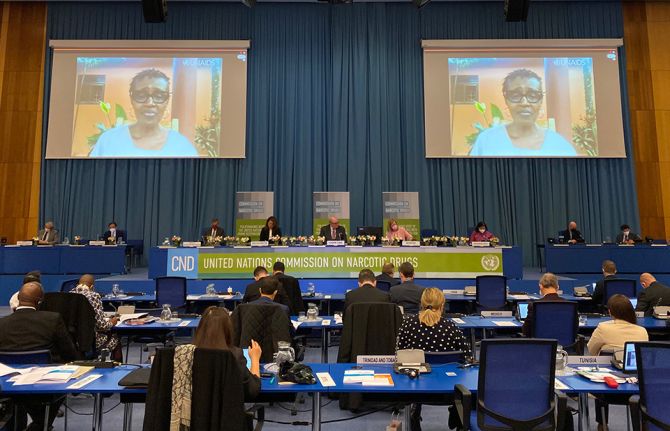
UNAIDS Executive Director's Statement at the 65th session of the Commission on Narcotic Drugs
14 March 2022
14 March 2022 14 March 2022Introduction
Thank you Ambassador Ghislain D'hoop and Belgium as the Chair of the 65th Commission on Narcotic Drugs, distinguished members of the Commission, Member States, Civil Society and networks of people who use drugs, UN agencies and all colleagues.
I thank very much my sister Ghada Waly for your strong leadership of United Nations Office on Drugs and Crime (UNODC) and your unequivocal support for the United Nations common position on drug policy.
I’d like to begin by expressing my solidarity for the people of Ukraine, who have suffered so much violence and injustice. For the last 15 years, Ukraine has had one of the largest and most successful HIV responses in Europe.
Now the entire HIV response is collapsing, and the lives of hundreds of thousands of Ukrainians living with HIV and the key groups are hanging by a thread.
I call on all partners to work to restore essential services for people living with and affected by HIV in Ukraine.
Last June, Member States adopted the 2021 Political Declaration on Ending AIDS. The resolution contains bold commitments, including new targets for 2025 to bring the response back on track to end AIDS by 2030.
Last year UNAIDS worked with all countries and partners to develop and adopt the Global AIDS Strategy. The golden thread of the strategy is on ending inequalities in an epidemic where 65% of all new infections are within particular groups – and these include people who use drugs and prison inmates.
We know that if we continue as we are, if we do not close the inequalities in the HIV response - the world could see 7.7 million AIDS deaths over the next ten years.
The global HIV response, which was already off track before COVID-19, is now under even greater strain as the COVID-19 crisis continues.
And people who use drugs and prisoners continue being among the most affected!
Globally, harm reduction services are not available at the level and scale that is required to end AIDS. And that’s true in the community and in prisons. In too many countries, they are not available at all.
Without continued access to HIV and harm reduction services, we will not end AIDS among people who use drugs and prison inmates, and we will therefore not end AIDS at ALL.
Key barriers to access to HIV and harm reduction services for people who use drugs and prisoners are criminalisation, stigma and discrimination.
We will not end inequalities and end AIDS without addressing these barriers and removing punitive laws and policies.
In particular, women who use drugs face legal, policy and social barriers to accessing life-saving HIV and harm reduction services; we need to invest in non-judgmental harm reduction services tailored to the needs of women.
We have an ongoing funding crisis for harm reduction in low-and middle-income countries. Government and donors have invested just 5% of the funds needed for an effective response. We need to scale up investment now, with a focus on funding for community-led responses. They are the most effective.
CONCLUSION
Members of the Commission, I believe in your leadership.
We must value the health and human rights of every person who uses drugs and the dignity of every prisoner.
We must implement our commitments to create enabling legal environments. We must promote and scale-up harm reduction as a safe and effective approach essential to end AIDS.
We must remove punitive and discriminatory laws and policies. This includes laws that criminalize drug use and possession as set out in our new Global AIDS Strategy.
Our work to end the inequalities that drive AIDS must be based on science, evidence and human rights.
I urge you Commissioners to uphold these principles to get us back on track to end AIDS by 2030.
I thank you all for your attention.
Winnie Byanyima
UNAIDS Executive Director
Vienna, 14 March 2022
"Without continued access to HIV & harm reduction services, we will not end AIDS among people who use drugs & prison inmates, and we will therefore not end AIDS at ALL."
— UNAIDS (@UNAIDS) March 14, 2022
Watch @Winnie_Byanyima's opening remarks at #CND65 @UNODC @CND_tweetshttps://t.co/c7McJbOv1A pic.twitter.com/LZWDdf6gWJ
65th session of the Commission on Narcotic Drugs
Our work


Feature Story
Social enterprises and financial saving supporting Madagascan sex workers through COVID-19
15 March 2022
15 March 2022 15 March 2022A pioneer of the HIV response in Madagascar, Réseau Association des Femmes Samaritaines (Réseau AFSA, the Association of Samaritan Women), an association of sex workers, was created following the discovery of the first case of HIV among sex workers, in 1987. For the past three decades, it has been focusing on the empowerment and social integration of sex workers, with the objective of preventing the transmission of HIV and other sexually transmitted infections.
But the COVID-19 pandemic brought with it a new tide of socioeconomic hardships that saw sex workers suffer the world over. Income losses and lockdown restrictions, along with ingrained societal and systemic stigma and discrimination, have posed unique challenges for sex workers to protect their health and safety. In line with these complex global challenges, marginalized communities from Madagascar, one of the world’s poorest countries, have been adversely affected during these uncertain times.
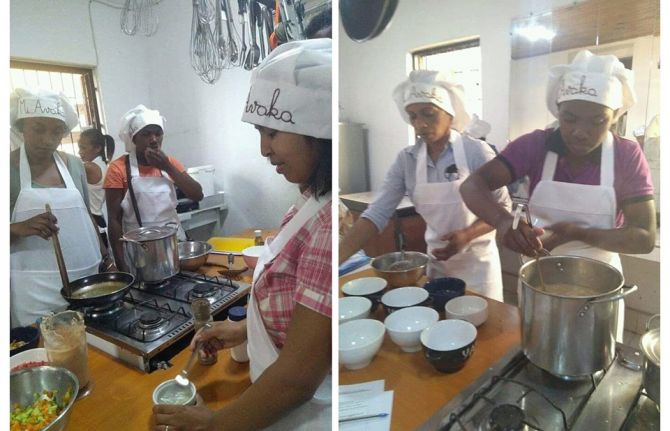
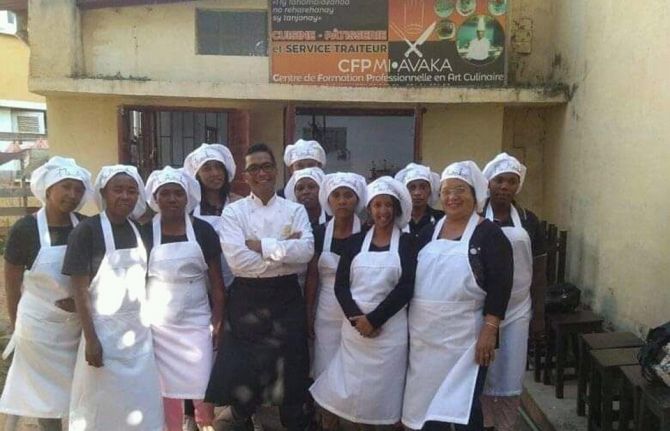
Through the UNAIDS Solidarity Fund, which was created to economically empower key populations through social entrepreneurship, Réseau AFSA developed small business activities in the Antananarivo region. Réseau AFSA is supporting 10 sex workers with businesses in the production of food and the sale of fruit, vegetables and clothing, who are also being taught simplified financial management skills to empower their individual businesses.
UNAIDS spoke to Rarivoharilala Esther, Technical Coordinator at Réseau AFSA, about how the Solidarity Fund project is building community resilience and the financial capacity of the community members.
What is the purpose of your social enterprise project?
Our main purpose is to enable sex workers to effectively manage and lead their own businesses, thereby earning a sustainable income.
The added value of the social entrepreneurship project is that each beneficiary is encouraged to save part of their revenue into a savings account to ensure the continuation of their enterprises. This was made possible through a collaboration with the Madagascan Ministry of Post and Telecommunications, which created the savings accounts.
What problem do you want to solve through your social enterprise?
Through the social entrepreneurship activities, we are supporting sex workers, including those who have children to take care of.
The income earned through the social enterprises helps them to support the care of their children. In addition, having savings can ensure the continuity of their enterprises and, potentially, sustained care for their children.
What is your biggest concern about the project and how will you overcome it?
Our main concern now is to encourage the habit of continuous saving to ensure the sustainability of community-led enterprises. But with the response and improving management strategies we have seen from the community, I am confident that they are keen to continue these enterprises. Réseau AFSA is also committed to monitoring their enterprises and supporting them in the coming year. We are focused on mapping funders and partners to ensure the continuity of this project.
What do you want to achieve for the community in the future?
We hope that the benefits of this project extend to more community members. We also hope that the project reaches other regions or provinces of Madagascar.
As part of addressing hardships as a result of the COVID-19 pandemic, the Plateforme Océan Indien (Indian Ocean Platform) entrusted Réseau AFSA with the management and distribution of food, masks, soap and gels for more than one hundred sex workers as well as other key populations at higher risk of HIV and COVID-19, including lesbian, gay, bisexual, transgender and intersex people, people living with HIV and people who inject drugs. The network also improved access to health-care services and vaccines during the pandemic.
The next step in this inspiring journey remains to ensure the sustainability of the social enterprises and to look for partners who can enhance them. Instilling the habit of saving to foster the growth of their social enterprises and strengthen community members’ ability to care for their children is a first step in this direction.
Our work
Region/country


Feature Story
UNAIDS staff member talks about the invasion of Ukraine
18 March 2022
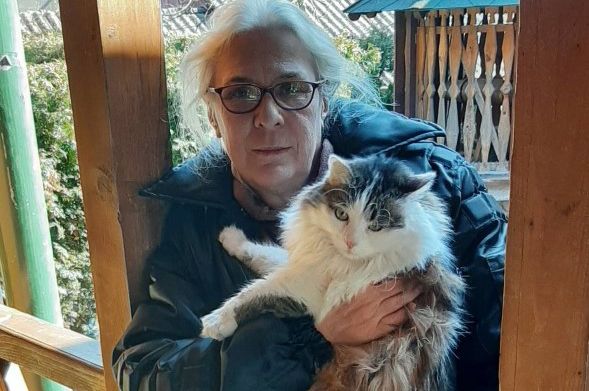
18 March 2022 18 March 2022On 24 February, Olena Sherstyuck, UNAIDS Global Outreach Officer in Ukraine, had no choice but to flee Kyiv. We spoke to her from her new location in western Ukraine.
On 24 February, what were your first thoughts?
Well, my day started very early that day. My son messaged me at 5 a.m. saying, “It looks like the war has begun.” When I went out on my balcony, I heard loud sounds that sounded like bombs.
Is that when you decided to leave Kyiv?
At first, I sat in my car with my cats and then, after checking in with the country director and the rest of the staff, I decided to go to my country house with a garden outside of the city, where I met up with my son and his wife.
Was that safe enough?
When I arrived, I realized this was worse than the city. My house is in fact near the Gostomel Airport, so is a target of missiles. We hardly slept at all. The sky was red and what I love about the place is that there are panoramic windows, but this was not pleasant at all. The windows kept rattling.
So, what did you do next?
On 25 February, at midnight, we decided to leave for western Ukraine. I had worked in the region for five years while working at the United Nations Children’s Fund and had been back since then, so the mountainous region seemed like a good option to me.
It meant driving solidly for 28 hours because we zig-zagged from place to place to avoid fighting and to find alternatives to closed roads or blown-up bridges. We had to change our route constantly. That was quite challenging.
I asked friends in the region to help me find a place to stay, so we are now settled in a wooden house with five rooms and a common kitchen.
Were you liaising with your team and your supervisor?
We are a small UNAIDS office in Ukraine and because of COVID-19 we had all sorts of ways of staying in touch, via WhatsApp, Viber, etc. Every morning we have our regular morning check-ins. That has helped a lot to stay connected. Colleagues from the region and the global hub have also reached out, which keeps me feeling like things are normal.
Normal, really?
I cannot sleep and I cannot eat but the work and meetings and coordinating efforts help keep me grounded—it keeps me going.
I am, however, addicted to the news. It’s impossible to stop watching and reading what is going on. I keep thinking about my apartment in the city and about my garden and when we can all go back to Kyiv.
I have no regrets about leaving. I am not a fighter nor am I in the army, so why get in the way of the people fighting. That first week I was in shock and I thought that it would end quickly, but we are now three weeks in.
I assume you took your passport and phone but what about food and clothing?
I took my key documents and passport and my work computer but only had gardening clothes from my house, so I have been wearing an all-purpose man’s jacket ever since. Let’s just say I am looking a bit disheveled, but I am not the only one! (Laughter.)
As for food, there are small markets and so far we have had no shortages. We are trying to make ourselves busy by joining local women making bread and there are other communal activities organized in the village.
(Interruption) Do you hear that, Charlotte? You heard the sound of the air raid alert? It’s stopped now.
Not having lived through something like this, what advice do you have for us?
First of all, having personal relationships with people really comes in handy in such times. Not only was I able to connect with my current colleagues, I also did so with my former work friends too.
And from the first day, I was able to reach out to the numerous networks of people living with HIV and other nongovernmental organizations I work with to see how they are doing. This meant lots of calls back and forth, but these are professional and personal relationships I have made over the years—I wanted to know if everyone was safe.
I must say we at UNAIDS were really good at sharing and passing on key information regarding what services are available, where and with whom, services such as antiretroviral therapy refills or opioid substitution therapy, and then updating the information. Before the war, I was a member of the national oversight committee and programmatic committee that oversees Global Fund to Fight AIDS, Tuberculosis and Malaria grants, so my colleagues and I are trying to follow up on programming aspects. It is not easy, and as for monitoring, many people are still hiding in basements, so that complicates things.
Secondly, it is really hard to plan strategically. In the beginning, everyone is making ad hoc decisions. Our partners, other international organizations, basically everyone was scrambling to help and unfortunately there was a lot of duplication. One day I would be asked to find mattresses, another day someone needed gas, now things feel more organized.
I learned that it takes time to understand how to act and react and it’s important to find one’s niche. Don’t try and spread out too much.
Good advice—basically, assign roles and/or tap into each organization’s strengths to work better as a whole?
Exactly. Another thing that has been helpful is to have the global hub’s input. I mainly work with local counterparts—for me, that is 90% of my time and because of all the running around and the forever-changing situation, it has been useful to have HQ give us the bigger picture.
How so?
It’s reassuring to know that countries, such as Poland and the Republic of Moldova, and people have committed to help Ukraine. I now know what our colleagues in the region are doing regarding antiretroviral therapy stocks and using international assistance. In Ukraine, we adopted more European standards, so, for example, our regulations on medicines and intellectual property are close to European standards and have little in common with former Soviet satellite countries. Our legislations contain chapters on key populations and prohibit discrimination and the Ukrainian Government financed basic HIV prevention services for hundreds of thousands of people from key populations. We also really pushed harm reduction services, since HIV in Ukraine affects mostly people who inject drugs, with thousands of people on opioid substitution therapy and pre-exposure prophylaxis. The rights of lesbian, gay, bisexual, transgender and intersex people have also been an integral component of the country’s human rights strategy. I can hardly imagine such developments in many eastern European countries.
Any last thoughts?
It’s really important to feel like I have human contact, so do reach out. And I must say I have been impressed by people uniting, Ukraine feels more united to me. That is my one optimistic note in all of this—there has been fantastic support among people. Glory to Ukraine!
Region/country
Related
 UNAIDS expands humanitarian support in Ukraine
16 September 2026
 Ukraine: Keeping people in care
23 February 2026
 Women, HIV, and war: a triple burden
12 September 2025
Feature Story
Eastern Cape becomes the first South Africa province to campaign on U = U
21 March 2022
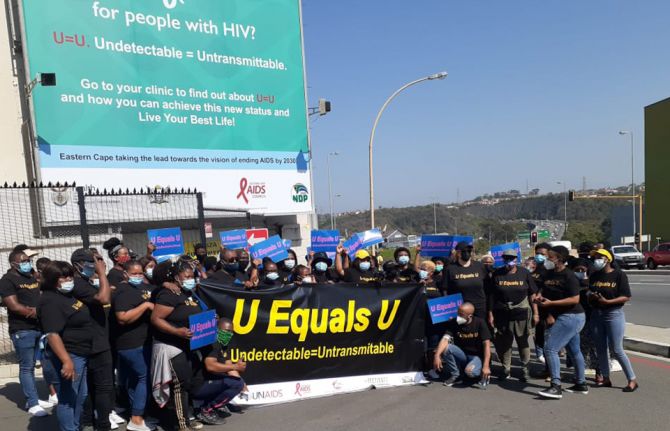
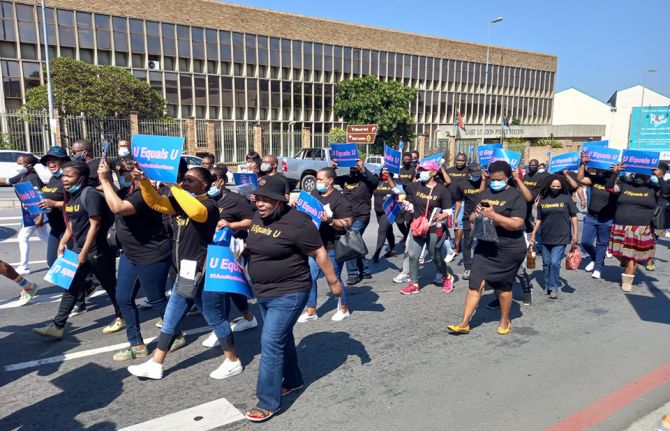
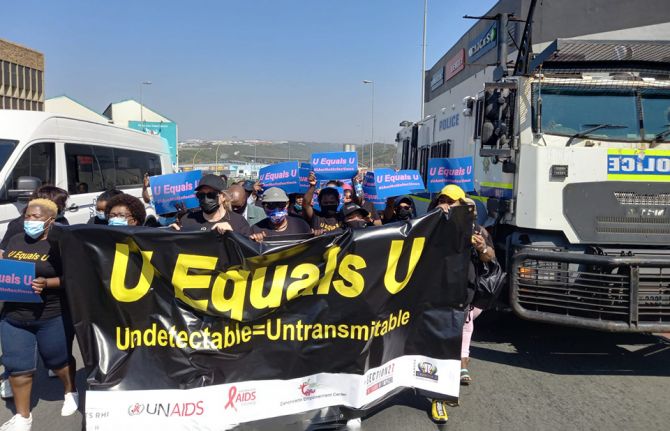
21 March 2022 21 March 2022Hundreds of people living with HIV are spreading the word in South Africa that effective treatment can prevent onward transmission of the virus. The Eastern Cape has become the first of nine provinces in South Africa to launch a public information campaign to raise awareness of U = U (undetectable = untransmittable) and to encourage people living with HIV to commence, maintain or resume treatment and achieve and maintain an undetectable viral load.
The innovative campaign celebrates the fact that people living with HIV who receive effective antiretroviral therapy and achieve and maintain an undetectable viral load cannot pass HIV to others via sexual activity.
The overall goal of the Eastern Cape U = U campaign is to reduce HIV transmission by promoting treatment adherence and decreasing loss to follow-up, increasing viral suppression and improving data management. The campaign is also promoting HIV prevention, including the use of condoms, and wider sexual and reproductive health.
Importantly, the campaign was designed to help the province to catch up and reach the HIV targets for 2020, under which 73% of all people living with HIV should have achieved viral suppression by 2020. Eastern Cape had reached 58% by 2020. The new global target for viral suppression is 86% by 2025.
The campaign was officially launched with pledges of support from Eastern Cape Premier Oscar Mabuyane, community members and other prominent stakeholders, including the Eastern Cape Provincial AIDS Council, the Department of Health, the South African National AIDS Council and UNAIDS.
Campaign leaders hope to inspire similar activities across the country and beyond. “We want this to be a bottom-up approach,” said nurse clinician and U = U pioneer Mandisa Dukashe, who first approached the Eastern Cape AIDS Council about the campaign. “We hope the success in Eastern Cape will inspire other provinces, at the national level and outside South Africa,” she said.
Four hundred people living with HIV have been trained as U = U peer educators across South Africa, including 70 in Eastern Cape, who formed the core of the new campaign. Campaigners are collaborating in a series of groups to ensure that awareness is raised, communities are mobilized and service providers are trained and ready.
The implications of U = U are that people living with HIV need access to treatment as soon as they are diagnosed and to maintain effective treatment to become virally suppressed. This means that people visiting health clinics and receiving a positive HIV test result need quality counselling, said Ms Dukashe, who is herself living with HIV. “There is not much time spent now with clients when initiating their treatment and they can get lost in the health system.”
The concept of U = U arose from trials in South Africa and elsewhere that found that early antiretroviral treatment of HIV infection can prevent onward transmission. However, people can only know whether they are virally suppressed by taking a viral load test. Viral load levels should be monitored regularly to be sure that the HIV medicines are working, and this requires the active involvement of health-care professionals.
The campaign organizers want health-care providers to communicate this information to all people living with HIV. They particularly hope to inform couples’ counselling, especially those in serodiscordant relationships, where one partner is living with HIV and the other is HIV-negative. U = U cannot only prevent transmission of HIV to the negative partner, but can also prevent onward transmission to their child if the couple conceives.
Importantly, knowledge of U = U can help to reduce stigma about HIV infection and motivate people to start treatment in order to become virally suppressed and continue follow-up care. Globally, 66% of people living HIV were virally suppressed in 2020, with South Africa estimated to have achieved 61%, with 58% in Eastern Cape. This compares to the global targets of 73% of all people living with HIV achieving viral suppression by 2020, and 86% by 2025.
Over the next six months, Eastern Cape province will spread the U = U message across diverse audiences, through social media, radio and print media. Peer educators are working as HIV ambassadors and sharing their stories to inspire others. The campaign will also use billboards, rallies and community dialogues to reach as many people as possible.
“There is clear evidence that U = U messaging works and helps to bring people back to treatment and reduces stigma and discrimination,” said UNAIDS Country Director for South Africa, Eva Kiwango. “Treatment interruption is a persistent issue in South Africa and this campaign helps remind everybody that having an undetectable viral load when you are taking HIV treatment also stops transmission of HIV to others. This is critical for populations at higher risk of infection, such as adolescent girls and young women and key populations, including sex workers and gay men and other men who have sex with men.”
Our work
Region/country

Feature Story
Zero Discrimination Day in Dakar is an opportunity to open the discussion on HIV with students from the BEM business school
16 March 2022
16 March 2022 16 March 2022The high level of stigma and discrimination against people living with HIV and various key populations continues to hamper the fight against aids. Around the world, people or groups deemed ‘different’ are targeted for many different and unjustified reasons. In the context of HIV, discrimination, which refers to the unfair or inequitable treatment of individuals based on their actual or perceived HIV status, hinders the identification of risk and the provision of care for those affected. HIV-related discrimination and stigma are rooted in pre-existing social inequalities and reinforce them, further excluding those affected by the virus and fuelling the epidemic.
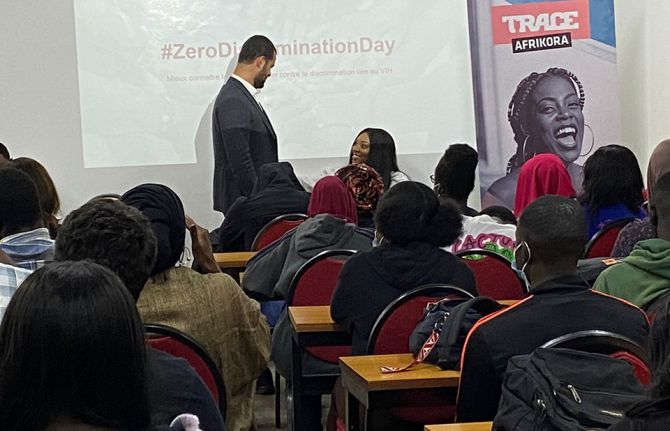
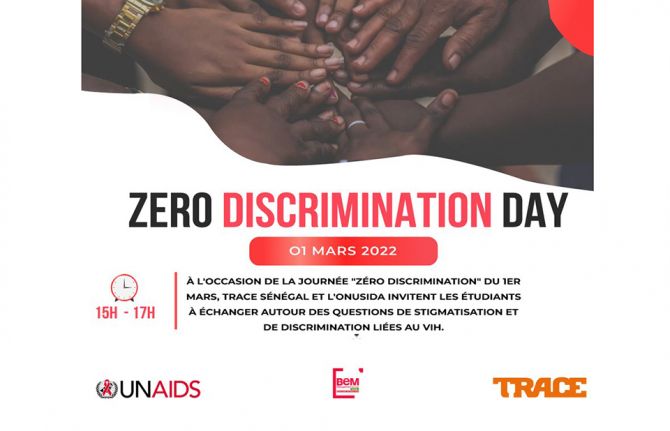
On the occasion of the Zero Discrimination Day on 1 March 2022, UNAIDS, together with the National Network of Associations of People Living with HIV (RNP+) of Senegal and Trace Senegal, invited students from BEM Management School in Dakar to join in for a conversation about HIV. This is an opportunity to deepen the understanding of HIV and its response, and to share situations of HIV-related stigma and discrimination. It is also intended to foster commitment to overcoming these barriers within a community of students who could potentially hold leadership positions in the future.
"We are very committed to raising awareness of HIV and other sexually transmitted infections to protect the health and well-being of our students," said Mr Diakhaté, Director of BEM Dakar. "We immediately seized the opportunity to host UNAIDS and its partners here, as we know that this interaction can play a key role in the development and engagement of our students as members of society and as professionals. We remain committed to the CEO's vision of seeing our students become activists and actors in a world of peace, tolerance and responsible progress.” The discussion took place in a friendly and open environment, which helped building trust between the speakers and the students and encouraged dialogue.
Knowledge of HIV among 15–24-year-olds in Senegal and West and Central Africa remains limited. Only 27.5% of young Senegalese can correctly identify the means of preventing sexual transmission of HIV and reject the main misconceptions about the spread of the virus. Educating students about HIV to combat discrimination is therefore a crucial intervention for HIV prevention.
To raise awareness among students, key actors in the fight against HIV-related discrimination and stigma were keen to share their experiences.
Soukeyna Ndiaye, an activist deeply committed to people living with HIV and President of RNP+, talks about her experience. She recounts how she was excluded by her family, who wanted to deprive her of "her responsibilities as a wife and mother" after learning of her HIV status. "People looked at me with pity, as if I was already dead.” Her children also suffered from discrimination at school, especially from teachers who organised school meetings to discuss their 'case'. Today, thanks to medication, Soukeyna is healthy and none of her seven children have HIV. In a world without discrimination, she would live a normal life.
Wassour Touré is the President of the Association Départementale And Juboo (ADAJ), an organisation of people living with HIV. In Wolof, And Juboo means “living together in peace and tolerance.” He shares a powerful testimony about the discriminatory treatment he witnessed in a hospital. "People living with HIV had to wait until all the other patients had been taken care of before they could be seen. They were put on a separate bench, waiting for a doctor to deal with them separately.” There was indignation and astonishment in the room, reflecting real empathy from the students, but also showing that discrimination and stigmatisation of people living with HIV is a subject that is not sufficiently raised. "I had no idea about this," explains one student, "it shocks me. We need to talk about it. Why have I never heard about this?”
The speakers certainly raised awareness and generated strong reactions among the students. "I was very moved by the story of all these people, and I would really like to help in the fight against all forms of discrimination," says one student.
UNAIDS is hoping to develop a long-term partnership with students. The creation of a focus group and a youth ambassador programme against discrimination and stigma would allow BEM’s and other students to be involved in advocacy activities alongside UNAIDS and its partners. "Students have a contagious energy and determination. This can be crucial in the fight against discrimination and stigma—an area where 'setting a good example' is particularly important," says Patrick Brenny, UNAIDS Regional Director for West and Central Africa. "Working with them can help reach an even greater audience in a personal and credible way. We are delighted with the students' enthusiasm for our project.”
The desire of BEM students to build a more inclusive environment, free of discrimination in all its forms, is particularly encouraging in a country where human rights issues are sometimes contentious, and where there are regular protests in favour of stricter legislation against homosexuality. Young people are the driving force behind Senegal's economic and social development, and it is essential to rely on them to prepare the country's future. Fostering dialogue about HIV and providing students with the necessary knowledge about the virus, prevention, testing, and treatment methods are key elements of this pathway, and a crucial step in empowering young people to fight HIV-related discrimination and stigma.
Region/country
Related
Feature Story
Keeping harm reduction available in Ukraine
09 March 2022
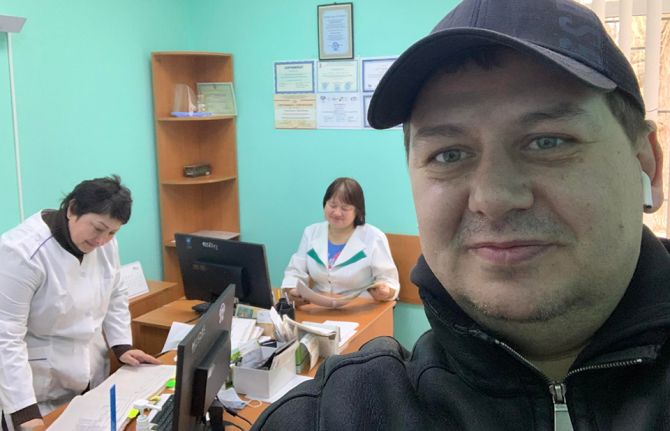
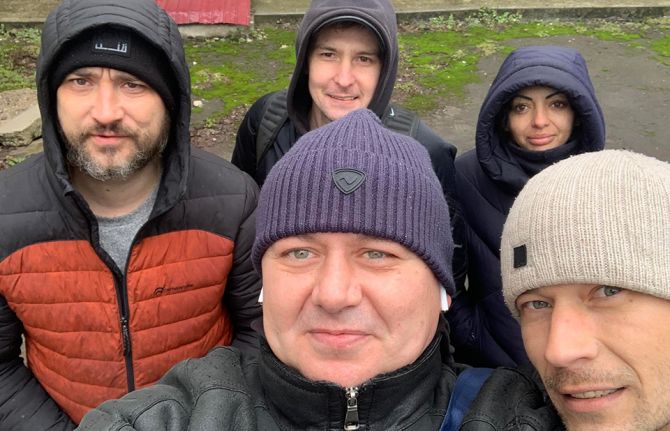
09 March 2022 09 March 2022Ten days after the start of the Russian invasion of Ukraine, UNAIDS spoke to Oleksii Kvytkovskyi, the head of the Volna Donbas Resource Center of the All-Ukrainian Association of People with Drug Addiction, a nongovernmental organization working with people who inject drugs in Ukraine.
How are you feeling Oleksii?
I am tired of fear and fleeing. I have decided I will carry on doing what I have been doing for the past 14 years—defending the rights of key communities, notably people who inject drugs and people in need.
This is not your first encounter with war?
Eight years ago, I was there when the Russian Federation attacked the eastern part of Ukraine—as you know, they are now self-proclaimed republics. I have three children and two were born during that conflict, one in 2014 and the other in 2019.
I still work in four cities in the Luhansk oblast (region), which are controlled by the Ukrainian Government, located almost on the front line: Severodonetsk, Lysychansk, Rubizhne and Kreminna.
What are you currently doing in your job?
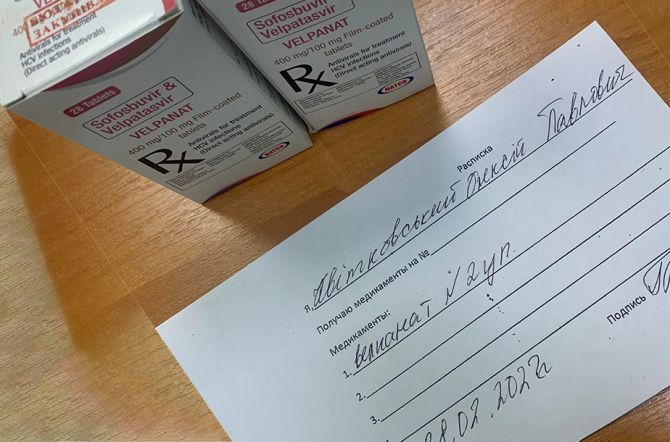
We at the nongovernmental organization receive and then deliver opioid substitution therapy (OST) and food and water to those who need it. We only have enough OST until the month’s end. That’s about 28 days, and then I don’t know what we will do.
Access to antiretroviral therapy is also problematic in some cities. Basically, we look at who lacks what and if there are risks of interruption.
Have a lot of people left your area?
Very few people can leave because they don’t have enough funds to do so. Until now they have been evacuating women, small children and the elderly as a priority.
Our nongovernmental organization turned to international organizations and we received assistance from the Eurasian Harm Reduction Network, the Eurasian Network of People who Use Drugs and Volna, and that has really helped to provide urgent assistance.
What about you?
I begged my wife to take the children and leave for Lviv. I even found a place for them to live but she said that she wouldn't leave me, and so she stayed.
But I am afraid. I am anxious about my children and my beloved wife.
What keeps you going?
I go to work every day. People ask me if I fear for my life. My answer to this is, “When you solve someone’s problems, you unknowingly forget about fear and war. Then solving the problem of a person from the community becomes the key objective for you, so you set out to help in any way.”
Region/country
Related
Feature Story
Quick thinking and planning instrumental for HIV network in Ukraine
08 March 2022
08 March 2022 08 March 2022When shelling awoke Valeriia Rachynska in Kyiv on 24 February, the first day of the conflict, she rolled over and tried to get more sleep. As a native of Luhansk, she had already lived through the 2014 conflict.
“I think my brain analysed the noise and realized I was out of harm’s way,” she said by videoconference from a small village in western Ukraine. “But when I saw my kids crying and frightened, I knew I had to relocate yet again.”
The following night she and her two sons stayed in a bomb shelter and then left their home in the capital city with her brother and his family.
As the Director of Human Rights, Gender and Community Development of 100% Life, the largest network of people living with HIV in Ukraine, she stressed that in order to continue helping people, she needed to relocate to a safer place.
“It’s like when you are in an airplane and there is a lack of oxygen,” Ms Rachynska explained. “You put the mask on yourself first then place it on others afterwards.”
The key for her and her organization was being able to have Internet access, a steady mobile phone service, open banks and a relative sense of safety. These days she felt like she was operating a switchboard.
“I respond to all calls and try to redirect them to the right people,” she said. “It has been non-stop and because there are so many attacks and so much unpredictability, I can only advance one step at a time.”
She credits 100% Life’s head, Dmytro Sherembey, for having done advance planning ahead.
“A lot of people told us, “You are crazy to panic,” but at 100% Life we moved our computer servers, documents and anything deemed sensitive to western Ukraine and even Poland and Germany.”
Some of her colleagues stayed in Kyiv saying they would tough it out, but 10 days later many of them left too.
“We are now focusing on evacuations and relocation for people living with HIV and their families as well as marginalized groups by hiring buses for them,” Ms Rachynska said, wrapped up in a blue sweatshirt with a hood. “For those not living in Kyiv, we are sending money via bank transfers for them to buy food and other essentials.”
The country has enough buffer stocks of HIV medications to last until April, but with the help of international partners and UNAIDS’ coordination, 100% Life has urgently planned to have additional life-saving medicines delivered to Poland. The Polish Government has secured a warehouse and agreed to help with logistics, getting antiretroviral therapy to people living with HIV in Ukraine.
Ukraine has the second largest AIDS epidemic in the region. It’s estimated that 250 000 people live with HIV in Ukraine, with more than half on antiretroviral therapy, medication that needs to be taken daily for people living with HIV to stay healthy.
“Our biggest challenge right now is to save lives, provide security and have people stay on treatment,” she said. The 100% Life network has already redesigned key aspects of its programme to get funding from the Global Fund to Fight AIDS, Tuberculosis and Malaria to meet the immediate needs.
Having joined 100% Life in 2011, Ms Rachynska has seen the strides that Ukraine has made to reverse the AIDS epidemic. She is particularly proud of the positive impact that harm reduction programmes, including opioid substitution therapy and needle–syringe exchanges, have had in Ukraine to reduce new HIV infections. HIV in the country continues to disproportionately affect people who inject drugs and the ongoing military offensive may hamper substitution therapy options. She said that 100% Life was actively working to avoid that.
Her other worry involved protecting sex workers, lesbian, gay, bisexual, transgender and intersex people and people who inject drugs. Based on the violence and stigma those groups experienced during the conflict in eastern Ukraine, she fears that key populations will be the targets of violence.
“Our next task will be to start and monitor human rights violations,” she said. “This is very important to me.”
Region/country
Related
UNAIDS expands humanitarian support in Ukraine
16 September 2026
Ukraine: Keeping people in care
23 February 2026
Feature Story
Engaging the EU in the Global Partnership on Zero Discrimination Day
03 March 2022
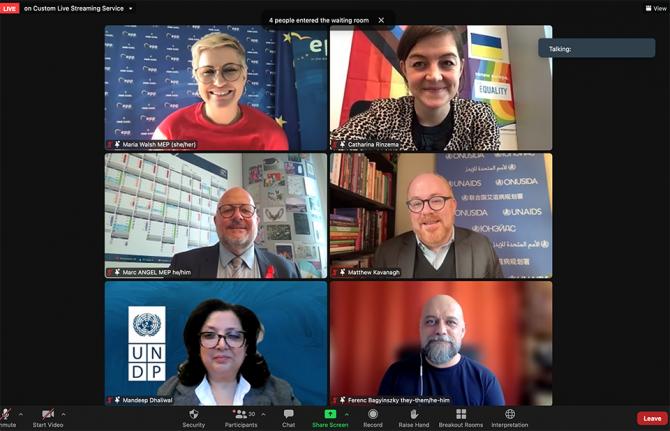
03 March 2022 03 March 2022On 1 March, Marc Angel, a Member of the European Parliament and former champion for the 90–90–90 HIV targets, hosted a virtual Zero Discrimination Day parliamentary event. The event, co-organized by the Global Partnership for Action to Eliminate all Forms of HIV-Related Stigma and Discrimination (Global Partnership), brought together high-level speakers who are passionate about ending discrimination in the European Union (EU) and beyond.
The speakers addressed HIV-related rights violations, societal barriers, including laws and policies, and the underlying stigma and discrimination that fuels the AIDS pandemic. Reflecting on their own work and experiences, they discussed how the EU and its member states could advance the work of the Global Partnership in ending discriminatory laws, policies and practices within the EU region and partner countries.
“Stigma and discrimination hurt the fight against HIV/AIDS, as they constitute a major obstacle to seeking testing and accessing or staying on treatment,” said Helena Dalli, the EU Commissioner for Equality. “We can, and must, combat HIV stigma and discrimination, speak up, collect evidence and share facts and knowledge.”
Evidence gathered by community networks and civil society organizations reveals significant levels of stigma and discrimination and other human rights violations that impact people living with and affected by HIV in the EU, which has been exacerbated by the COVID-19 pandemic.
“When it comes to the EU, there are still growing inequalities, which are major barriers in the HIV response,” said Ferenc Bagyinszky, the Executive Coordinator of AIDS Action Europe. “The global AIDS strategy gives an excellent opportunity for the EU and its member states, together with the communities, to work towards ending these inequalities in the EU, especially in relation to the 10–10–10 targets.”
“The EU can make a critical contribution to address HIV-related stigma and discrimination by establishing linkages with its various human rights and gender equality projects,” said Mandeep Dhaliwal, Director of the HIV, Health and Development Group of the United Nations Development Programme.
“By leveraging its expertise, resources and political leadership to support communities and partner countries in ending HIV-related stigma and discrimination wherever it exists, the EU can make a huge contribution to getting the HIV response back on track,” said Matthew Kavanagh, UNAIDS Deputy Executive Director, a.i., Policy, Advocacy and Knowledge.
To date, 29 countries, none of which are EU member states, have joined the Global Partnership.
Luxembourg’s Minister for Development and Humanitarian Affairs, Franz Fayot, announced Luxembourg’s support for the Global Partnership, the first EU member state to do so. “We support the work of the Global Partnership and can only applaud its role in assisting countries in achieving the 10–10–10 targets by removing laws that harm and creating laws that empower. The Global Partnership’s strategic approach and inclusive platform to manage the diverse human rights violations faced by people living with HIV and marginalized populations will be key to addressing counterproductive discriminatory practices,” Mr Fayot said.
“The Global Partnership is a unique opportunity for the EU and its member states to end intersecting inequalities and injustices for a pandemic-resilient Europe and the world,” said Mr Angel.
Catharina Rinzema, a Member of the European Parliament, spoke about the importance of talking about HIV openly, to correct misconceptions and help the public to educate themselves. She also alluded to the stigma and discrimination that lesbian, gay, bisexual, transgender and intersex people face in the EU. “We should have a blood donation policy where it doesn’t matter with whom you have sex, but whether the sex was safe,” she said.
Maria Walsh, a Member of the European Parliament, referred to the effects that stigma and discrimination has on the mental health and well-being of people living with HIV and called for an inclusive and comprehensive EU mental health strategy. “In order to break the stigma and empower HIV-positive people, it is essential that we speak openly and honestly about their lived experience,” she said.
Mr Angel concluded by encouraging EU member states to join the Global Partnership and highlighted the need for global and concerted action to meaningfully advance towards ending HIV-related stigma, discrimination, inequalities and AIDS by 2030.
Feature Story
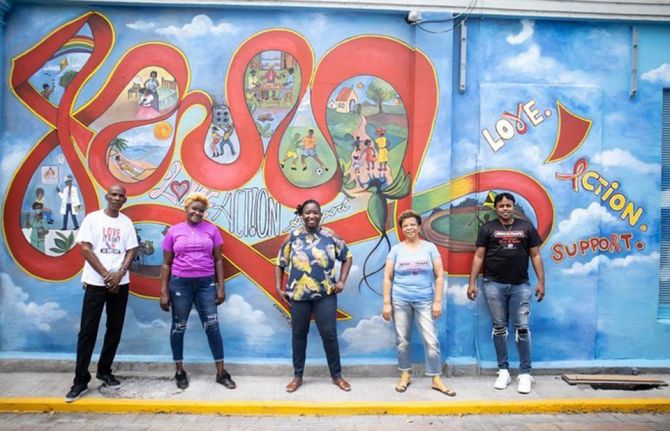
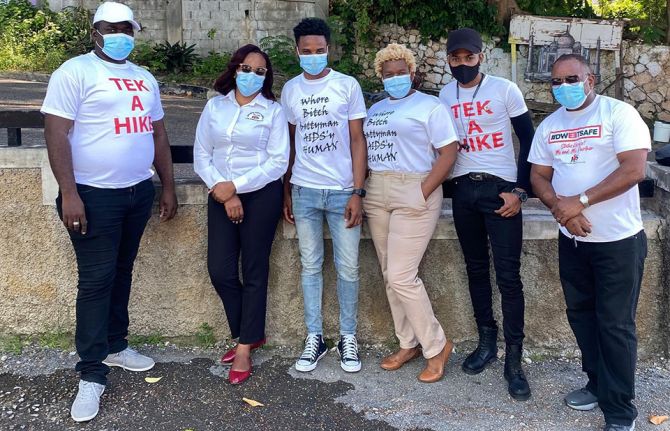
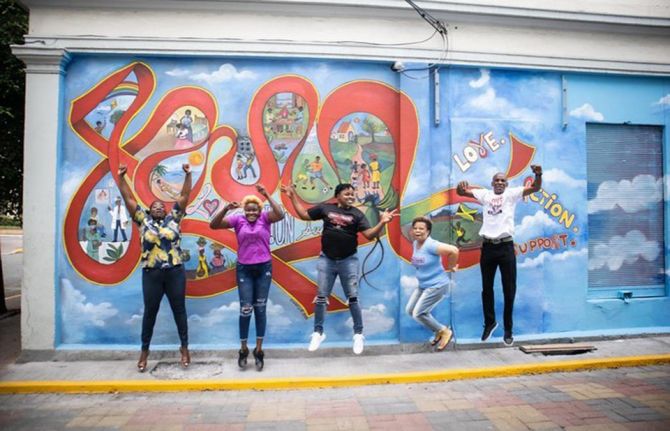
The case for anti-discrimination legislation in Jamaica
01 March 2022
01 March 2022 01 March 2022Michael James (not his real name) was shell-shocked when he was fired. He scanned the dismissal letter. It cited his performance and tardiness as reasons for the job loss. But years of performance appraisals told a different story. He’d consistently received positive evaluations and there were no memos about late-coming or substandard work on his file. The only reason he could discern was that colleagues recently learned that he was living with HIV.
HIV-related prejudice remains rife in Jamaica. One third of people living with HIV responding to the 2020 Jamaica People Living with HIV Stigma Index reported experiencing stigma and discrimination. Verbal harassment, gossip and discriminatory remarks were the most common violations. But one in 10 said they were refused employment or lost a source of income because of their HIV status. No legislation prohibits a Jamaican employer from discriminating on the basis of HIV status.
This has marked implications for the HIV response. Twenty-one per cent of respondents were worried about mistreatment or confidentiality breaches by health-care workers. Thirty-eight per cent delayed testing and 29% delayed starting treatment because of concerns about how they would be treated.
Shelly John (not her real name) recounts hopping from one treatment site to another before landing at Jamaica AIDS Support for Life. At other facilities she overheard nurses gossiping about patients’ medical histories.
“I felt uncomfortable. If I am hearing about other clients, other clients can come inside and hear about me as well,” she reasoned.
“The fear of stigma drives some persons underground and away from much needed health services. Owing to stigma and discrimination, some persons delay accessing needed services and, as a result, some are diagnosed with HIV at an advanced stage,” acknowledged State Minister in the Health and Wellness Ministry and Chair of the Jamaica Partnership to Eliminate HIV-Related Stigma and Discrimination, Juliet Cuthbert Flynn.
Jamaica’s testing and treatment outcomes bear this out. While an estimated 86% of people living with HIV were aware of their status in 2020, just 40% of people living with HIV were on HIV treatment.
While the Jamaica Charter of Fundamental Rights and Freedom guarantees protection against discrimination, it is limited in scope. The protected grounds are race, sex, place of origin, social class, colour, religion and political opinions. There are piecemeal anti-discrimination provisions in different pieces of legislation, such as the 2014 Disabilities Act and the 1975 Employment Act. But neither the constitution nor ordinary legislation make discrimination on other grounds unlawful.
Since 2020, UNAIDS and the United Nations Development Programme have been providing technical and financial support to local nongovernmental organizations, including Jamaica AIDS Support for Life, to support the rollout of a national survey on the public’s perspectives and experiences with stigma and discrimination in Jamaica and on the need to have more adequate protections in the law. The results of the survey will be used to advocate for legislation to adequately deal with discrimination experienced by vulnerable and marginalized groups.
The proposed legislation should provide protection across areas including discrimination based on health status, pregnancy or childbirth, hiring or termination decisions and the denial of services to minority groups. It should also address discriminatory conduct based on assumptions about a person’s competence, capabilities, age, self-expression, income level, the neighbourhood in which they live or their educational background.
“Comprehensive anti-discrimination legislation will strengthen the legal framework for the protection of human rights towards achieving equality for all,” Manoela Manova, the UNAIDS Country Director for Jamaica, explained.
In real terms, this means that duty-bearers will have to consider how their policies, programmes and services will affect people with the protected characteristics. Critically, the focus on markers related to poverty would mean that for the first time public bodies will have a duty to consider socioeconomic disadvantage when making strategic decisions about how to exercise their functions and when proposing to use public funds.
“Our overarching finding has been that regardless of health status, sex, age or sexual orientation, the factor that fuels discrimination and makes people more vulnerable is poverty. Moving forward, it is critical that we don’t treat HIV as a stand-alone concern but address the full picture of what makes people marginalized and vulnerable in Jamaica,” said UNAIDS Community Support Adviser for Jamaica, Ruben Pages Ramos.
Region/country
Related
Feature Story
Investments in HIV, health and pandemics are vital for economic recovery in Africa
15 February 2022
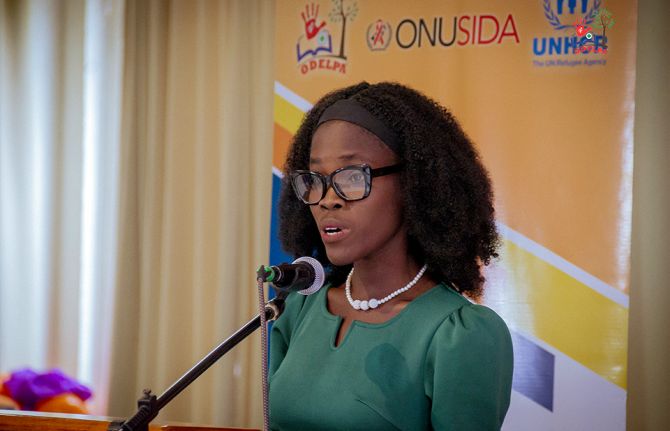
15 February 2022 15 February 2022Global health and financing leaders and experts have come together at a high-level virtual event to tackle one of the most pressing issues facing the world today—health security. The event, “Investing in health is investing in economic recovery: Financing for HIV, stronger public health systems, and pandemic preparedness and response” was held ahead of the sixth Africa - European Union (EU) Summit which is taking place on 17 and 18 February.
While hosting 16% of the global population, and facing 26% of the global disease burden, Africa accounts for only 2% of global health spending. Despite the 2001 Abuja Commitment of governments to allocate 15% of their budget to health, the average is still only 7%.
Speakers discussed how Africa has been left behind in the COVID-19 response, with less than 12% of people in Africa fully vaccinated against COVID-19. Insufficient access to vaccines, medicines and technologies, and weak health systems have impeded the realization of the right to health of all Africans during the pandemic. In addition, fiscal constraints and unsustainable debt burdens, are hindering the path to recovery.
Cosponsored by the Government of France, the event was convened by UNAIDS, the African Union, the Global Fund to Fight AIDS, Tuberculosis and Malaria, the World Bank, the United Nations Development Programme, and the World Health Organization. Moderated by Dr. Donald Kaberuka, High Representative for Financing, African Union (AU), the session strived to find ways of broadening the revenue base available to African countries to increase health financing and to boost global solidarity.
Participants underlined the overarching need for investment in strengthened public health systems for universal healthcare, including community-led services, and avoiding overburdening the most vulnerable with out-of-pocket expenses to overcome the COVID-19 crisis. Further, tackling the current pandemics of HIV and COVID-19, and other infectious diseases such as malaria and TB, must happen simultaneously to prevent future pandemics and protect global health security.
"If we continue as we are - if we do not take the steps necessary to speed access and close inequalities in the HIV response - the world could face 7.7 million AIDS deaths over the next ten years - 4.7 million of those deaths would be in Africa"
Leaders stressed how essential HIV, health systems and pandemics preparedness investments are to save human lives and for economic recovery, and how there will be no steep recovery for Africa without health security for all.
“Less than half of health clinics in Africa have water and electricity. We have to do more, we know where the funding gap is: investments in health, human resources and infrastructure"
Tackling existing pandemics, such as COVID and HIV, needs to happen at the same time as countries strengthen health systems and build up pandemic preparedness.
“Diseases are not a choice, but pandemics are a choice that we could choose to avoid. Ultimately the key to sustainably protecting everybody from the deadliest infectious diseases is through domestic financing"
Participants praised the increased African leadership and sovereignty and called for a renewed Africa-EU partnership that would support African institutions and rely on its leadership, in collaboration with multilateral institutions. Specifically, they called on the EU to further dedicate financing mechanisms for HIV, health and pandemic preparedness, including sustained and increased overseas development assistance (ODA).
“Investing in health is a political decision. Africa's youth can be its greatest asset. Quality healthcare is the foundation upon which Africa's youth will flourish. We can no longer treat healthcare spending as an afterthought”
The panel members also recognized the importance of domestic financing for long-term sustainability. However, the current financial constraints are overwhelming for many countries in the region. Decisive action to eradicate tax evasion and tax dodging will be critical: every year between 25 and 50 billion that could be used for the health and education of Africans are lost. Increasing domestic revenues requires brave international and national tax reforms. Possible ways forward discussed for broadening the revenue base included combating tax evasion, improving the conditions under which African countries obtain financing, debt relief and cancellation policies, and Special Drawing Rights reallocation.
“The pathway to achieving global health security for humanity is to strengthen African support to achieve health sovereignty”
Speakers highlighted that a growing share of revenue allocation, as well as better investment and the use of health and pandemics´ resources are urgently needed, leveraging the AIDS infrastructure and lessons learned from the rights-based AIDS response to prevent future pandemics.
“The COVID-19 pandemic has created a tragic opportunity to revise thinking fundamentally, strengthen health systems effectively, and reshape resource mobilization in health, including domestic investment"
The leaders called for robust international financing, through special drawing rights reallocation, debt relief, new concessional sources and additional ODA. They identified The Global Fund replenishment in 2022 as a key moment to ensure overarching support for the fight against AIDS, malaria and TB, to get back on track.