Documents
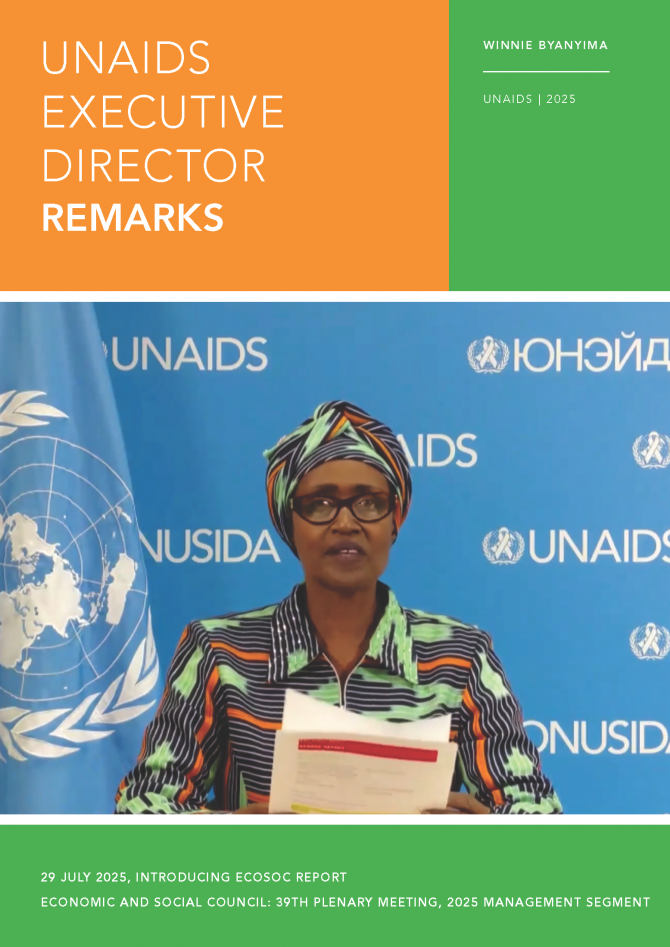
Introducing ECOSOC report
29 July 2025
Introducing ECOSOC report: UNAIDS Executive Director remarks — Economic and Social Council: 39th Plenary Meeting, 2025 Management Segment, 29 July 2025

Press Release
UNAIDS hails historic court ruling in St Lucia decriminalizing consensual same-sex relations
30 July 2025 30 July 2025A milestone for human rights which accelerates access to HIV services, free from discrimination in the Caribbean which will advance efforts to end AIDS by 2030
Kingston/Geneva 30 July 2025—UNAIDS celebrates the groundbreaking decision by the High Court of Justice in Saint Lucia declaring sections 132 and 133 of the Criminal Code unconstitutional for criminalizing consensual adult sexual acts in private. This triumph upholds LGBTQ+ people’s rights to protection of the law, privacy, non-discrimination, freedom of expression, and equal protection under the law, as guaranteed by the Constitution.
"This landmark decision underscores the transformative power of the law in protecting human rights and public health," said Luisa Cabal, UNAIDS Regional Director for Latin America and the Caribbean. "In a region where punitive laws hindered progress towards ending AIDS, Saint Lucia's High Court has set a powerful precedent. UNAIDS stands ready to support all governments and communities in ensuring everyone can live free from discrimination and access the services they need to thrive healthily and safely," said Ms Cabal.
The case is one of the five country strategic litigation initiatives of the Eastern Caribbean Alliance for Diversity and Equality (ECADE) which has been working closely with LGBTQ+ organizations, individuals and allies to protect and promote the community’s basic human rights. The case removes out-dated, colonial-era barriers that fuel stigma, discrimination and violence. The Court modified the laws relating to exclude private consensual acts between adults (section 132) and those aged 16+ (section 133), paving the way for dignity and equality to be respected.
Saint Lucia now joins Belize (2016), Antigua and Barbuda (2022), St. Kitts and Nevis (2022), Barbados (2022), and Dominica (2024), which decriminalised same-sex intimacy in recent years. This chronology reflects a surging momentum against outdated laws, fostering more inclusive, rights-based societies across the region.
"The ruling in Saint Lucia gives us hope, demonstrating that justice and equality can prevail and that our courts are advancing public health initiatives by protecting human rights," said Richard Amenyah, UNAIDS Country Director for the Caribbean. "By removing these outdated criminal provisions, we open doors for LGBTQ+ individuals to seek HIV prevention and care without fear, ultimately strengthening our regional fight against HIV and saving lives."
UNAIDS champions this move as a key stride toward zero discrimination and ending AIDS by 2030. By erasing these discriminatory provisions, the ruling removes an obstacle to HIV prevention, testing, and treatment, vital in a region where gay, bisexual and other men who have sex with men and transgender women have disproportionately high rates of HIV and often are kept away from health services for fear of stigma, discrimination and criminalization.
UNAIDS urges remaining countries where these discriminatory laws remain on the books to repeal such laws and prioritize rights-based HIV strategies for healthier futures and more equitable societies.
UNAIDS
The Joint United Nations Programme on HIV/AIDS (UNAIDS) leads and inspires the world to achieve its shared vision of zero new HIV infections, zero discrimination and zero AIDS-related deaths. UNAIDS unites the efforts of 11 UN organizations—UNHCR, UNICEF, WFP, UNDP, UNFPA, UNODC, UN Women, ILO, UNESCO, WHO and the World Bank—and works closely with global and national partners towards ending the AIDS epidemic by 2030 as part of the Sustainable Development Goals. Learn more at unaids.org and connect with us on Facebook, Twitter, Instagram and YouTube.
Contact
UNAIDS LACDaniel de Castro
tel. +507 6998 3175
decastrod@unaids.org
UNAIDS Caribbean
Jaevion Nelson
tel. +1 876 459 3211
nelsonj@unaids.org
Our work
Region/country
Documents
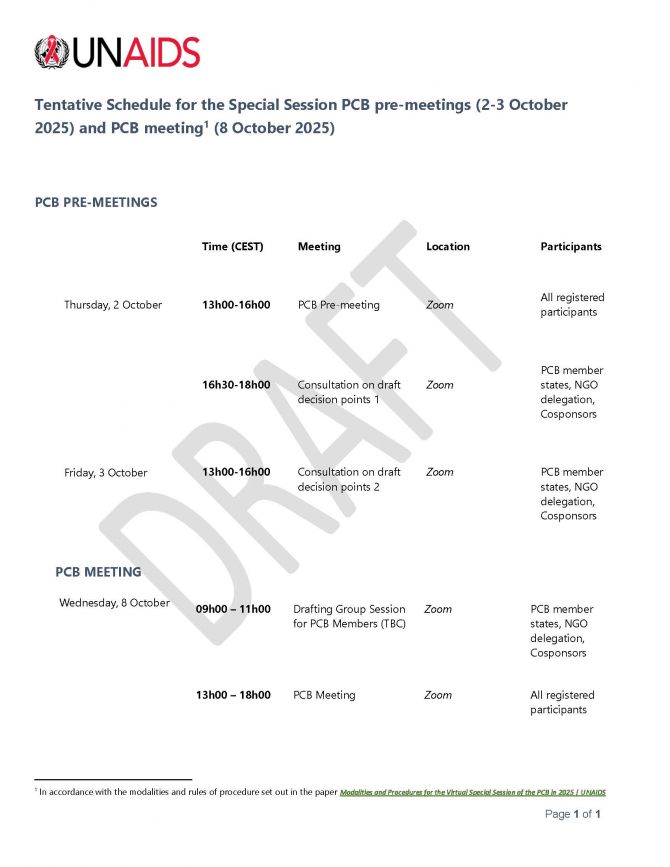
Tentative meeting schedule
08 October 2025
Feature Story
Using sports to combat gender stereotypes and learn about HIV
30 July 2025
30 July 2025 30 July 2025This story first appeared in the UNAIDS Global AIDS Update 2025 report.
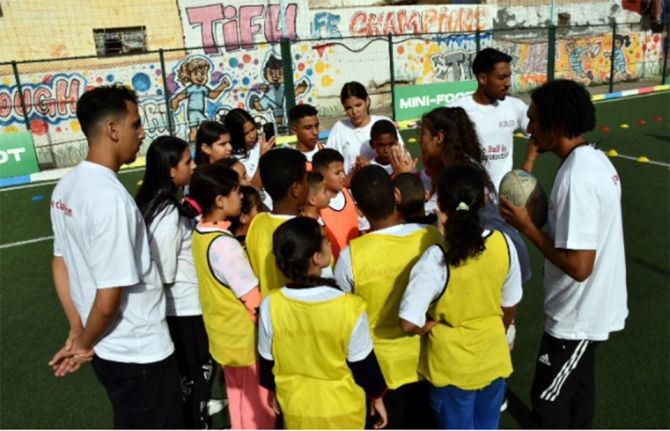
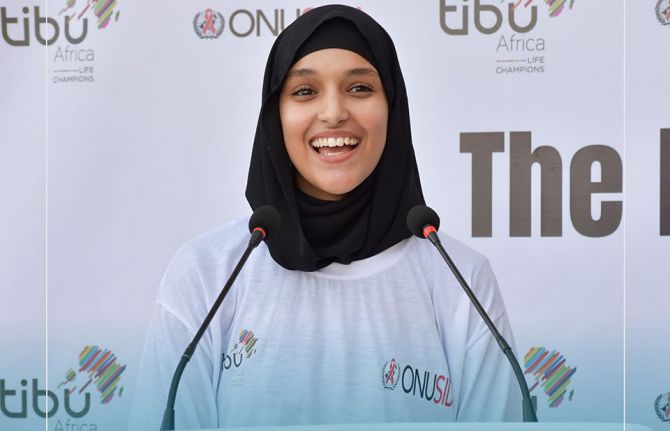
Marouane Abouzid grew up in Casablanca, Morocco, where many boys act like bullies and sex is taboo. That changed when he joined the project Sport Is Your Protection, where he gained knowledge about gender equality and health. “The training on HIV awareness led by UNAIDS and Tibu Africa was a transformative experience in the sense that I saw how sports can be an effective way to get a message out,” the 25-year-old says. “It also gave me essential skills like communicating clearly and active listening.”
He enjoyed the project so much that he trained to lead sports activities and participate in other sessions. “I talk openly about what I have learned. I encourage my friends to get tested for HIV and encourage people to respect others,” he says, excited about becoming a role model for his peers.
Marouane describes the activities as a safe space to discuss all sorts of issues that young people face in Morocco, such as poverty, unemployment and a patriarchal system.
Marouane is not alone. Assia Ezzahraoui, a participant in the Tibu Africa sports vocational school programme, joined the weeklong sexual education awareness meeting. “The informative sessions gave me new insights into symptoms, prevention methods and available treatments,” she says. Assia feels more secure about how to protect herself and her friends.
Tibu Africa was founded in 2011 and aims to bring the programme across different cities in Morocco. UNAIDS joined with Tibu Africa in 2024. “This first partnership with UNAIDS Morocco mobilized young people around issues to transcend barriers and create opportunities for dialogue and awareness,” says Mohamed Amine Zariat, President of Tibu Africa. “We hope this first step will serve as a springboard for future, even more ambitious initiatives.”
An estimated 24 000 [21 000–26 000] people are living with HIV in Morocco, and nearly 40% of these are women. Although the prevalence of HIV is relatively low in Morocco, vulnerable populations such as sex workers, gay men and other men who have sex with men and people who inject drugs are particularly at risk. Moroccan youth represent more than 30% of the total population, but a quarter of people aged 15–24 years have no job and lack education and training—young women are particularly hard hit.
Houssine El Rhilani, UNAIDS Country Director in Morocco, is aware of this. He believes the collaboration with Tibu Africa combining sport, education and awareness-raising can empower young people. “We were able to reach young people not only with information, but also through experience, providing them with concrete tools to become prevention ambassadors in their own communities,” he says. “We cannot end AIDS without prioritizing future generations.”
Global AIDS update 2025
Region/country
Related
Documents
Information for participants
08 October 2025

Documents
Modalities and Procedures for the Virtual Special Session of the PCB in 2025
08 October 2025

Documents
Annotated Agenda
08 October 2025
Documents
Timewise Agenda
08 October 2025
Feature Story
Reducing stigma in health-care settings and reforming the law: a double hurdle in western and central Africa
28 July 2025
28 July 2025 28 July 2025This story first appeared in the UNAIDS Global AIDS Update 2025 report.
In seven countries in western and central Africa surveyed in 2023, more than 12% of people living with HIV aged 18–24 years reported avoiding health centres for care because of their HIV status.
Whether it is a refusal of care, humiliating comments or disclosure of their status, many people described feeling alienated. Last year, with funds from Expertise France and the help of UNAIDS and partners, a pilot was launched to raise awareness of stigma in Cameroon, Côte d’Ivoire, Senegal and Togo.
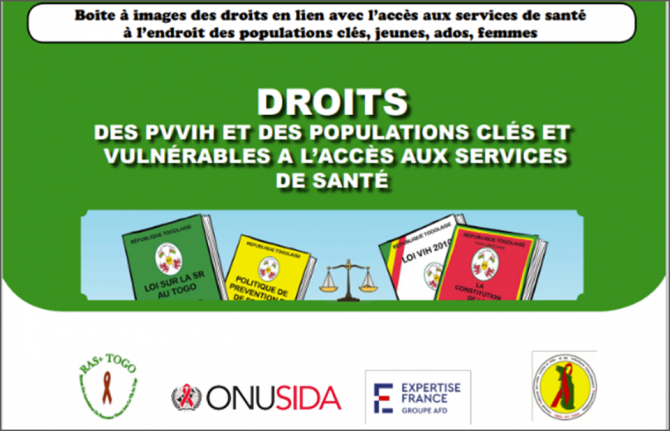
Training in the Looking In, Looking Out (LILO)* approach raised awareness among 150 health professionals in Senegal and 97 in Togo about sexual diversity, gender-based violence and respect for human rights. In Kara, northern Togo, a visual digital tool (named “image boxes”) has been designed with communities to raise awareness of health and HIV.
When individuals and communities know their rights, they are empowered to take control of their own health and to hold service providers accountable. This is one of the key messages of this tool used by the Network of People Living with HIV (RAS+ Togo). A total of 300 young people attended educational health sessions in the Central African Republic. In Benin and the Central African Republic, the project focused on legal reform, with the involvement of parliamentarians, including members of the women’s caucus in both countries. Legal texts, a draft decree and a decree have been drafted in the Central African Republic. In Benin, the work also focused on advocacy for the adoption of the new HIV bill.
“We must make the link between HIV and gender-based violence. The law must protect women in all spheres, especially including health,” said Huguette Bokpe Gnacadja, President of the National Institute for Women in Benin.
The year-long partnership has enabled action to be taken at the individual level (rights literacy), organizational level (paralegals in community organizations, training for community actors), interorganizational level and national level (legal reform).
In the next year, UNAIDS wants to further improve access to inclusive human rights-based HIV services for people from key populations, adolescents, girls and young women in the region.
“The fight against HIV will not be won in laboratories, but in the power relations between caregivers and those receiving care, between the state and its citizens,” said Fatou Sy, a UNAIDS focal point in the region who oversaw the projects in the six countries. “We have more work to do.”
*Looking In, Looking Out (LILO) refers to a process of internal and external reflection aimed at improving understanding of key populations and their access to health services. The approach seeks to strengthen the knowledge of intermediaries in the response to stigma surrounding key populations, with a view to encouraging their involvement in creating a supportive environment.
Global AIDS update 2025

Feature Story
As HIV infections soar due to injecting drug use, harm reduction should be a priority in Fiji
25 July 2025
25 July 2025 25 July 2025This story first appeared in the UNAIDS Global AIDS Update 2025 report.
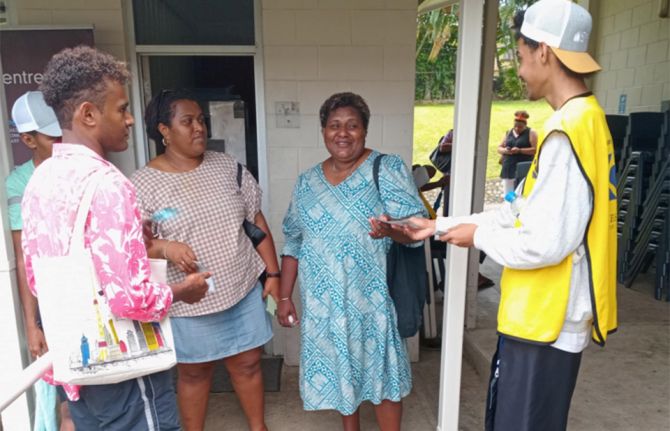
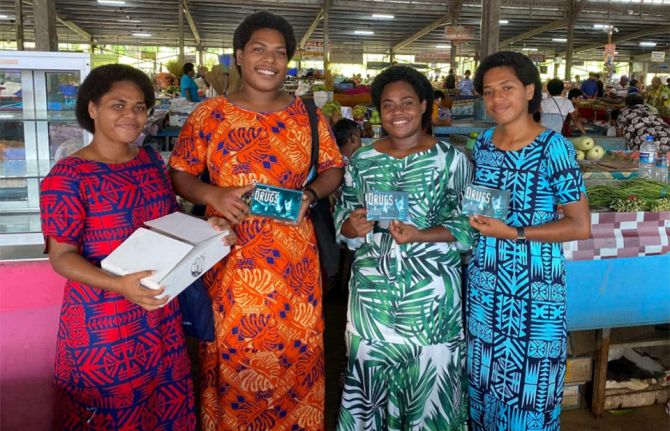
Kalesi Volatabu, founder of DrugFree World Fiji, breaks the ice at drug awareness sessions by sharing her shocking story.
When she was 13, her parents sent her to relatives in Sydney for what she thought was a vacation. In fact, they expected her to stay there, work and send money back to them in Fiji. She ended up on her own with no passport, no schooling and no care. She spent three years on the streets. Boyfriends abused her. She was raped twice. She attempted suicide three times. By the age of 17, she was a mother.
“Marijuana did nothing for me,” she says. “My drug of choice was meth. I needed to go to the hardest drug to numb the pain I was going through ... to fill the void. When I share this in Fiji today in villages, schools and churches, it gives people the power to say, ‘This is what happened to me.’ It is a healing journey.”
Kalesi leads the one community organization exclusively committed to addressing the drug use fuelling Fiji’s ballooning HIV epidemic.
Since 2014, number of new HIV infections in Fiji has risen by an alarming 10-fold. UNAIDS estimates that in 2014, there were fewer than 500 people living with HIV in Fiji. Just 10 years later, that number was 5900 [4500–8900]. In 2024, only 36% [27–54%] of people living with HIV in Fiji were aware of their HIV status, and only 24% [18–36%] were receiving treatment.
Preliminary data for 2024 from the Ministry of Health show that among people newly diagnosed with HIV who are currently receiving antiretroviral therapy, half contracted HIV through sharing needles.
Responding to the sharp increase in new diagnoses, the Government of Fiji declared an HIV outbreak in January 2025. The HIV Outbreak Response Plan and the previously announced Counter Narcotics and HIV Surge strategies call for the introduction of harm reduction programmes for people who inject drugs. Currently there are none.
Although there is agreement in principle with the introduction of needle–syringe programmes, moving towards implementation has been more challenging. “We still need to raise awareness,” says Kalesi. “It is not just about giving out needles. It is about education. But there are so many myths and misconceptions. We have to educate the leaders first. When the indigenous chiefs call, people will follow. Then there are the churches. Last but not least, the Government.”
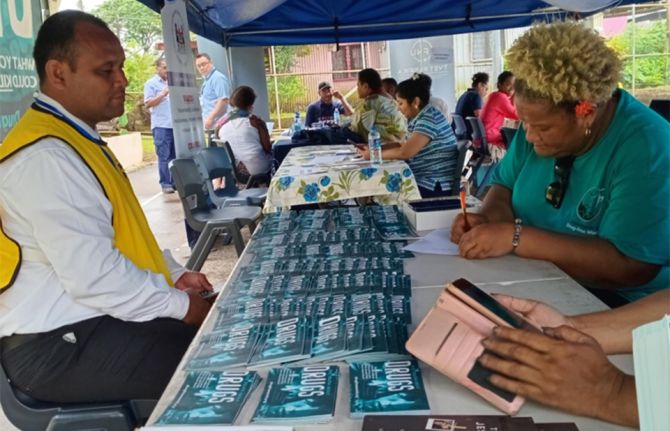
Medical Services in the Pacific (MSP) Fiji is prepared to implement a needle–syringe programme. The non-profit-making organization provides a broad range of sexual and reproductive health services. It is already supporting the scale-up of much needed HIV prevention, testing and linkages to care. Beyond its clinics in Labasa, Lautoka and Suva, it deploys an outreach team of clinicians and counsellors to the field. A mobile clinic goes to hotspot areas to provide a package of HIV and noncommunicable disease services in areas with high levels of injecting drug use.
“Since we started providing point-of-care (rapid) screening last year, the numbers have continued to escalate,” says MSP Fiji Country Director, Railala Nakabea. “It is not only in the cities and towns. We are also seeing positive cases in rural communities. Most of the cases we detect are among people who inject drugs.”
MSP Fiji Medical Officer, Kesa Tuidraki, reiterates the importance of harm reduction alongside longer term and more widely accepted plans for the construction of a drug rehabilitation facility. “It is not only HIV,” she says. “We also have increasing hepatitis C infection, which is even more easily spread through sharing injecting equipment. We need to have harm reduction programmes in place as soon as possible. Rehabilitation does not address the immediate public health emergency.” She acknowledges the importance of partnering with an organization of people with lived experience to more effectively serve the community of people who use drugs.
For Kalesi Volatabu, it is critical that stakeholders work together to design a tailored approach. “We definitely need harm minimization strategies, but we have to contextualize the programmes. What would work in the western context will not work in Fiji. You need to speak the language of your audience. It must be driven by the people and owned by the people.”