Feature Story
UNAIDS, WHO and Unitaid bring manufacturers and governments together in Geneva as HIV financing enters a new era
14 September 2026
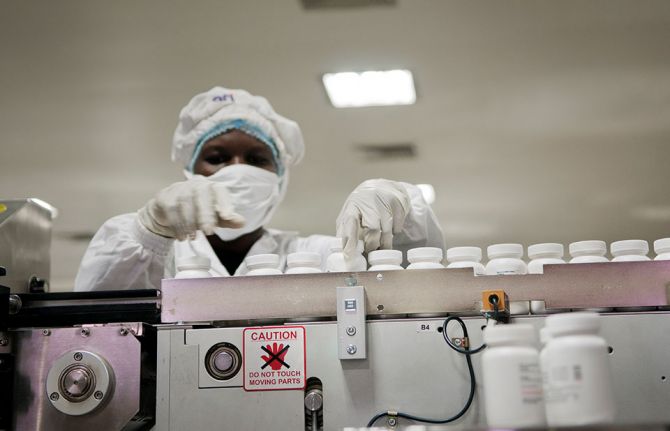
14 September 2026 14 September 2026For more than 15 years, UNAIDS and WHO have convened governments, manufacturers, financing partners, communities and technical agencies in Geneva for one purpose: making sure the medicines, diagnostics and prevention products needed for the HIV, TB and hepatitis responses are produced in sufficient quantities and reach countries at prices they can afford. From 15 to 18 September, UNAIDS jointly with WHO and Unitaid will once again convene their annual consultation with pharmaceutical and diagnostics manufacturers, partner organizations and national governments.
The meeting arrives at a pivotal moment for the global HIV response as international funding declines and countries take on a greater share of the cost of their own responses. In 2025, domestic sources accounted for 59% of the US$ 17.6 billion invested in the HIV response in low- and middle-income countries (LMIC). Almost 74% of antiretroviral spending is already covered by domestic spending in LMICs, and just over 52% of antiretroviral spending in Eastern and Southern Africa specifically.
From inception, the consultation has served as one of the few forums where demand forecasts, financing realities and market dynamics can be discussed together. Its discussions have informed demand forecasting, improved visibility of market trends, supported the introduction of new technologies and contributed to efforts to increase affordability and strengthen supply security. Over the years, the meeting has evolved alongside the epidemic itself, moving from early conversations about scaling up treatment to today's priorities: sustainable financing, long-acting prevention technologies and regional manufacturing.
“Reliable financing, procurement and demand intelligence help countries and manufacturers anticipate needs, plan investments and expand access to new and existing health products,” said Jaime Atienza, Director, Sustainability, Financing and Economics at UNAIDS.
Nowhere is that shift clearer than in HIV prevention. While treatment programmes are increasingly funded from domestic budgets, many prevention interventions remain heavily dependent on external support — PrEP chief among them. Demand for oral and long-acting PrEP options is expected to rise sharply in the coming years as more countries expand access and ensuring that financing and procurement systems can keep pace with that growth is set to be a central theme of this year's discussions.
UNAIDS role
UNAIDS brings three things to the table. Data — gathered through the Global AIDS Monitoring framework, AIDS financing analyses and epidemiological monitoring — establishes the baseline numbers that guide the forecasting work. Convening power brings governments, manufacturers, donors and communities into the same room, alongside WHO and Unitaid. And market intelligence, drawn from UNAIDS' global targets, forecasts and projections of future demand for HIV medicines and prevention technologies, gives manufacturers and financing institutions an essential baseline scenario on which to build alternative forecasts.
Communities remain essential partners in ensuring that financing and market decisions translate into equitable access on the ground. Their participation keeps the discussions grounded in the realities faced by people living with HIV and by populations at higher risk of acquiring the virus.
As governments, manufacturers, financing institutions and communities gather in Geneva this week, the objective is straightforward: to keep lifesaving HIV medicines, diagnostics and prevention products affordable, available and accessible to everyone who needs them. At a moment of significant financial transition and new product introductions, cooperation across sectors will be essential to sustaining the progress made so far and to advancing the goals of the Global AIDS Strategy.
Contact
For more information please contact UNAIDS technical focal point Deepak Mattur, Senior Adviser, Resource Tracking at UNAIDS - MatturD[at]unaids.org
Feature Story
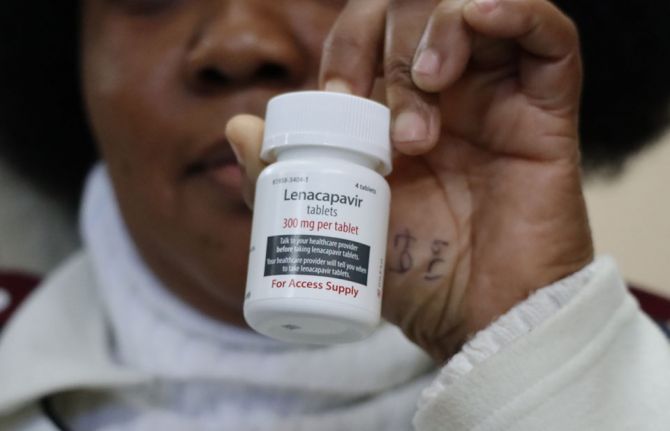
UNAIDS works with partners and communities to support Zambia's rollout of Lenacapavir to prevent new HIV infections
09 September 2026
09 September 2026 09 September 2026With Zambia having received the delivery of the first US-funded HIV prevention medicine Lenacapavir, UNAIDS is now working in close partnership with the Zambian government, communities, the Global Fund to Fight AIDS, TB and Malaria and the US government to ensure that this new HIV prevention option reaches the people who need it the most to prevent new HIV infections in the country. The rollout of Lenacapavir offers Zambia an opportunity to accelerate prevention and protect hard-won gains in the country’s HIV response.
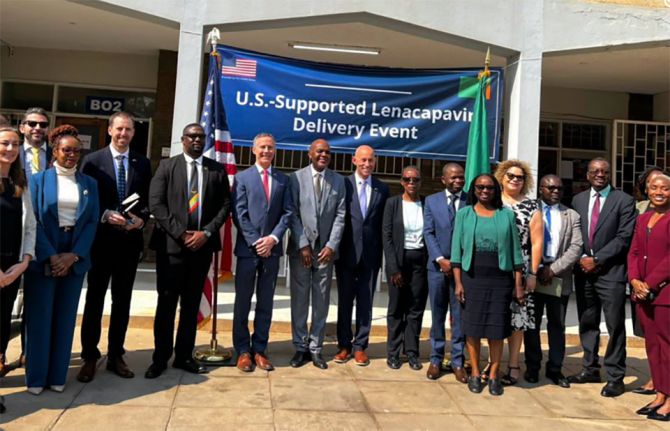
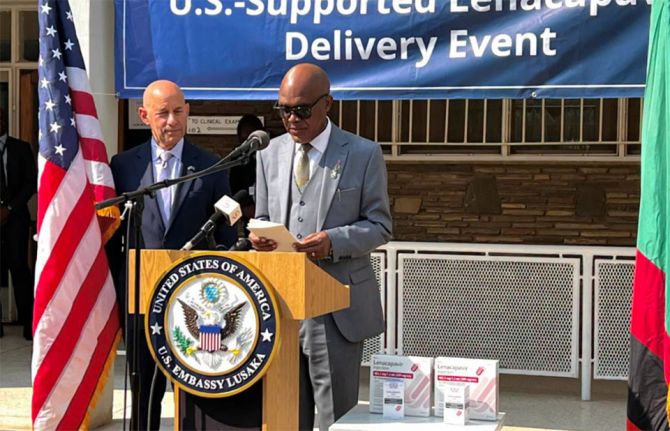
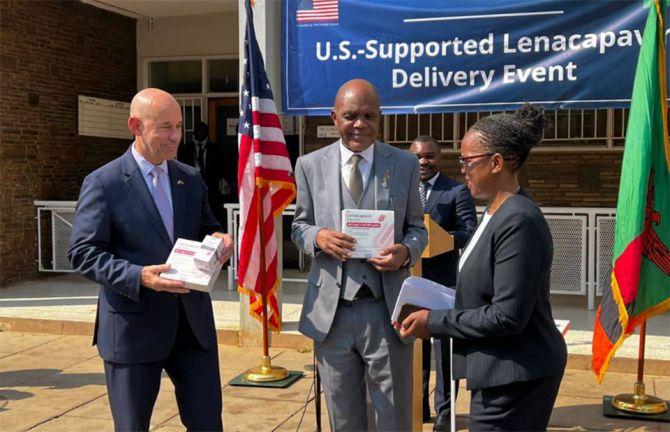
The Government of Zambia received the first stock of the highly anticipated, twice-yearly injectable pre-exposure prophylaxis (PrEP), long-acting medication at the University Teaching Hospital in Lusaka on 1 September 2026. The shipment was officially received by the Ministry of Health's Permanent Secretary for Donor Coordination, George Sinyangwe, alongside the US Assistant Secretary of State for African Affairs, Frank Garcia, highlighting a continued strategic health partnership between the two countries.
Lenacapavir’s efficacy has been established, having been found to be almost 100% working in preventing HIV infection. It offers the country an important opportunity to build on its significant progress in the HIV response and advance efforts to end AIDS in Zambia.
UNAIDS will work with partners, including providing data and evidence on populations that are at high risk of acquiring HIV, to guide the rollout of Lenacapavir and scale up access with the aim of reaching 82 000 people by the end of 2026 across selected 542 health facilities.
UNAIDS Regional Director for Eastern and Southern Africa, Anne Githuku-Shongwe, welcomed the arrival of the medicines. “This collaboration demonstrates what is possible when political leadership, global solidarity, communities, science and partners come together around a common goal. The rollout of Lenacapavir will bring Zambia one step closer to ending AIDS as a public health threat.” said Anne Githuku-Shongwe.
Approximately 21 000 of the people to benefit from Lenacapavir are pregnant and breastfeeding women which will boost efforts to protect maternal health and eliminate vertical transmission of HIV which is estimated to be at around 6% in Zambia.
At the event marking the arrival of the shipment on 1 September, US Assistant Secretary of State for African Affairs Frank Garcia said that the US was proud to stand with Zambia in rolling out Lenacapavir, signaling a longstanding partnership in the country's HIV response through the US President's Emergency Plan for AIDS Relief (PEPFAR).
Sub-Saharan Africa is the region with the highest number of people living with HIV, home to 26.3 million of the 41 million people living with HIV globally. Zambia joins Eswatini, Nigeria, Kenya, Zimbabwe and South Africa as the first countries in the region to receive the ground-breaking HIV prevention medicine.
In Zambia, there were 23 000 new HIV infections in 2025, with adolescents and young people accounting for 37% of new annual HIV infections - of whom 29% are adolescent girls and young women - who continue to face disproportionate vulnerability to HIV in many parts of sub-Saharan Africa. Having access to discreet, long-acting prevention will offer an important additional HIV prevention to them.
“The introduction of Lenacapavir gives us an opportunity to build on that progress and ensure that prevention reaches the people who need it most, particularly adolescent girls and young women.” said Ms Githuku-Shongwe.
Lenacapavir will be integrated into Zambia’s broader combination HIV prevention approach. UNAIDS will offer strategic coordination, technical advice and advocacy to ensure the roll out of Lenacapavir is guided by evidence and equity, to reach people who will benefit most.
UNAIDS has been working closely with Zambia over many years, supporting the country’s efforts to strengthen its national HIV response. The partnership includes support for policy development, strategic information, sustainability, community engagement, and efforts to ensure that HIV services reach people who are most vulnerable. Lenacapavir will be an important part of that next chapter.
Region/country

Documents
Consideration of the report of the 58th PCB meeting
26 October 2026
Feature Story
Remembering King Oyo’s heartfelt leadership for young people and the fight to end AIDS
04 September 2026
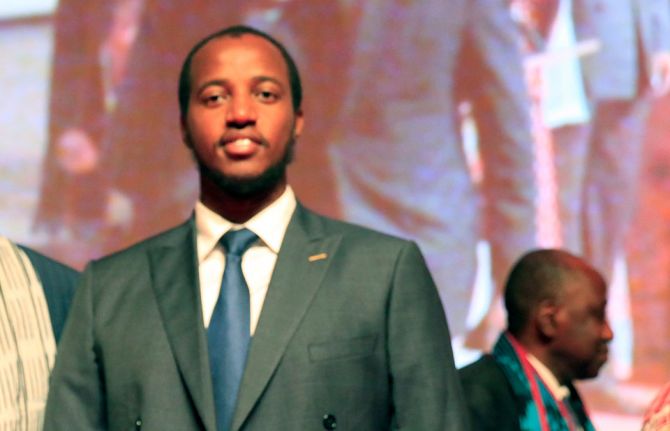
04 September 2026 04 September 2026UNAIDS is deeply saddened by the passing of His Majesty King Oyo Nyimba Kabamba Iguru Rukiidi IV of the Tooro Kingdom, at a young age of 34. Heartfelt condolences to the people of Tooro Kingdom, the Royal Family, the Government and people of Uganda, and all those whose lives were touched by His Majesty’s leadership and service.
In 2016, His Majesty King Oyo was recognized as a UNAIDS Goodwill Ambassador for ending AIDS among young people in Eastern and Southern Africa. He accepted this role at the age of 24, at a time when he was widely respected as the youngest reigning monarch in the world and as an influential voice for young people across the region.
“King Oyo used his voice, his influence and his deep commitment to young people to advance the vision of ending AIDS as a public health threat,” said Winnie Byanyima, Executive Director of UNAIDS. “His advocacy reminded the world that young people must be at the centre of the HIV response with access to education, information, protection and opportunities to thrive.”
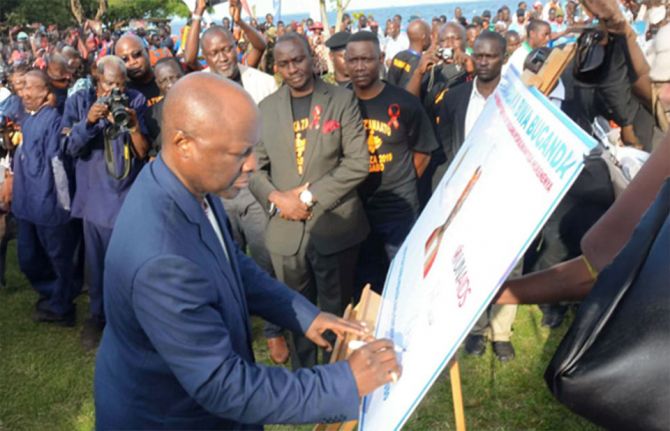
Over the years, King Oyo used his platform to amplify the call to end AIDS as a public health threat by 2030. He championed efforts to eliminate new HIV infections in the Tooro Kingdom, called for stronger engagement of men and boys in the HIV response, and encouraged communities to take collective responsibility for prevention, treatment and care.
His advocacy also underscored the importance of keeping young people especially adolescent girls and young women in school, where they can access information, protection, support systems and life skills that reduce vulnerability to HIV, teenage pregnancy, early marriage and gender-based violence.
“His Majesty King Oyo brought courage, compassion and clarity to the HIV response in Uganda and beyond,” said Jacqueline Makokha, UNAIDS Country Director for Uganda and Tanzania. “He understood that ending AIDS requires investing in young people, keeping them in school, protecting them from violence and ensuring that no one is left behind.”
UNAIDS honours his legacy and reaffirms its commitment to work with partners, communities and young people to end AIDS and build healthier, safer futures for all.
As the Tooro Kingdom observes its period of mourning, UNAIDS stands with the Royal Family, the Babiito clan and the people of Tooro during this most difficult time.
Region/country
Related
Documents
Operational guidance on gender equality programming for the HIV response in The Global Fund cycle
04 September 2026
This Operational Guidance aims to support countries in integrating gender-equality programming across the Global Fund grant cycle. It provides step-by-step support for applying a structural gender-equality approach throughout current and future Global Fund grant cycles. It includes examples of evidence-based, gender-responsive HIV interventions; considerations for developing gender-related performance indicators; guidance on applying this approach within the GC8 Modular Framework; and links to relevant resources and tools, including the UNAIDS Gender Assessment Tool.
Documents
Evaluation of the UNAIDS Joint Programme in achieving the 2030 targets and sustaining gains
02 September 2026
Documents
Draft Annotated Agenda
26 October 2026

Press Statement
UNAIDS condemns the destruction of lifesaving HIV supplies in Ukraine
01 September 2026 01 September 2026UNAIDS strongly condemns the destruction of a warehouse containing HIV supplies in the region of Kyiv. The warehouse, which was destroyed on 19 July, was used by Ukraine’s National HIV Prevention Programme to store HIV prevention supplies for programmes reaching more than 300,000 people each year.
Thanks to advance distribution across Ukraine, services will continue uninterrupted through to the end of 2026. However, the destroyed supplies were intended for 2027 and must be urgently replaced to prevent future shortages.
“Attacks on medical facilities and lifesaving health commodities violate international humanitarian law,” said Winnie Byanyima, Executive Director of UNAIDS. “Even in war, there are rules. Health facilities and medical supplies must never be targeted. Destroying HIV prevention supplies puts lives at risk, and I must speak out.”
UNAIDS is working with the Ministry of Health and partners to replace the lost supplies and ensure uninterrupted access to HIV prevention, testing, treatment and care. Protecting these lifesaving services is an urgent priority.
UNAIDS
The Joint United Nations Programme on HIV/AIDS (UNAIDS) leads and inspires the world to achieve its shared vision of zero new HIV infections, zero discrimination and zero AIDS-related deaths. UNAIDS unites the efforts of 11 UN organizations—UNHCR, UNICEF, WFP, UNDP, UNFPA, UNODC, UN Women, ILO, UNESCO, WHO and the World Bank—and works closely with global and national partners towards ending the AIDS epidemic by 2030 as part of the Sustainable Development Goals. Learn more at unaids.org and connect with us on Facebook, Twitter, Instagram and YouTube.
Region/country
Press Release
UNAIDS, SADC and China, partner to advance local pharmaceutical manufacturing and health security in Southern Africa
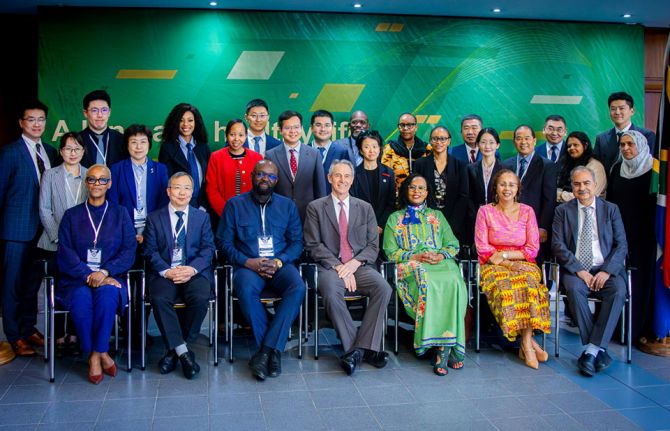
01 September 2026 01 September 2026JOHANNESBURG/GENEVA, 1 September 2026 – UNAIDS, the Southern African Development Community (SADC) and the Global Health Innovation Institute (GHII) have brought together the Government of South Africa, the Government of China, Chinese pharmaceutical companies and regional and global partners in a major new collaboration to strengthen pharmaceutical manufacturing across Southern Africa.
The partnership, developed through sustained engagement led by UNAIDS, is being advanced this week through a SADC-China strategic exchange taking place from 31 August to 4 September 2026 in Johannesburg, Durban and Cape Town. By applying lessons from the HIV response, it brings together governments, pharmaceutical manufacturers, research institutions, financial and development partners and health experts to explore how stronger partnerships can accelerate regional production of medicines, diagnostics and health technologies.
“Strengthening pharmaceutical manufacturing is about much more than producing medicines. It is about African countries having greater control over the health products their people depend on including for HIV, while building the skills, investment, technology and systems needed for long-term health security,” said Anne Githuku-Shongwe, UNAIDS Regional Director for East and Southern Africa
The exchange comes at a time when health security, resilient supply chains and sustainable access to essential medicines are priorities across Africa. For Southern Africa, strengthening regional manufacturing capacity offers an opportunity to reduce vulnerability to external supply disruptions while supporting innovation, skills development, investment and economic growth.
“Health security requires the capacity to produce. Our partnership with China can help connect African manufacturing capability with the investment, technology and skills needed to strengthen regional pharmaceutical production,” said Dr Lamboly Kumboneki, SADC Secretariat.
Building regional manufacturing capacity
A key focus of the exchange will be how a China-Africa collaboration can help unlock technology transfer, investment, manufacturing expertise and innovation to strengthen African pharmaceutical production.
The programme will include high level policy discussions with government and regulatory stakeholders, engagement with development and financing partners, and visits to pharmaceutical manufacturing and research facilities in Johannesburg, Durban and Cape Town.
Discussions will explore expanding investment and technology transfer; improving market intelligence, demand visibility and regulatory readiness; strengthening pooled procurement and health commodity security; and identifying practical opportunities for deeper Africa–China collaboration on pharmaceutical manufacturing.
“China’s healthcare industry has grown and matured significantly over the last few decades, and companies are looking for opportunities beyond, globally. Africa is the market of the future. Being here has shown us the willingness and readiness of South African companies and policy makers. I believe this is a perfect opportunity to bring accessible health products through a mutually beneficial partnership” said Gary Yang, Acting CFO, Head of Business Development and Global Alliance.
At the conclusion of the exchange, partners will identify priority opportunities and practical next steps to strengthen regional pharmaceutical manufacturing and health commodity security.
UNAIDS
The Joint United Nations Programme on HIV/AIDS (UNAIDS) leads and inspires the world to achieve its shared vision of zero new HIV infections, zero discrimination and zero AIDS-related deaths. UNAIDS unites the efforts of 11 UN organizations—UNHCR, UNICEF, WFP, UNDP, UNFPA, UNODC, UN Women, ILO, UNESCO, WHO and the World Bank—and works closely with global and national partners towards ending the AIDS epidemic by 2030 as part of the Sustainable Development Goals. Learn more at unaids.org and connect with us on Facebook, Twitter, Instagram and YouTube.
Contact
UNAIDSBathsheba Okwenje
tel. +250 789 358 817
okwenjeb@unaids.org
UNAIDS
Robert Shivambu
tel. +27 83 608 1498
shivambur@unaids.org
Region/country



Feature Story
Built on trust - Community-led HIV responses in Thailand
26 August 2026
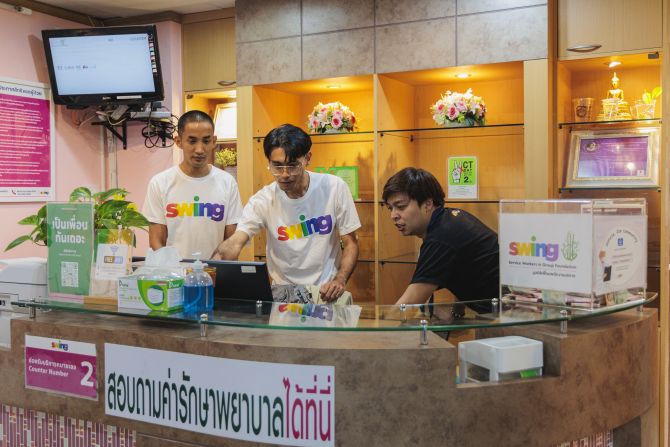
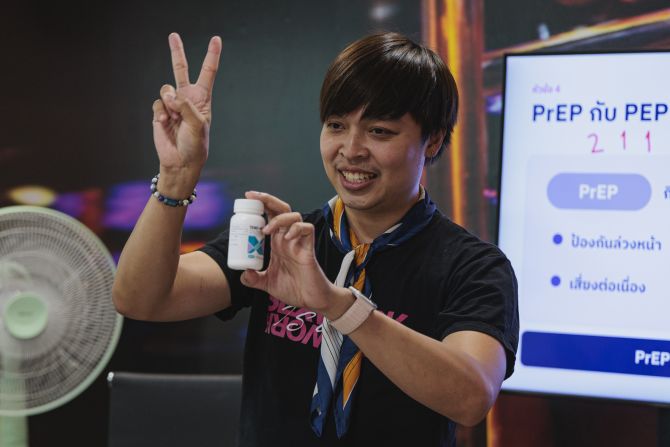
26 August 2026 26 August 2026Before the doors of SWING Thailand clinics open each morning, Siripong “Arm” Srichau has already reached hundreds of people.
Some have watched one of his videos on social media. Others have sent private messages asking where they can get an HIV test or whether they should start PrEP - a preventive HIV medicine for people at risk of HIV.
Sitting in front of his computer, Arm, communications lead at SWING, a community-led organization providing HIV and sexual health services for gay men, transgender people and sex workers in Thailand, scrolls through the digital campaigns he has created to make accessing HIV prevention more engaging.
In one interactive game, users match themselves with a virtual boyfriend based on their lifestyle, then recommends the PrEP option that best suits them. Another uses a fortune teller to predict their future need for PrEP. A third turns the hunt for misplaced PrEP pills into an online game.
They are playful by design with a purpose.
"If you want to reach people online, you have to understand them," he said. "You have to know what they are interested in, what is trending, and make our message relatable."
Berry is one of SWING’s regular clients who first discovered SWING through social media while searching for information about PrEP.
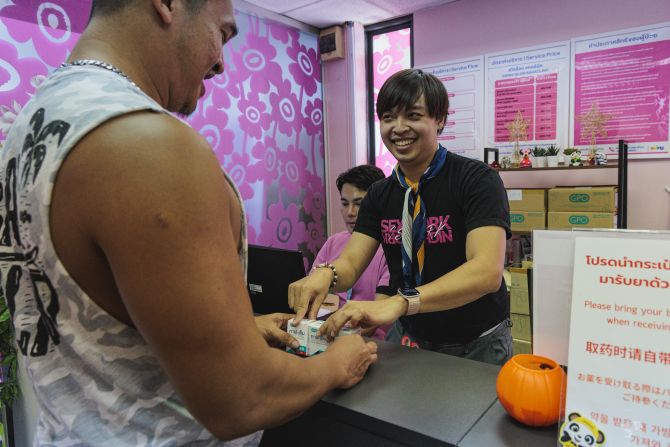
"I didn't really know what PrEP was initially," he said. "The staff here explained everything to me."
Nearly ten years later, he keeps returning for HIV prevention services. For him, the difference is not only the medical care. "Here, nobody looks at you like you're a weird person," he said. "Even though Thailand is quite open for LGBTQ people, discrimination still exists. Here, we feel comfortable."
Arm's works extends beyond the virtual space and the clinic walls.
In the afternoon, Arm is presenting HIV prevention and sexual health options to a group of young deaf transgender women, with every word translated into sign language. And the evening finds him standing outside a nightclub, handing out condoms, answering questions and helping people register for HIV services on their phones.
A former teacher with a background in dramatic arts, Arm never expected to build a career in the HIV response.
“Every day I see proof that this work matters, in the messages people send us and in the clients who keep coming back. What people do not see is the cost. We are still here because we believe in this. But belief does not pay for a clinic or a salary. Communities need resources, not just recognition,” said Arm.
Thailand’s investment in community-led programmes is a key part of Thailand’s remarkable progress in the HIV response, with 82% of people living with HIV on treatment in 2025 and a 66% reduction in new HIV infections since 2010.
This progress comes at a time when community-led organizations around the world are facing growing uncertainty. Global development assistance fell by 23% in 2025 and HIV programmes have been among the hardest hit. Globally, community-led organizations are seeing critical funding disappear, putting essential HIV services at risk.
Meanwhile in Thailand, over 100 community-led organizations, including SWING, are formally recognized as HIV service providers under Thailand's Universal Health Coverage system, delivering HIV testing and counselling, PrEP and other essential services with domestic funding. These organizations now reach 75% of key populations with HIV prevention services.
"Our priority now is ensuring community-led organizations are truly an integral part of the national health system. With UNAIDS support, Thailand is developing a Community-Led Response Sustainability Roadmap to help make that happen," said Patchara Benjarattanaporn, UNAIDS Country Director for Thailand.
Community leadership has helped make Thailand's HIV response one of the strongest in the region. Sustaining it will require more than dedication from people like Arm. It will require commitment from governments, health systems, donors and partners to ensure community-led organizations have the recognition, resources and support they need to continue their work.