
Documents
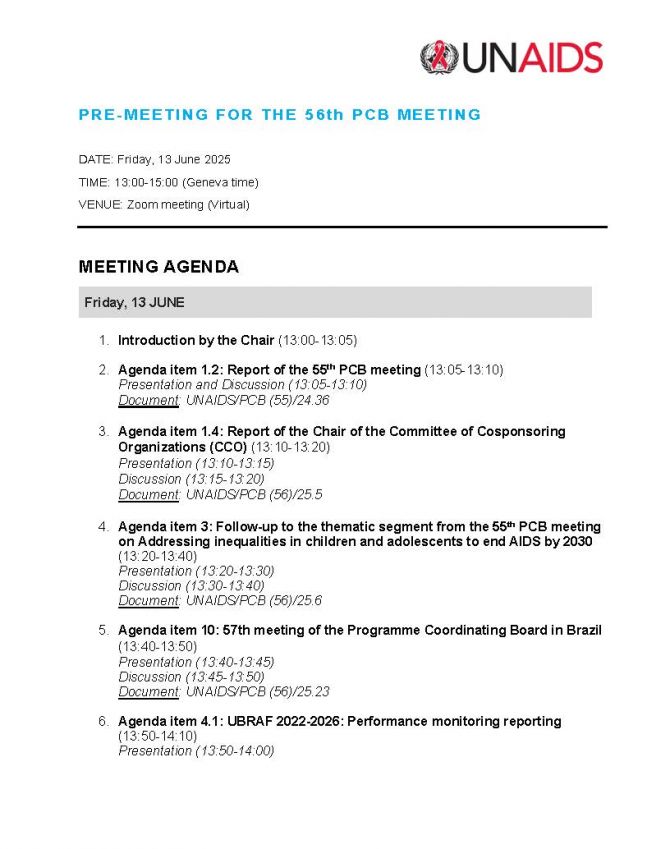
Draft agenda for 56th PCB pre-meetings
24 June 2025
Documents
Kenya 2024
09 December 2024
Documents
Agenda item 5: Annotated outline of the next Global AIDS Strategy 2026-2031
24 June 2025

Feature Story
UNAIDS and Akbaraly Foundation unite to transform the HIV response in the Indian Ocean region
06 June 2025
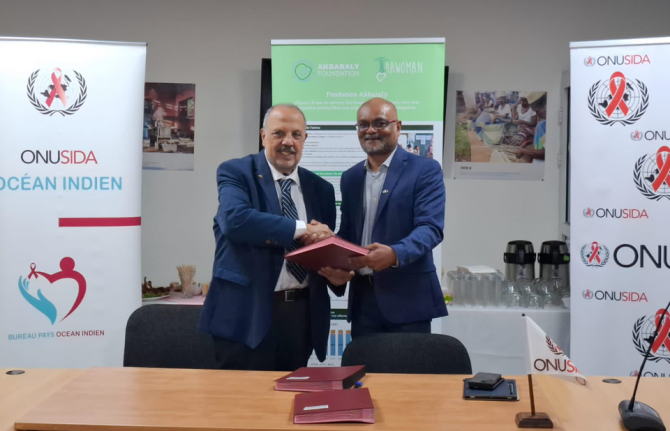
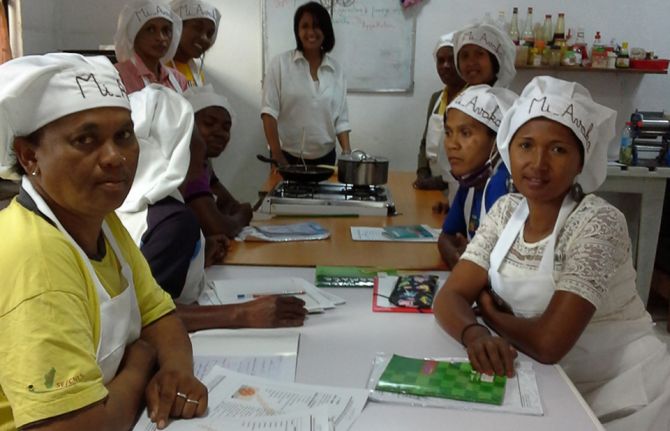
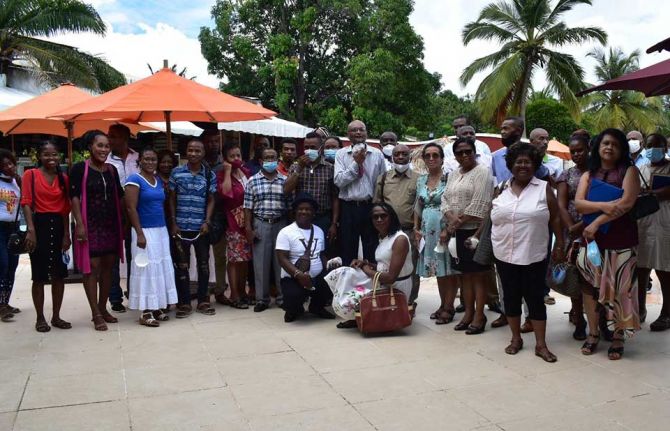
06 June 2025 06 June 2025UNAIDS and the Akbaraly Foundation have signed a landmark partnership agreement to reshape how HIV and women’s health are addressed across Madagascar and the Indian Ocean region.
Over the past 15 years, new HIV infections in Madagascar have surged by 151%, and AIDS-related deaths have risen by 279%. Of the estimated 70 000 people living with HIV in the country, only 20% are receiving treatment. These statistics reflect lives and families in jeopardy and communities in need.
This new alliance brings together two organizations with shared goals and complementary strengths. UNAIDS brings decades of global leadership in the HIV response., while the Akbaraly Foundation offers deep community trust and a proven ability to deliver results.
“This agreement goes well beyond organizational cooperation,” said UNAIDS Country Director, Jude Padayachy, “it represents a collective commitment to innovation, equity and results that matter.”
Since its founding in 2008, the Akbaraly Foundation, which also operates in India, Italy and Rwanda, has become a pillar of healthcare delivery in Madagascar, especially in underserved regions. Its mobile unit, LUISA, has travelled more than 25 000 kilometres to provide medical services in remote villages. Over 340 000 women have been screened for cancer and 480 000 people have received life-changing education on cancer prevention.
The partnership will focus on incorporating HIV services into the fixed and mobile Akbaraly medical infrastructure to extend their reach as well as training programmes for health professionals in Comoros to strengthen the region’s response capabilities.
In addition, UNAIDS and the Akbaraly Foundation will coordinate advocacy efforts during global campaigns such as World AIDS Day and World Cancer Day to strengthen public awareness and reduce stigma. This strategic alliance is a promise to deliver health with dignity, from city centres to the most isolated islands.
Region/country
Documents
General Assembly annual review of HIV/AIDS
05 June 2025
UN Deputy Secretary-General’s message on the occasion of the General Assembly annual review of HIV/AIDS, 5 June 2025
Documents
Agenda item 9.4: Report of the Independent External Oversight Advisory Committee (IEOAC)
24 June 2025

Feature Story
UNAIDS supports countries to adopt differentiated service delivery approaches to HIV care
05 June 2025
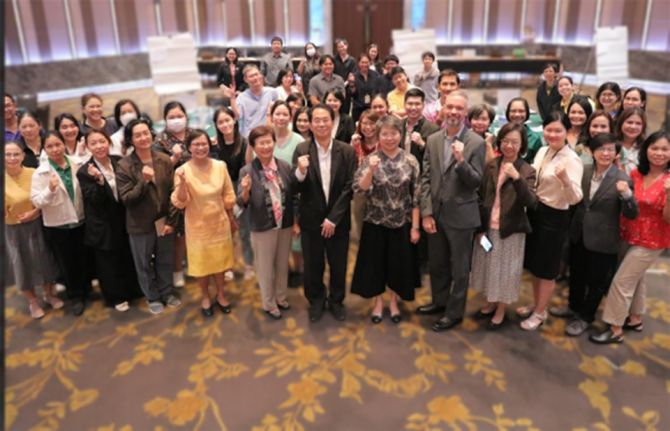
05 June 2025 05 June 2025UNAIDS has supported eight countries including Mali, Angola, Madagascar, South Sudan, Indonesia, Pakistan, Philippines and Thailand to assess the strengths and weaknesses of their HIV care service delivery systems.
If countries are to succeed in reaching the 95-95-95 HIV targets, their health systems must adopt rights-based, gender-sensitive, and people-centered models to reach the underserved populations and improve service quality.
One such model is the differentiated service delivery (DSD) approach, which is designed to provide HIV services that are adapted to reflect the preferences and needs of people living with and vulnerable to HIV, while reducing unnecessary burdens on the health system.
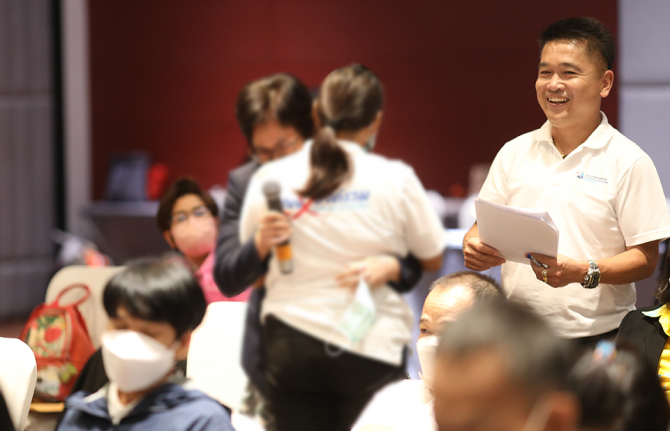
UNAIDS mobilized Technical Assistance Demand Generation (TADG) funding support from USAID, to bring together national program stakeholders and community groups for a data-driven consensus building process. In each country, participants used a structured health system assessment and strengthening tool, developed by the HIV Coverage, Quality, and Impact Network (CQUIN), of the Columbia University, to make informed decisions on enhancing quality HIV testing, treatment, and care services.
According to participating country teams, the exercise facilitated a breakdown of national program landscapes into clear, actionable focus areas, and improved their understanding of differentiated delivery of HIV care services. Program teams were able to prioritize areas for focus and to streamline decision-making, which will ultimately lead to practical and sustainable enhancement of HIV service provision.
“Considering South Sudan is lagging behind in treatment coverage, this was a very timely technical support exercise, that will strengthen the HIV care response to achieve 95-95-95 targets through collective action, advocacy and investment” said Dr Agai Akec, Director, HIV Programme, Ministry of Health, South Sudan.
The participating countries recognised the value of adopting differentiated service delivery approach to HIV testing, HIV treatment and the management of advanced HIV disease; establishing linkages with related services such as maternal and child health, Tuberculosis and non-communicable disease care, and promoting collaboration between health facilities and the community.
UNAIDS role has been instrumental in using US catalytic resources to mobilize partners including WHO, The Global Fund, and technical support agencies to support national government and community groups to promote a critical area of work for HIV testing and treatment.
"The TADG catalytic funding helped the country beneficiaries to demystify Differentiated Service Delivery and to identify concrete areas for improvement within national programs. I would encourage countries to undertake more of these exercises to make services available and accessible by all, particularly those who have been left behind." said Fodé SIMAGA, UNAIDS Director, Science Systems and Service for All.
For further details and guidance on using the tool, visit:


Feature Story
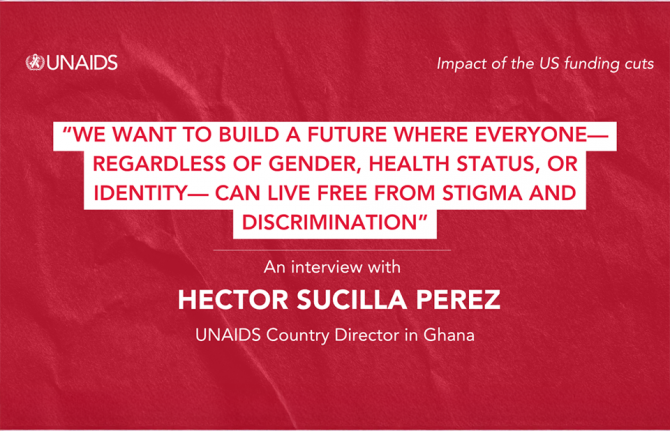
"We want to build a future where everyone—regardless of gender, health status, or identity—can live free from stigma and discrimination"
05 June 2025
05 June 2025 05 June 2025Ghana’s efforts to end AIDS has long relied on international support, particularly from the United States. Recent US funding cuts, however, have led to the suspension of critical programmes including human rights, raising concerns for key populations most affected by HIV-related stigma and discrimination.
In this interview, Hector Sucilla Perez, UNAIDS Country Director for Ghana, talks about the current state of the HIV response, the consequences of these funding changes, and the next steps for the country’s HIV response.
Q: What is the current state of Ghana’s HIV epidemic?
Ghana has an estimated 330 000 people living with HIV, with two-thirds being women aged 15 and over. In 2023 alone, there were 18 000 new infections and 12 000 AIDS-related deaths. The most affected groups are transgender women, men who have sex with men, female sex workers, and women. While new infections and deaths have decreased over the last decade, the reduction is far below expectations—only a 19% drop in new infections and 35% in deaths since 2010. The country needs to speed up more in the way we are decreasing new infections and deaths.
Ghana’s HIV response is heavily dependent on international donors. In 2022, Ghana's total expenditure on HIV and AIDS-related activities was approximately US$ 126 million. The Global Fund covers about 29% of this, PEPFAR (the US President’s Emergency Plan for AIDS Relief) about 8.5%, and the UN about 4.5%. PEPFAR support in Ghana has been essential and critical, investing more than US$ 204 million since 2007, mainly in HIV prevention, testing, treatment support, monitoring, and human rights work.
Q: What specific activities has PEPFAR been supporting in Ghana?
PEPFAR works in three regions of Ghana, (Western, Western North, and Ahafo), supporting essential catalytic services related to HIV prevention, including PrEP, as well as diagnosis, testing, treatment, and support services. They have also been supporting monitoring and evaluation to strengthen health information systems and improve data accuracy, which is critical for guiding our response.
Additionally, PEPFAR has been implementing human rights programmes with special emphasis on eliminating HIV-related stigma and discrimination. While they do not procure antiretroviral treatment in Ghana, they provide key technical assistance to the health sector on supply chain management for drugs and commodities.
Q: What has been the impact of the recent US funding cuts?
The initial pause in US government support affected activities in more than 120 healthcare sites across two regions, affecting 10 civil society organizations collaborating on PEPFAR-implemented programmes.
Some critical PEPFAR-supported actions were thereafter reinstated due to the waiver, particularly those related to the 95-95-95 targets, with a focus on vulnerable populations, especially adolescent girls and young women, and pregnant women. Monitoring, evaluation, data collection, and technical support for supply chain management were also reinstated.
However, strategic activities related to human rights with emphasis on stigma and discrimination, community-led monitoring, and interventions focusing on key populations have been definitively suspended. This represents a significant challenge for Ghana's HIV response.
Q: How is Ghana responding to these funding cuts, particularly regarding human rights programmes?
The government, through the Ghana AIDS Commission, has re-established and reinvigorated the Human Rights Stream Committee supported by UNAIDS and the Global Fund Grant. The Committee is currently to analyzing how the country can take over some of these activities. They are looking at integrating HIV more deeply into actions implemented by other government partners such as the Commission for Human Rights and Administrative Justice (CHRAJ), and increasing collaboration with the Ministry of Gender and Social Protection and the Ministry of Labour. UNAIDS provides technical assistance in support to these efforts.
We are also supporting CHRAJ to develop a handbook on stigma and discrimination through the lens of HIV, health and rights as a sustainable way of embedding continuous professional development in the work of this Government entity on actions focused to address HIV stigma and discrimination.
UNAIDS in Ghana is also strengthening community leadership particularly networks of PLHIV and key populations to play an important role in leading harmonized CLM initiatives in Ghana in collaboration with Global Fund implementers. This is by means of technical assistance and hands on support to communities to develop concrete priorities aligned to key data gaps, including stigma and discrimination and linkages to treatment adherence.
UNAIDS has also engaged with the Global Fund to explore using efficiencies in their grants to cover these activities. The Global Fund has shown willingness to potentially develop a strategy where all stakeholders can contribute to maintaining the most relevant human rights activities in Ghana.
Q: What new initiatives are being developed to address these gaps?
The UNAIDS country office is developing an umbrella strategy called the "Ghana for Rights Initiative." We envision this as a national movement aimed at promoting and protecting human rights in Ghana, especially for those most affected by inequality, discrimination, and stigma.
This initiative goes beyond the regular framework for HIV response, focusing more comprehensively on human rights issues such as gender equality, rights of persons in vulnerable situations, access to healthcare and education, and eradication of HIV-related stigma and discrimination.
The key components are advocacy, capacity building, and community engagement, with a strong emphasis on community-led monitoring. We are accelerating discussions with country partners, including the government, bilateral donors, communities, and the UN agencies to frame human rights in a different approach and mobilize resources for the country to continue priority work on HIV and human rights intersectional agenda.
Q: What are your concerns if human rights programmes remain suspended?
Without these critical human rights programmes, we risk seeing increased stigma and discrimination against people living with HIV and key populations. This could reverse progress made in encouraging people to get tested and access treatment, ultimately leading to more new infections and AIDS-related deaths.
The suspension of community-led monitoring also means we lose vital data and feedback from those most affected by HIV, making our response less effective and less targeted to real needs on the ground. This is why we are urgently working to find alternative approaches and funding sources to maintain these essential services.
Q: What is your message to the international community?
Now is not the time to step back from supporting the global HIV response. The progress we have made over the past years—reducing new infections, expanding access to treatment, and fighting stigma—has only been possible because of strong international solidarity and partnership. The recent US funding cuts have significantly impacted Ghana’s HIV programmes , especially those focused on human rights, stigma, and discrimination, which are essential to reaching the most marginalized and people in vulnerable situations .
We urge donors, development partners, and the global community to continue investing in the global HIV response especially in countries like Ghana, particularly in areas that protect and promote human rights. Without this support, we risk reversing decades of progress and leaving behind those who are most in need. Sustained international commitment is crucial to ensure that Ghana can achieve the UNAIDS 95-95-95 targets by 2030 and, ultimately, end AIDS as a public health threat.
We also invite all partners to join us in innovative approaches, such as the “Ghana for Rights Initiative,” to build a future where everyone—regardless of gender, status, or identity—can live free from stigma, discrimination, and the burden of HIV.
Watch: Disruption not the solution to end AIDS
Related resources
Region/country
Related

Documents
Global Public Investment campaign launch
29 May 2025
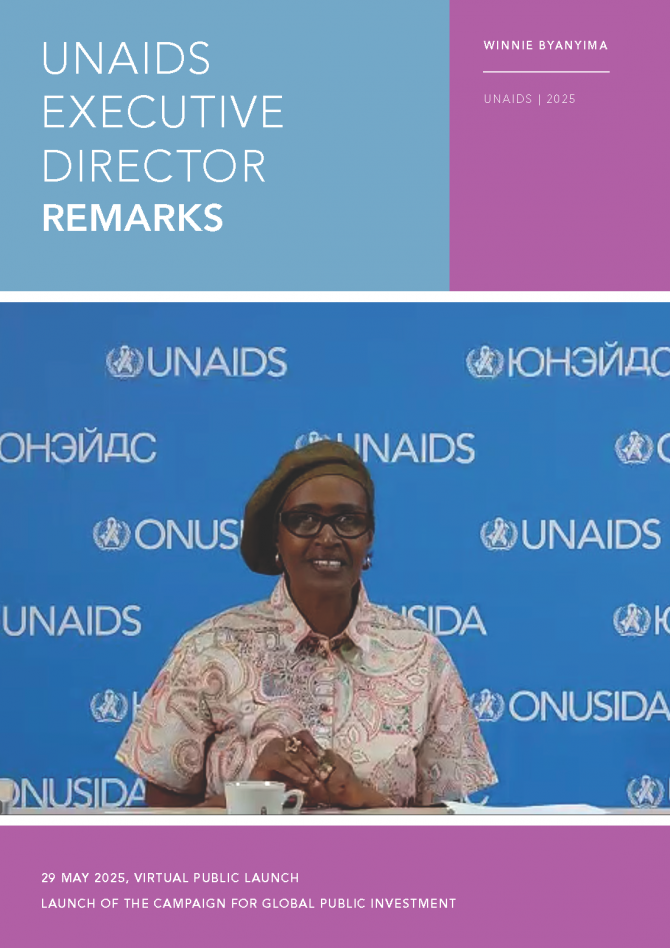
UNAIDS Executive Director remarks - Launch of the campaign for Global Public Investment - Virtual public launch, 29 May 2025
Documents
Agenda item 4.2: Interim Financial Management Update
24 June 2025
