

Media Advisory
Upcoming launch of new report by Global Council on Inequality, AIDS and Pandemics, showing how inequalities drive current and future pandemics and what leaders need to do to address them
27 October 2025 27 October 2025A new report by the Global Council on Inequality, AIDS and Pandemics, will be launched on 3 November in Johannesburg - and worldwide online - showing the danger of inequalities that are prolonging current pandemics, such HIV and tuberculosis, and making the world more vulnerable to future pandemics. Read press release
The Council is co-chaired by Nobel prize-winning economist Joe Stiglitz, former First Lady of Namibia Monica Geingos, and Director of the Institute of Health Equity Sir Michael Marmot. It has brought together economists, public health experts and current and former government leaders from around the world.
The launch on 3 November will come ahead of the G20 meetings in South Africa, including the G20 health ministers’ meeting on 6-7 November. The report will also be presented to President Ramaphosa. This year’s G20, chaired by South Africa, has focused its attention on the challenge of inequality.
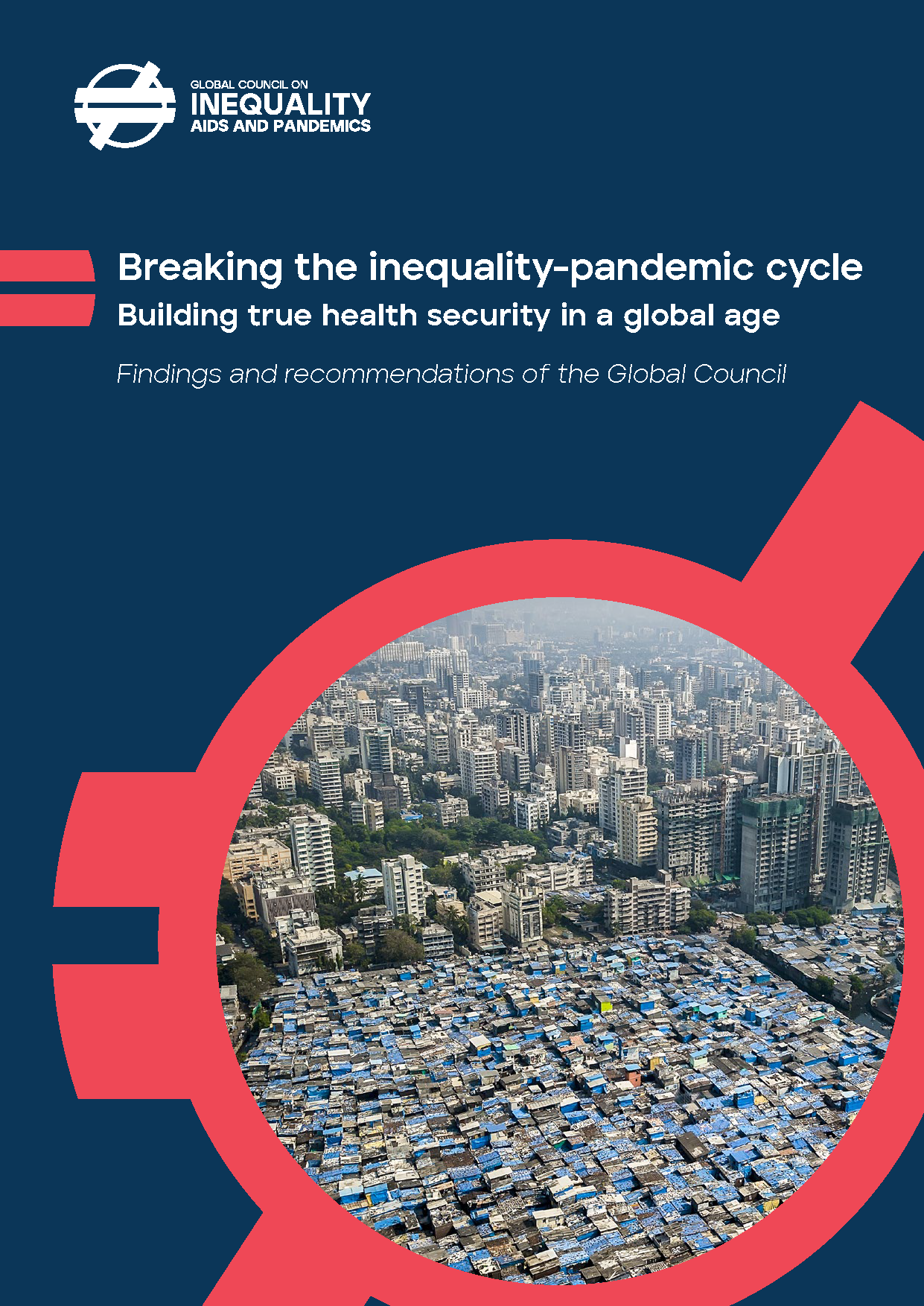
The report, Breaking the inequality-pandemic cycle – building true health security in a global age, will set out what world leaders need to do to better prepare for future pandemics by reducing inequalities, including addressing the global debt crisis, enabling local research, development and production of new medicines, expanding social protection and supporting communities.
The global event, moderated by Nozipho Mbanjwa-Tshabalala, will be live-streamed by the Mail&Guardian around the world, and will include speakers joining from London, Rio, Madrid, Windhoek, and Kampala, and a studio audience in Johannesburg. It will be immediately followed by a press conference.
WHAT: Launch of the Global Council on Inequality, AIDS and Pandemics report, Breaking the inequality-pandemic cycle – building true health security in a global age. Launch event with interviews of co-chairs and experts from across the world, followed by a press conference and reception.
WHEN: Monday, 3 November 2025, 15:00 South Africa Standard Time
WHERE: Johannesburg, South Africa - and worldwide online
SPEAKERS INCLUDE:
- Winnie Byanyima, Executive Director of UNAIDS and Under-Secretary-General of the United Nations
- Michael Marmot, Institute of Health Equity at University College London
- Joseph Stiglitz, Nobel prize-winning economist
- Monica Geingos, Executive Chairperson, One Economy Foundation and former First Lady of Namibia
- Aaron Motsoaledi, Minister of Health, South Africa
- Nísia Trindade, Former Minister of Health, Brazil
- Javier Padilla Bernáldez, Secretary of State for Health, Spain
- Joe Phaahla, Deputy Minister of Health, South Africa
- Richard Lusimbo, Director General of the Key Populations Consortium, Uganda
- Nomonde Ngema, HIV youth activist, South Africa
For media attendance at the launch event and press conference in person or online, and for interviews and access to the embargoed report, please contact:
Robert Shivambu in Johannesburg | tel. +27 83 608 1498 | shivambuh@unaids.org
or Oliver Aplin in London | tel. +44 785 155 2441 | oca10@georgetown.edu
About the Global Council on Inequality, AIDS and Pandemics
The Global Council on Inequality, AIDS and Pandemics is a high-level initiative convened by UNAIDS to confront how inequalities drive pandemics—and how pandemics, in turn, deepen inequality. Announced in June 2023, the Council is co-chaired by Namibia’s former First Lady Monica Geingos, Director of the UCL Institute of Health Equity Professor Sir Michael Marmot, and Nobel laureate Joseph E. Stiglitz. It brings together leaders across economics, public health, human rights and finance to build a policy environment in which inequalities can be addressed so the world can end AIDS and better prepare for and respond to future pandemics.
Breaking the inequality-pandemic cycle: Building true health security — Findings and recommendations of the Global Council
Feature Story
South Africa charts a new frontier by rolling out a twice-yearly injection which is almost 100% effective in preventing HIV
24 October 2025
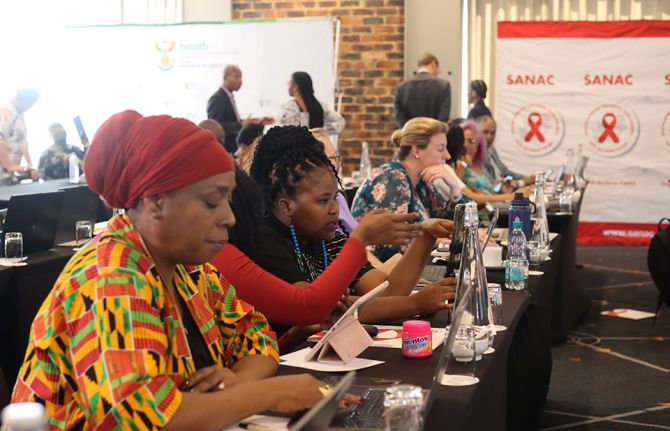
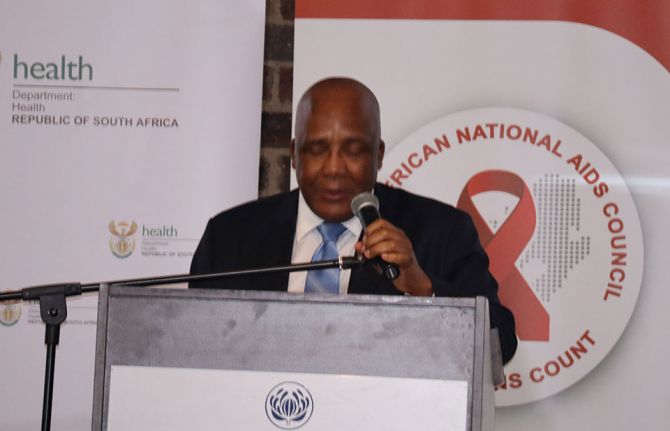
24 October 2025 24 October 2025South Africa has taken a decisive step towards stopping new HIV infections. The South African National AIDS Council (SANAC) and the National Department of Health, in collaboration with UNAIDS, convened a two-day national meeting on access to a new, and potentially groundbreaking medicine (lenacapavir) which is set to be rolled out in South Africa in early 2026.
Minister of Health Dr Aaron Motsoaledi affirmed government’s commitment to make lenacapavir “a public good - accessible, affordable and locally produced”. He emphasised the importance of prioritising adolescent girls and young women. There are around 8 million people living with HIV in South Africa and every week around 1000 adolescent girls and young women become newly infected with HIV.
“The introduction of lenacapavir marks the beginning of a new phase in HIV prevention, one grounded in collaboration between government, communities, our partners like the Global Fund and UNAIDS and the private sector,” said Dr Motsoaledi. “This partnership must be accountable, transparent and inclusive if we are to achieve our national targets.”
South Africa is among nine countries globally selected to roll out the medicine under the Global Fund to Fight AIDS, TB and Malaria’s financial commitment to reach 2 million people across low- and middle-income countries.
“Science continues to offer us new tools, but innovation alone is not enough,” said Eva Kiwango, UNAIDS Country Director for South Africa. “Equity must follow. Communities, especially young women and key populations, have waited too long for HIV prevention they can trust and use with dignity.”
Through a US$ 29 million grant, South Africa will receive enough medicine to provide HIV prevention to 450 000 people at high risk of HIV during a rollout in 23 high-incidence districts across six provinces. The aim is to reach adolescent girls, young women, sex workers, men who have sex with men, people who use drugs and other at risk populations.
“We are not gathered merely to discuss a medicine, but to reaffirm our collective commitment to justice and equality,” said Steve Letsike, Deputy Minister for Women, Youth and People living with Disabilities. “No young woman, no queer person, no person with a disability must be left behind in the promise of HIV prevention.”
Across both days, a common message resonated: partnership is South Africa’s greatest strength. Dr Thembisile Xulu, SANAC CEO, called for unity of purpose noting, “We must move from conversation to coordination, and from coordination to action.”
Yvette Raphael, Co-founder of the Advocacy for Prevention of HIV and AIDS in South Africa emphasised the need to take the message to communities, saying, “Civil society must be given the tools for demand creation to provide research literacy in the way that we and communities understand.”
The evidence and the promise
Presenting findings from the PURPOSE 1 and 2 trials, Professor Linda-Gail Bekker, CEO of the Desmond Tutu Health Foundation reported 100 % efficacy among cisgender women and 96% efficacy among men, transgender and non-binary participants. She highlighted that long-acting prevention tools such as lenacapavir expand choice, strengthen agency, and promote equity, offering new hope to those who need discreet and durable protection.
Professor Helen Rees, from WITS RHI, emphasised the issue of misinformation and disinformation as South Africa prepares to roll out lenacapavir next year. She said that all stakeholders, “Must underscore the importance of science because if there is mistrust in science, people will not trust new products. As we roll out lenacapavir we must have our ears on the ground for misinformation and disinformation.”
Gilead Sciences, developer of lenacapavir, represented by Country Manager, Wendy Cupido affirmed its commitment to ongoing dialogue and partnership with the Government of South Africa and stakeholders to ensure affordable, equitable access. She noted that the manufacturer of lenacapavir Gilead remains ready to engage with the country and partners as they explore local manufacturing readiness.
Speaking during a panel discussion, young Shout Out Now ambassador, Lerato explained the impact of missing one day of oral PrEP means putting yourself at risk of acquiring HIV. She said, “I am looking forward to lenacapavir to reduce my monthly visits to the clinic to access medication and all the relevant screenings to keep myself safe from HIV. It will make my life easier.”
Dr Yogan Pillay, Director HIV and TB delivery at the Gates Foundation underlined how collaboration is transforming affordability. Recent landmark agreements secured by Unitaid, CHAI, Wits RHI and Gates will make generic lenacapavir available at a cost of US$ 40 a year in 120 low- and middle-income countries starting in 2027. “Sustainability isn’t imported -it’s built,” he said, noting the importance of local manufacturing and data-driven delivery.
The meeting entitled Lenacapavir Access and Sustainability was held in Johannesburg on 14 and 15 October, 2025. Over 100 participants participated in person and 130 joined virtually. The consultation marked the launch of the rollout of Lenacapavir in South Africa which is set to start in 2026.
Region/country

Feature Story
Germany steps up support to UNAIDS amidst HIV funding crisis
23 October 2025
23 October 2025 23 October 2025As global HIV funding faces mounting pressure, Germany is stepping up its support to ensure the world remains on track to end AIDS by 2030. As donors reduce contributions, UNAIDS and its partners are facing growing challenges in maintaining access to life-saving HIV prevention and treatment services worldwide. Germany’s leadership comes at a crucial time.
At the World Health Summit last week in Berlin, Germany announced an additional €2.5 million in core funding to UNAIDS, bringing its total core contribution for 2025 to €5.5 million. Germany also announced a €1 billion commitment to the Global Fund to Fight AIDS, TB and Malaria’s Eighth Replenishment.
Germany has long been one of UNAIDS’ most steadfast and trusted partners. With the support of the Federal Foreign Office, UNAIDS has established a major hub in Bonn as part of a broader transformation to make the organization more effective, efficient, and fit for purpose. The Federal Foreign Office has pledged an additional €500,000 to support the relocation of additional staff from Geneva to Bonn, as well as a €1.2 million contribution to strengthen UNAIDS’ work with LGBTIQ+ communities worldwide.
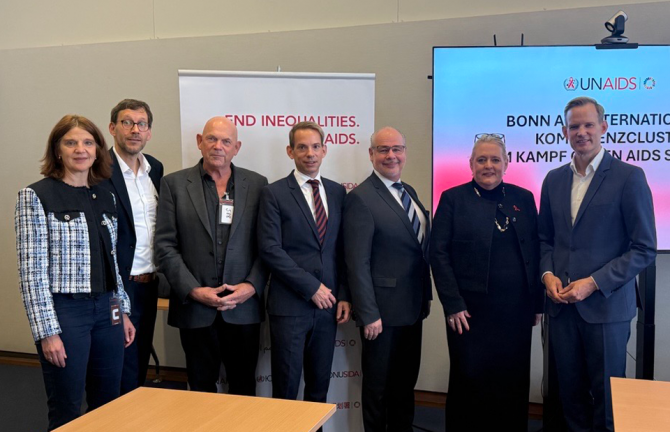
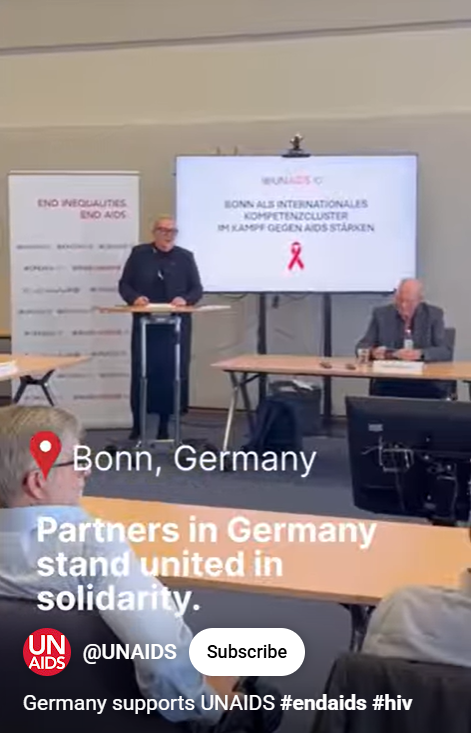
At an event held at the United Nations Campus in Bonn this week, around 30 representatives from the German Federal Government, academia, civil society, AIDS activists, and international development and global health organizations came together to explore how to further strengthen the partnership between UNAIDS and Germany and to reinforce Bonn’s role as a key global hub for health and HIV.
“Crisis often creates opportunities for change,” said Christine Stegling, UNAIDS Deputy Executive Director. “As UNAIDS redefines its structure to better serve the global AIDS response, Germany’s partnership is of central importance. It sends a powerful message when, at a time when others are stepping back, Germany steps forward—affirming that ending AIDS remains a political priority.”
The event also featured remarks by Georg Kippels, Parliamentary State Secretary of the Federal Ministry of health, who emphasized Germany’s founding role in establishing UNAIDS in 1996 and reaffirmed the Federal Government’s long-term support. “UNAIDS reaches people who are often left behind—people who use drugs, those facing discrimination and young women. Germany will continue to stand by UNAIDS to ensure that no one is excluded from the global AIDS response,” said Mr Kippels.
A subsequent panel discussion opened with a statement by Hendrik Streeck in his triple role as local Member of Parliament from Bonn, Director of the Institute of Virology at the University Hospital Bonn and Federal Commissioner on Drugs. Panelists Paul Zubeil, Federal Ministry of Health, Peter Wiessner, Action Alliance against AIDS and Anne von Fallois, Chief Executive Officer, German AIDS Foundation highlighted Germany’s leadership in the global response, the vital role of civil society, and new opportunities for collaboration within Bonn’s expanding AIDS competence cluster.
Paul Zubeil left no doubt that UNAIDS is a critical actor as the global context of the AIDS response is radically shifting: “The Federal Ministry of Health is working closely with UNAIDS and has seen it manouevering the new realities in a proficient manner. UNAIDS can support domestic stakeholders in high-burden settings to take more ownership while ensuring that key populations remain at the centre o the response. "The fundamental values of UNAIDS’ approach are based on scientific evidence, human rights, and the inclusion of key populations,” said Mr Wiessner. “UNAIDS brings everyone to the same table—governments, civil society, and affected communities—and that’s what makes it unique and invaluable.”
Hendrik Streeck underlined that medical innovation remains key to ending AIDS, citing the example of Lenacapavir, a new injectable drug that can protect a person from HIV infection for an entire year. “The Bonn research ecosystem is ideally placed to contribute to such breakthroughs,” he noted.
Anne von Fallois emphasized the importance of continued collaboration between international organizations and civil society actors based in Bonn. “UNAIDS plays an essential role in connecting us. In Bonn and across Germany, we must continue working together to ensure that HIV remains a priority on the global health agenda. UNAIDS provides us with information, guidance, and context for our work—and reminds all of us that the fight against HIV is not over yet.”
This year, UNAIDS is expanding its staff presence in Bonn to strengthen collaboration with the city’s leading global health research institutions and UN organizations. Once the current restructuring is complete, Bonn will become UNAIDS’ largest hub, underscoring its growing importance as a centre for innovation, research, and partnership in the global AIDS response.
Video

Documents
PCB57 Meeting Schedule
16 December 2025


Feature Story
Breaking barriers, saving lives: how UNAIDS has helped drafting Philippines’ landmark HIV laws
13 October 2025
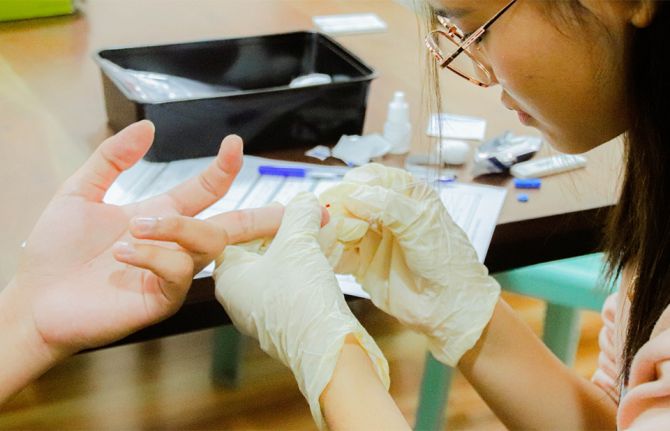
13 October 2025 13 October 2025At 17, Krang Martir stood in a clinic, alone and scared. He had decided to get tested for HIV after suspecting he may have been exposed when a trusted friend abused and raped him. But he hit a wall: the law at the time did not allow minors to access HIV services without parental consent – and he did not feel comfortable disclosing details to his parents. At that moment, even as he tried to take control of his health, the law made him wait. That wait could have cost him everything.
Thankfully, a clinic worker who empathized with him helped him get tested, which opened the door to treatment.
Today, young people in Krang’s situation no longer face that same barrier. In 2018, the Philippines passed a landmark HIV law - Republic Act 11166 - allowing people as young as 15 to access HIV testing and treatment without parental consent. The law didn’t just change policy. It saved lives. And it opened the door for a more inclusive, compassionate HIV response.
“Through RA 11166, we didn’t just protect all Filipinos, from womb to tomb, against the threat of HIV, we also provided support to the children, families, partners, and support groups of people living with HIV”, said Elena Felix, co-founder of the Association of Positive Women Advocates, Inc.
For more than a decade leading up to the law’s passage, UNAIDS worked alongside communities, government agencies, and civil society organizations to make this possible. Behind the scenes, it brought in global guidance, supported consultations, helped build consensus across sectors, and ensured that those most affected were leading the conversation.
“This wasn’t a one-year push,” said Bai Bagasao, UNAIDS Philippines Country Director from 2008 to 2016. “It took over a decade of advocacy, technical inputs, and persistent work with civil society, lawmakers, and health officials.”
The story of RA 11166 begins long before its enactment. In 1998, the Philippine AIDS Prevention and Control Act, also known as RA 8504, became the country’s first comprehensive legal response to HIV – also developed with support from UNAIDS. At the time, it was a progressive step to strengthen public awareness, establish the Philippines National AIDS Council, and enshrine into law protections for people living with HIV.
Geoffrey Manthey, the first UNAIDS Country Director in the Philippines, was directly involved in the advocacy for RA 8504. “Back then, passing the law was about breaking the silence,” he recalled. “We needed a framework that recognized HIV as a public health and human rights issue, not just a medical one. It was about protecting people who were most at risk, even when talking about HIV was still taboo.”
But as the years passed, the epidemic evolved. The virus began to spread rapidly among young Filipinos, especially among young men who have sex with men. Yet legal restrictions kept them from getting timely help.
Gerard Belimac, who once led the Department of Health’s National HIV and AIDS Program, remembers those years as a race against time. “We saw the numbers rising, especially among youth, but the law had not caught up. It didn’t reflect the realities on the ground,” he said. Many young people, afraid of rejection or not ready to talk to their families, avoided testing altogether. The result was late diagnosis, missed treatment, and sometimes lives lost.
RA 11166 was signed into law in December 2018. It did more than address the consent issue. The law streamlined testing and treatment procedures, embedded HIV education into schools, and updated national guidelines to reflect the latest global standards. It also strengthened the approach to view HIV not just as a medical condition, but also as a rights issue.
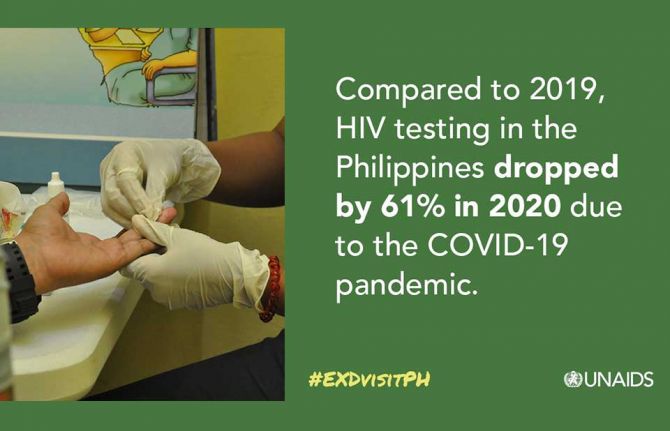
That shift continues today. In 2022 and 2023 alone, UNAIDS and its UN partners supported wide-reaching reforms. PrEP - a preventive medication - was added to the national drug formulary, enabling procurement through government channels. Over 50,000 people from key populations accessed it. PhilHealth, the national insurance provider, raised its HIV treatment reimbursement rates by 95%. And testing and treatment are expanding into new spaces, with faster turnaround times and better community-based systems.
“Laws don’t change things overnight,” said Louie Ocampo, UNAIDS Philippines Country Director. “But they create space. They legitimize what people have already been doing on the ground - and that makes a huge difference.”
Ms Felix sees the law as a symbol of how far the country has come - and how far it still has to go. “This law gave us space to be heard,” she said. “To be seen not just as patients, but as advocates.”
It’s a perspective echoed by Malou Quintos, UNAIDS Philippines’ Community-Led Responses Adviser. “We’ve moved from fear to hope. But the most powerful shift has been that people living with HIV are now leading the conversation.”
For Krang, now 26, the transformation is personal. He now speaks publicly about his experience and works to support young people who feel lost like he once did. “I wish I had this kind of law back then,” he said. “But I’m grateful it’s here now.”
Despite major successes, the work continues. Stigma remains. Many Filipinos still face barriers to care. But the path is clearer now - and more inclusive. With the United Nations celebrating 80 years of global service, the Philippines HIV response offers a striking example of how international cooperation and partnership, grounded in local realities, can deliver long-term results.
As Krang put it, “This law doesn’t just protect us, it tells us we matter. And that’s something no one can take away.”
Originally published in Breaking barriers, saving lives: how UNAIDS has helped drafting Philippines’ landmark HIV laws | United Nations in Philippines
Region/country
Documents
Intersessional: Modalities and Procedures for the 56th and 57th PCB Meetings
16 December 2025

Press Release
At the World Health Summit, global parliamentarians meet with partners to strengthen political leadership in ending AIDS
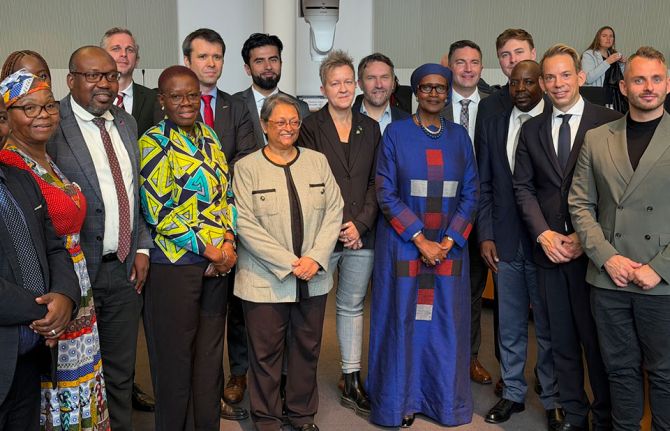
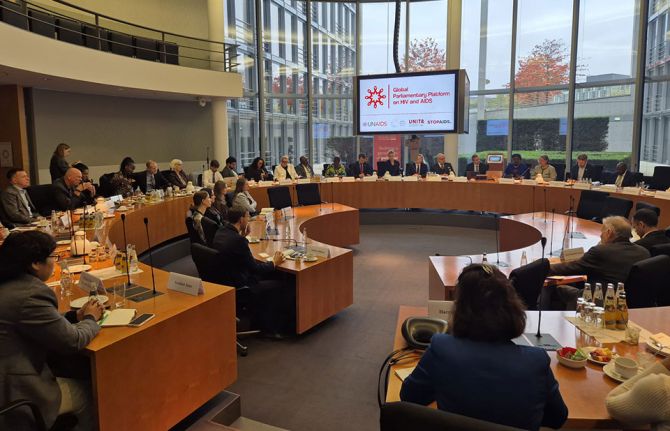
13 October 2025 13 October 2025BERLIN/GENEVA, 13 October 2025—Parliamentarians from around the world met with policymakers and partners at the World Health Summit in Berlin to foster dialogue on how to mobilize political will, defend equal rights and build inclusive and sustainable responses to HIV.
“Parliamentarians have long been a cornerstone of international efforts to end AIDS, pushing for efforts to secure substantial funding, technical expertise, and political advocacy to ensure equitable access to life-saving HIV treatment and prevention services,” said UNAIDS Executive Director, Winnie Byanyima. “As we work towards ending AIDS by 2030, partnerships with governments that prioritize human rights and equity remain critical.”
The event was organized by UNAIDS, UNITE - Parliamentarians Network for Global Health, the Global Equality Caucus, and STOPAIDS, under the umbrella of the Global Parliamentary Platform on HIV and AIDS. Hosted by German MP Sasha van Beek, participants focused on reinforcing global collaboration to end AIDS as a public health threat by 2030 and advance human rights for populations most affected by HIV. Participants underscored the urgent need for renewed global commitment to HIV financing and to strengthening cooperation between North and South.
“Over the past 30 years, the HIV response has offered one of the greatest lessons in global health. Today, parliamentarians hold both the responsibility and the power to advance and revitalize that response. This dialogue reaffirms and strengthens that commitment,” emphasized UNITE’s Executive Director, Dr. Guilherme Duarte.
During the breakfast, parliamentarians reaffirmed their commitment to advancing policies that address structural inequalities and protect vulnerable populations. Discussions focused on improving access to HIV services, eliminating stigma and discrimination, and ensuring the protection of rights for women, girls, and LGBTQ+ people, who continue to face disproportionate barriers in accessing healthcare.
Parliamentarians also echoed UNAIDS’ call for long-acting injectable medicines that are effective in preventing new HIV infections to be affordable and available for all. UNAIDS estimates that if 20 million people in highest need, including men who have sex with men, sex workers, people who inject drugs and young women and adolescent girls in sub-Saharan Africa have access to antiretroviral prevention medicines, it could dramatically reduce new infections and significantly advance progress towards ending AIDS by 2030.
“Game-changing medicines like Lenacapavir have created the very real possibility of ending AIDS as a public health threat by 2030,” said Mike Podmore, CEO of STOPAIDS. “However, overseas development aid reductions risk undermining our ability to realize this opportunity and even reverse existing progress. Parliamentarians, uniting in partnership around the world through mechanisms like The Global Parliamentary Platform for HIV, are essential voices to make sure their governments play their part and invest now to reach the incredible goal of ending AIDS.”
Parliamentarians from Germany, Lesotho, Liberia, Malawi, Mexico, Namibia, Sweden, the United States, Uganda and Zimbabwe participated in the event which took place on the opening day of the World Health Summit.
"An equitable HIV response should remain a key priority in the actions of governments to address the disproportionate impact that HIV has on marginalised communities, such as LGBT+ people,” said Aron le Fèvre, Executive Director of the Global Equality Caucus. “Parliamentarians have an important role holding governments to account, and forums such as the Global Parliamentary Platform are crucial to developing the partnerships needed to support lawmakers in their parliamentary and policy advocacy."
As the World Health Summit continues, UNAIDS will underscore the importance of sustained political leadership, international cooperation, and human-rights-centred approaches in the fight against AIDS.
UNAIDS
The Joint United Nations Programme on HIV/AIDS (UNAIDS) leads and inspires the world to achieve its shared vision of zero new HIV infections, zero discrimination and zero AIDS-related deaths. UNAIDS unites the efforts of 11 UN organizations—UNHCR, UNICEF, WFP, UNDP, UNFPA, UNODC, UN Women, ILO, UNESCO, WHO and the World Bank—and works closely with global and national partners towards ending the AIDS epidemic by 2030 as part of the Sustainable Development Goals. Learn more at unaids.org and connect with us on Facebook X Instagram and YouTube.
UNITE
UNITE is a non-profit, non-partisan global network of current and former members of parliament from multinational, national, state and regional Parliaments, Congresses, and Senates committed towards the promotion of efficient, sustainable and evidence-based policies for improved global health systems in alignment with the United Nations Sustainable Development Goals (SDGs). The network currently has over 520 Parliamentarians in 119 countries. Learn more at unitenetwork.org and connect with us on LinkedIn,Facebook, X, and Instagram.
Contact
UNAIDSSophie Barton-Knott
tel. +41 79 514 6896
bartonknotts@unaids.org
UNITE
Ana Filipa Cruz
anafilipavc@unitenetwork.org